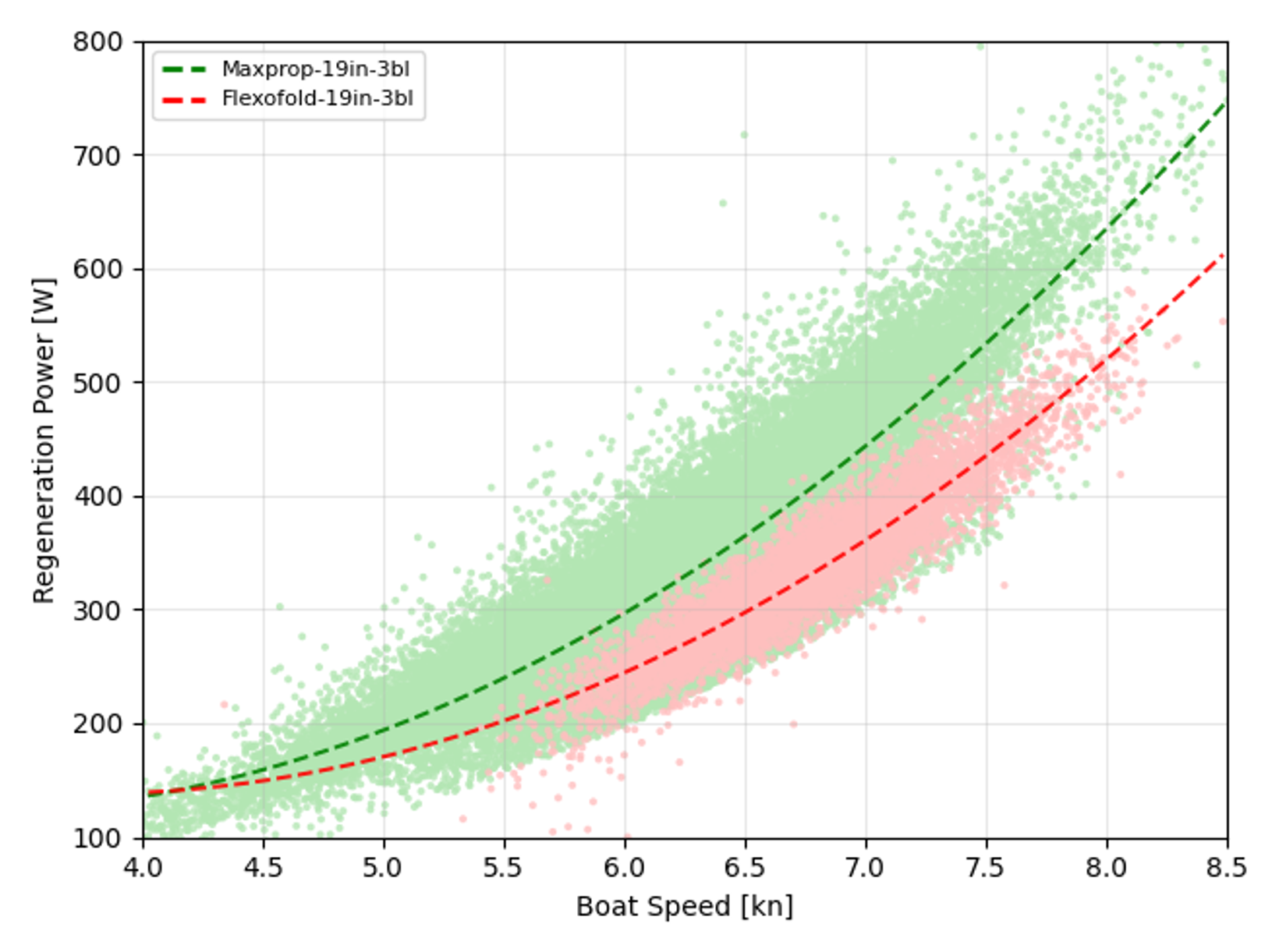
Spinning in Forward or Reverse?
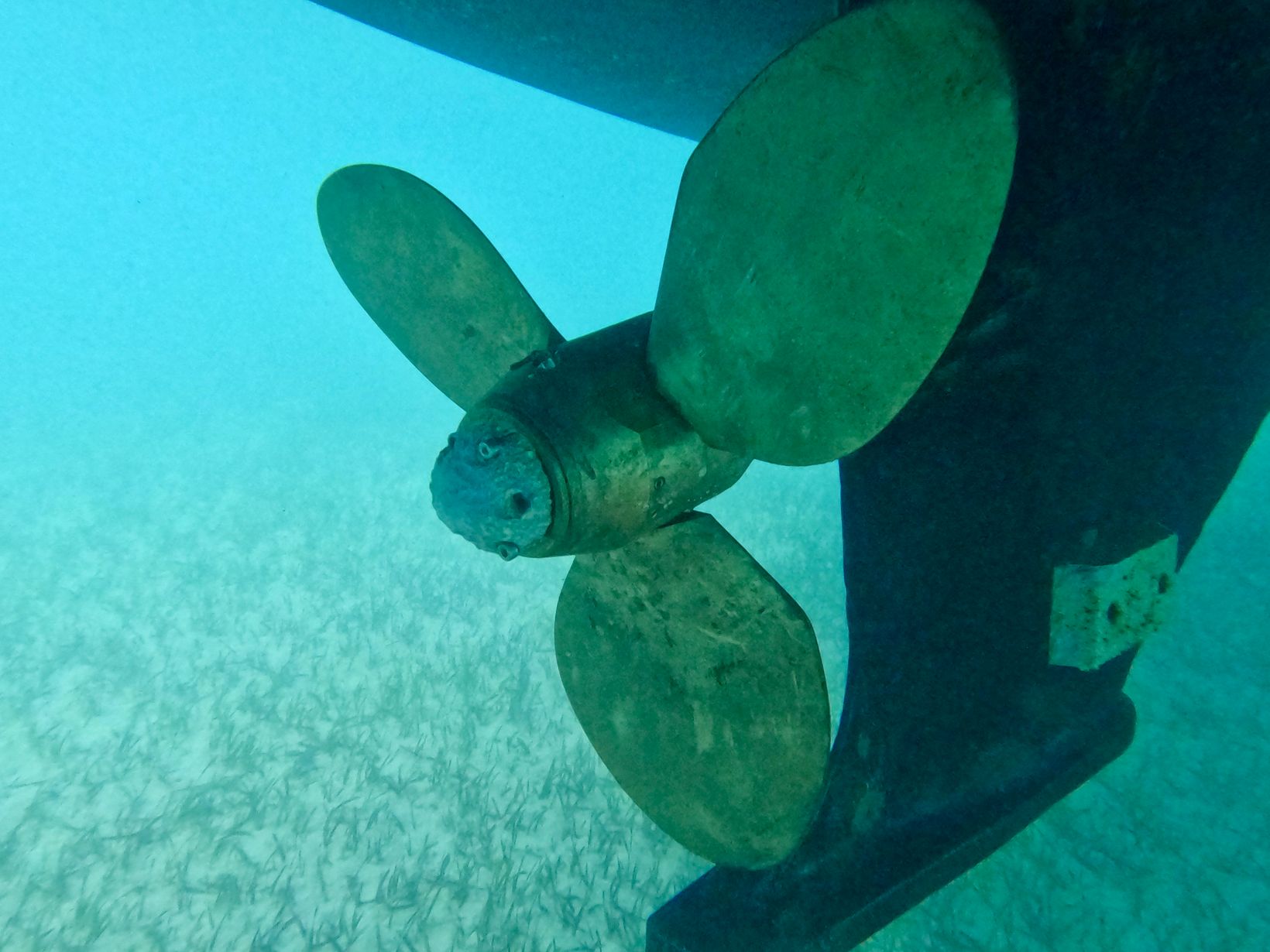
After fitting our new Max Prop propeller half a year ago, we have sailed down the Canada and US East Coast in often less than champagne sailing conditions.
Weather windows to sail south/south-west were rare, and passages often involved motoring either because winds were too light or on the nose.
So regeneration, or generating power through our propeller while sailing, sadly became an afterthought, as it generally works best in decent sailing conditions. Still, we tried regeneration here and there, but over time we noticed it didn’t work as well as it used to half a year ago. We didn’t think much of it and waited for better winds.
When the winds arrived somewhere in the Bahamas, it was time to dive deeper into the details of the Max Prop propeller and how it is supposed to work. Many people in the electric boating community assured me in their Facebook group that regeneration with Max Prop was very easy and reliable. The idea is this: while sailing at decent speed without engine power, you apply a short burst of reverse power, which turns the rotating blades of the Max Prop propeller by 180 degrees, and they are then “locked” in that position and while water flow presses against them then will not leave this position, meaning uninterrupted regeneration.
The following video shows how that looks with our prop. I’m spinning the propeller in reverse at -100 rpm, then set the throttle to idle and it starts spinning forward in its locked position at 280 rpm. The only problem is, it stops (feathers) after 10 seconds. That’s not what everyone said! I was stumped. Upon closer inspection in slow-mo, you get the sense that the bigger half of the propeller blade that is now facing the current, is not only pushed backward by the boat’s movement, but is also affected by its own spinning and the resistance of the water that it rotates through (sideways), and ultimately these sideways forces win, pushing the blade edge forward and into a feathered position.
When spinning the propeller forward while sailing, and then returning the throttle to neutral, the consensus is that Max Prop should feather for lowest water resistance - one of it’s big selling points even on non-electric sailboats. Interestingly enough, it doesn’t do that in our case. The blades (with their smaller sides now facing the current) somehow find an equilibrium of backward and sideways forces, and they remain angled, and keep spinning, and therefore generating power.
What had changed in the last half year, why was it not working before? The best explanation may be that I cleaned the hull, and especially the propeller shaft skeg on our boat which is just forward of the propeller, before taking the above videos. The skeg had some amount of growth, and although it wasn’t that bad, apparently it was enough to disturb the water flow and the equilibrium that keeps the propeller blades angled in our unusual, forward-facing regeneration mode. That meant we could neither get regeneration starting from forward or from reverse power.
The inverted behavior of our Max Prop (feathers from reverse rotation although it should lock, regenerates from forward rotation although it should feather) could likely be “normalized” by increasing the “neutral brake” setting on the electric motor, i.e. how much resistance does the motor create against external rotation of the shaft, when throttle is in neutral. Sadly this requires an expensive diagnostics dongle (Curtis OEM Configuration tool) that we don’t have, and since we have really stable regeneration from forward propulsion (as long as we keep the skeg clean, apparently), we are happy with the current setup. It pays to clean the boat!
New Practical Results
Passage from Long Island (Bahamas) to Jamaica: in 66 hrs of passage, regeneration was running for 53 hrs. Total power generated on the passage was 19.4 kWh, 360 W average while regeneration was running or 7 kWh per 24 hrs. Add another 3 kWh of solar power per 24 hrs and this meant we had approx. 2.5 kWh energy surplus per day, and at times kept our electric water heater running for pure luxury! Free power! That’s what they tell you in the Oceanvolt adverts, and now we finally have it (in good conditions).
Passage from Jamaica to Panama: in 94 hrs of passage, regeneration was running for 60 hrs. We stopped it on purpose for one night (keeps the boat a little quieter as the noise of the spinning shaft stops), and the winds were a little light towards the end. We still generated 16.3 kWh in total or a 270 W average / 4.1 kWh per 24 hrs. With added solar power, our energy balance on this passage was plus/minus zero (excl. motoring), which is still great.
Because of regeneration, we saved 4 hours of generator runtime or 12 liters of diesel on those two passages. It is worth noting that in those two entire passages, regeneration stopped unintentionally only once or twice (I believe boat speed dropped below 3.5 knots for a moment). It otherwise ran super reliable, in 2 meter waves with occasional sideways pushing of our stern (which disrupts flow), boat slowdowns at the bottom of waves, etc. - no issues.
These were two excellent trade wind passages with average wind speeds of 20 and 18 knots respectively, and their regeneration output easily surpasses our best passage so far with Max Prop (9.6 kWh produced), as well as the meager 6 kWh that we achieved only with lots of manual regeneration restarts with our old Flexofold from Porto - Madeira.