Glimpse into the Inner Island
In Nuku Hiva, we change perspective and rent a car. A tour of the inner parts of the largest of the Marquesas ought to be more than worthwhile.
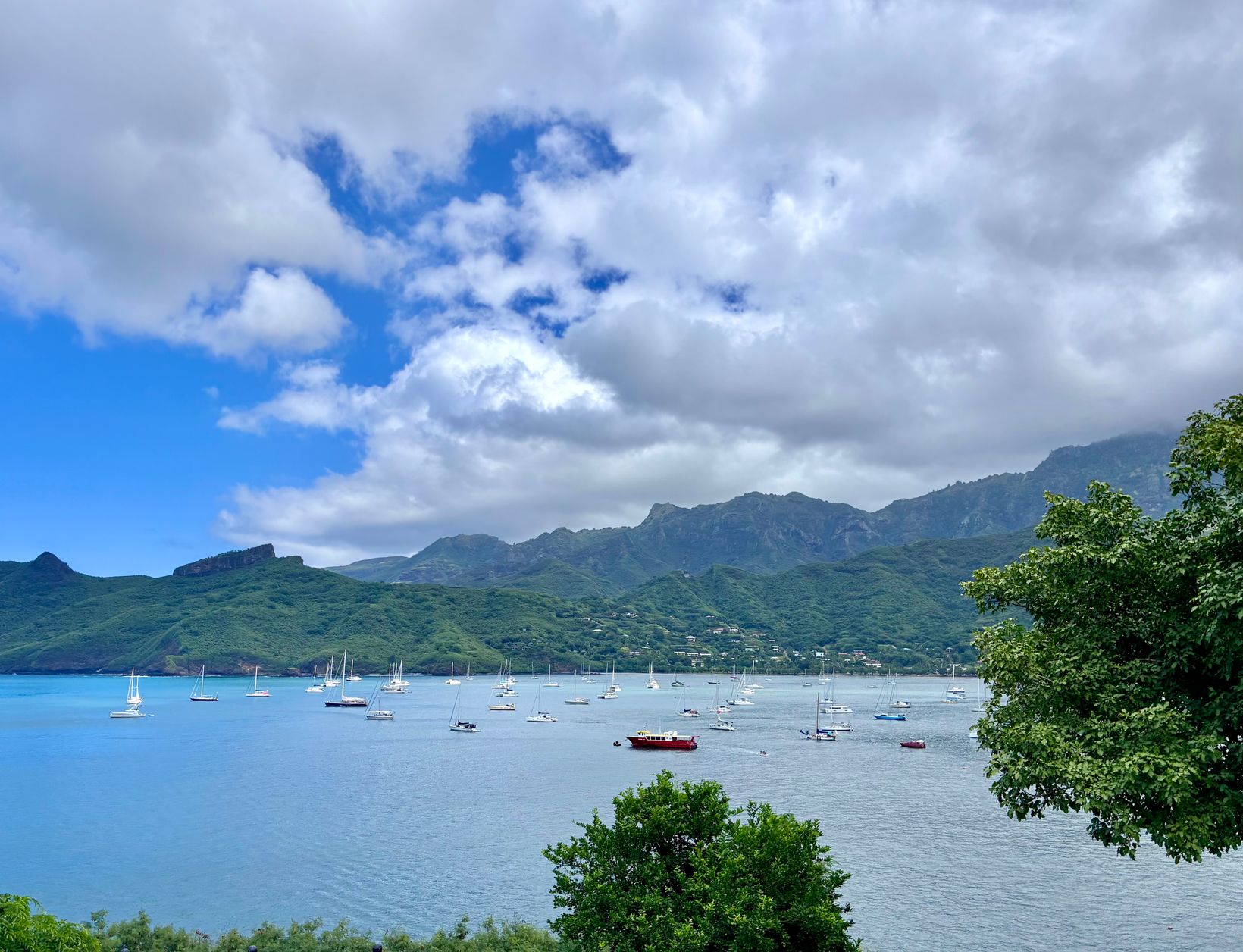
Before we explore the hinterland, we linger in Taiohae and soak up the atmosphere of the enormous volcanic crater. Since small cruise ships occasionally call at the big natural harbor, there’s a whiff of tourist infrastructure in town. We find an information center, a little market with handicrafts and even postcards. When we make a brief detour into the small hospital, we get a glimpse of the health care here. If patients everywhere in the world had such a beautiful view, they’d surely recover better.
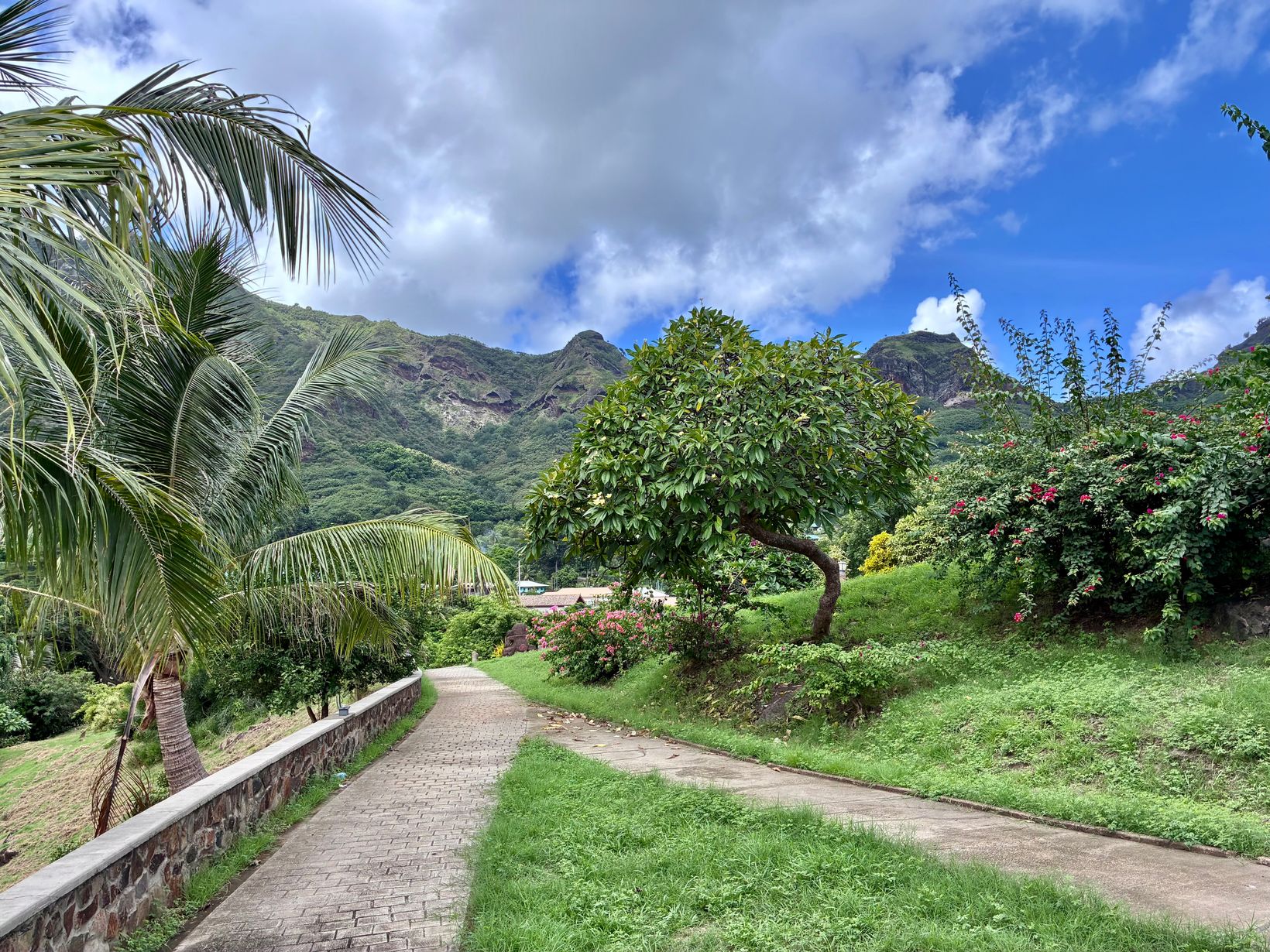
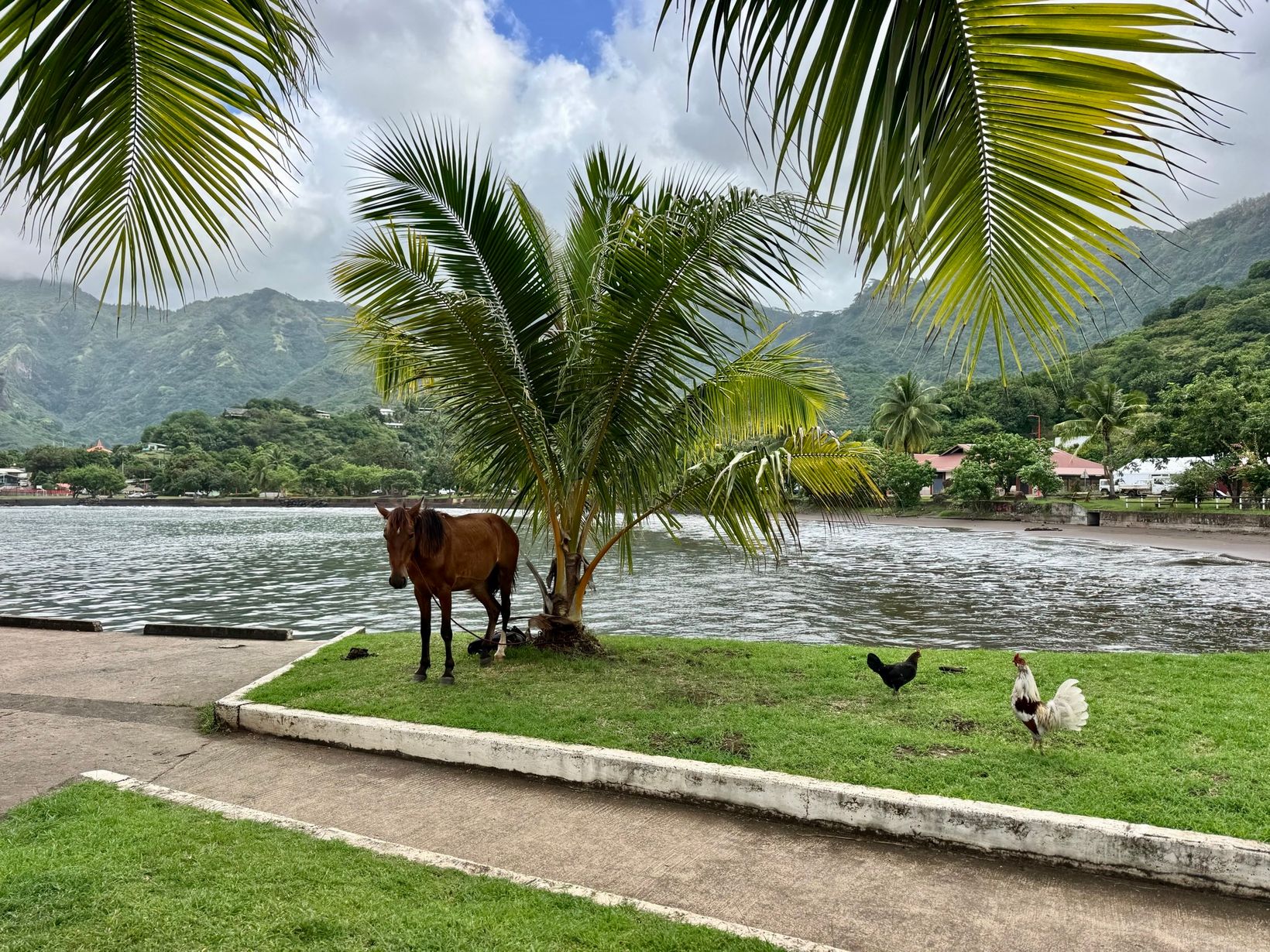
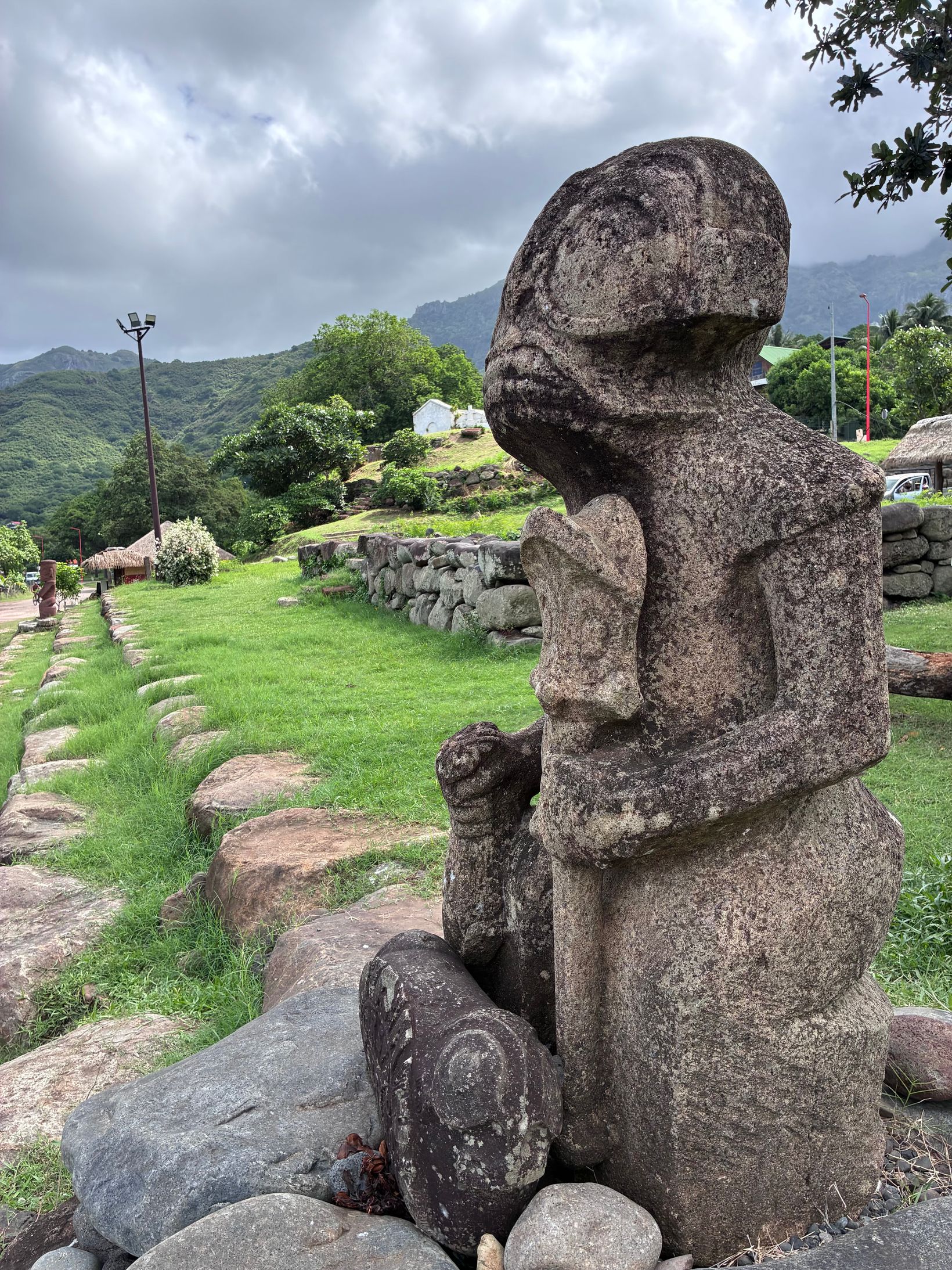
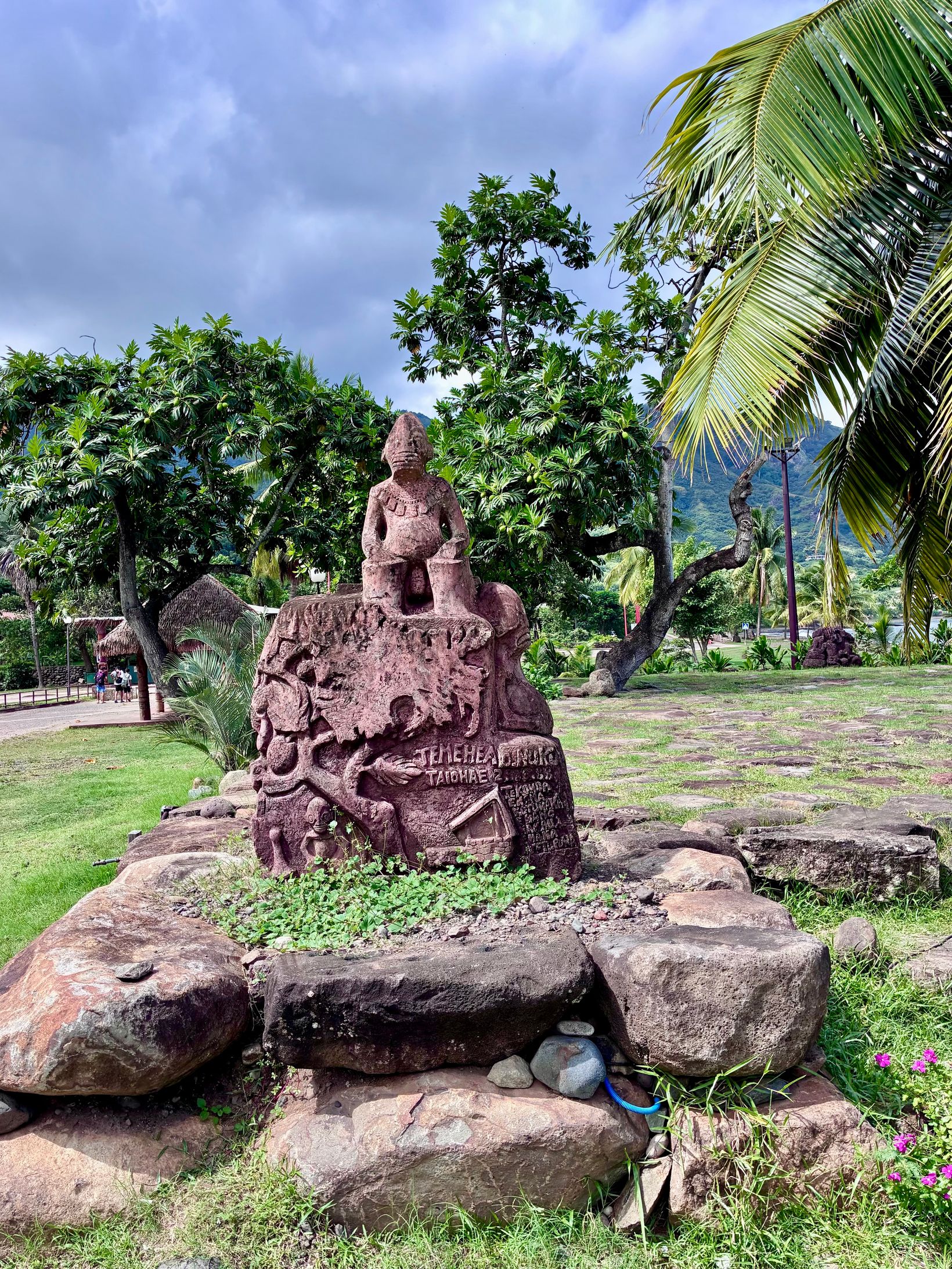
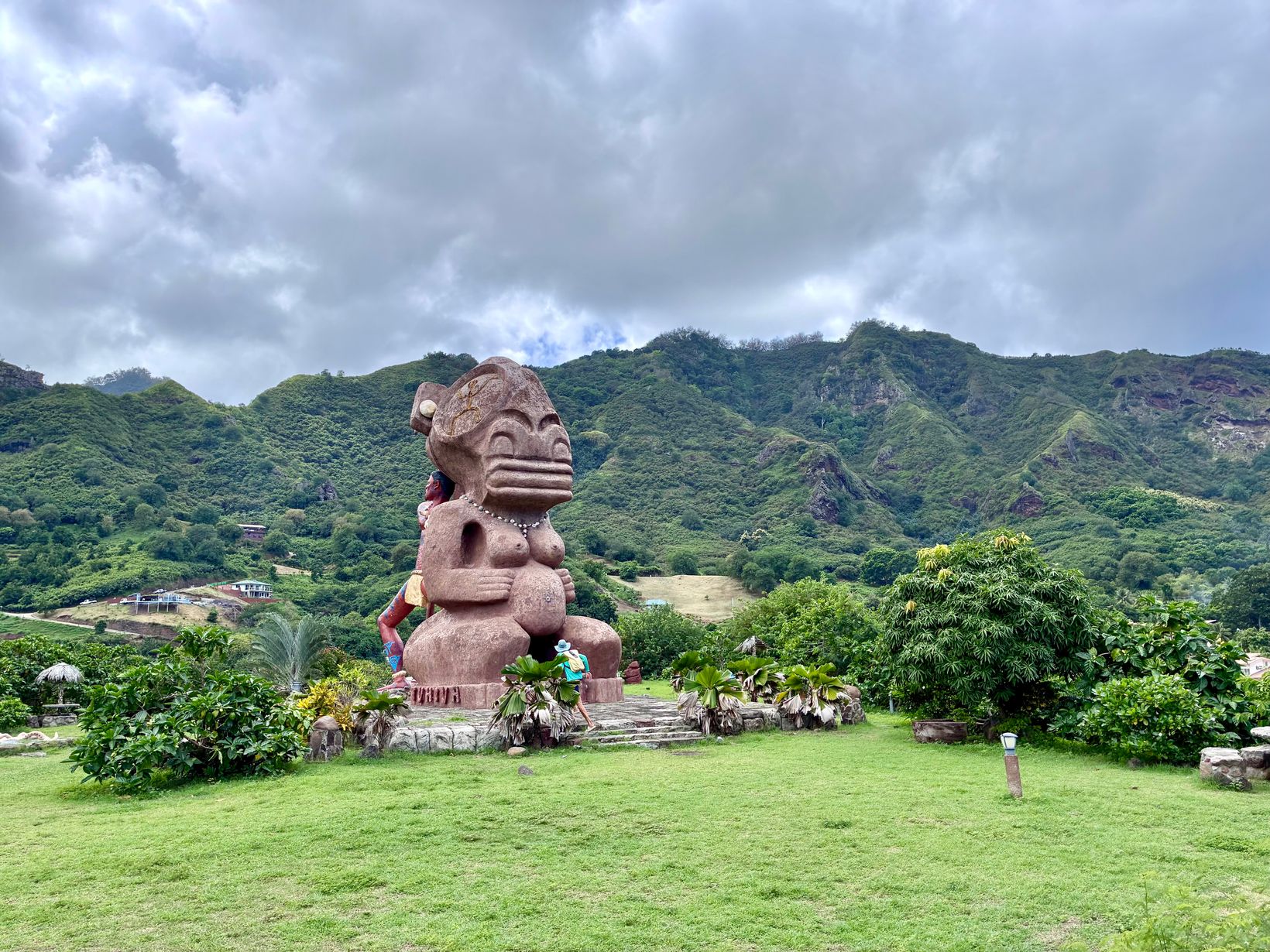
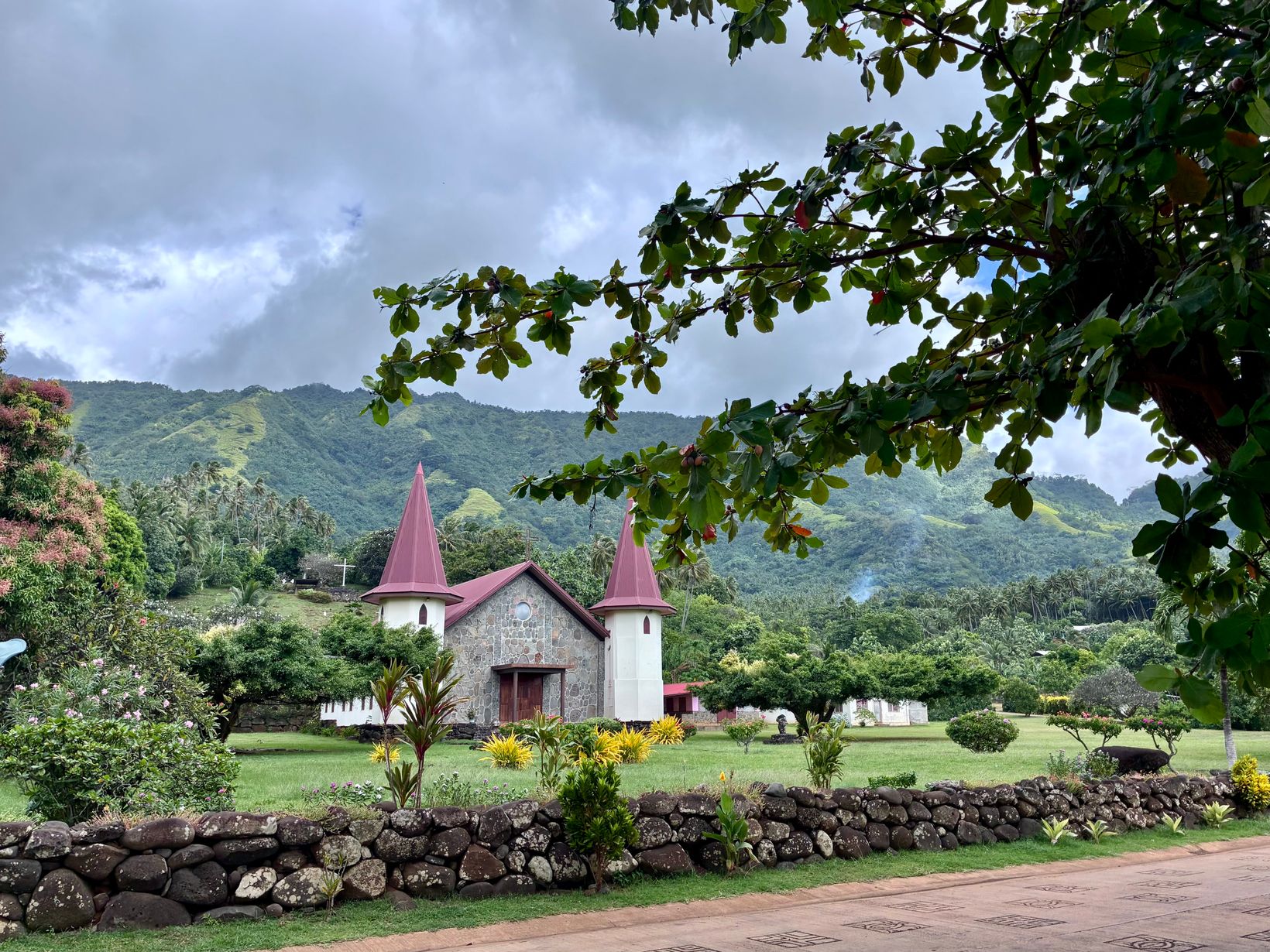
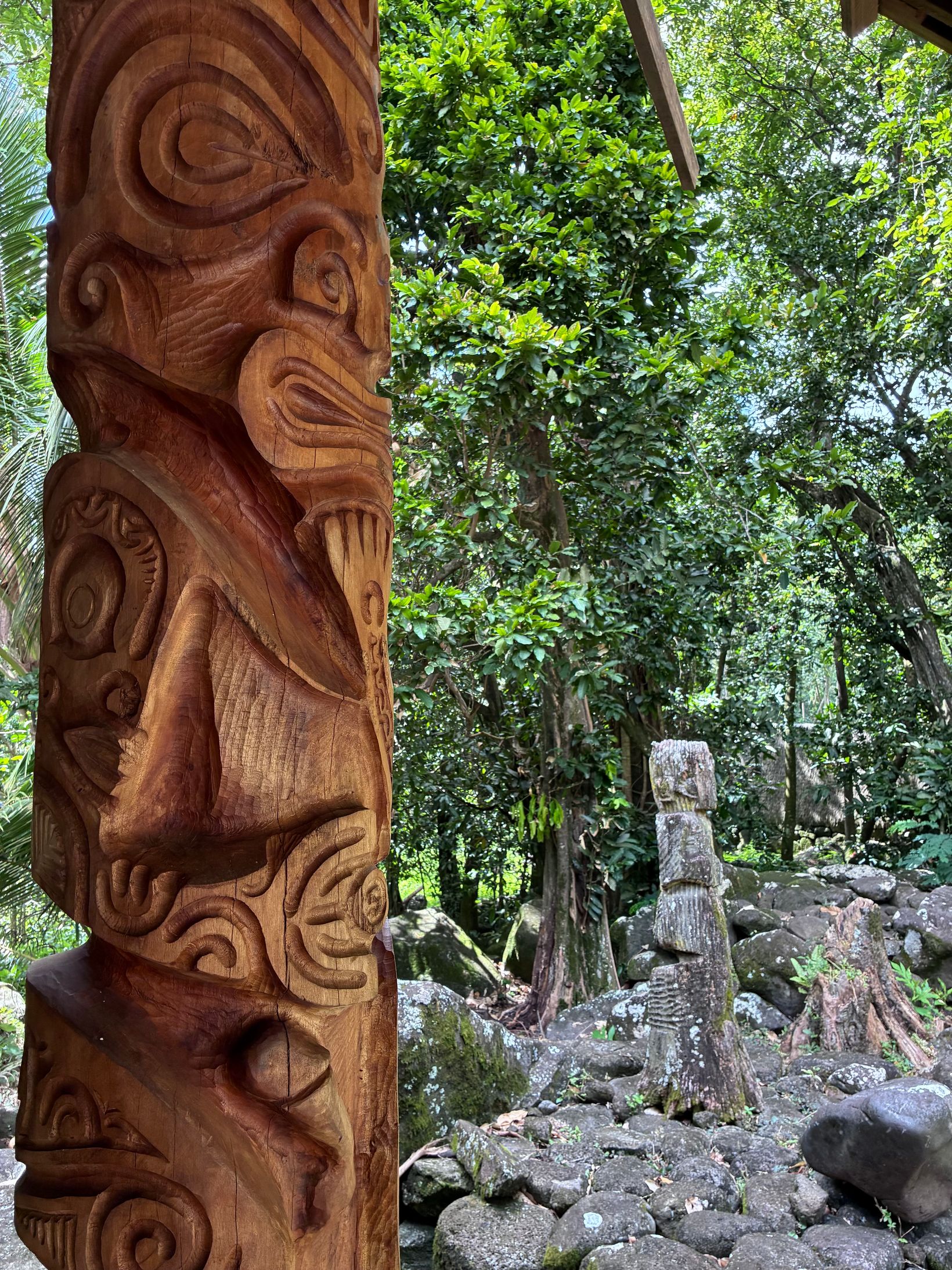
The parallel existence of Polynesian tradition and missionary heritage shows: Life plays out between traditional gathering places lined with tikis and a small cathedral. Drumbeats and church singing seem to merge seamlessly into one another.
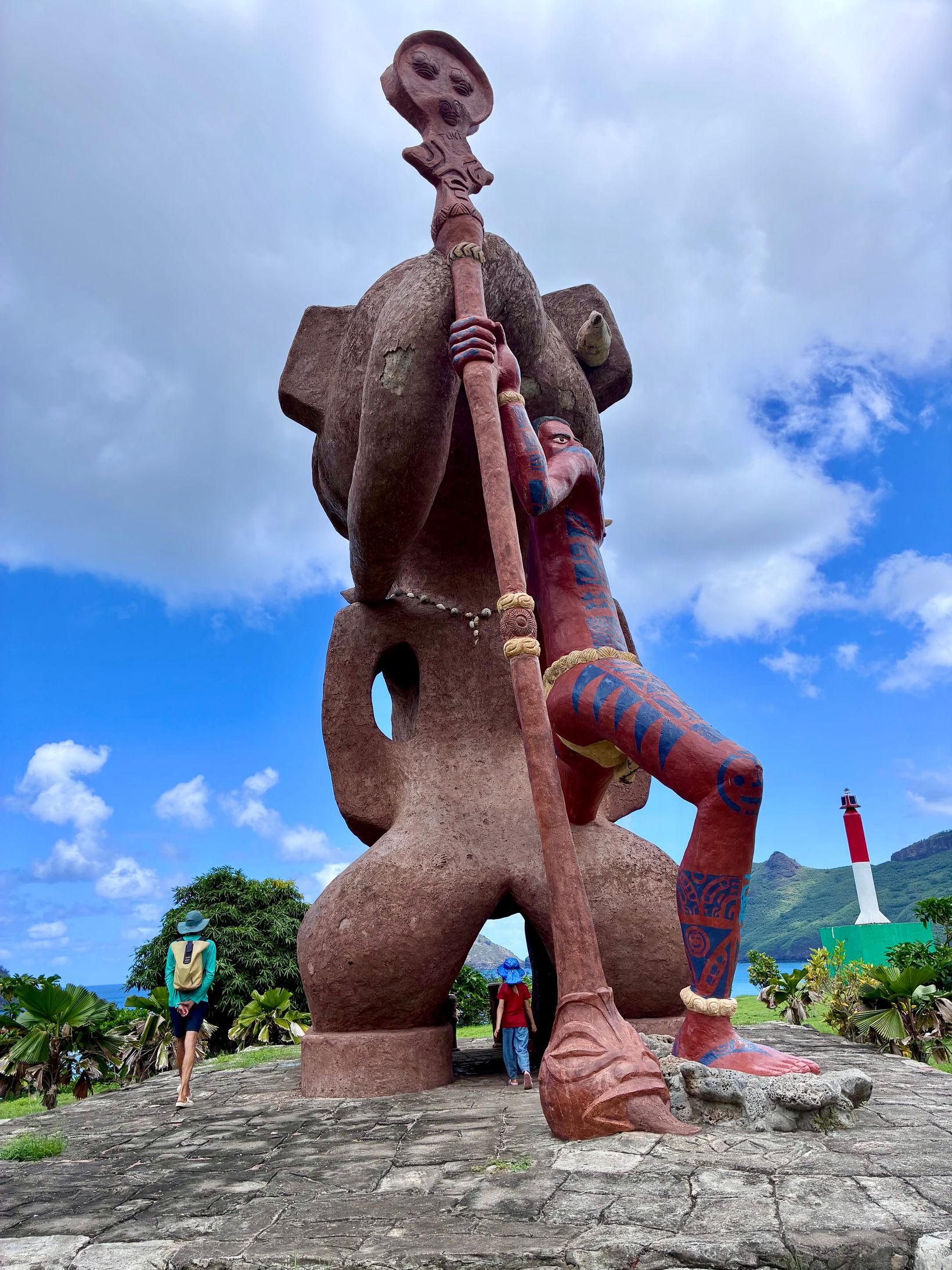
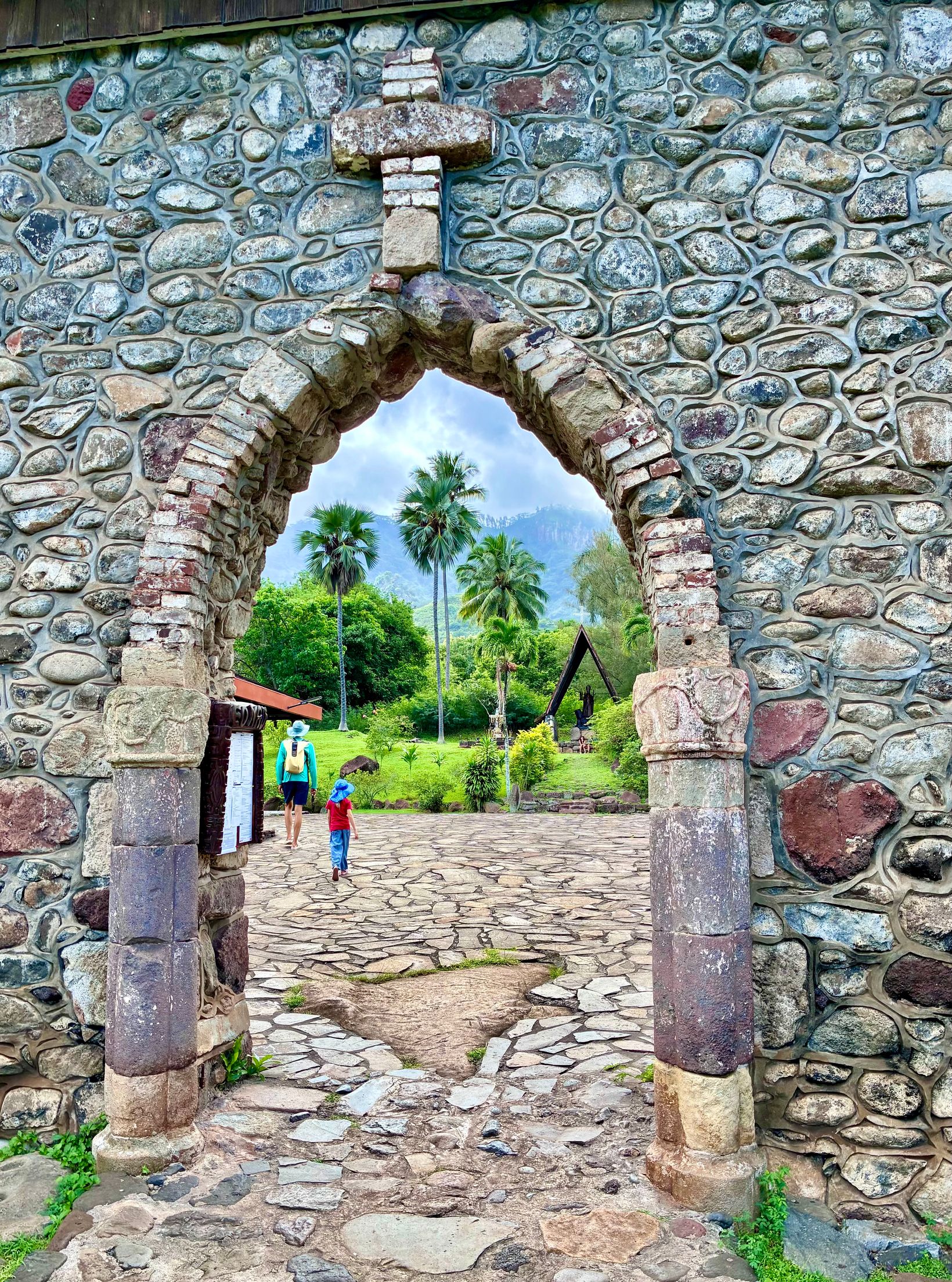
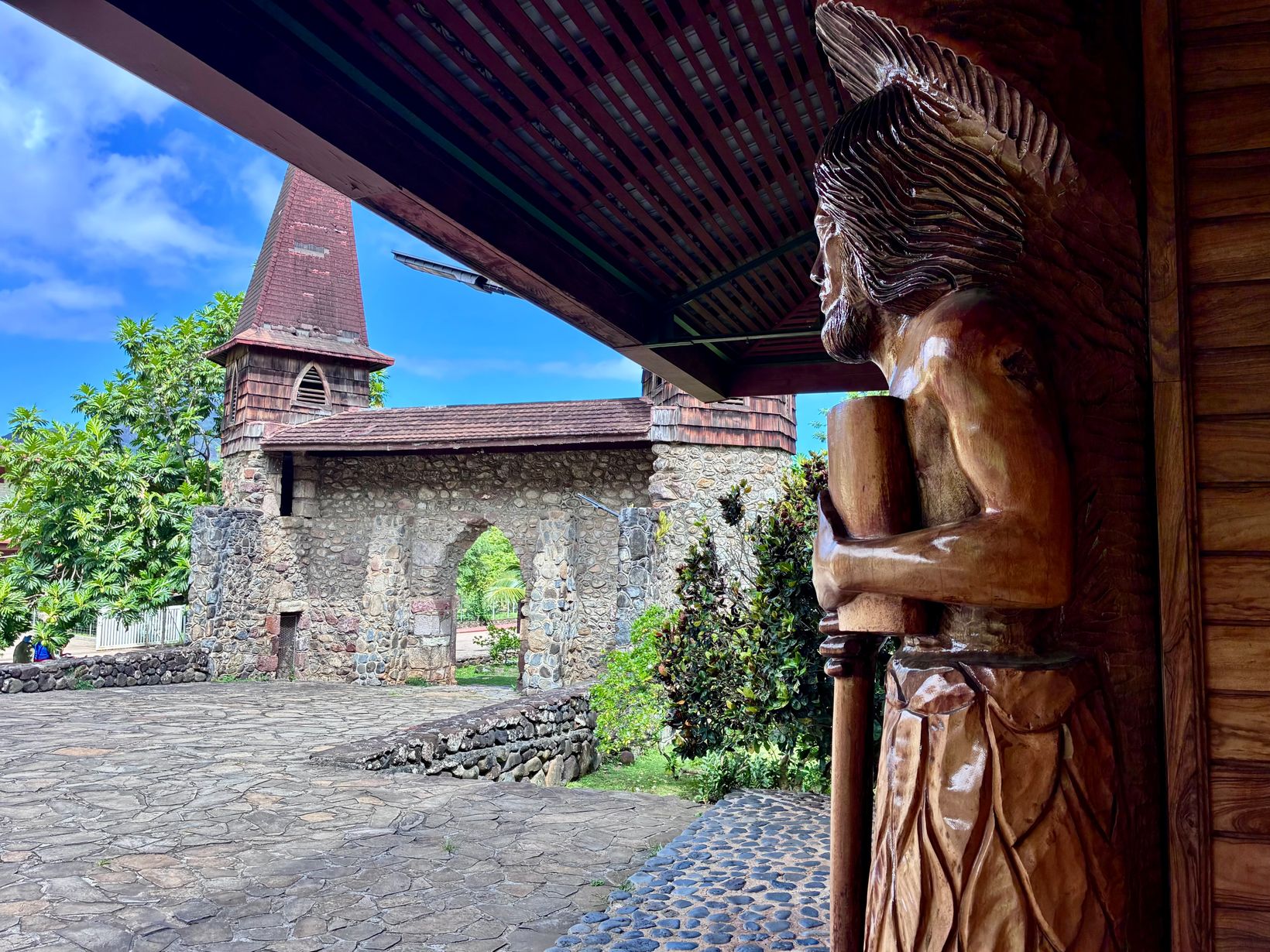
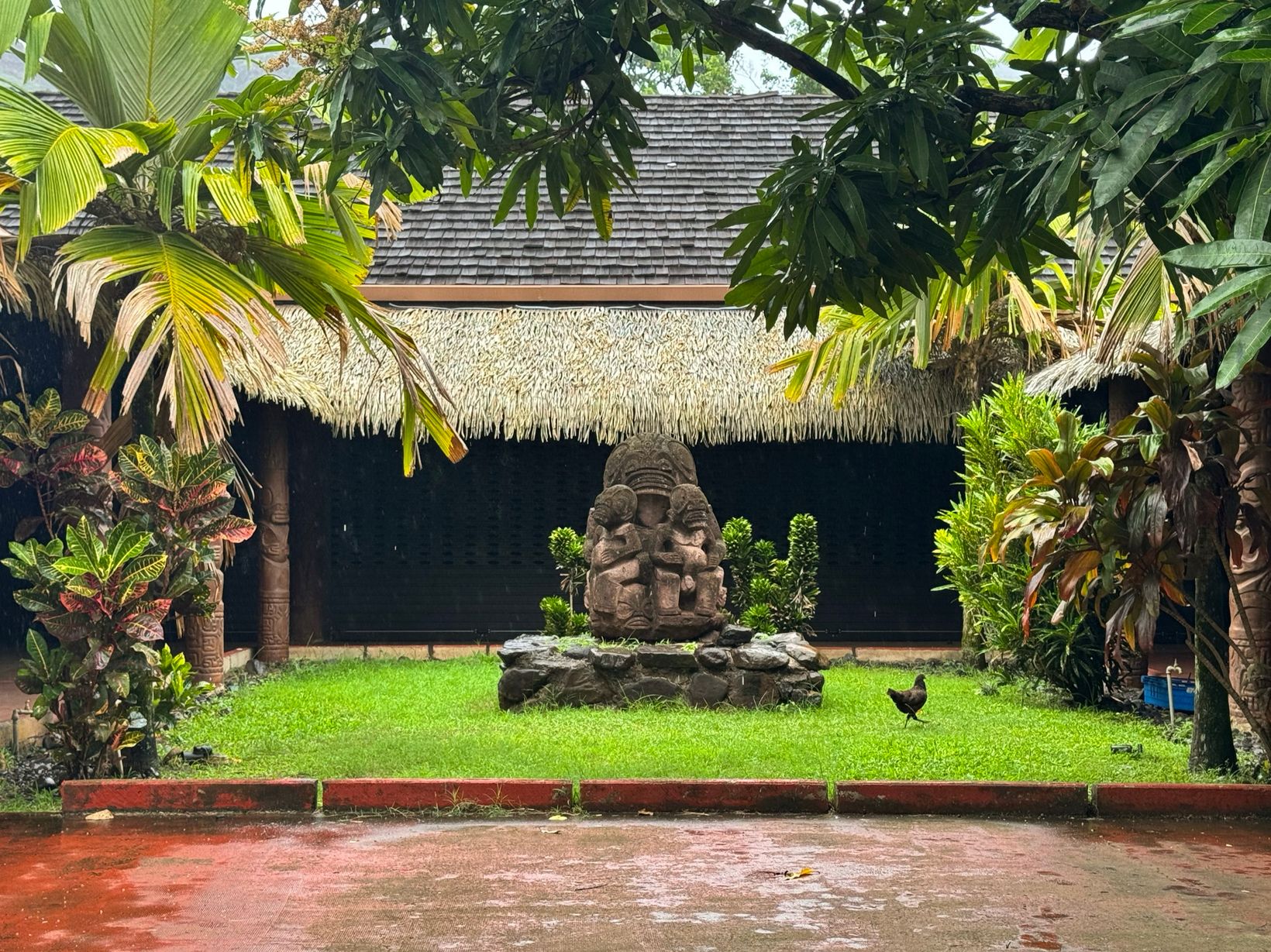
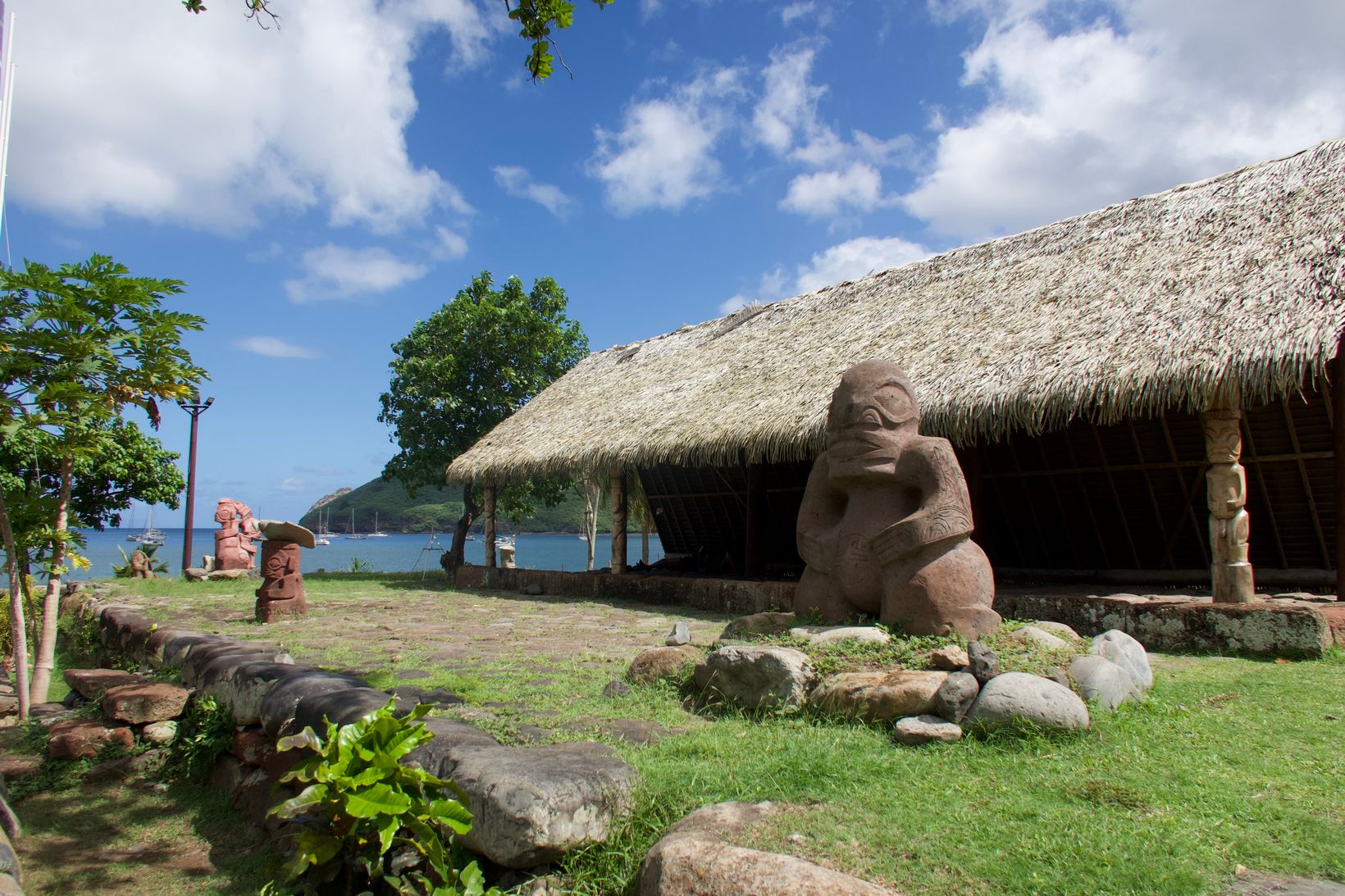
After a few days of sightseeing around town, we finally get into the car. Five minutes after setting off and a few hairpin curves later, the first viewpoint stops us. We look over the bay with its huge anchorage with Nikola in the middle of it.
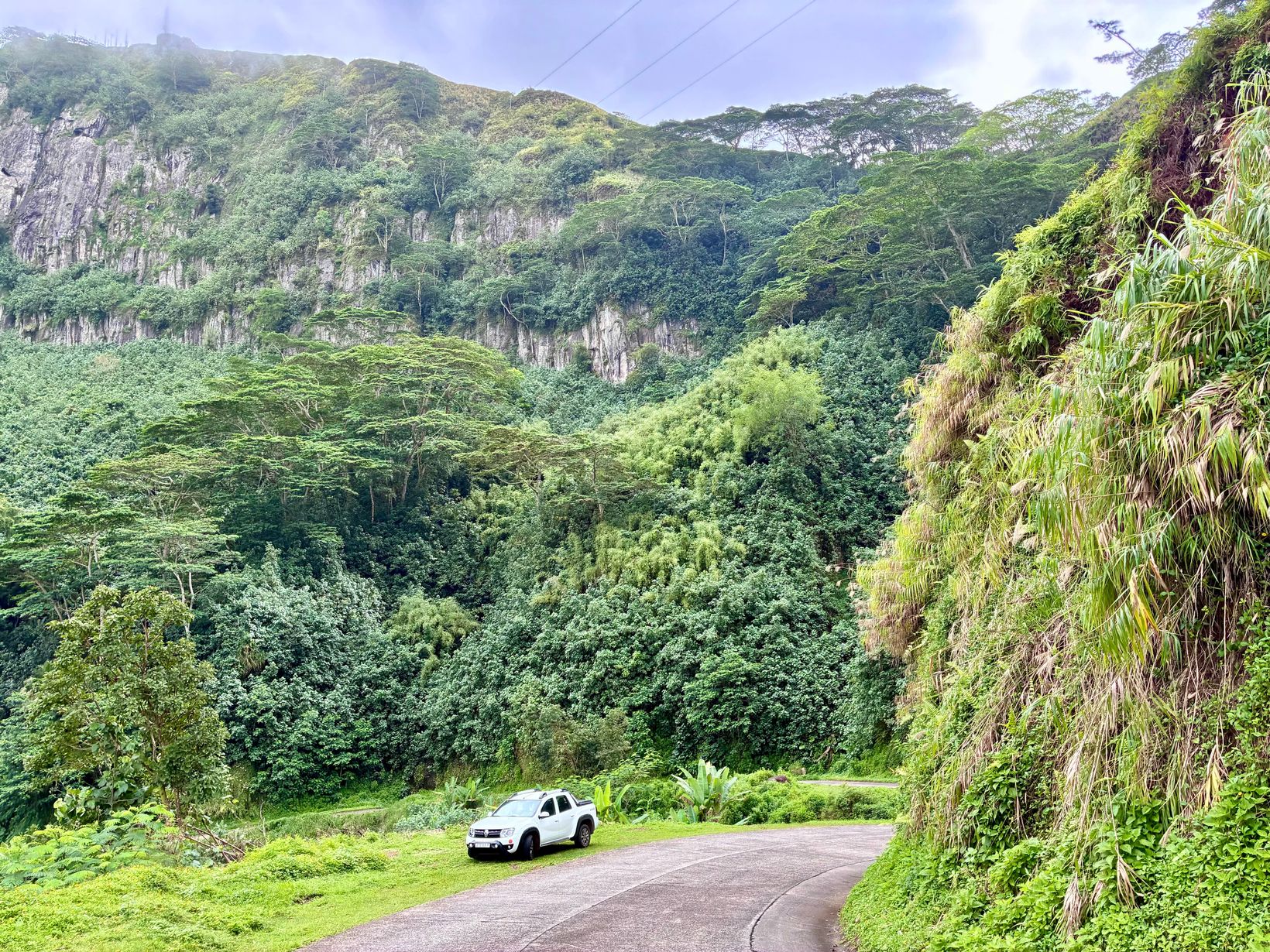
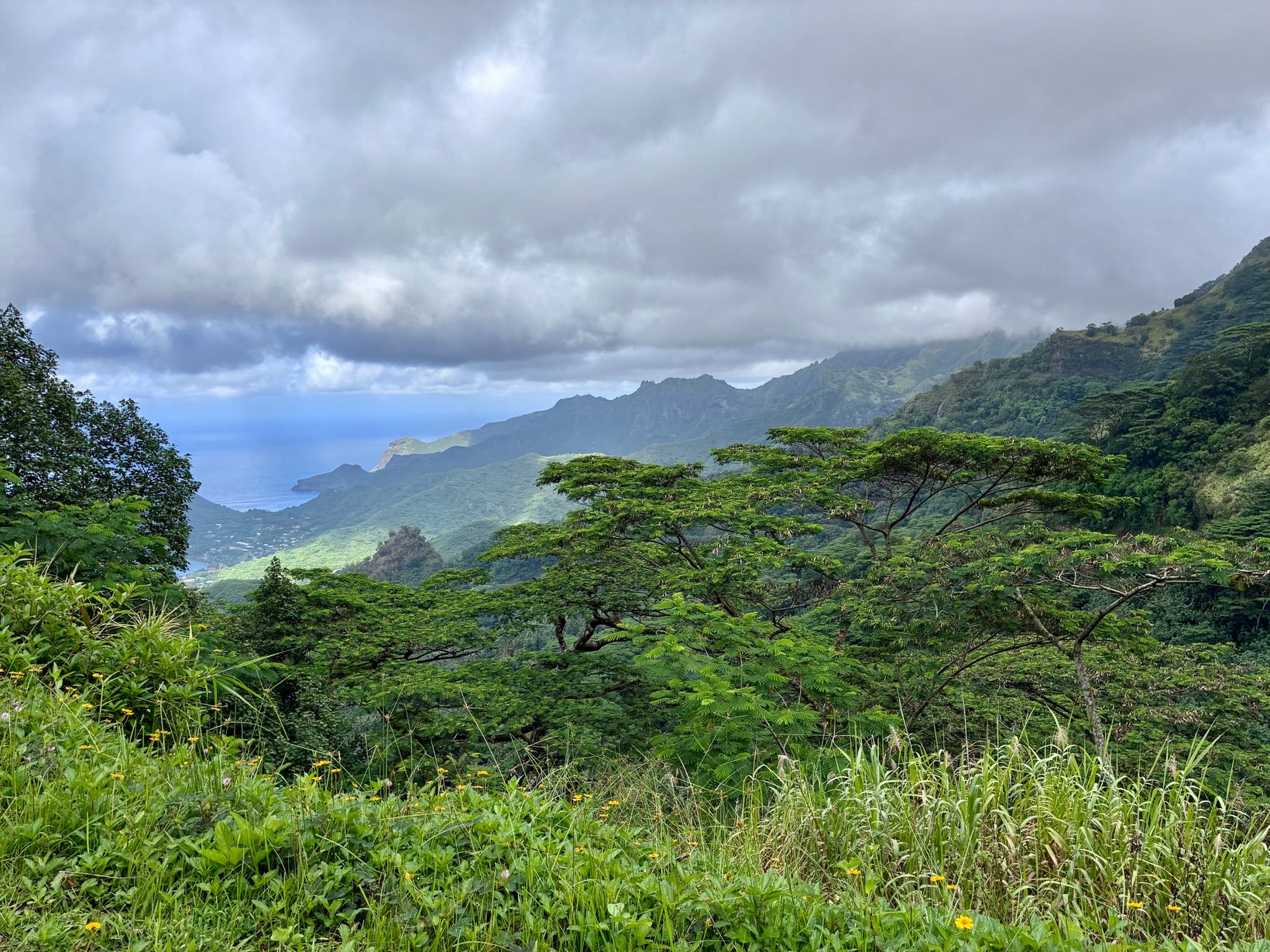
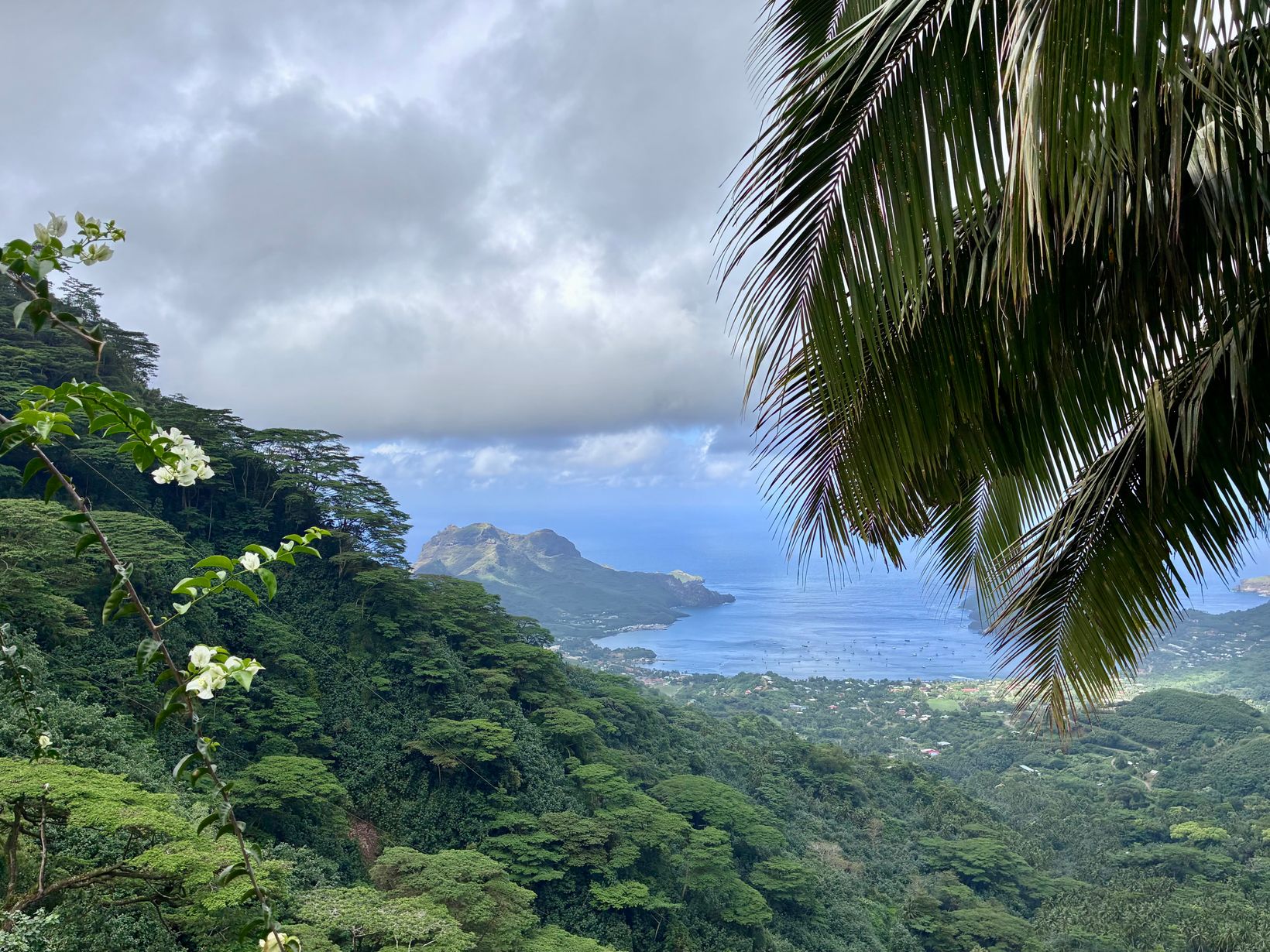
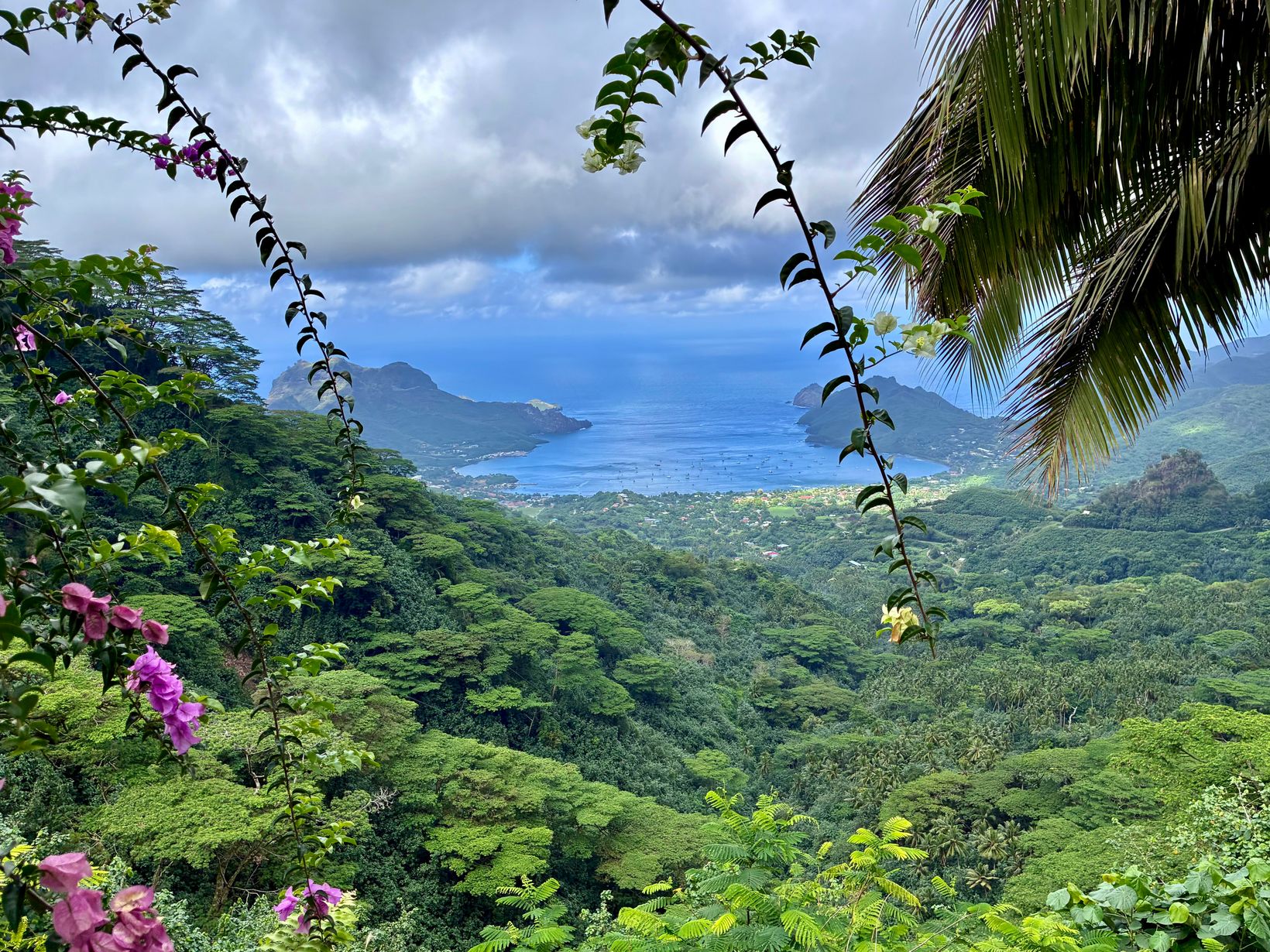
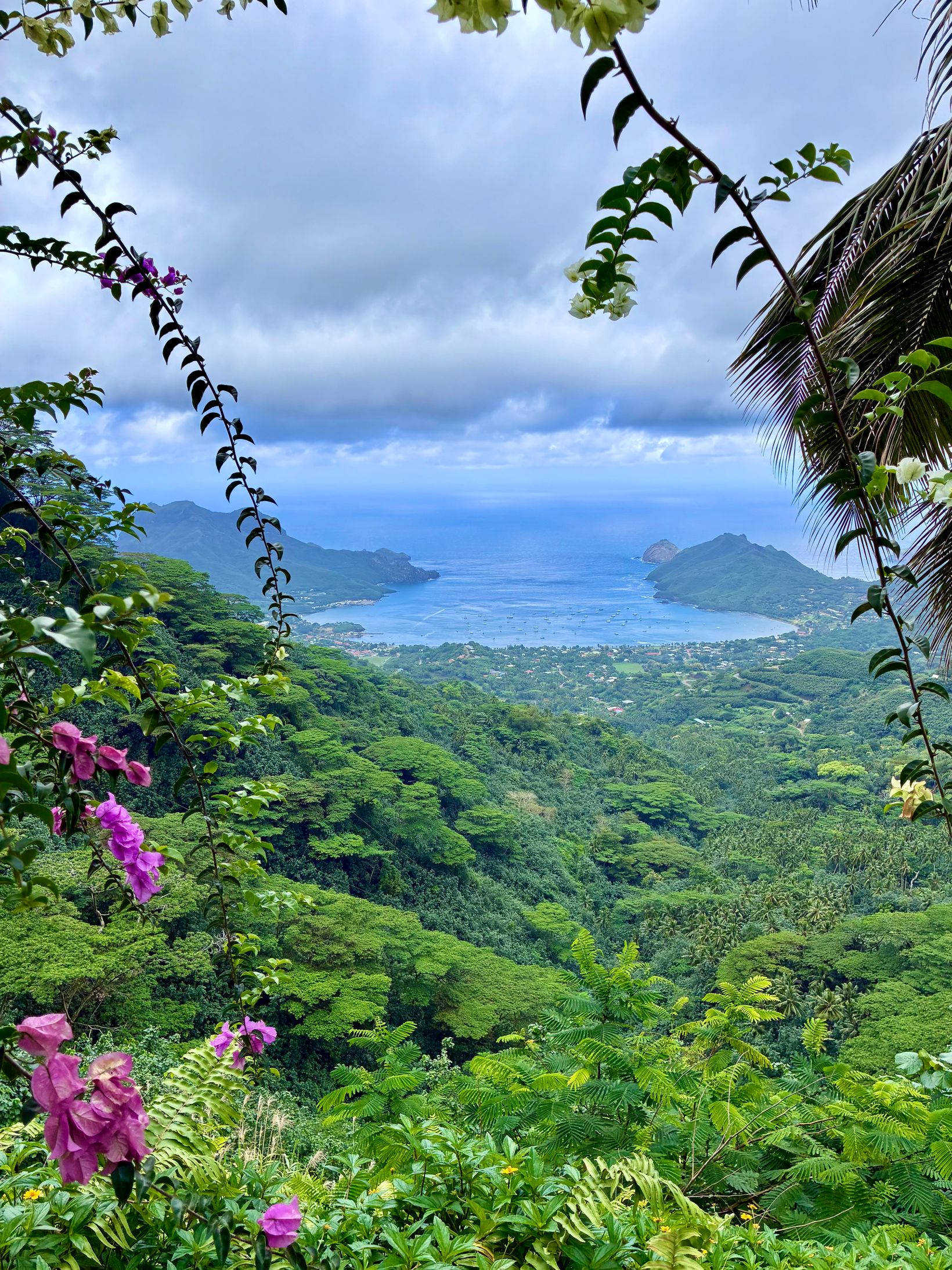
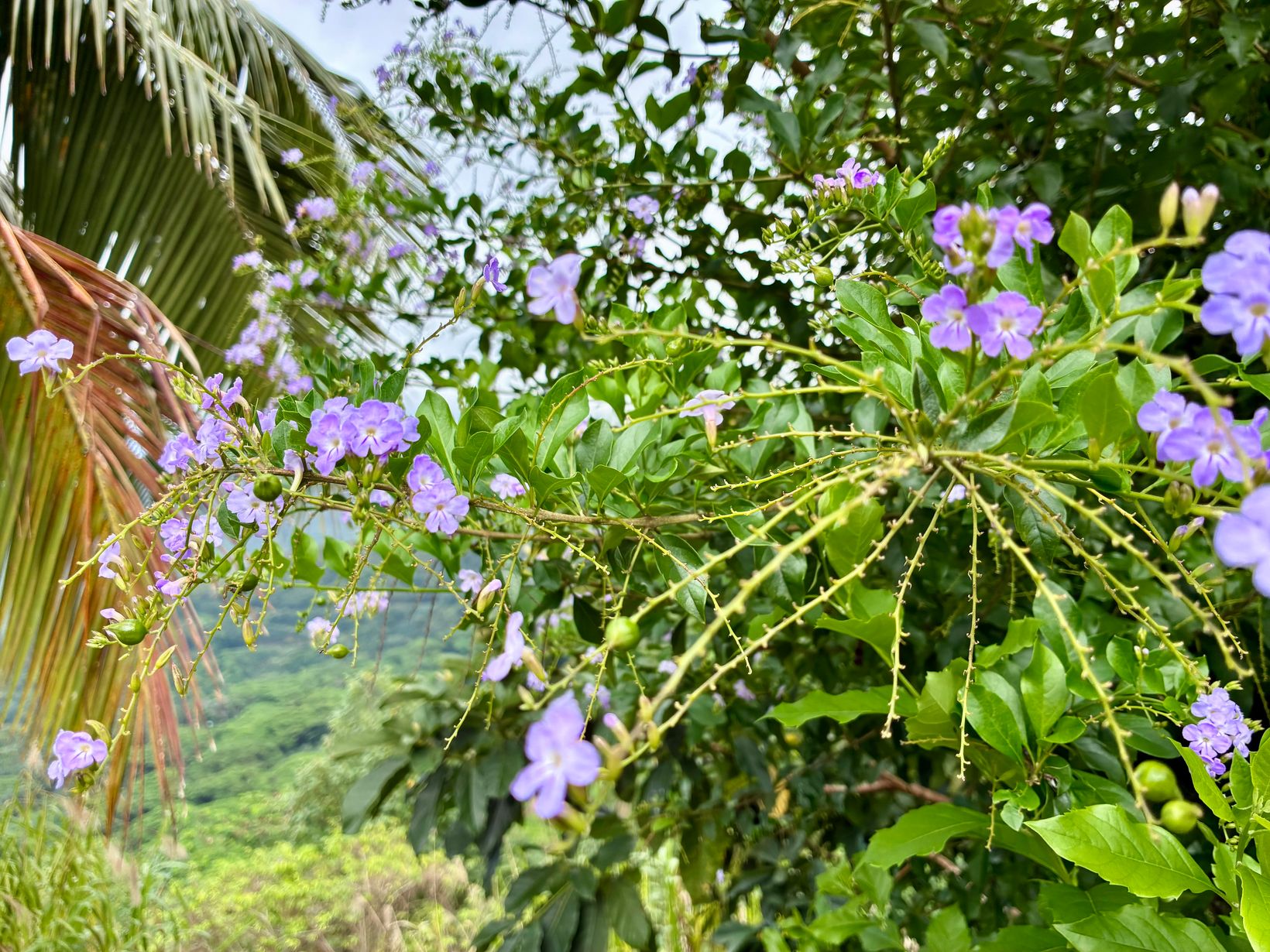
The village behind the first mountain has a bakery. It has croissants and pain au chocolat. When it comes to coffee we are risk-averse and rather brought our own. Now we are ready for the excursion. Nonetheless, we decide to save the Herman Melville memorial for later. Back in the days he reached the island aboard a whaling ship and seized the chance to escape the miserable working conditions. Like so many, he too left with a lasting impression of the Marquesas, and Nuku Hiva became the setting for his first novel. For us a little circle closes. Barely a year ago we were on Nantucket, which is the setting for Melville’s Moby Dick. From there many whalers set out for the hunting grounds of Polynesia. Like us, they came by ship. Only we now have the luck of no longer having to sail around Cape Horn.
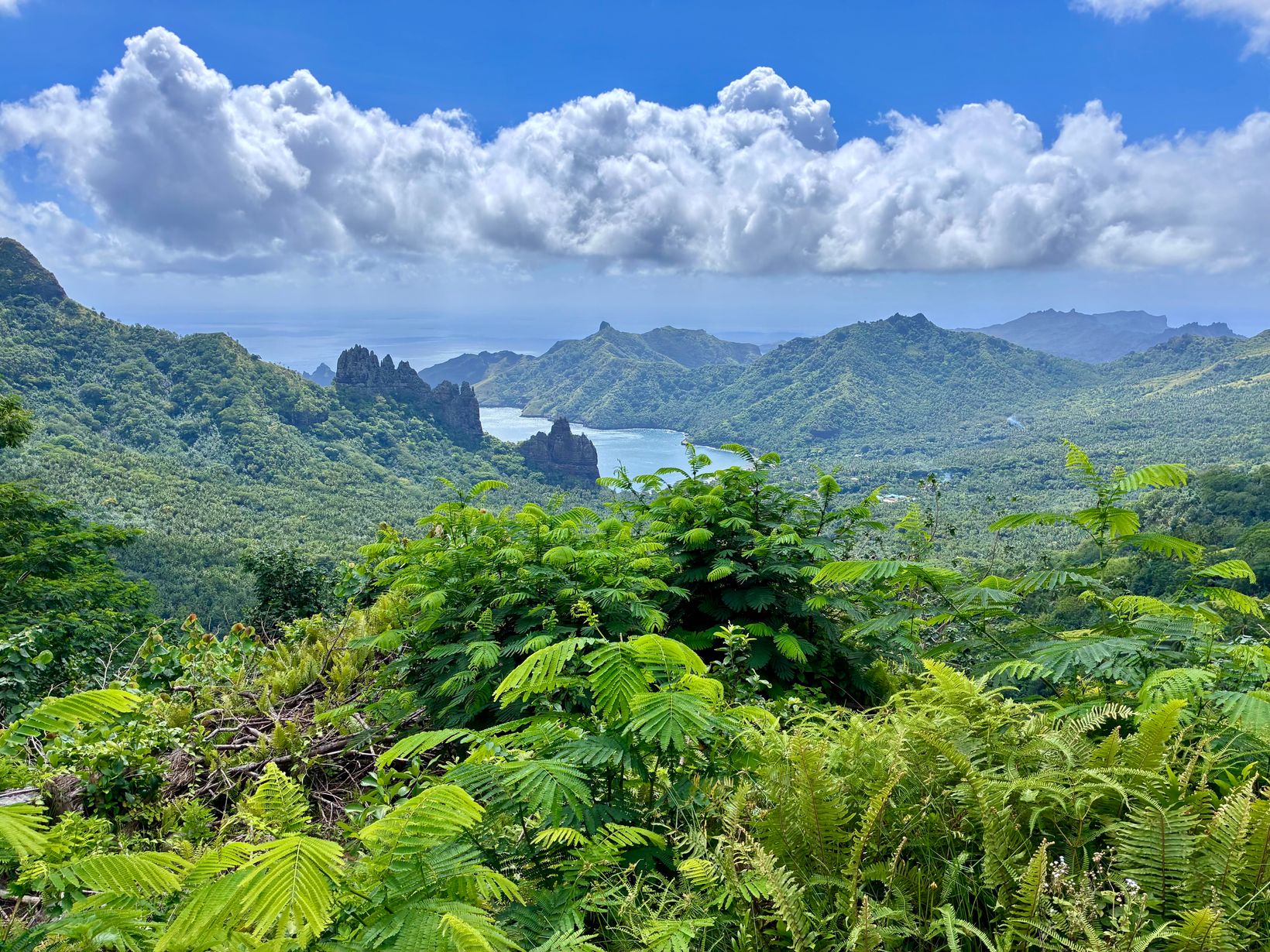
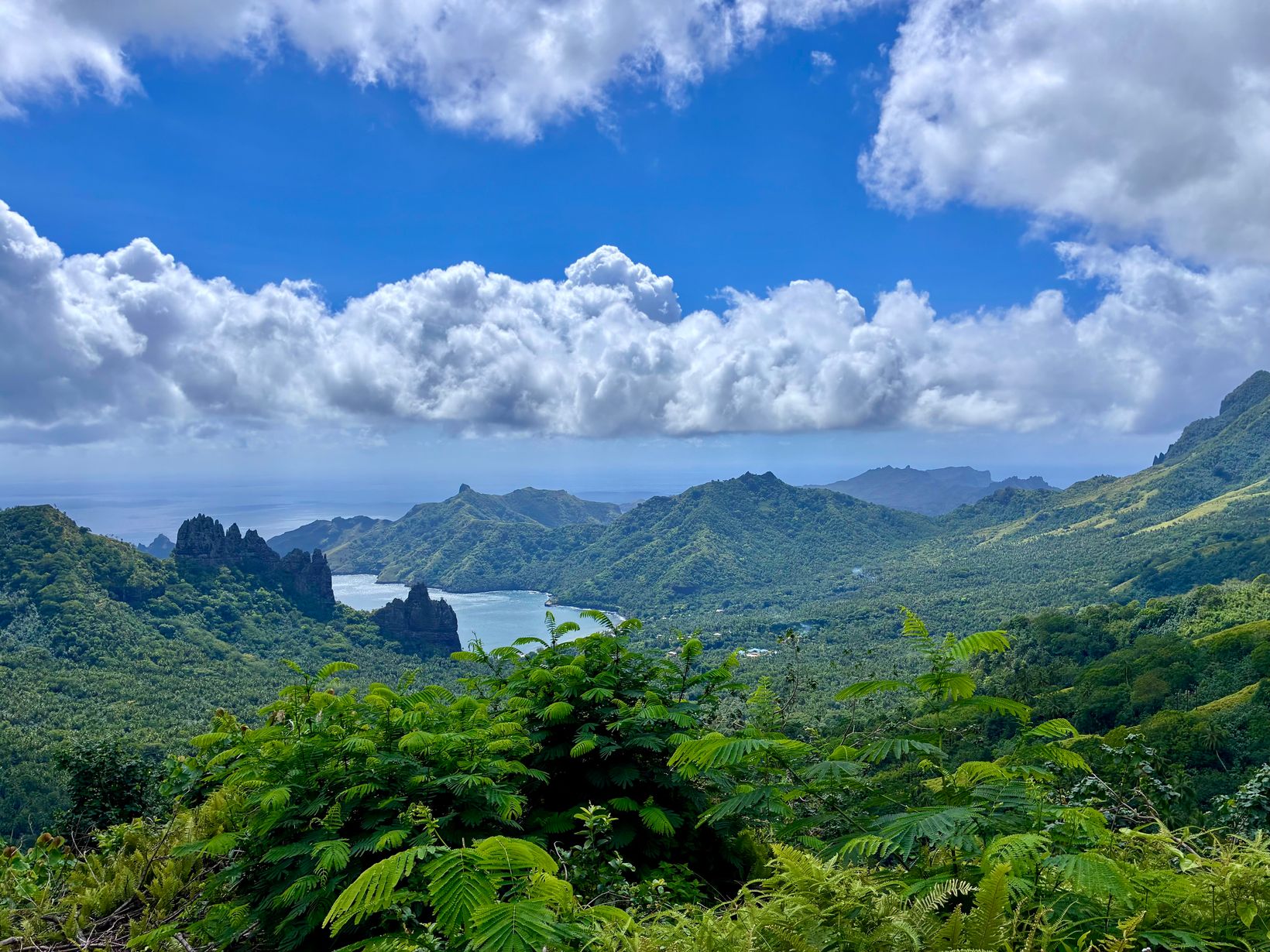
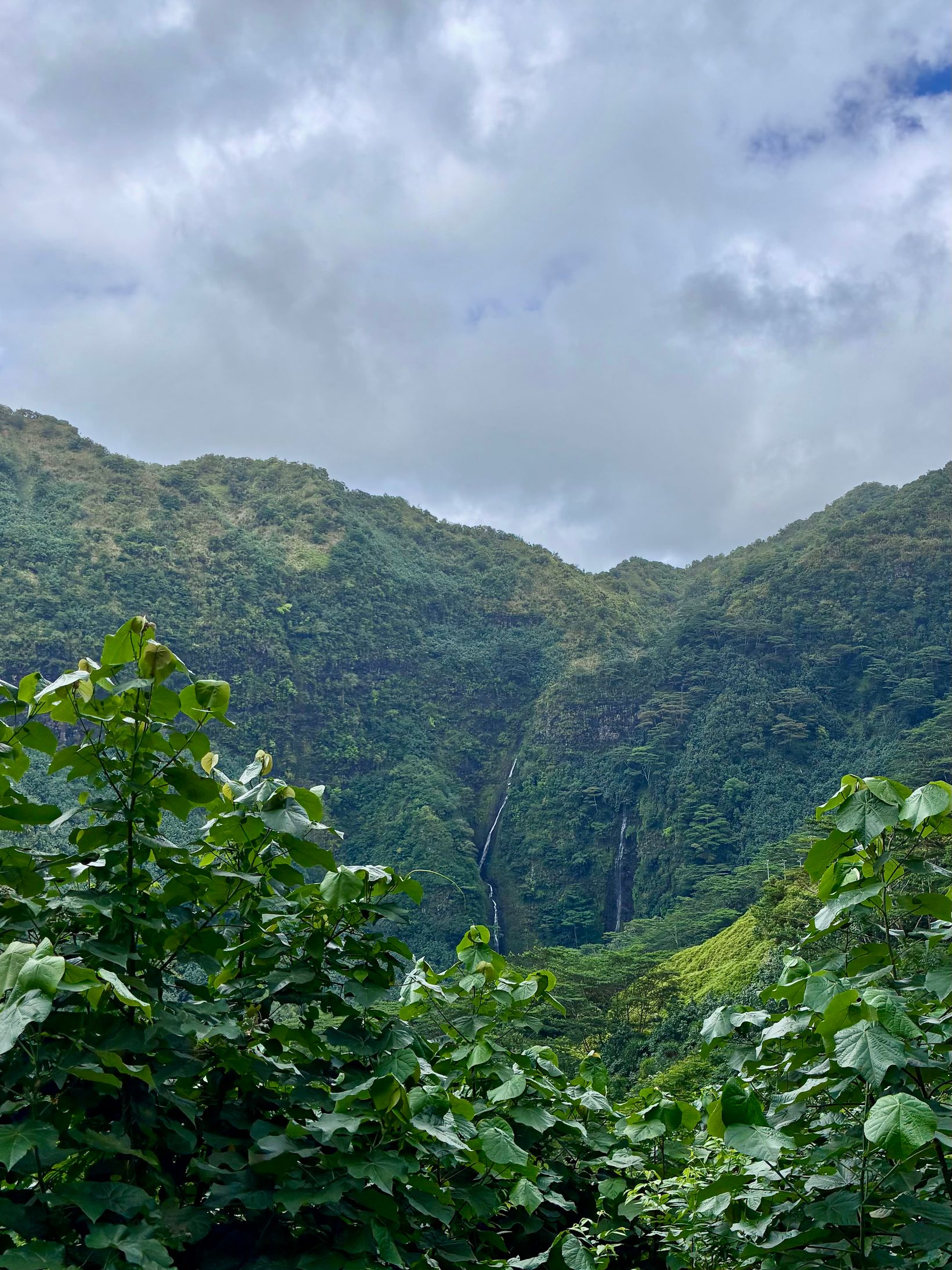
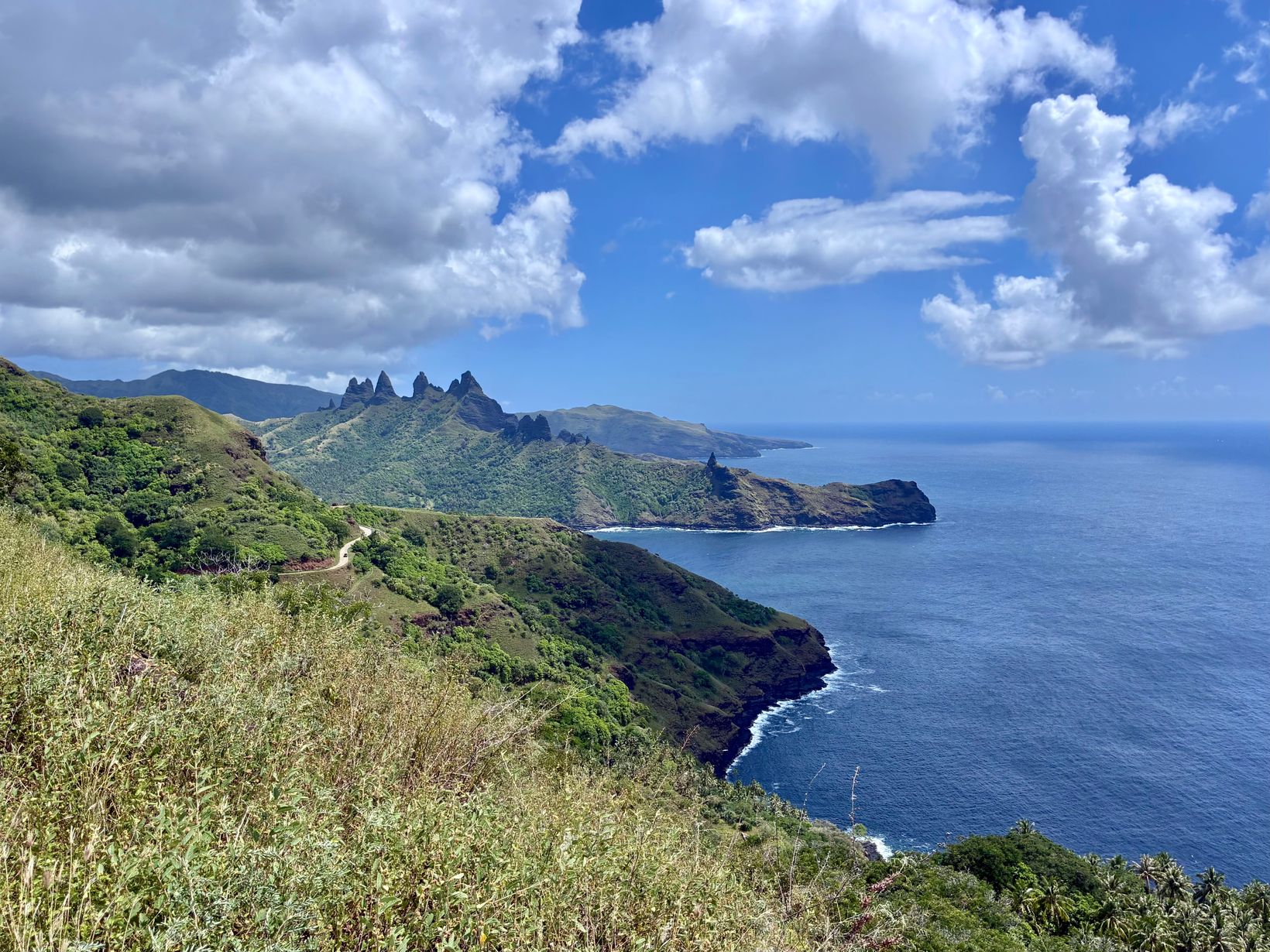
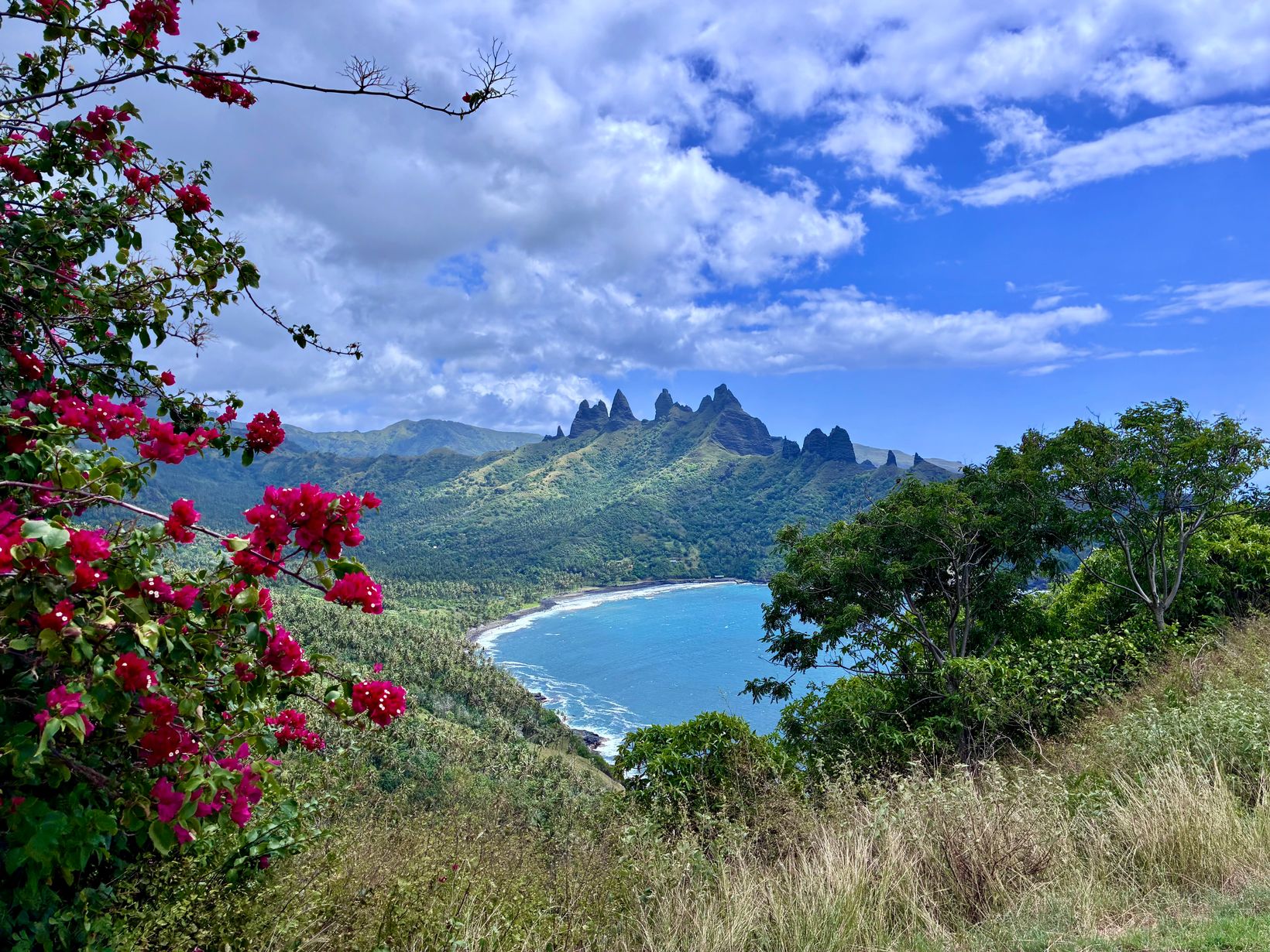
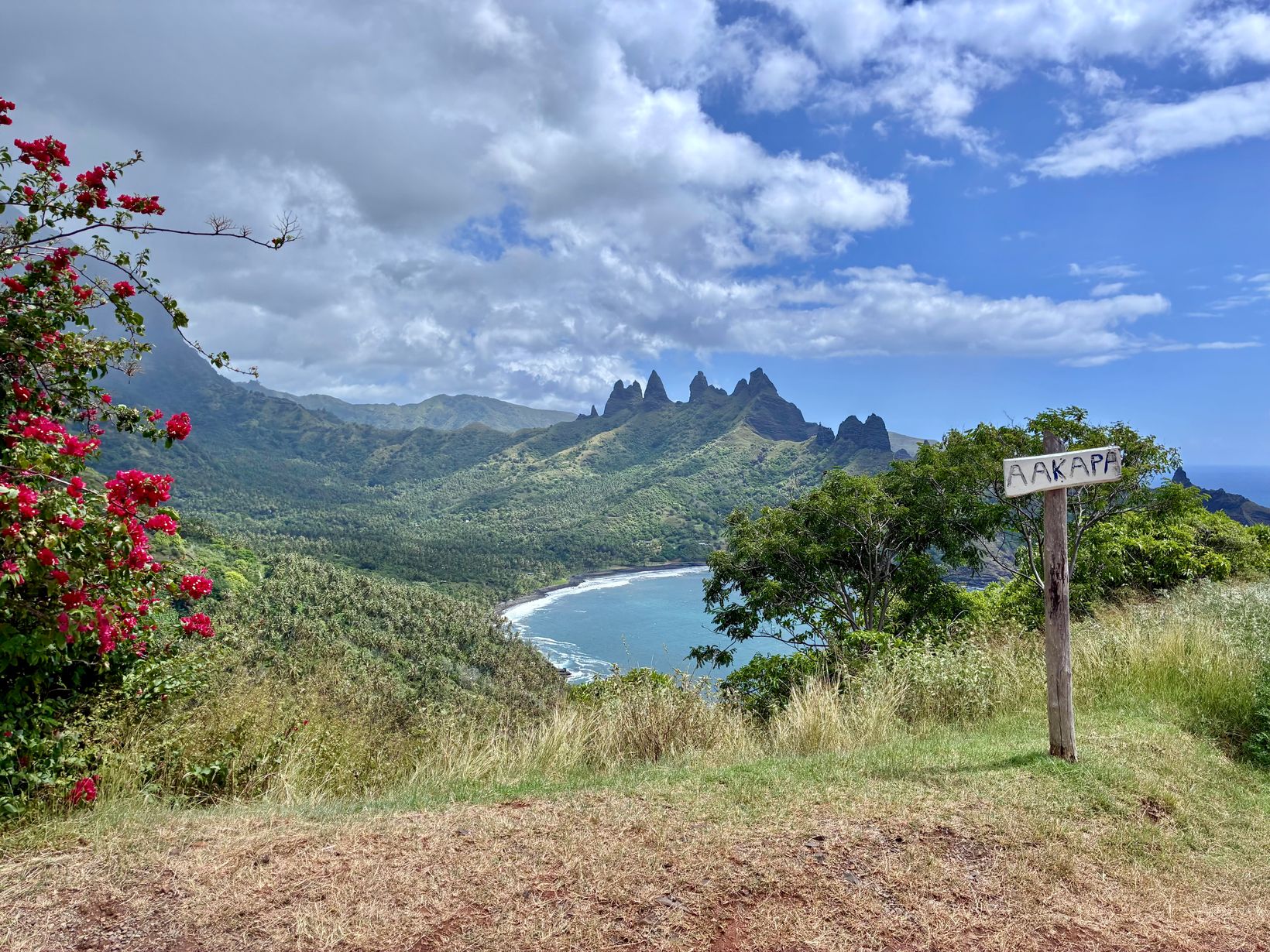
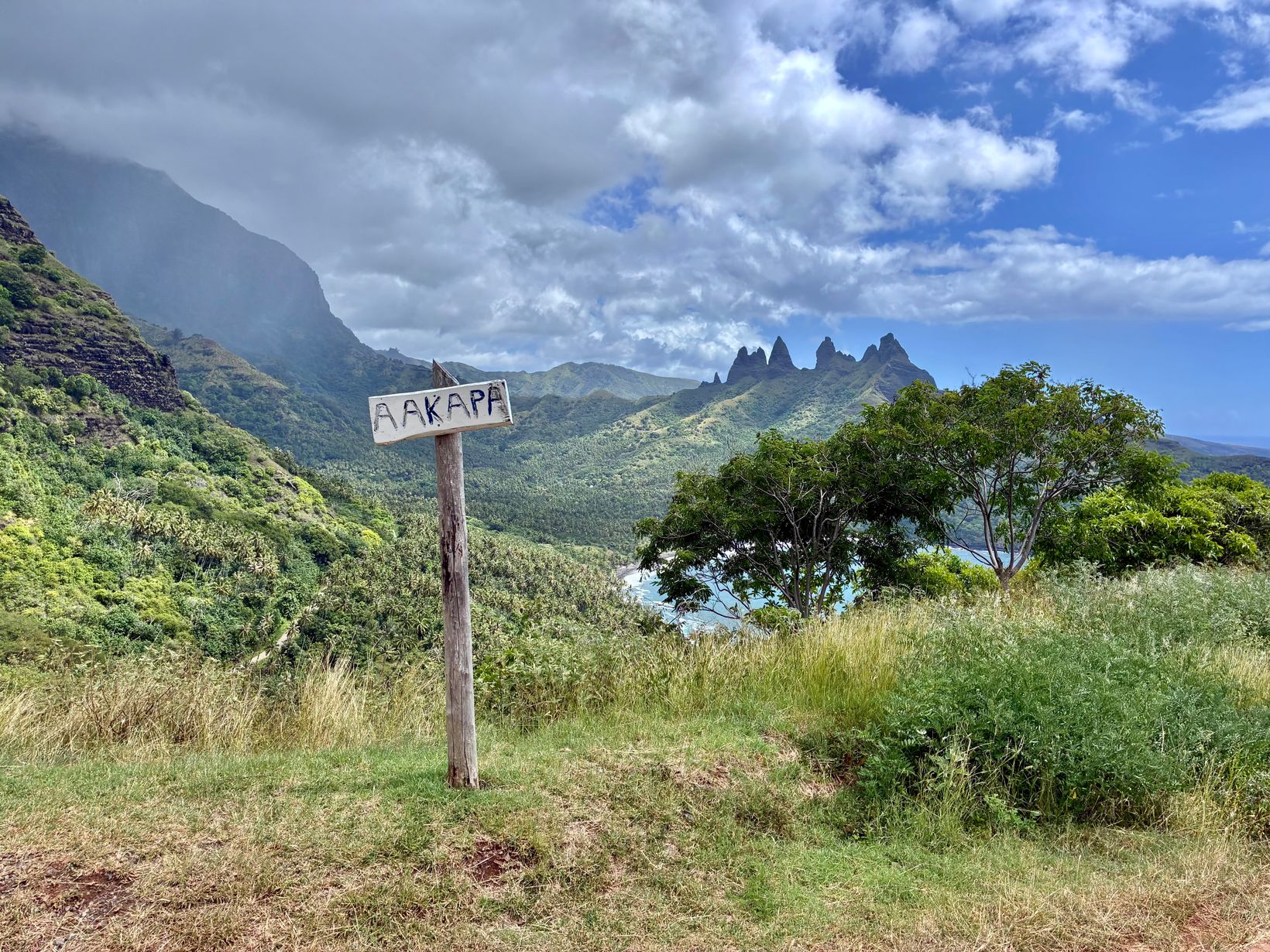
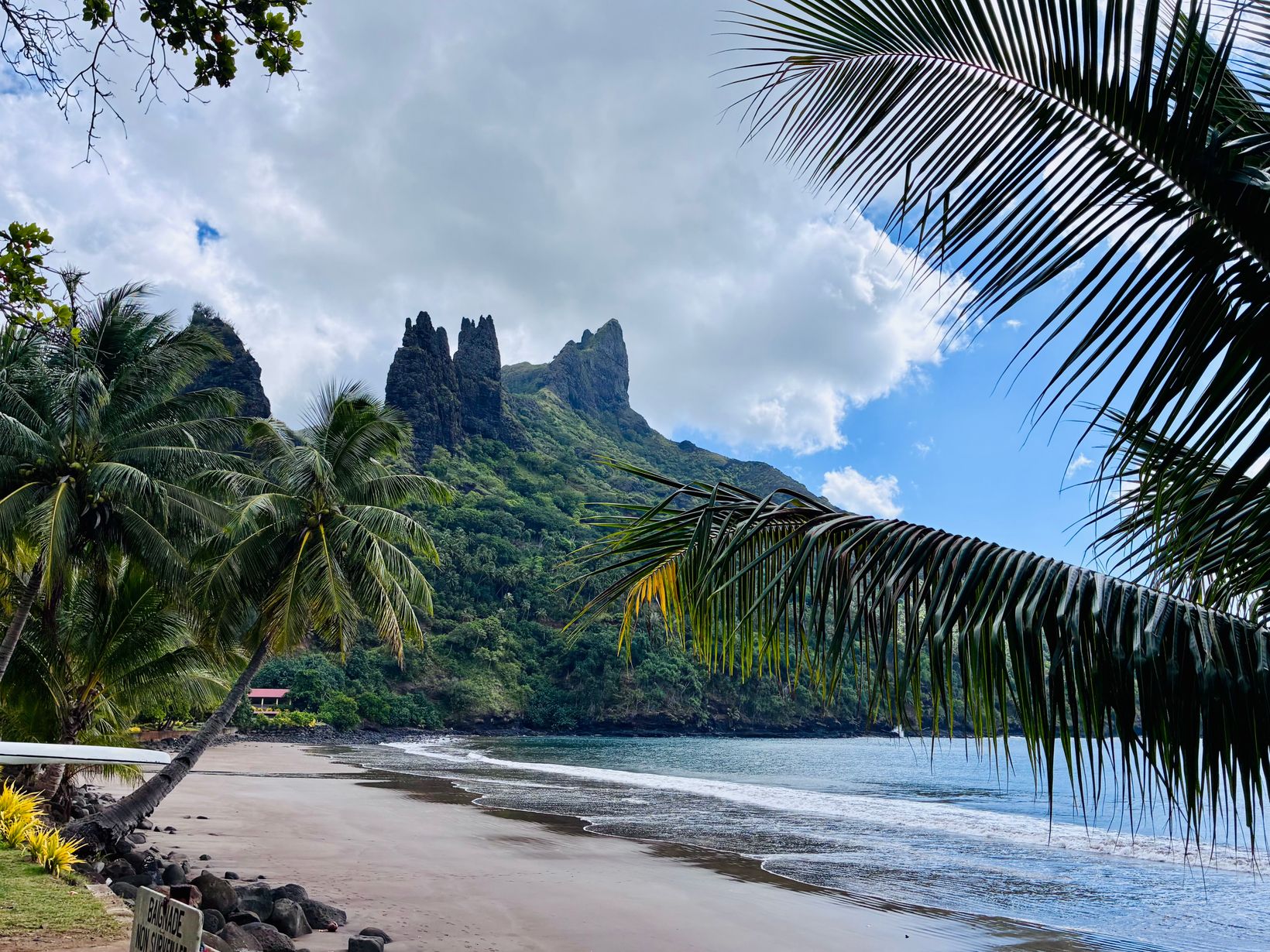
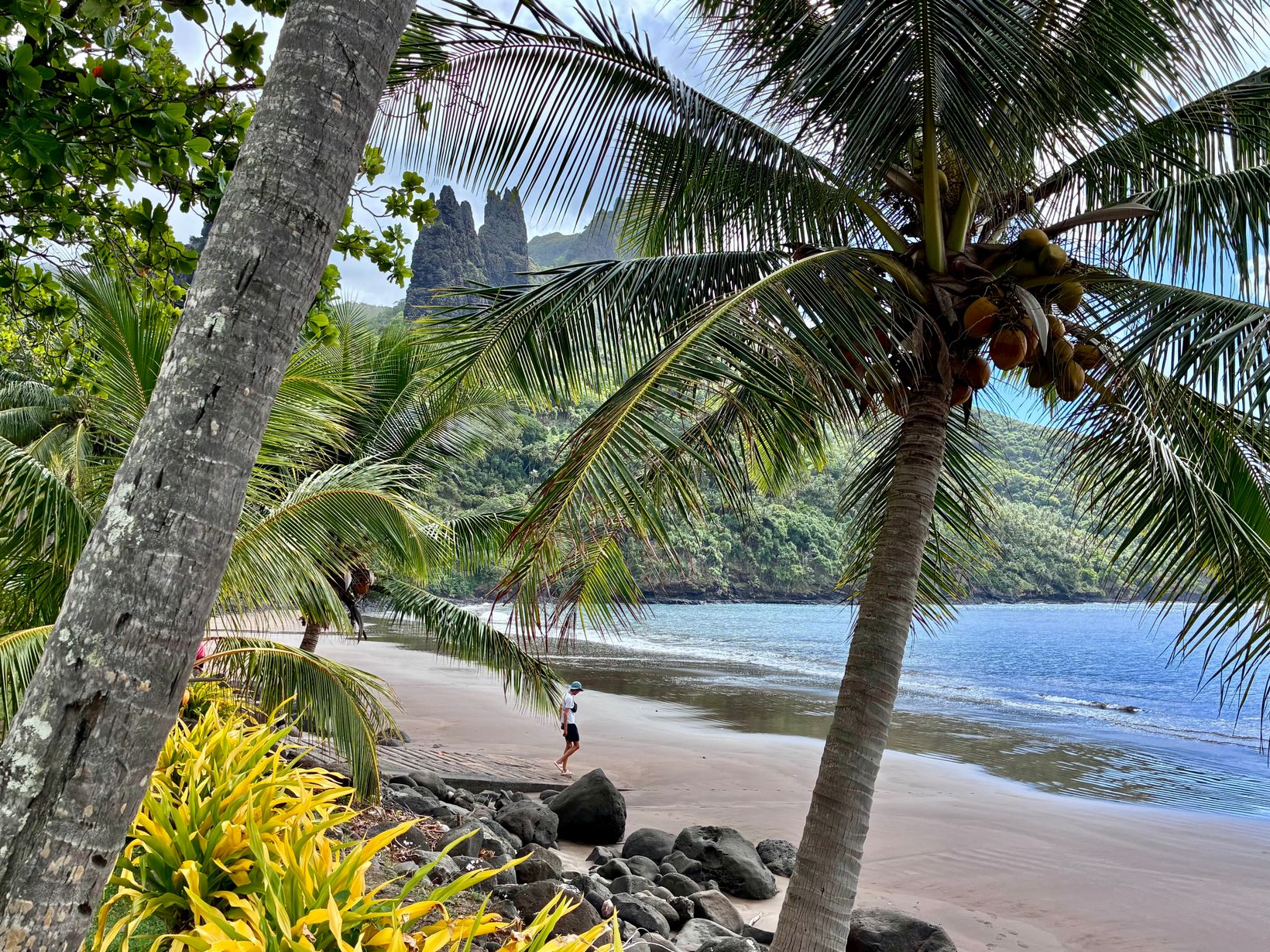
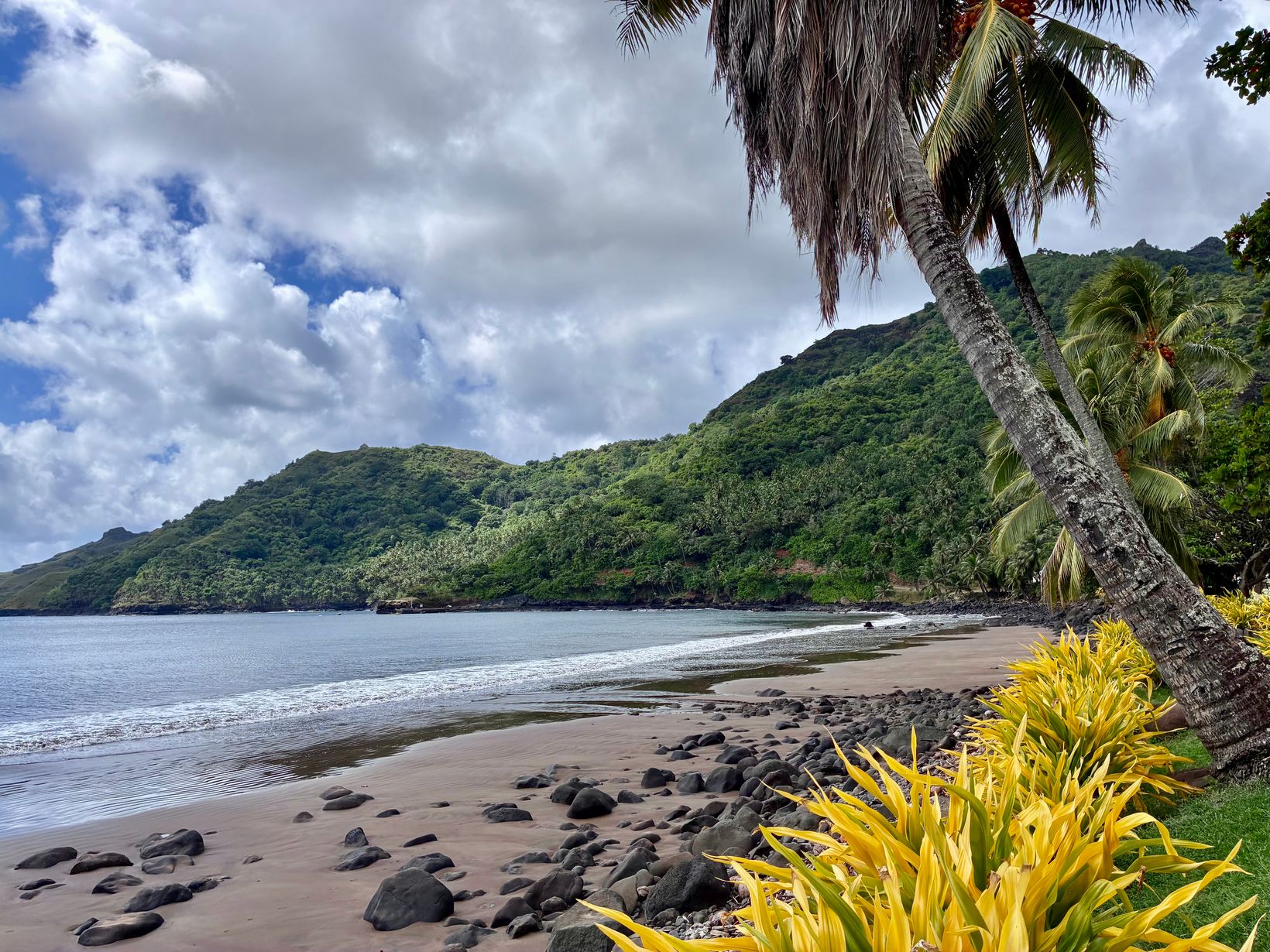
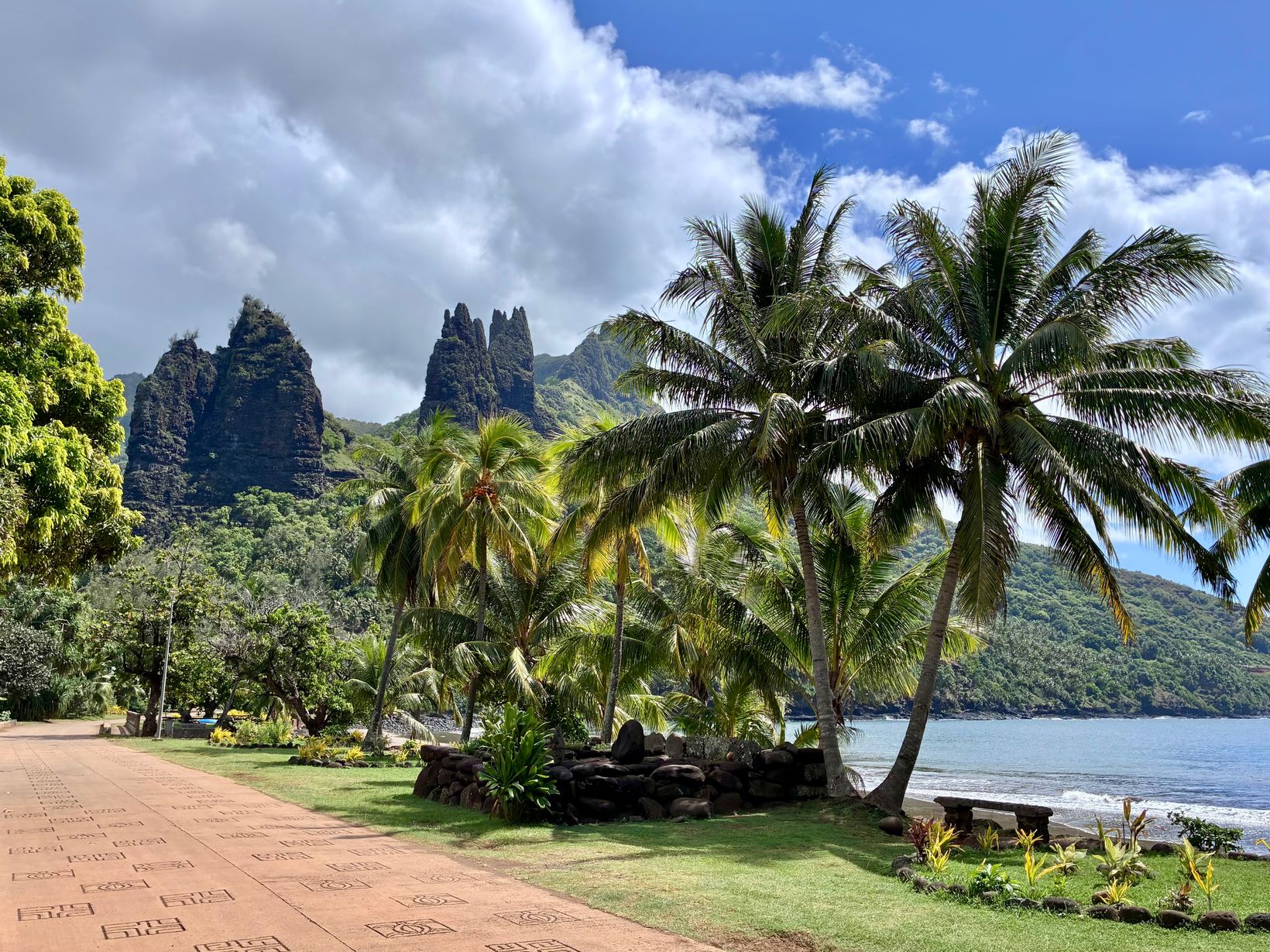
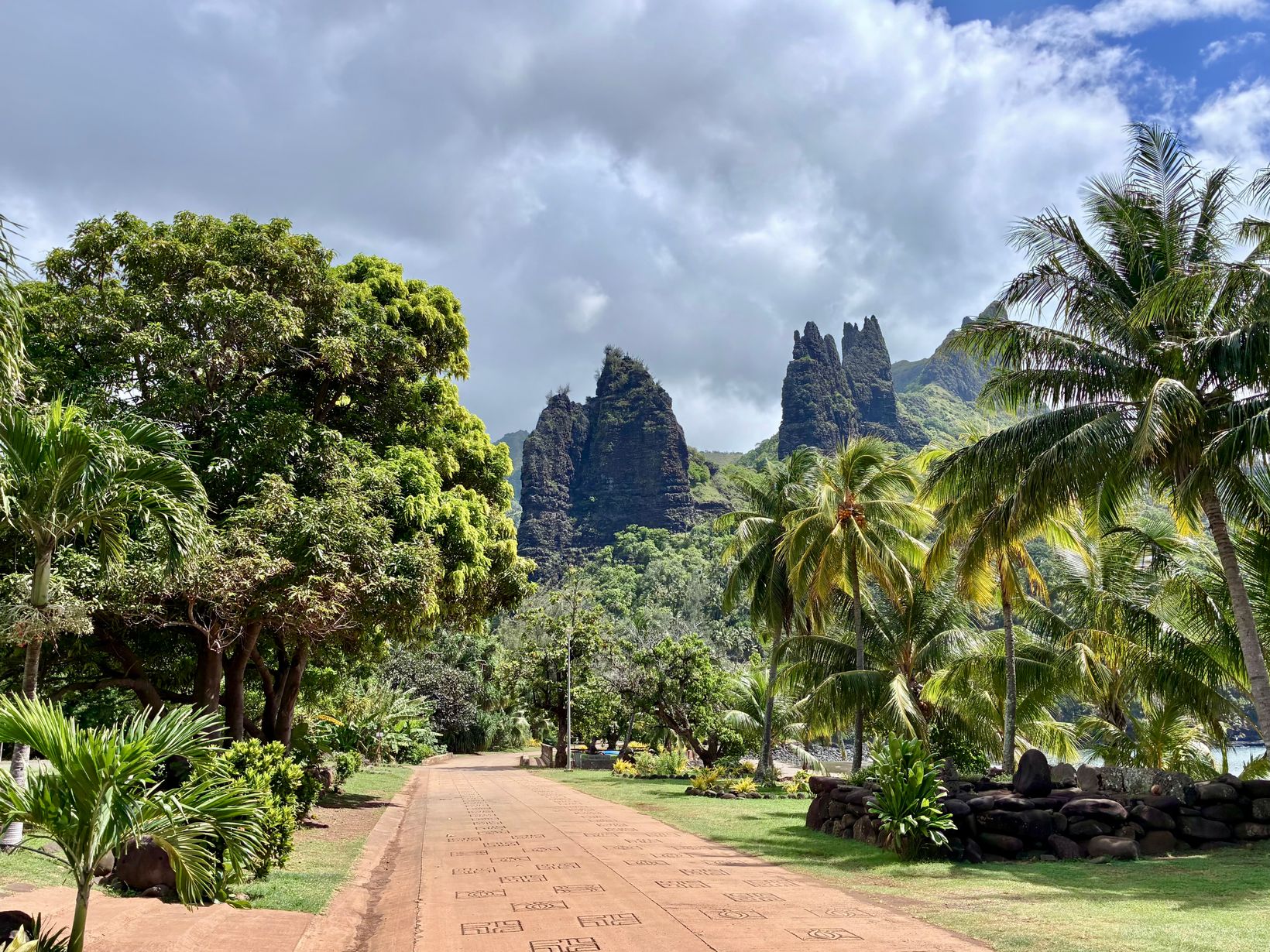
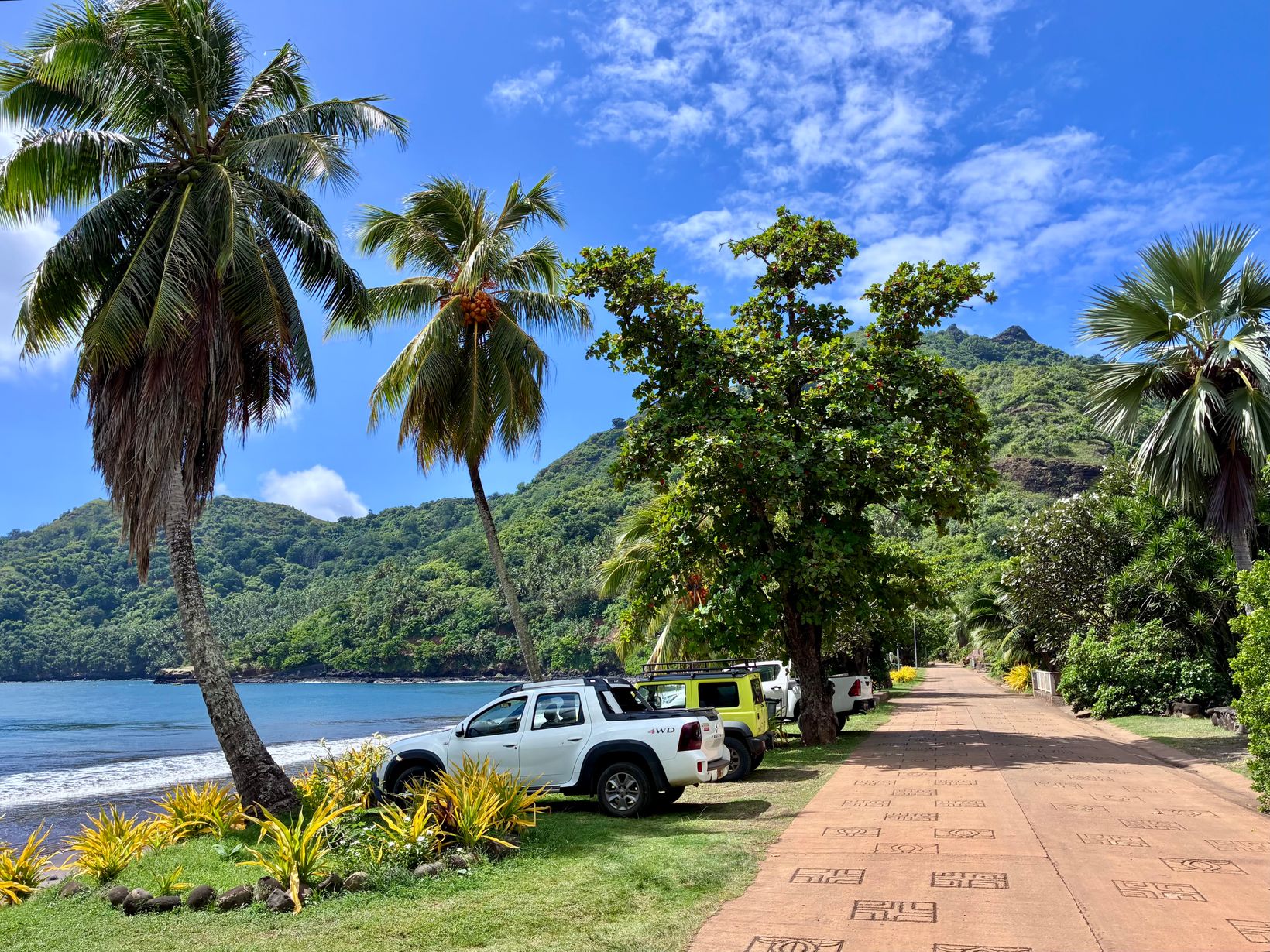
Scenic roads lead on to the north, to Hatiheu and Akaapa, where the world feels very, very far away. One view follows the next, one impression the other. There are places in this world you never forget. The coast of Nuku Hiva is surely one of them. After a good long while of marveling, we reset our senses over a lunch break at what is probably the only restaurant outside Taiohae.
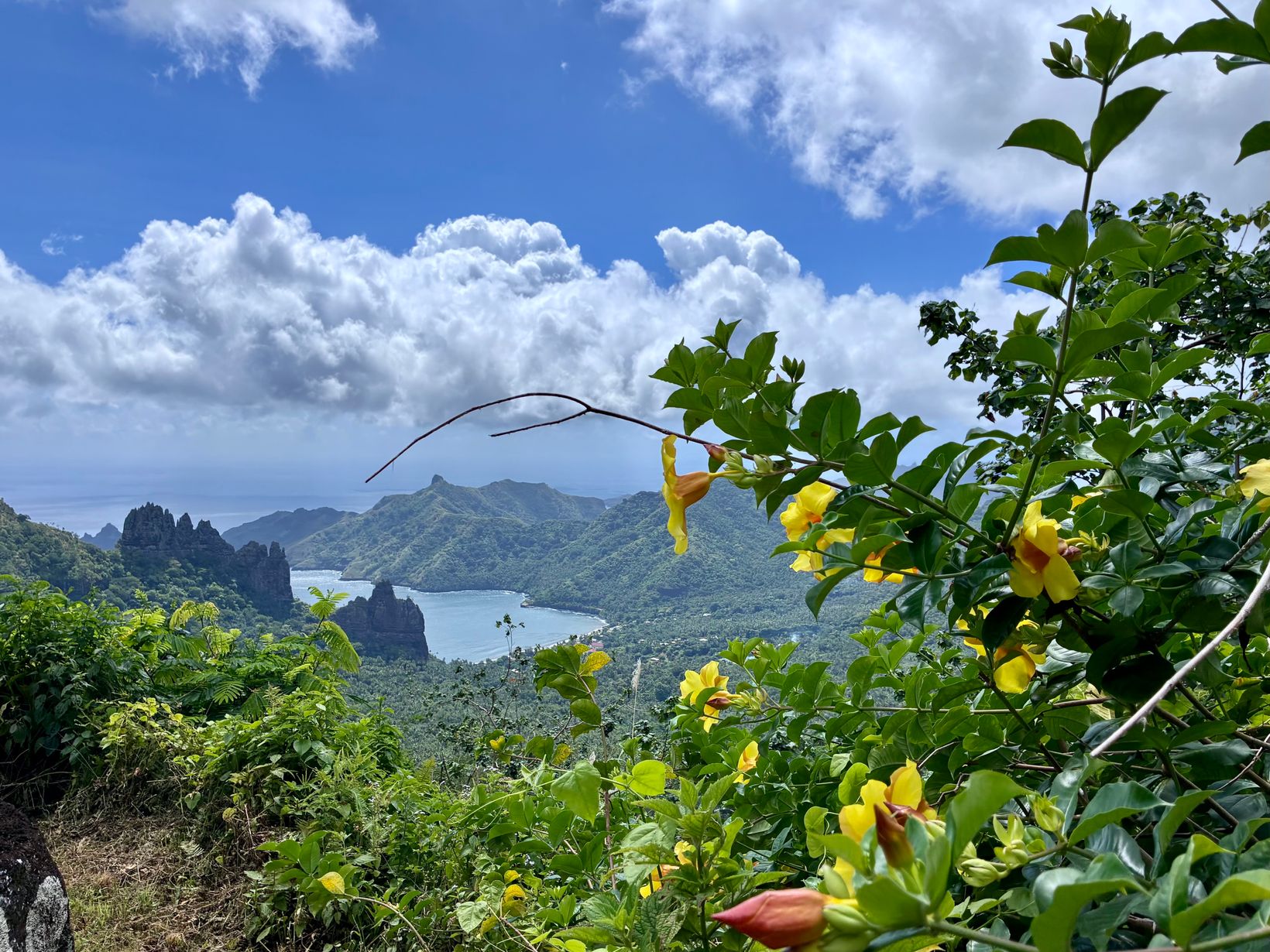
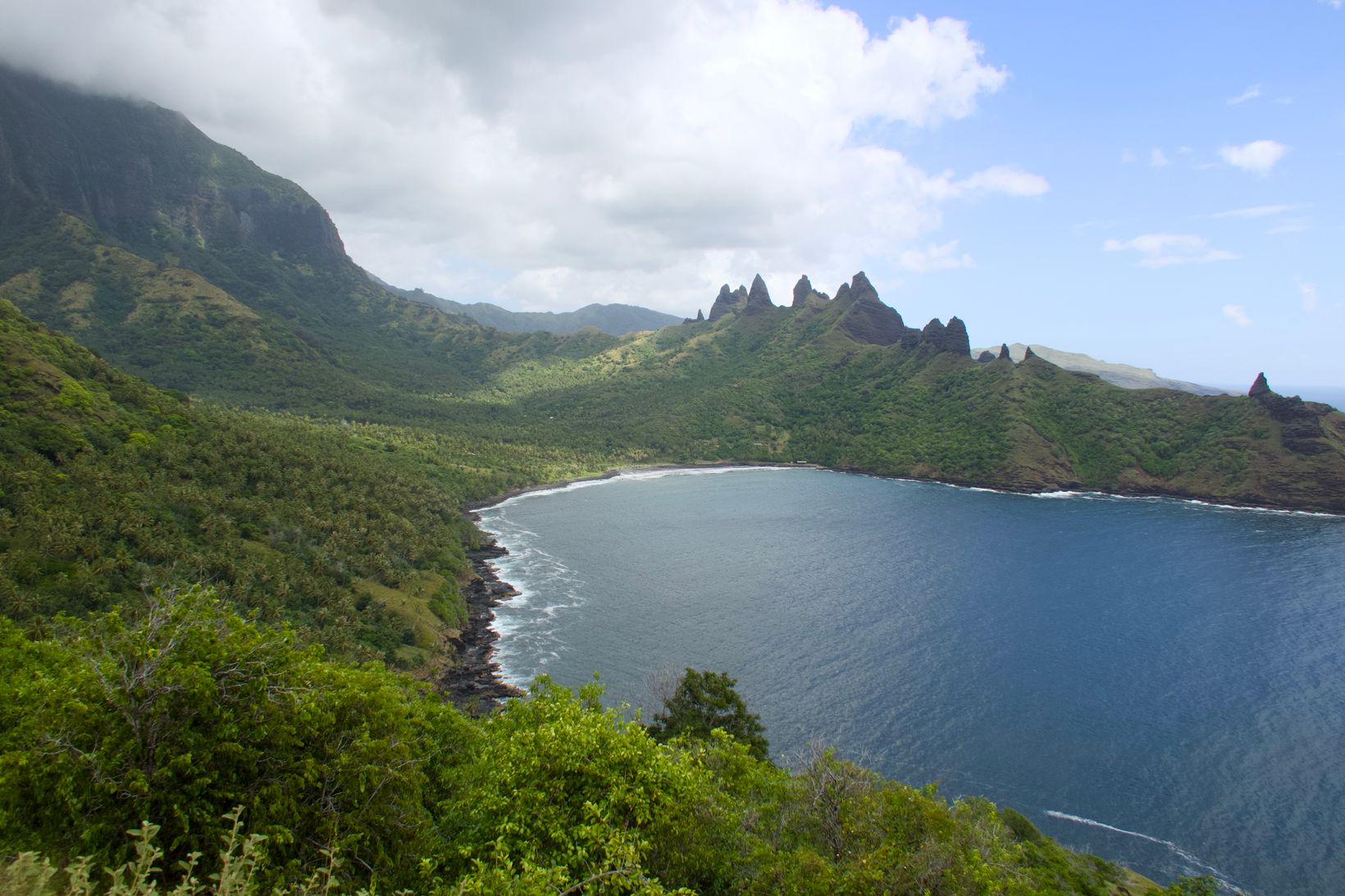
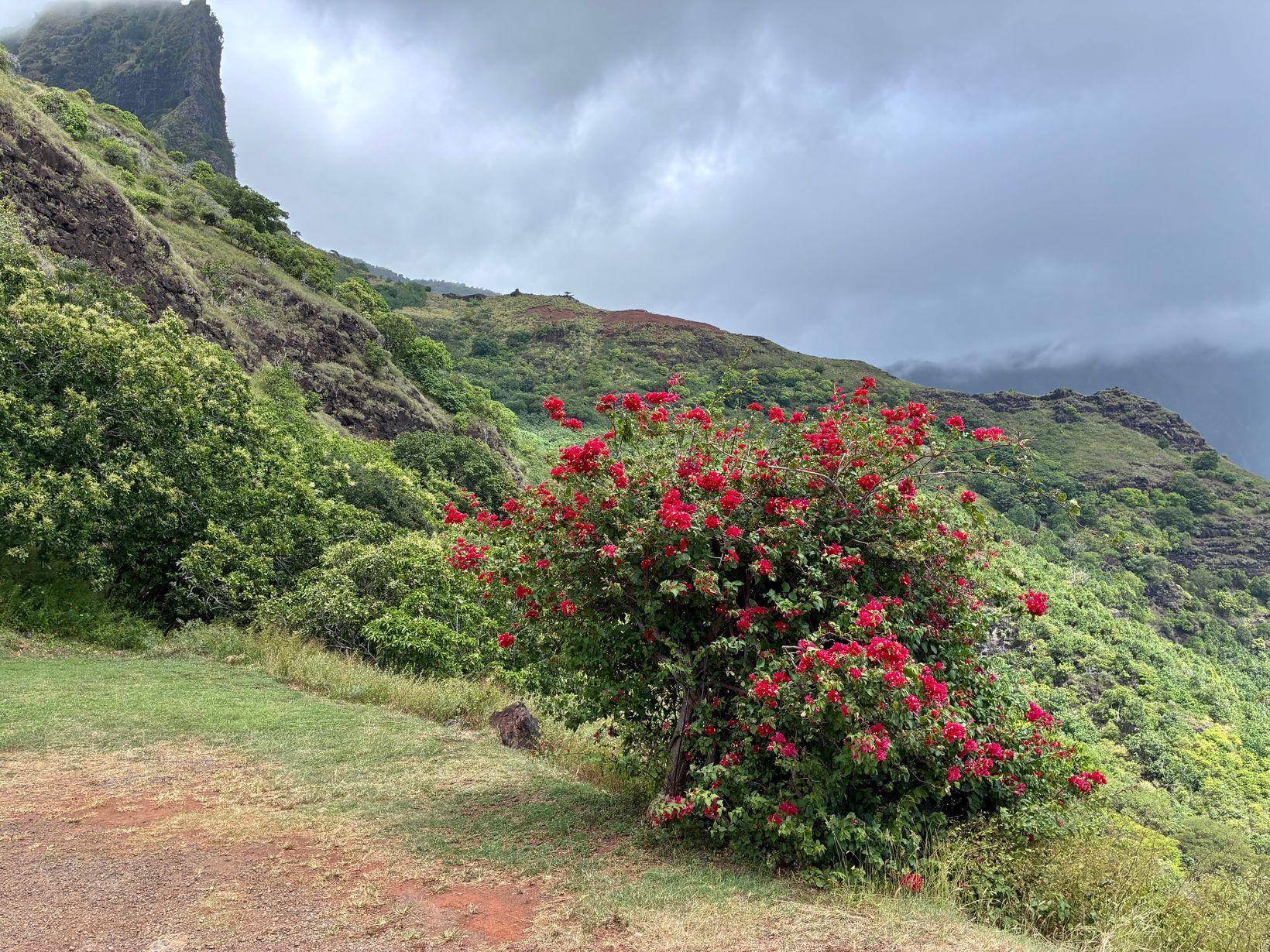
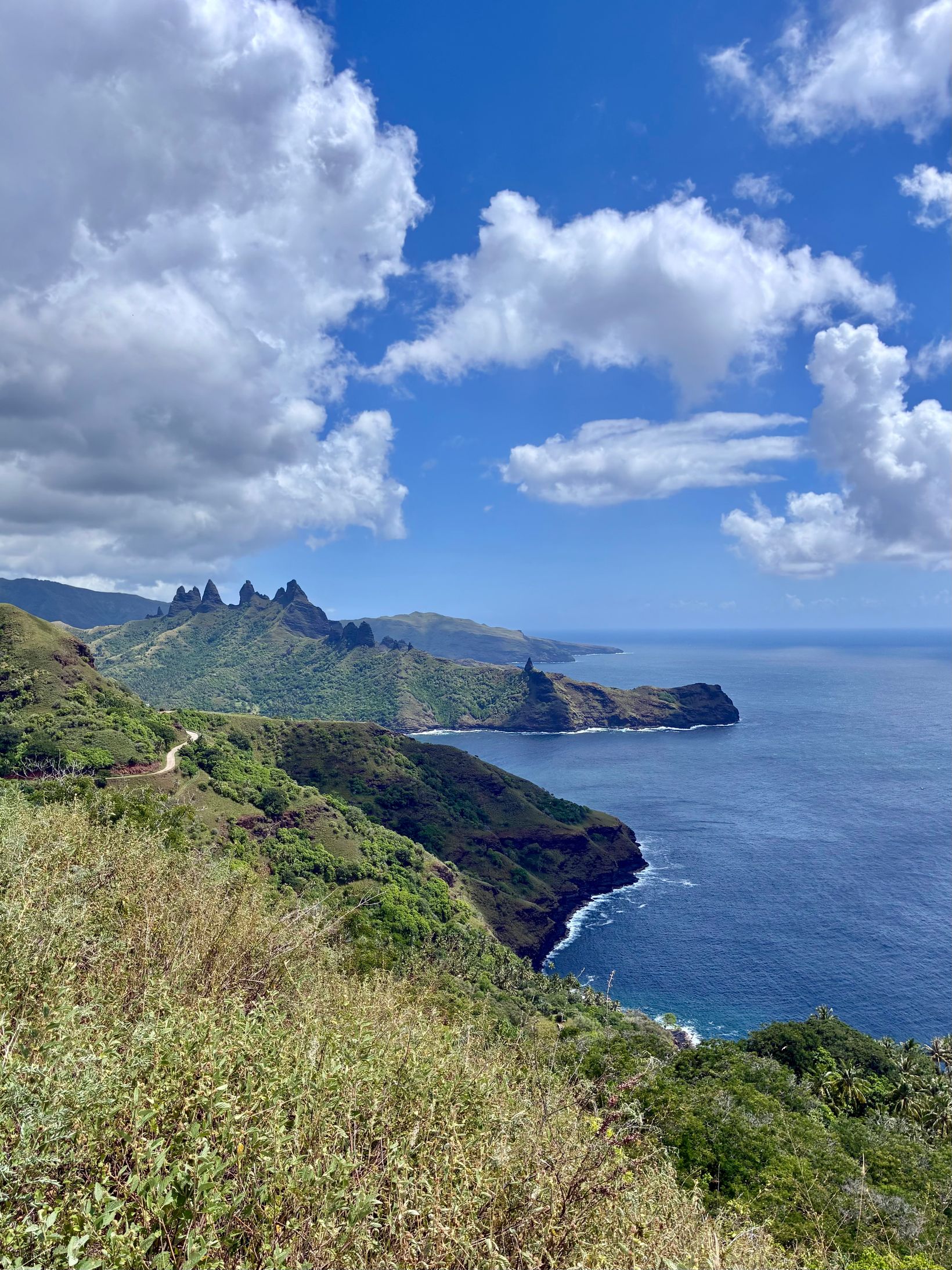
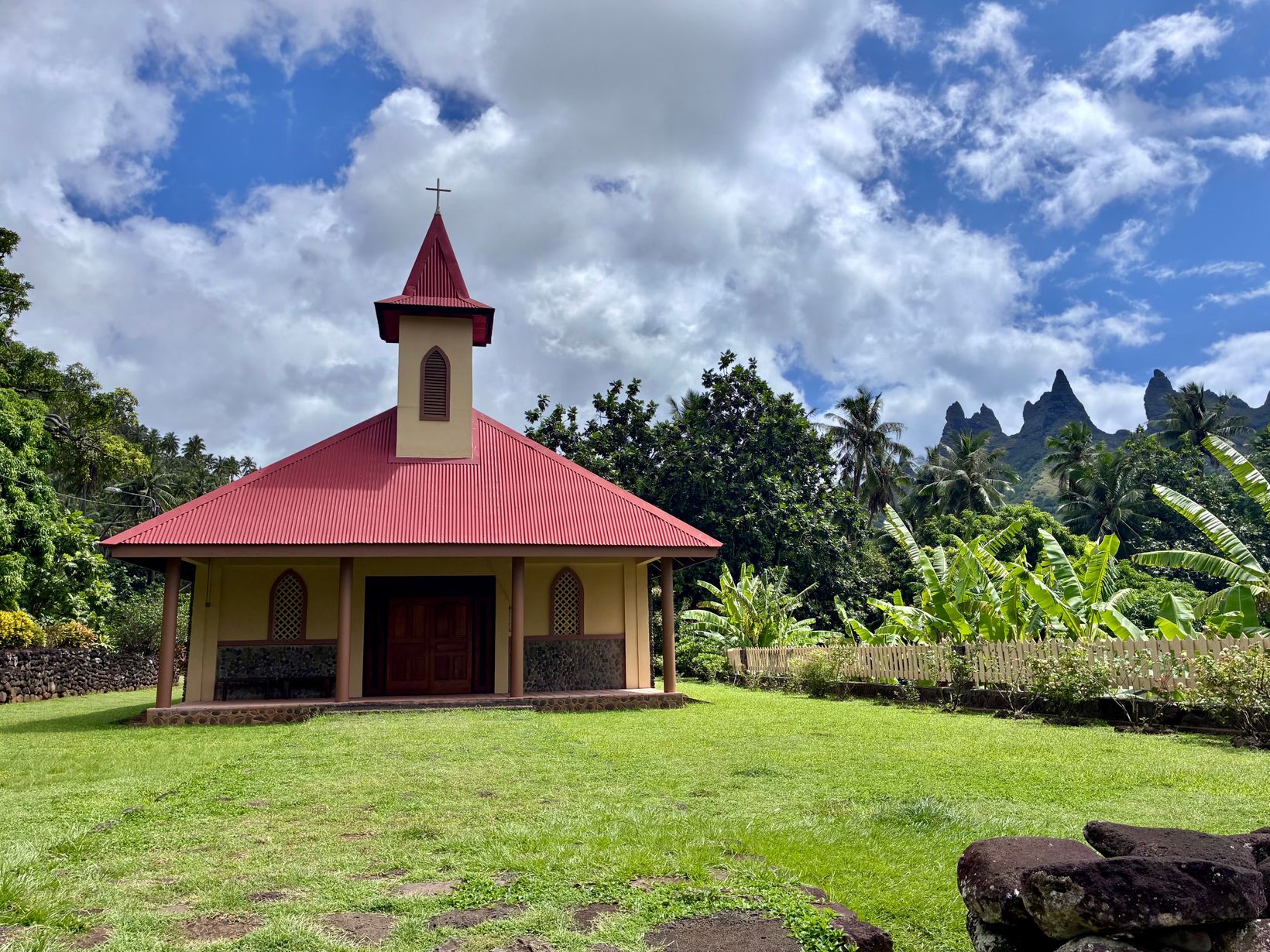
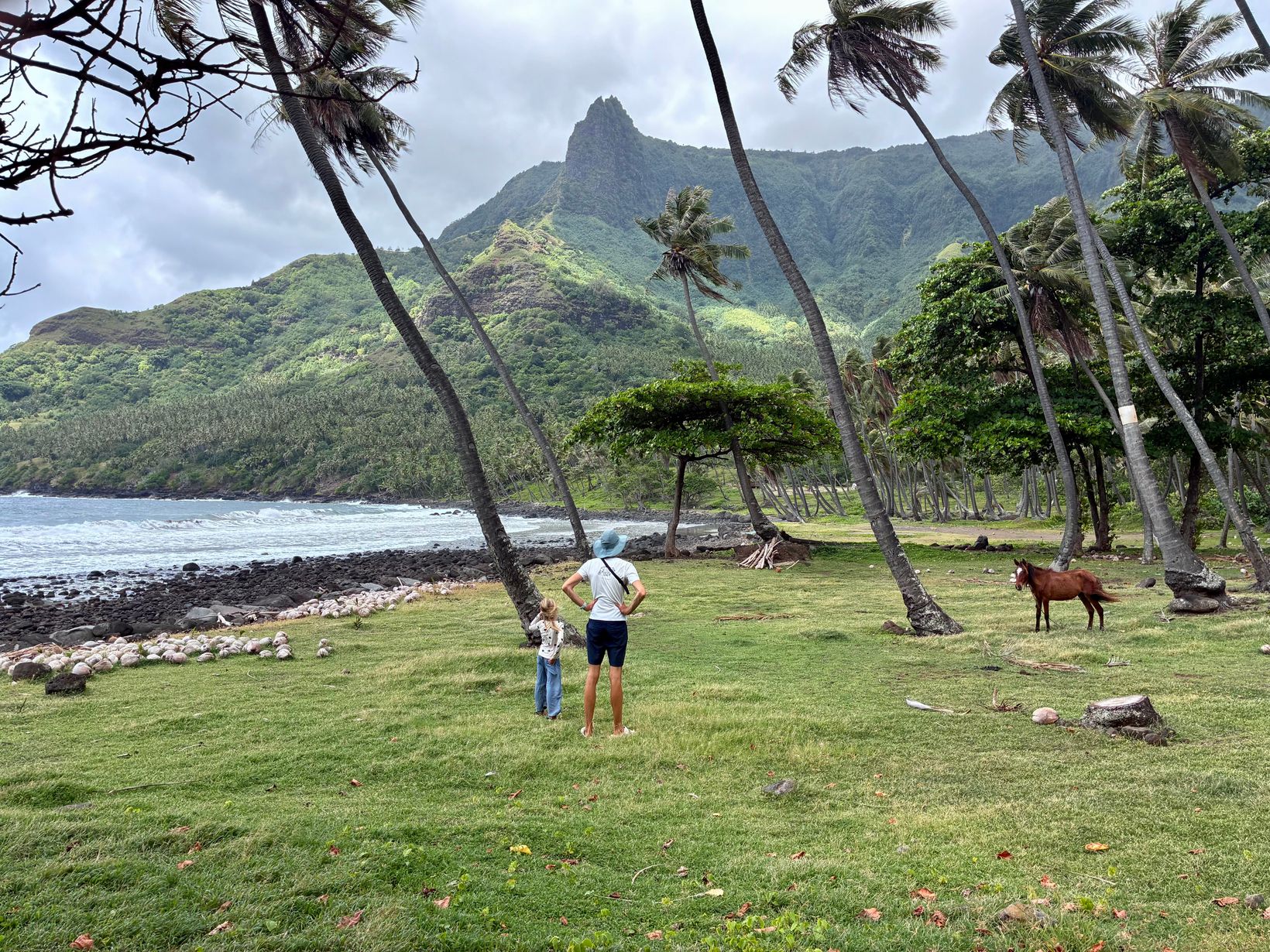
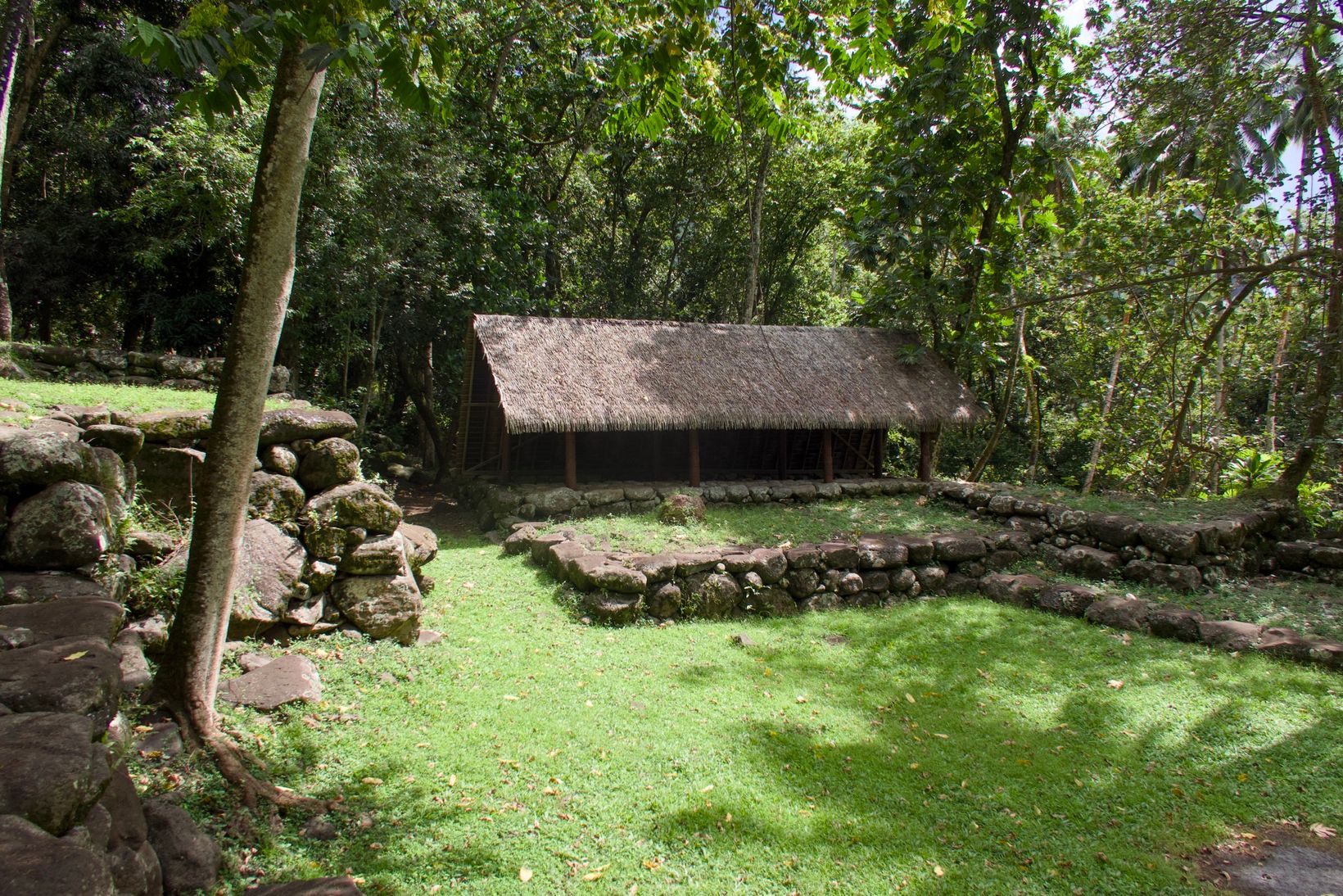
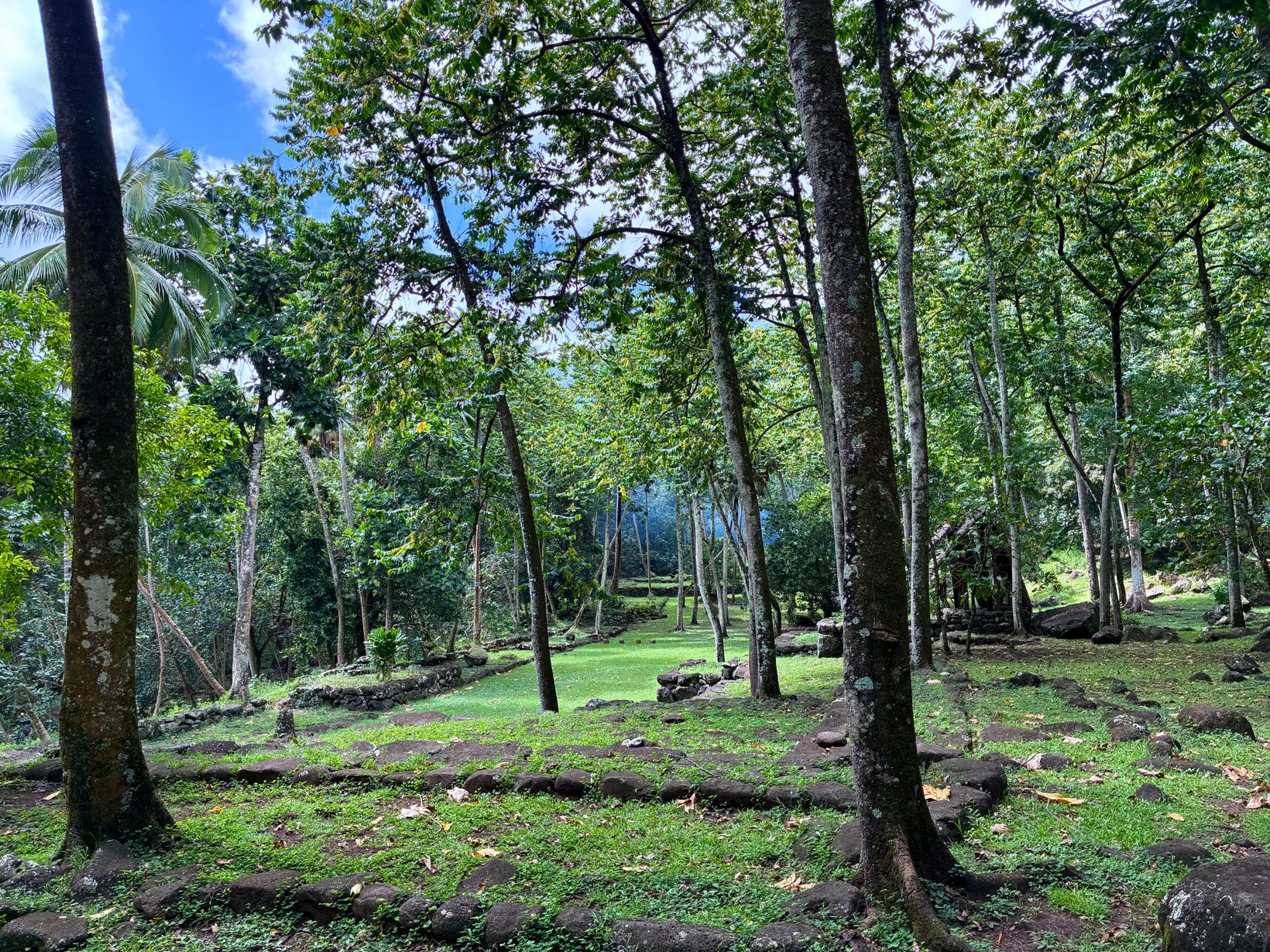
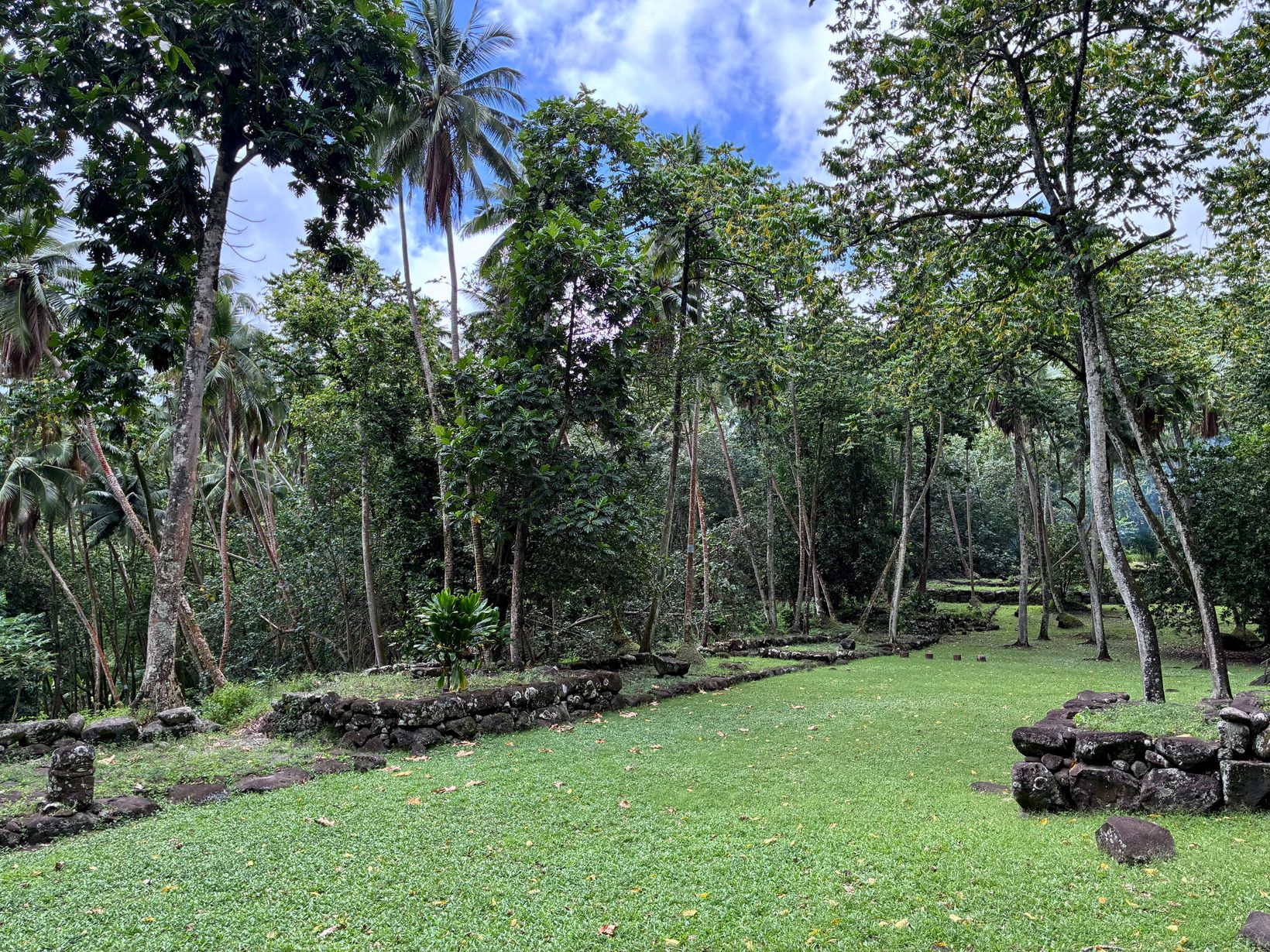
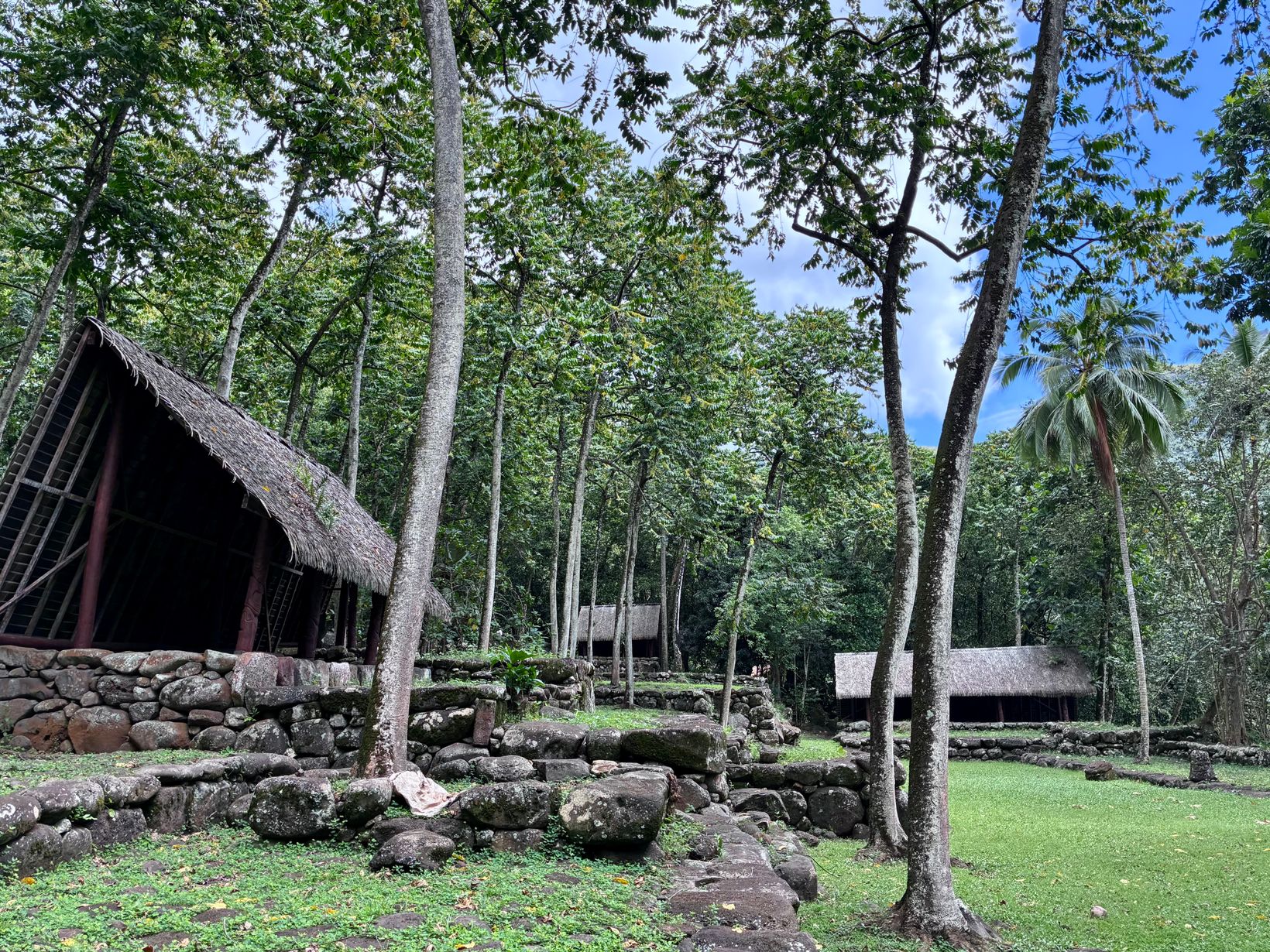
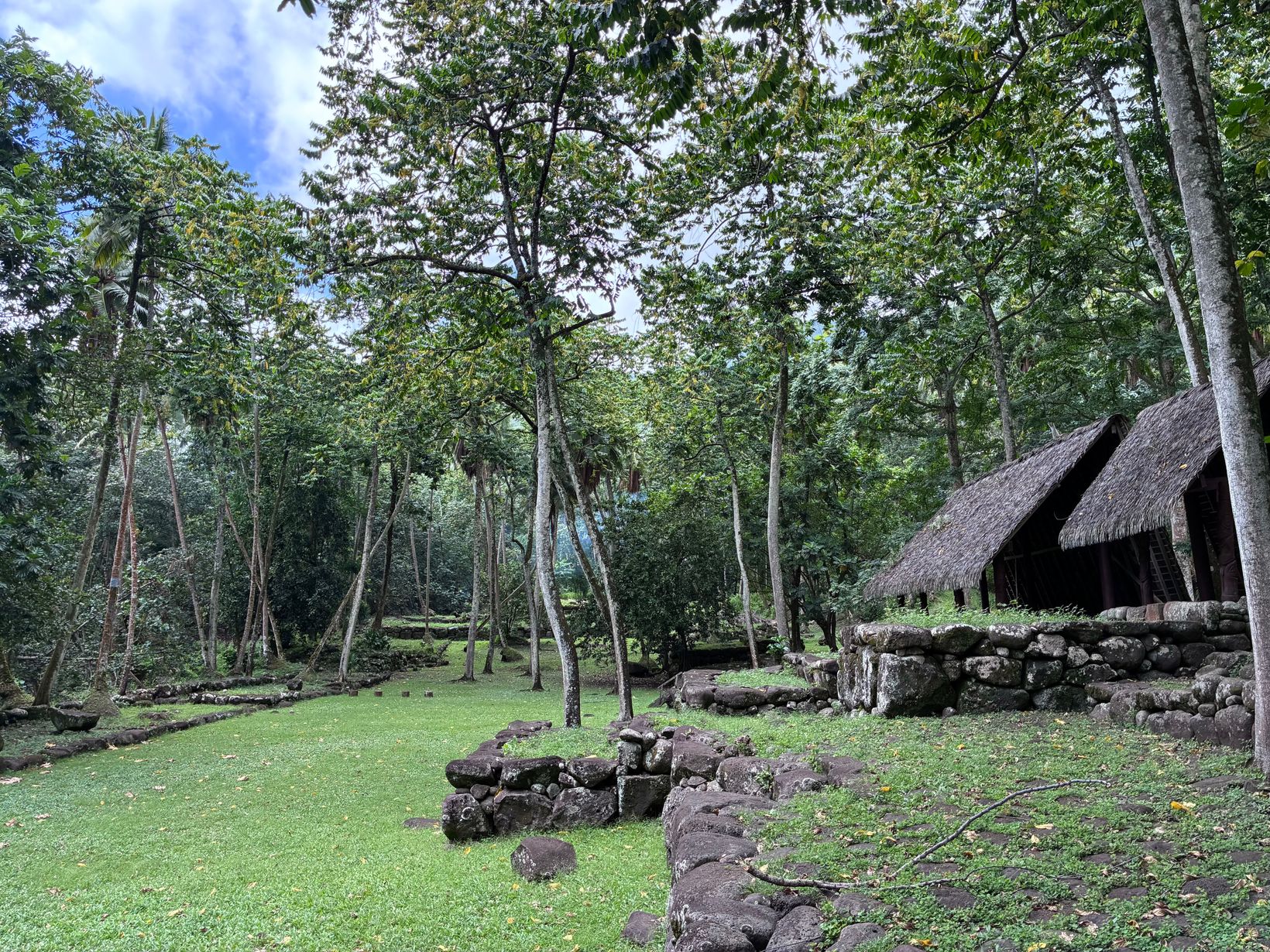
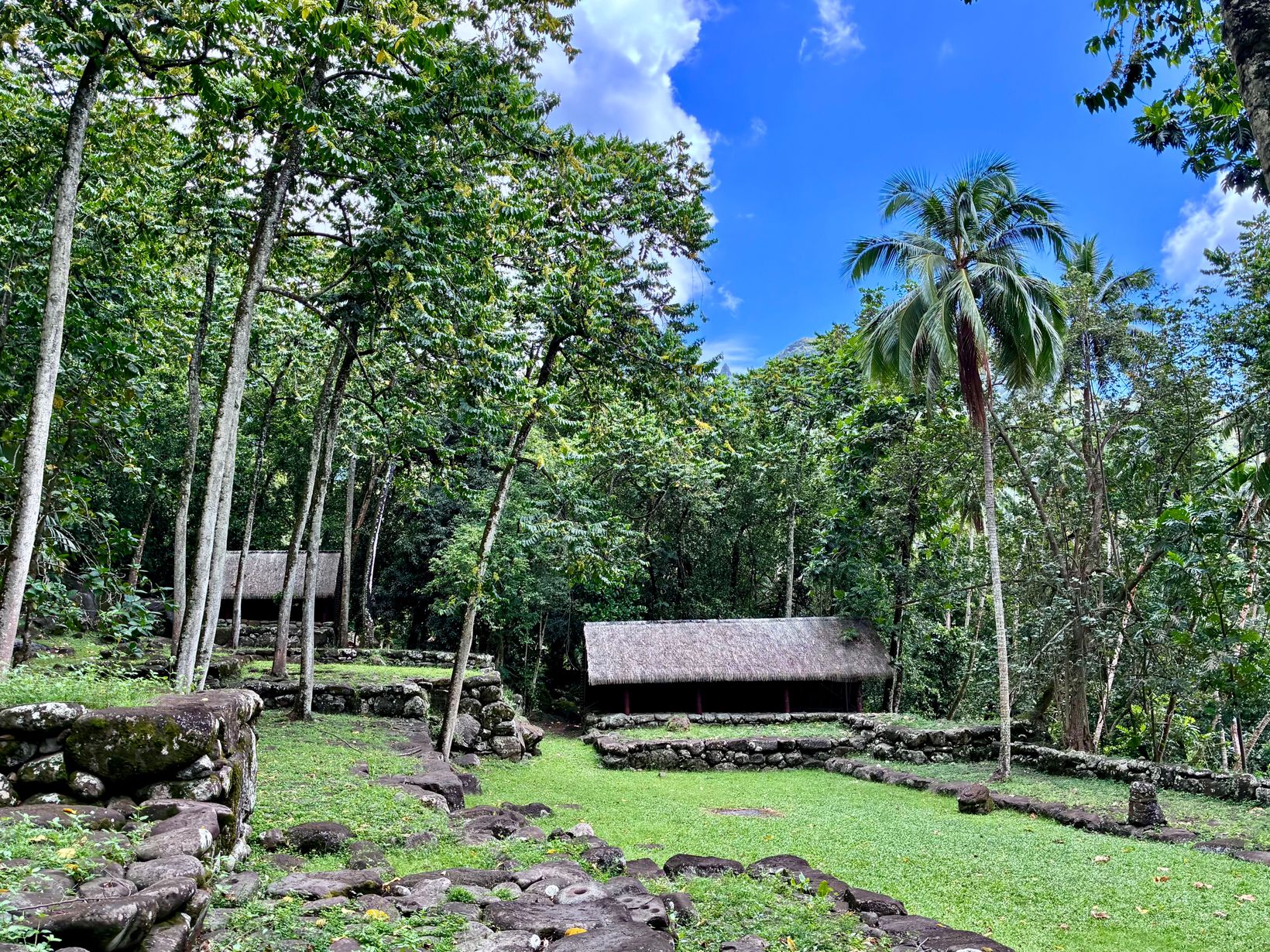
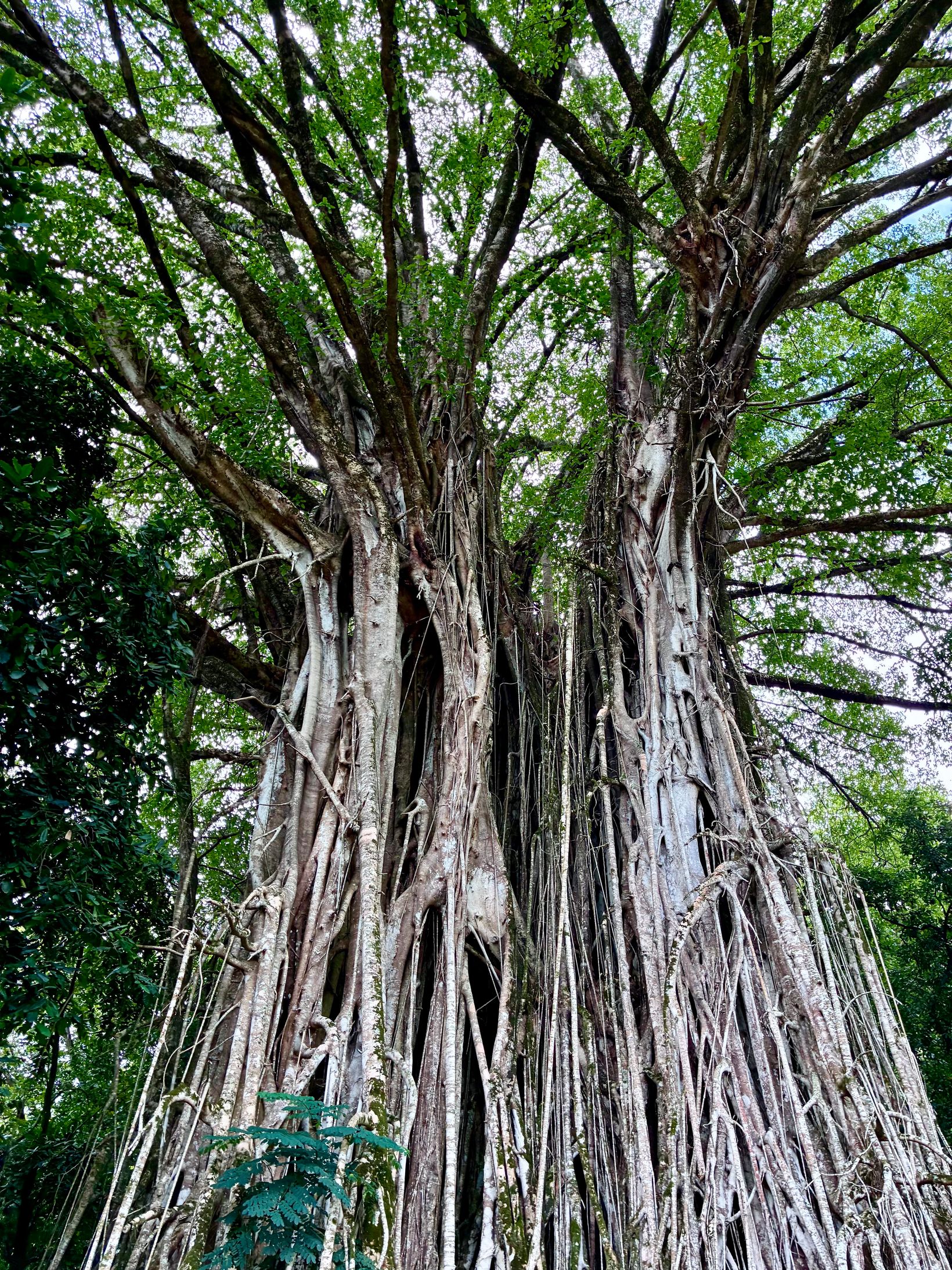
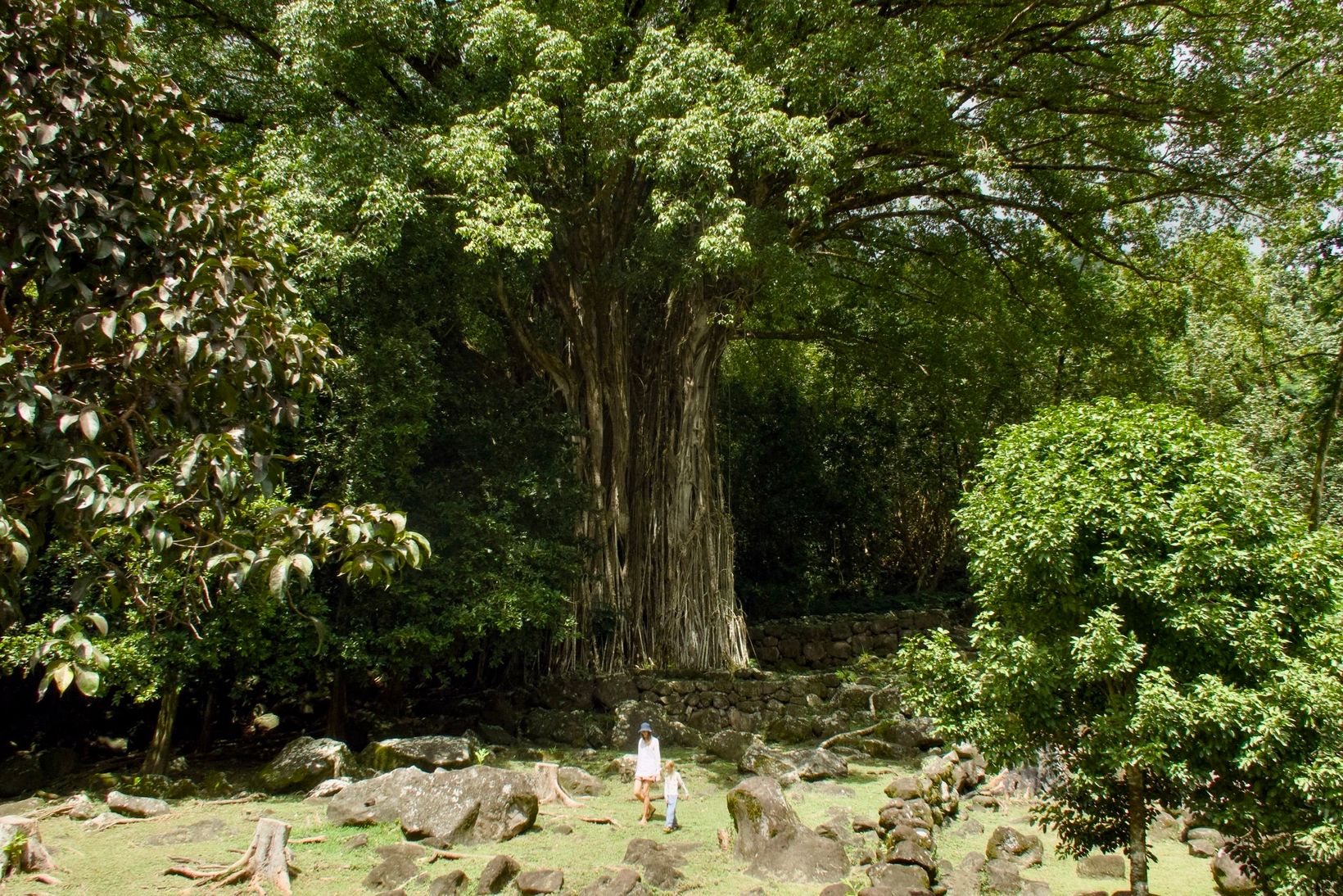
Several archaeological sites lie in the island’s mountains. We stop at the ruins of the ancient ceremonial site of Kamuihei. Overgrown stone platforms and fish, dogs or turtles carved from stone hint at the ceremonial gathering place. Following their ancestors, the people of Nuku Hiva still use the site among the centuries-old banyan trees for dances and gatherings.
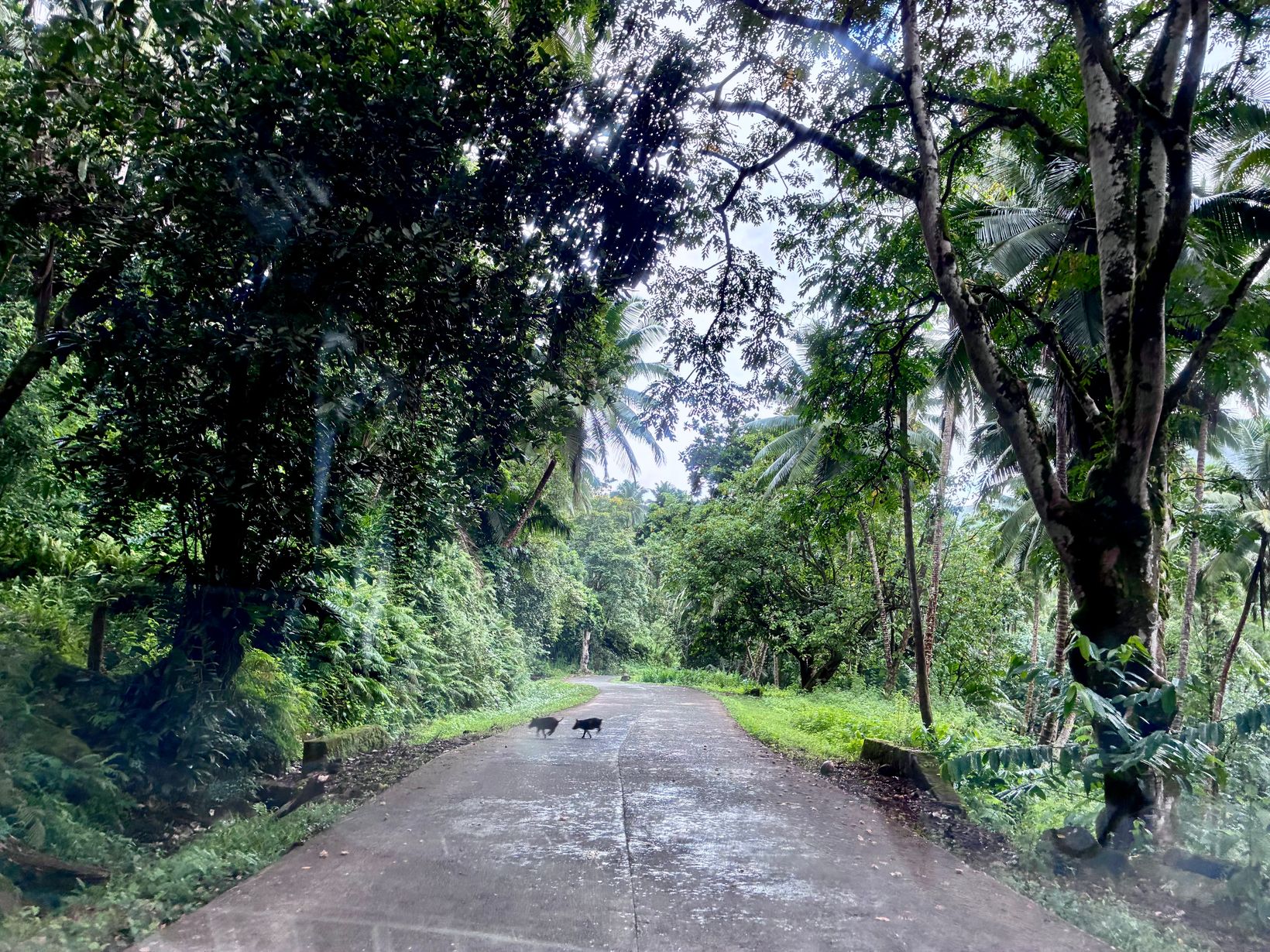
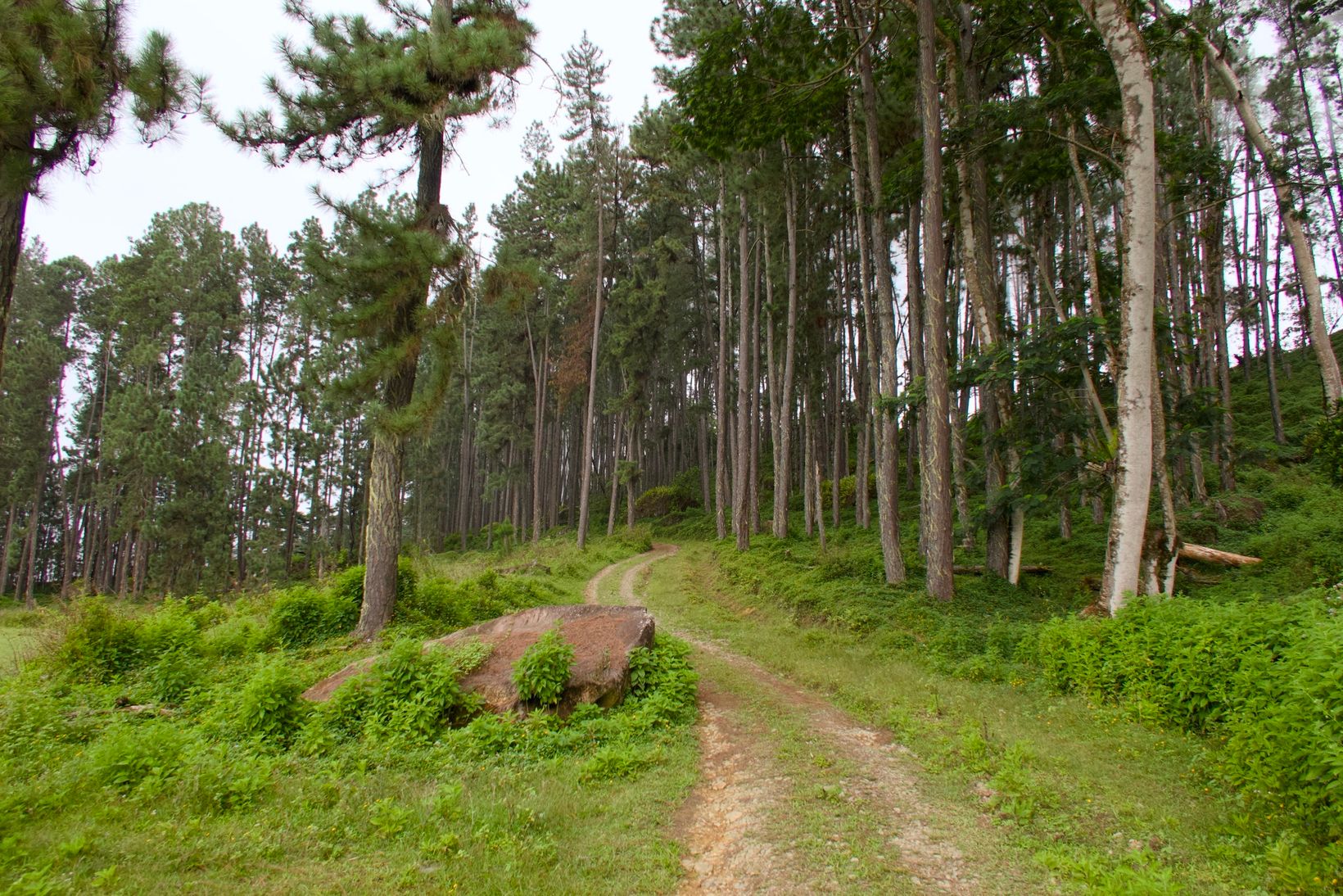
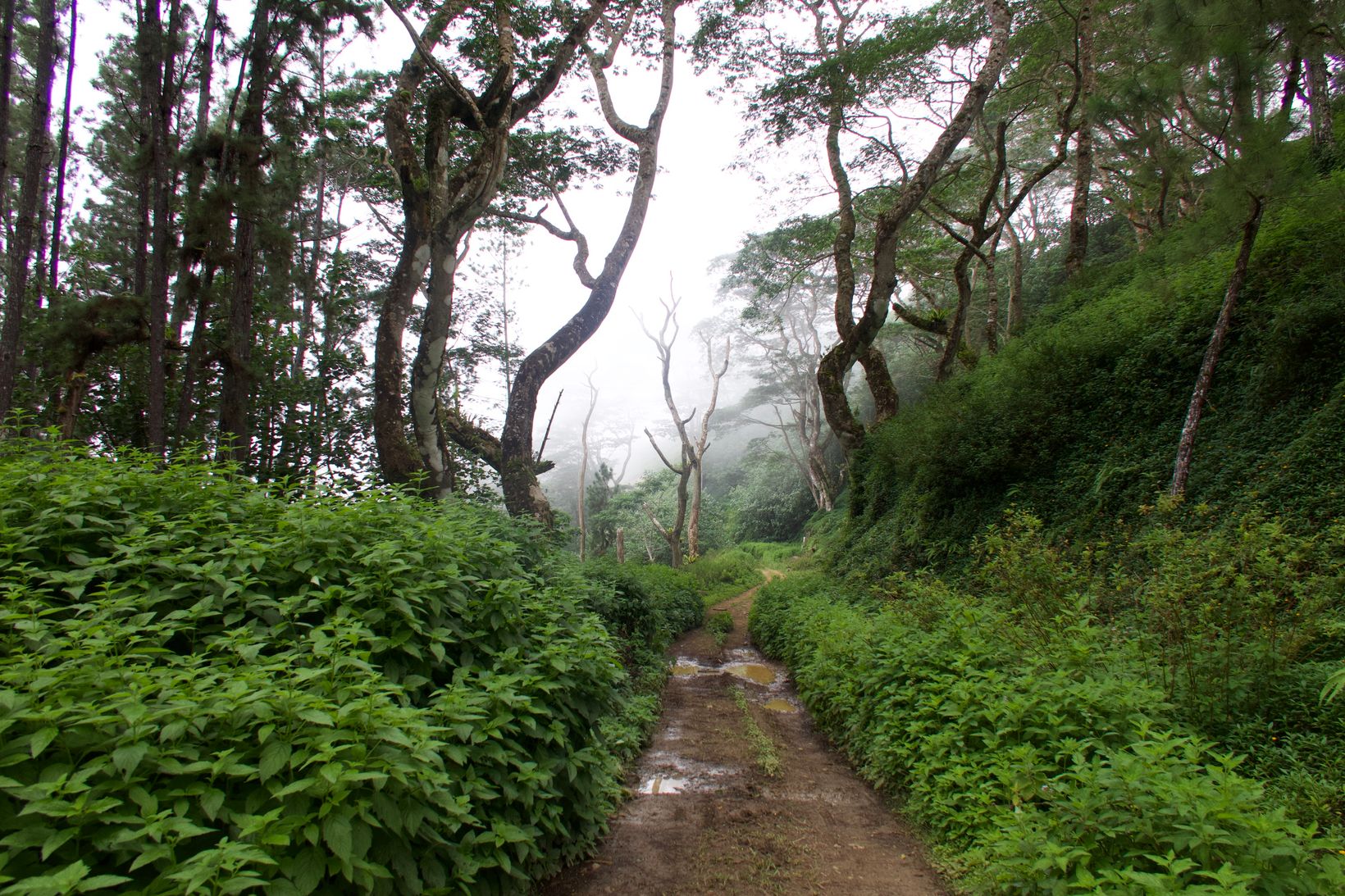
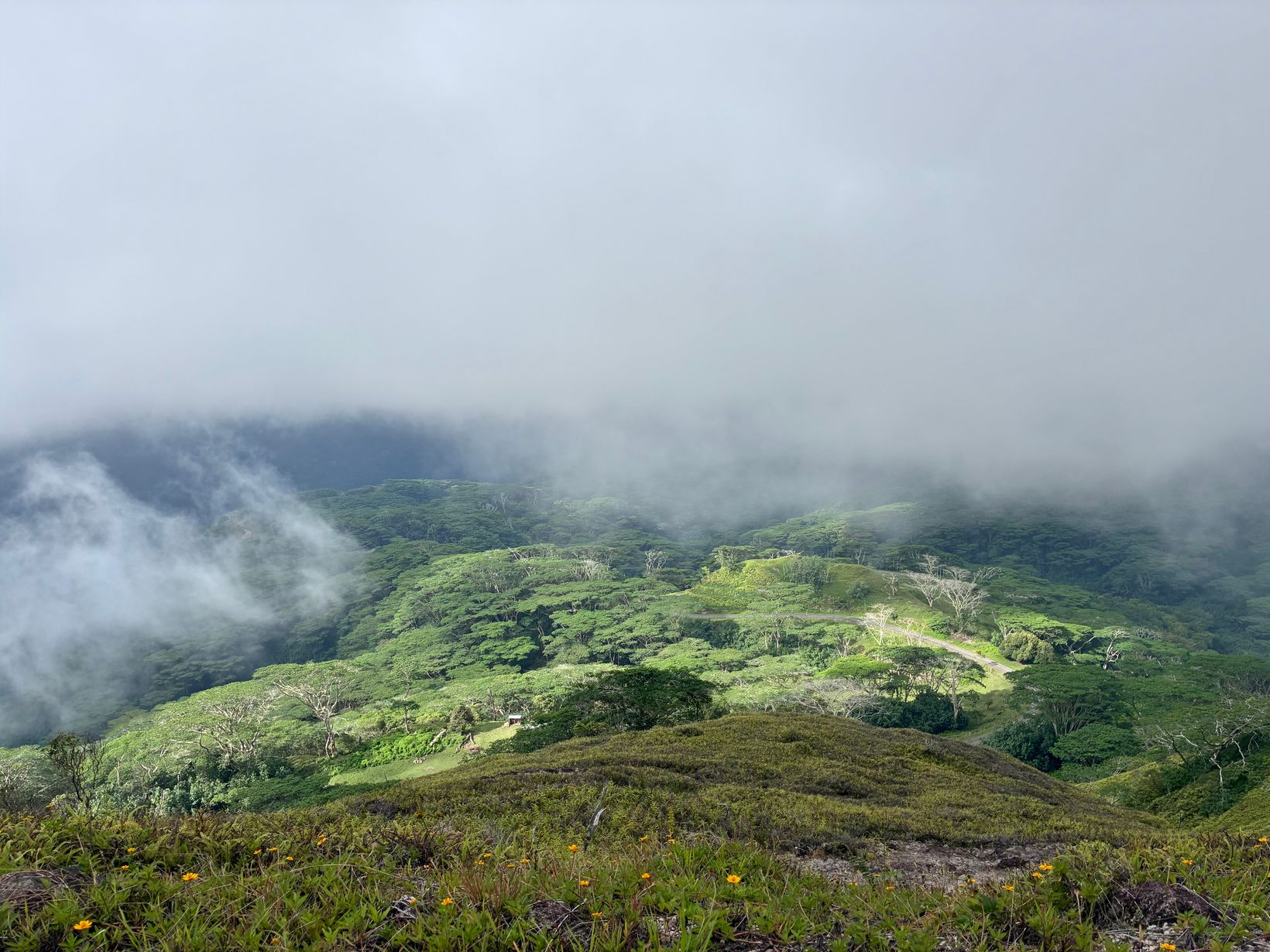
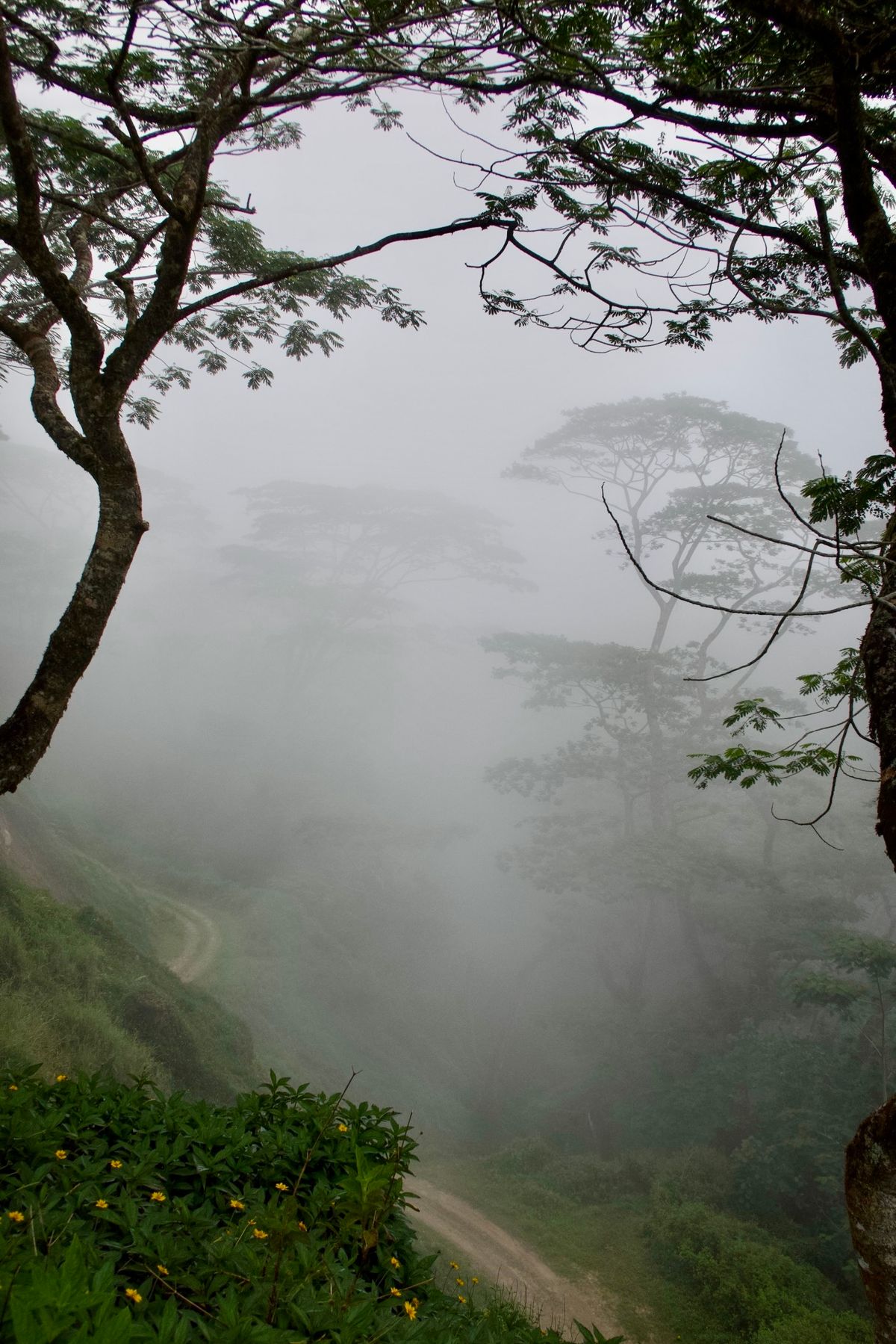
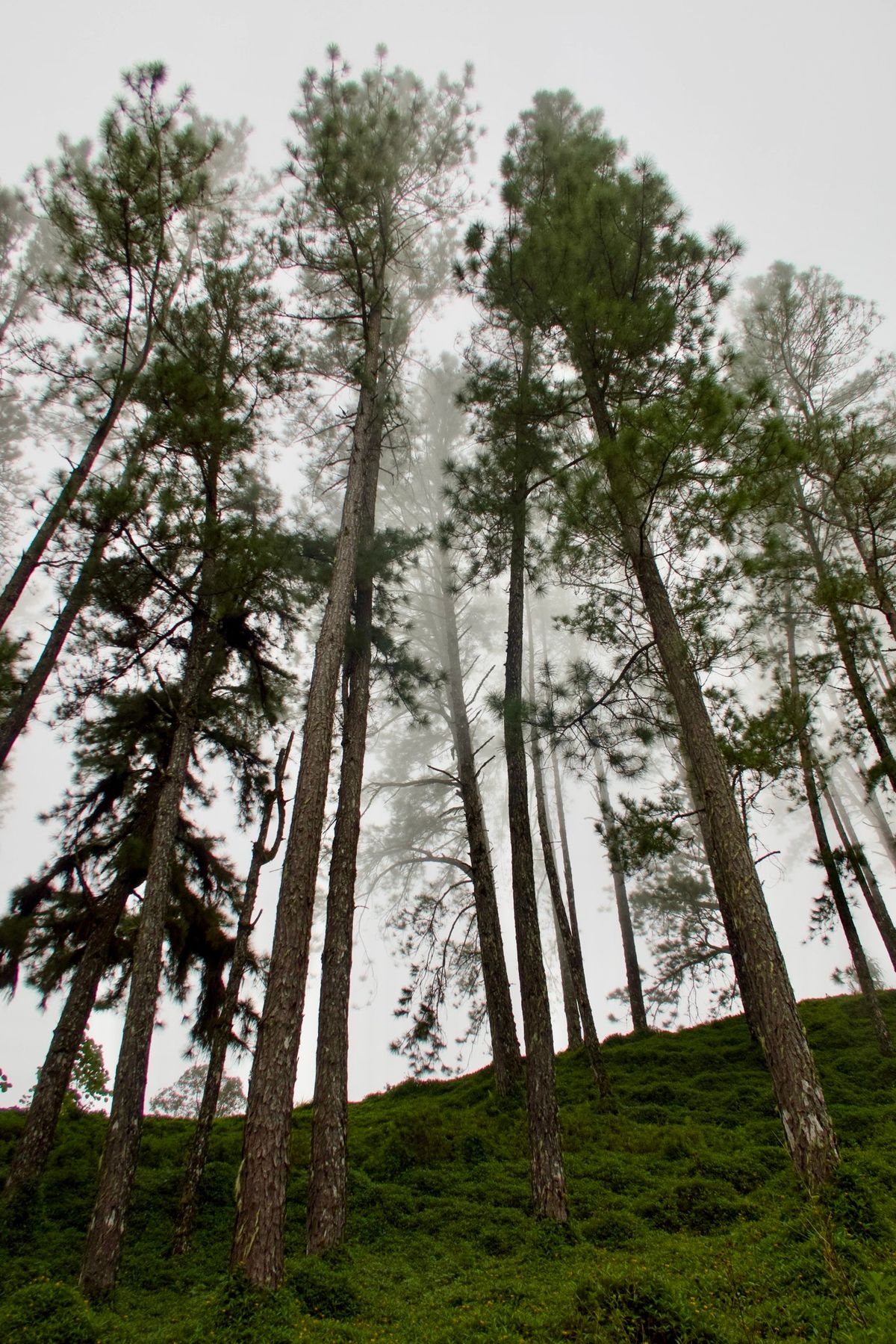
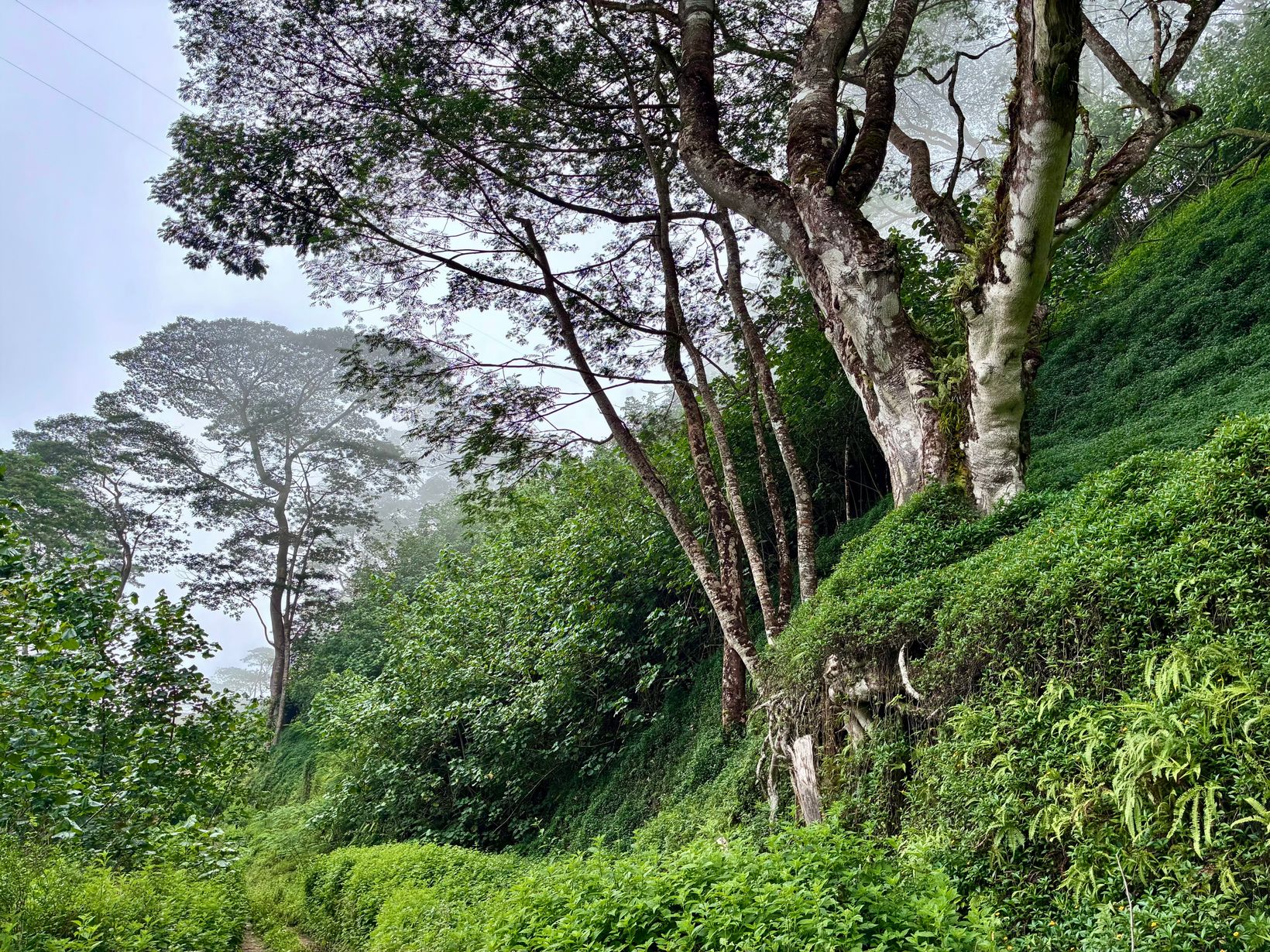
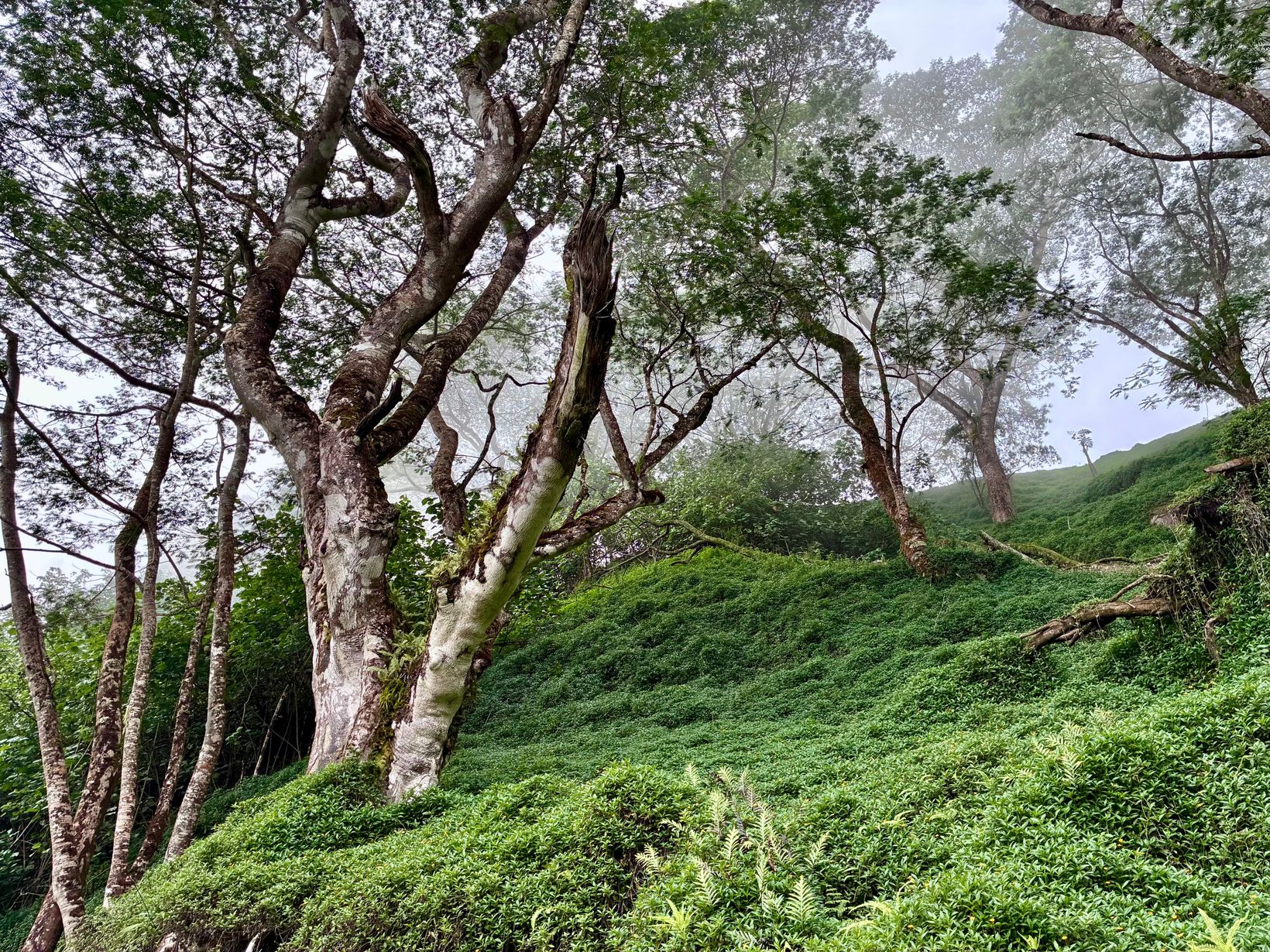
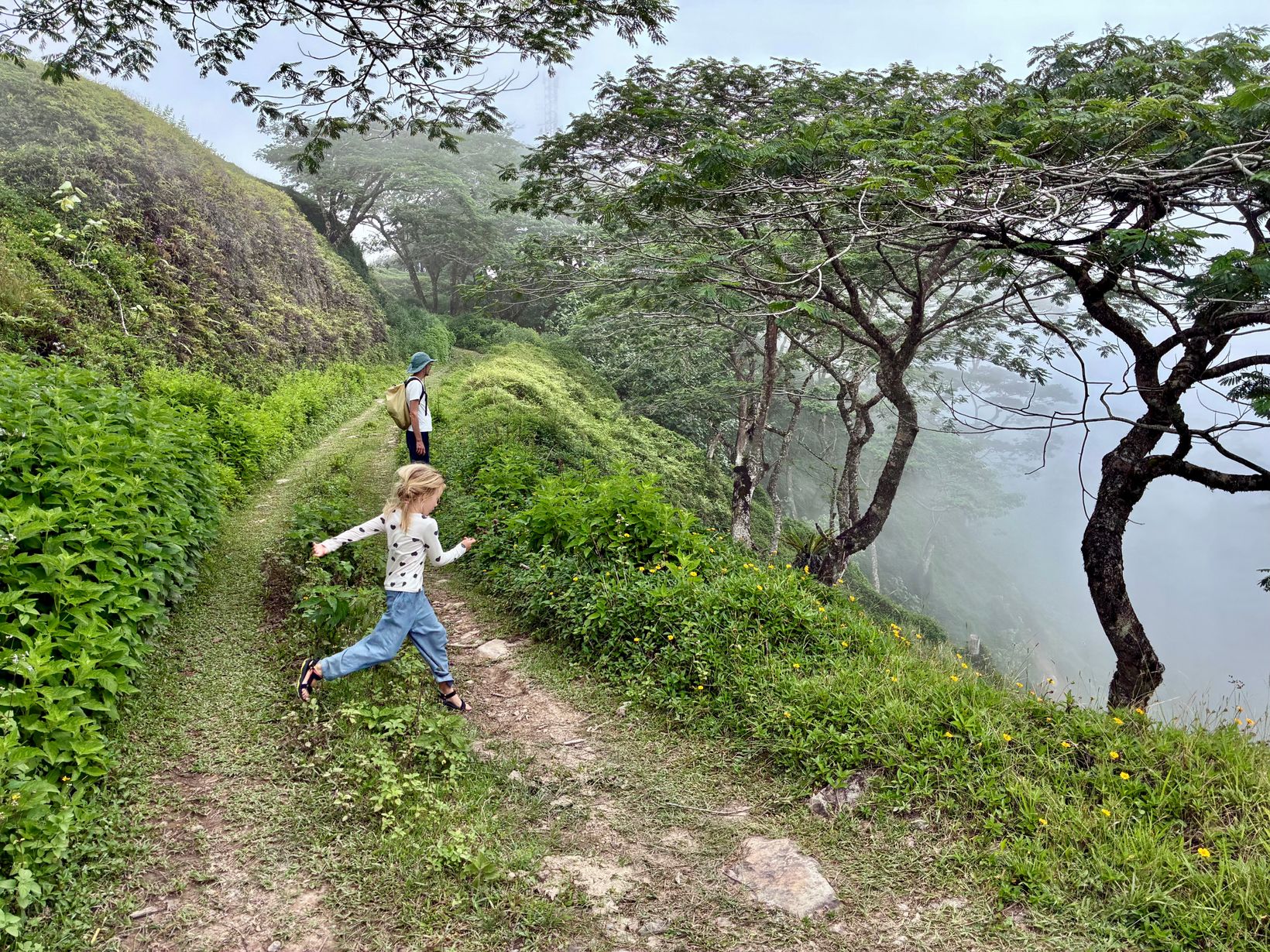
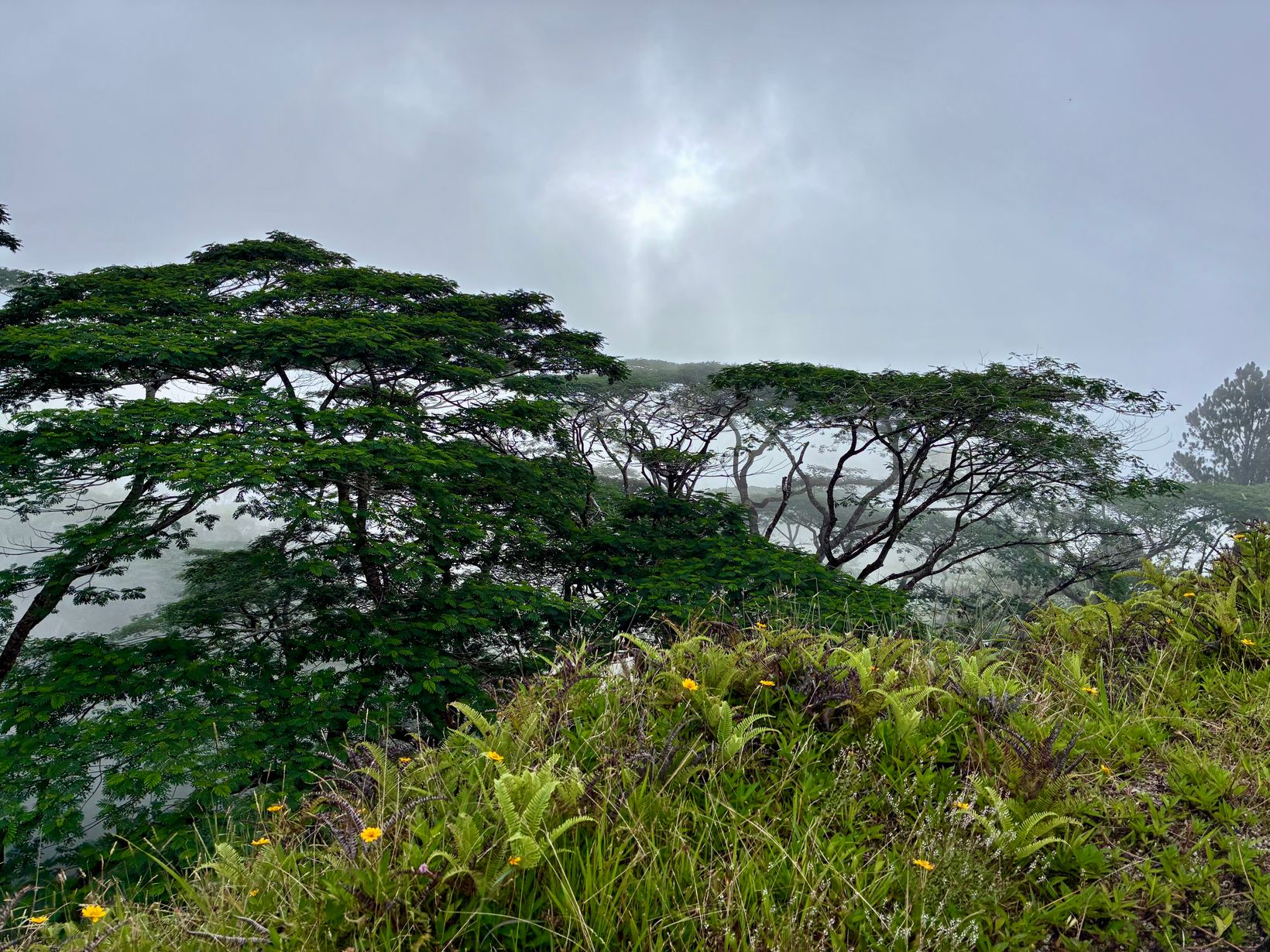
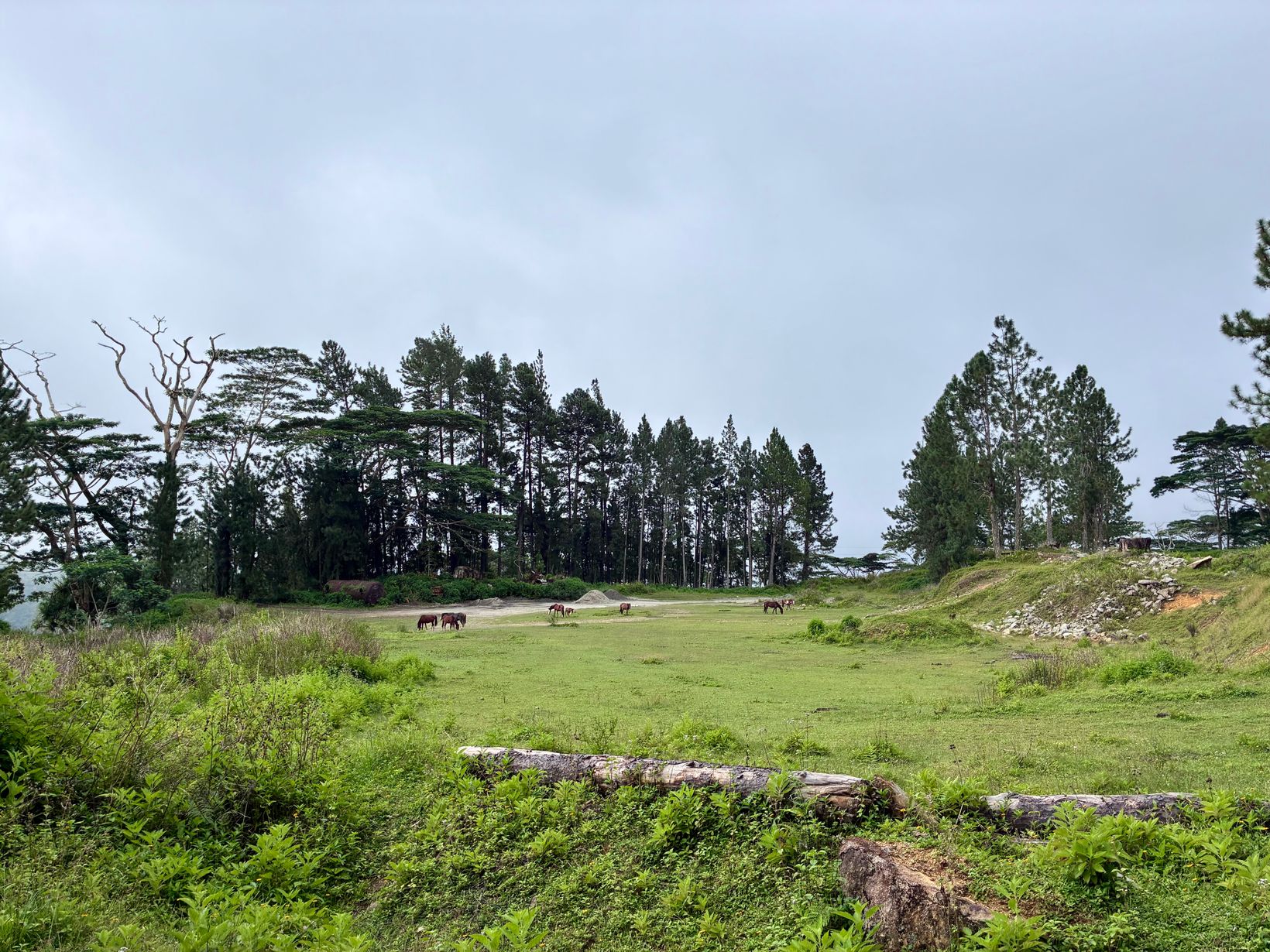
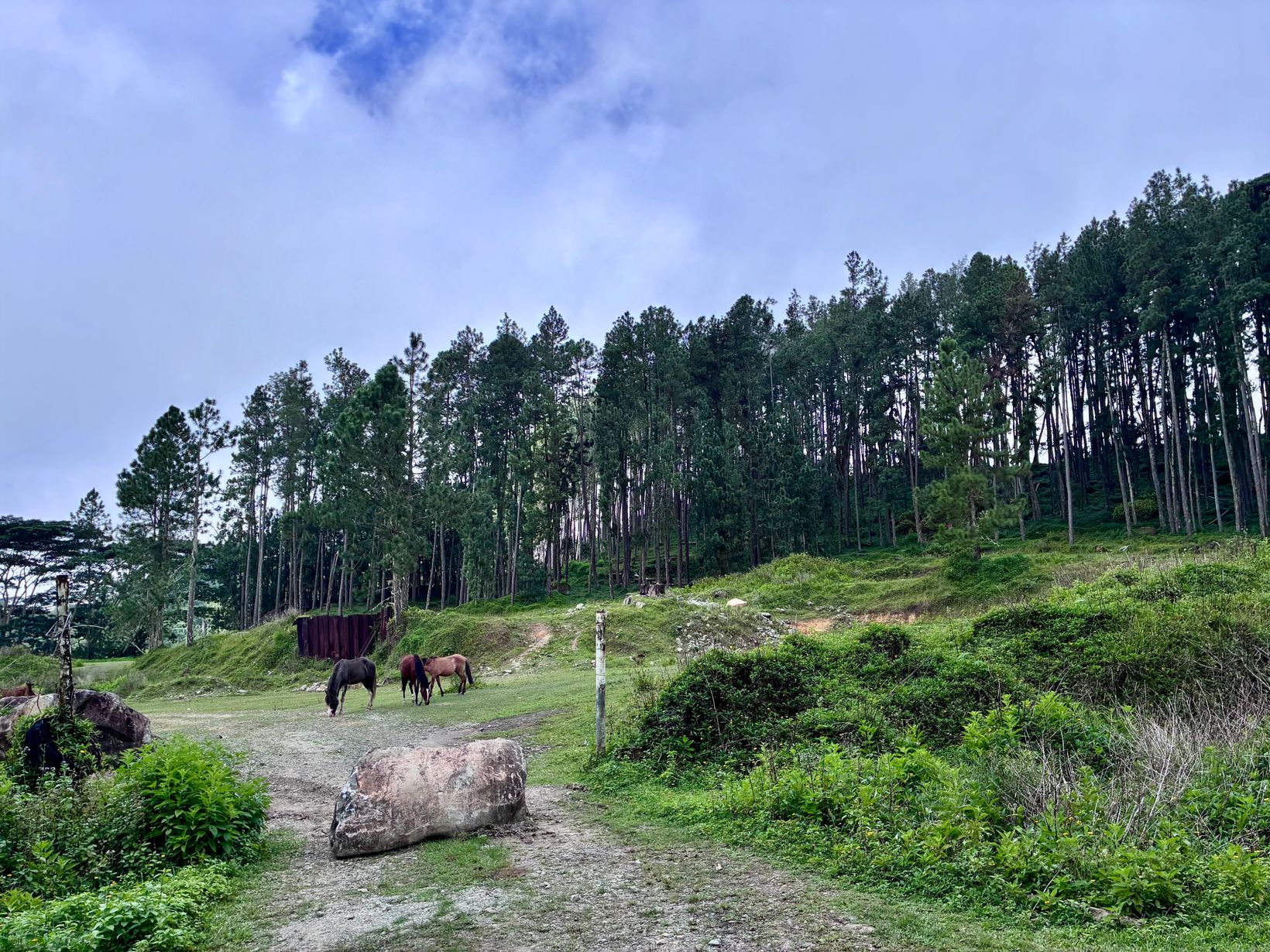
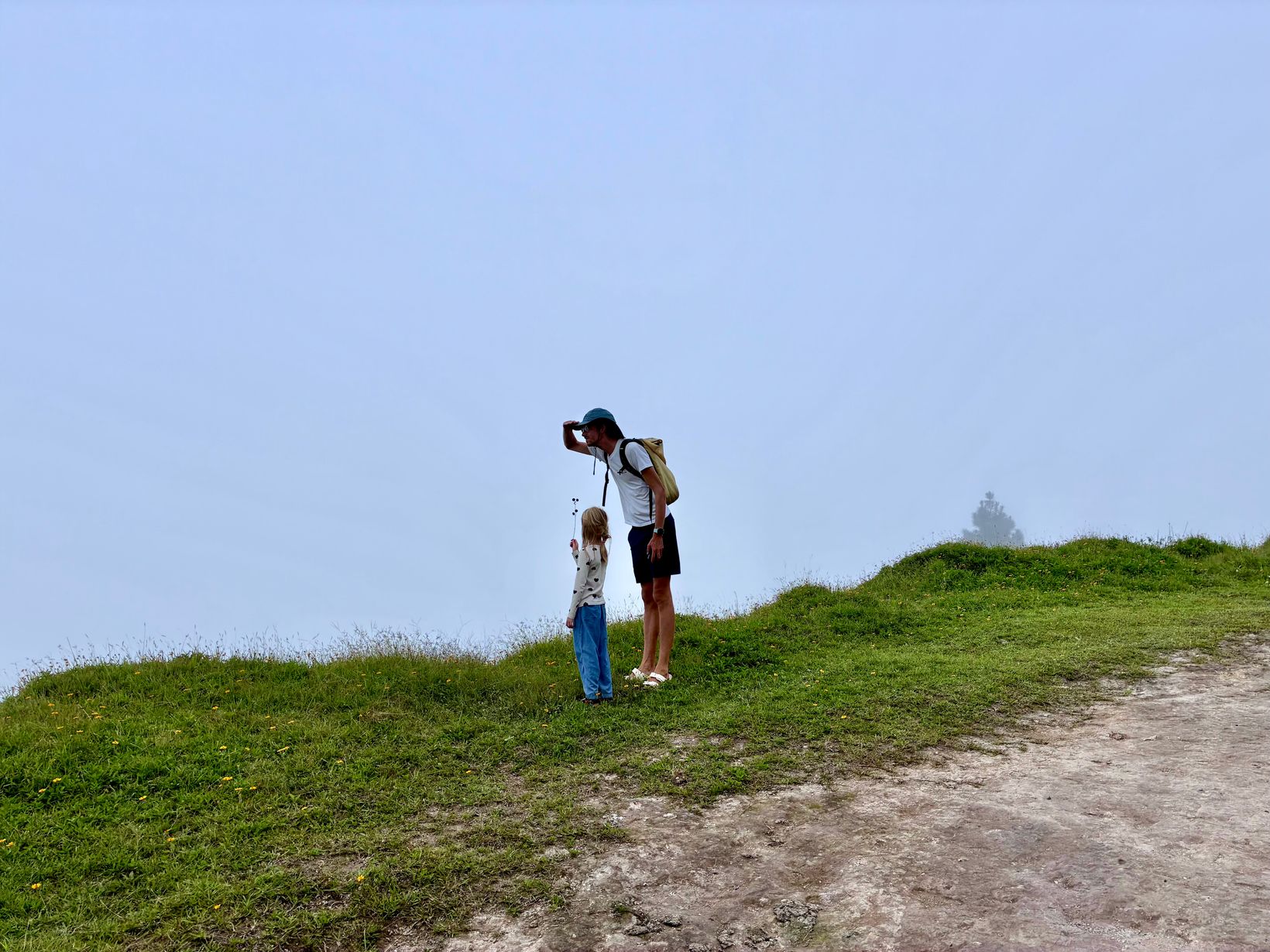
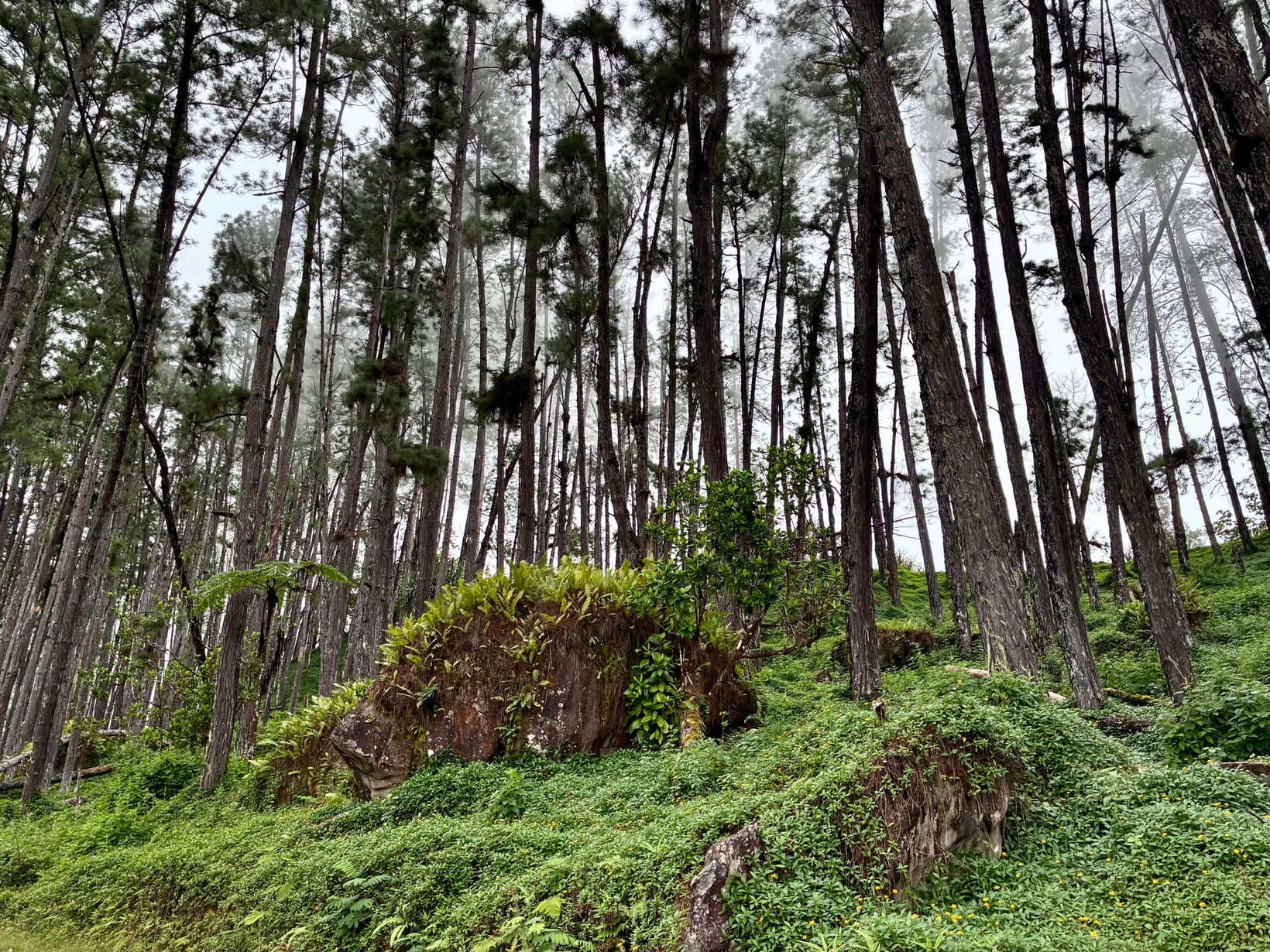
Nuku Hiva has even more to offer. Wind your way a bit further up the mountain by car and the surroundings suddenly change. Gone are the evergreen palms, mango and breadfruit trees. We’re up in the highlands now, surrounded by mist, conifers, little piglets and a smell that reminds us of the forests back home. Only the birds sound decidedly exotic. We enjoy the homely feel and the cool temperatures and hike cheerfully past a horse paddock up to the summit. Horses seem to play a big role on the Marquesas in general. In the villages a rider will occasionally come galloping at you, and on many corners horses stand tethered, in rather varying condition. Up here, at least, there seem to be proper horse farms with room to roam.
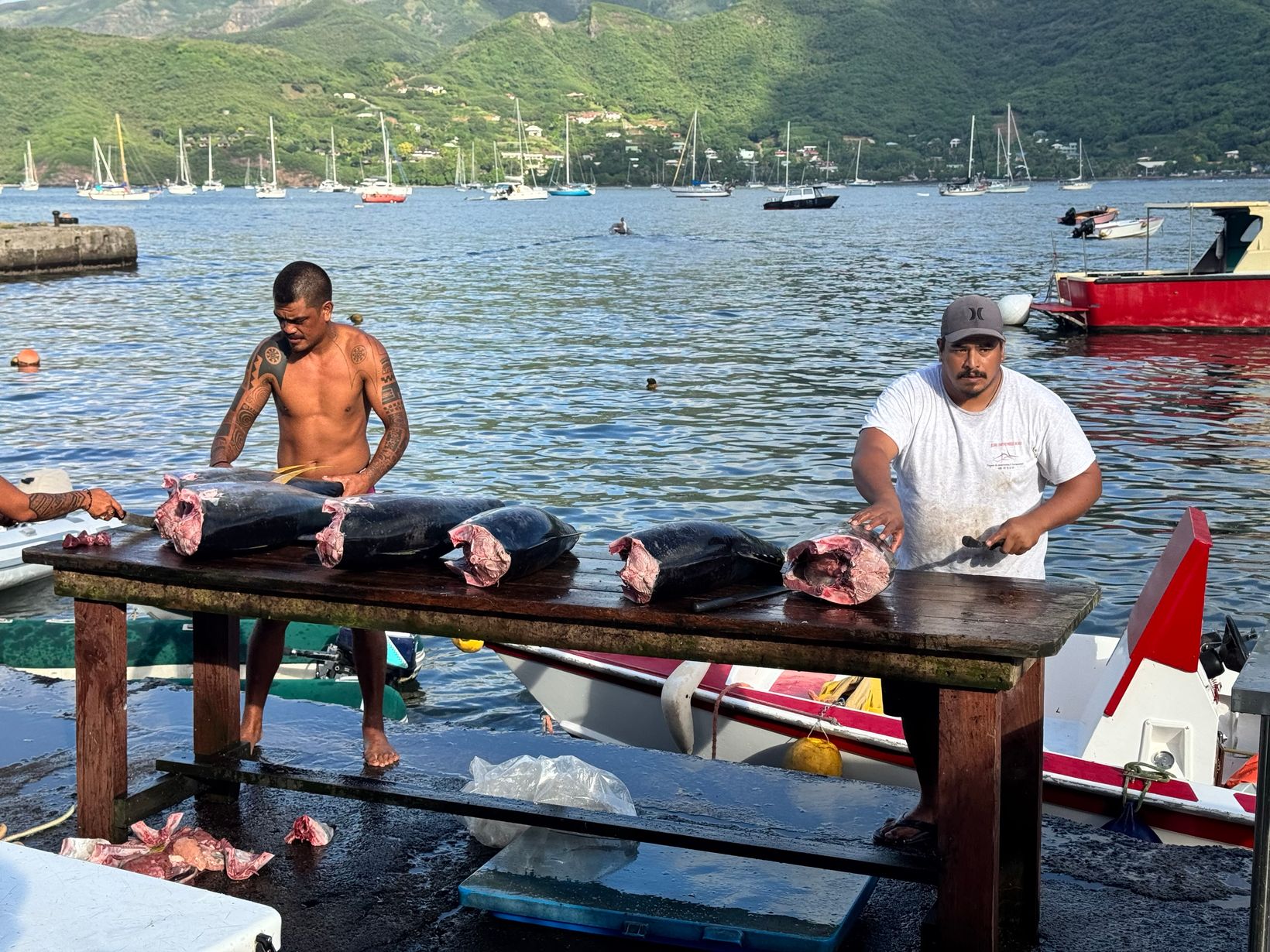
Our Marquesan story ends rather hastily, which doesn’t do the island justice. But the weather for the three-day trip to the Tuamotus looks good, and the wobbling aboard the boat gets worse by the day. The bays are definitely the one downside of our otherwise spectacular and impressive time on the Marquesas. What a magnificent start of our Polynesian era. Perhaps it was a mistakevto leave the island without a tattoo from one of the artists. As a displacement activity we buy tuna instead. Who knows how much luck we will have with the fish in the Tuamotus.