One day, two oceans
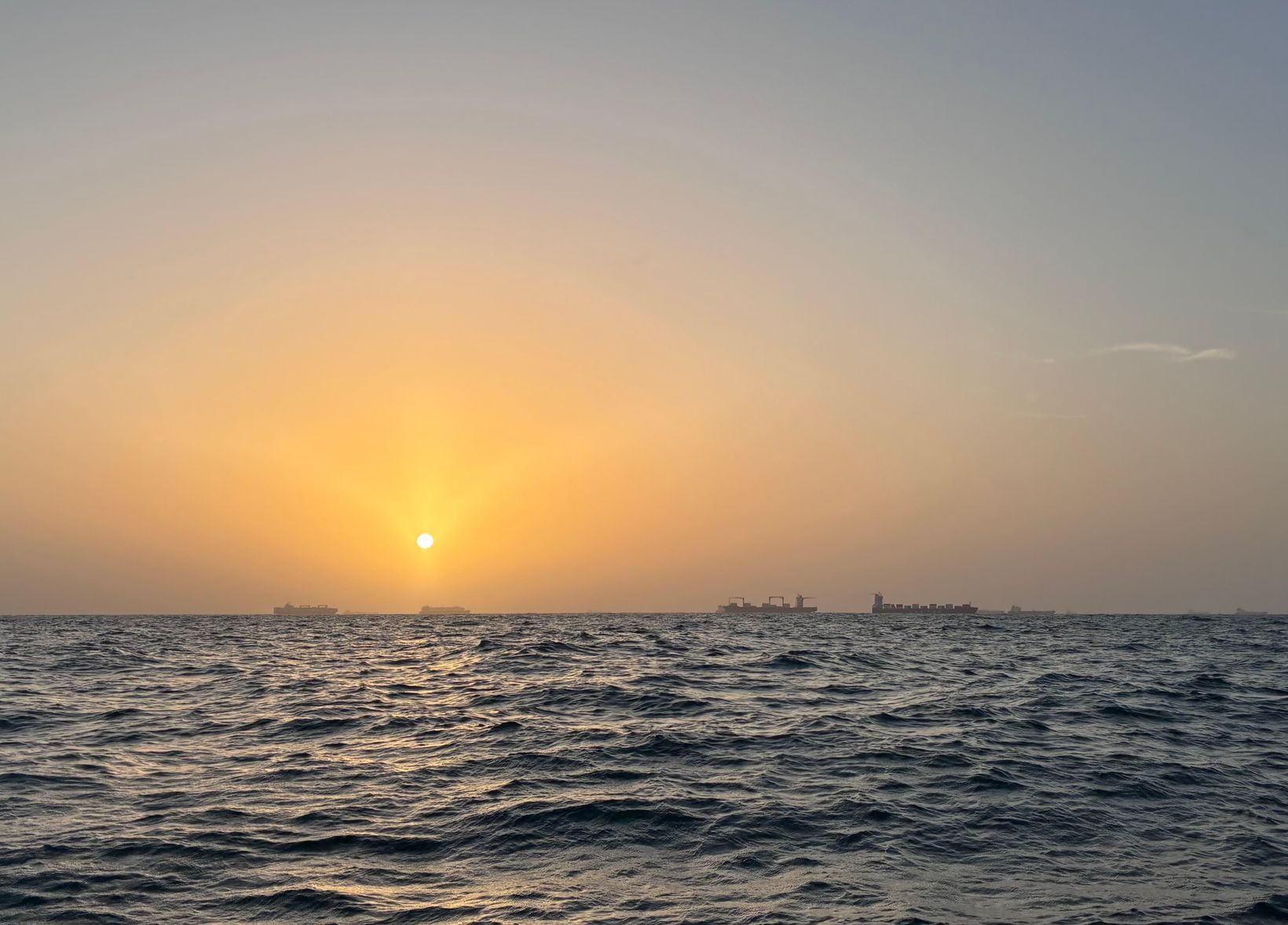
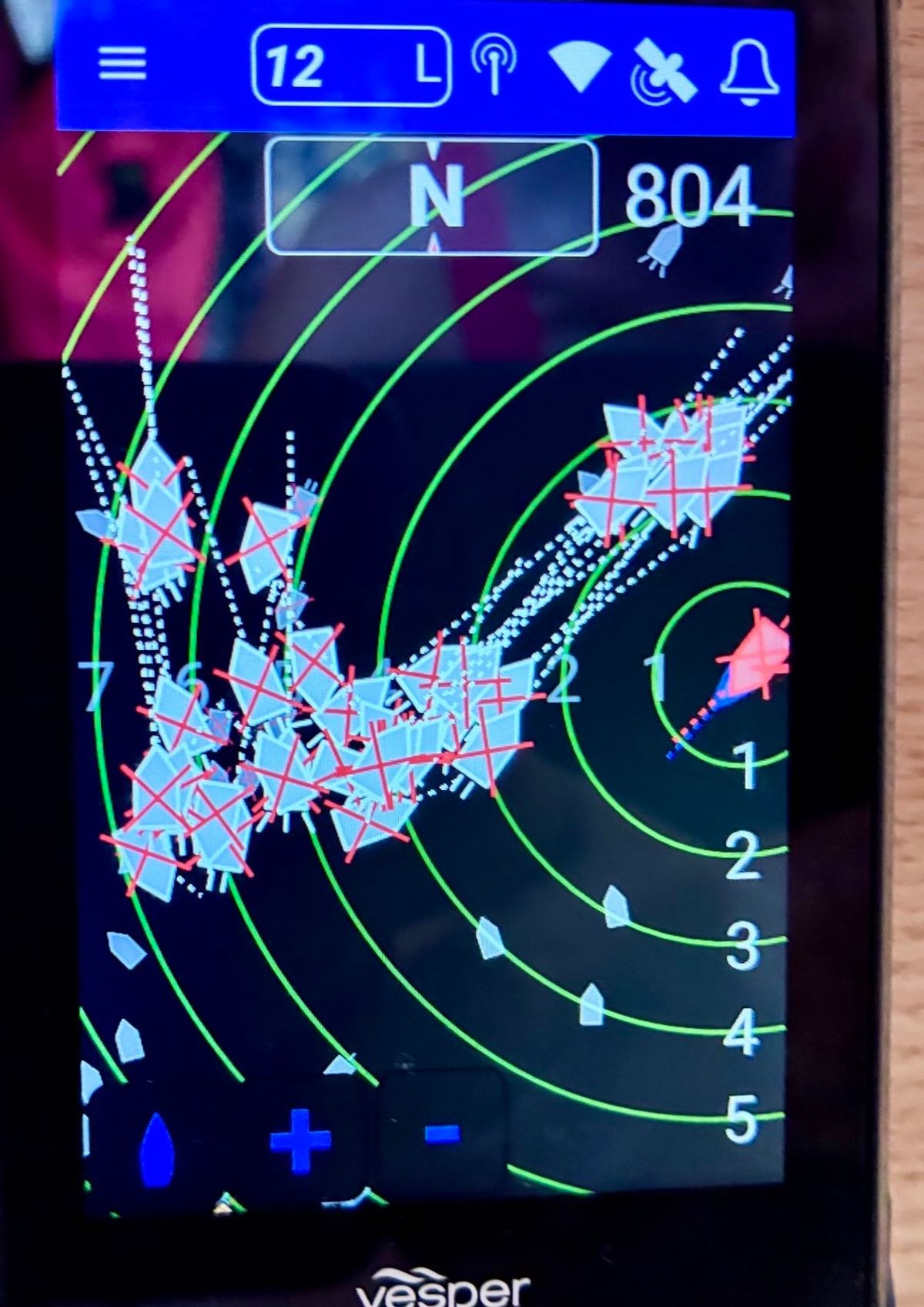
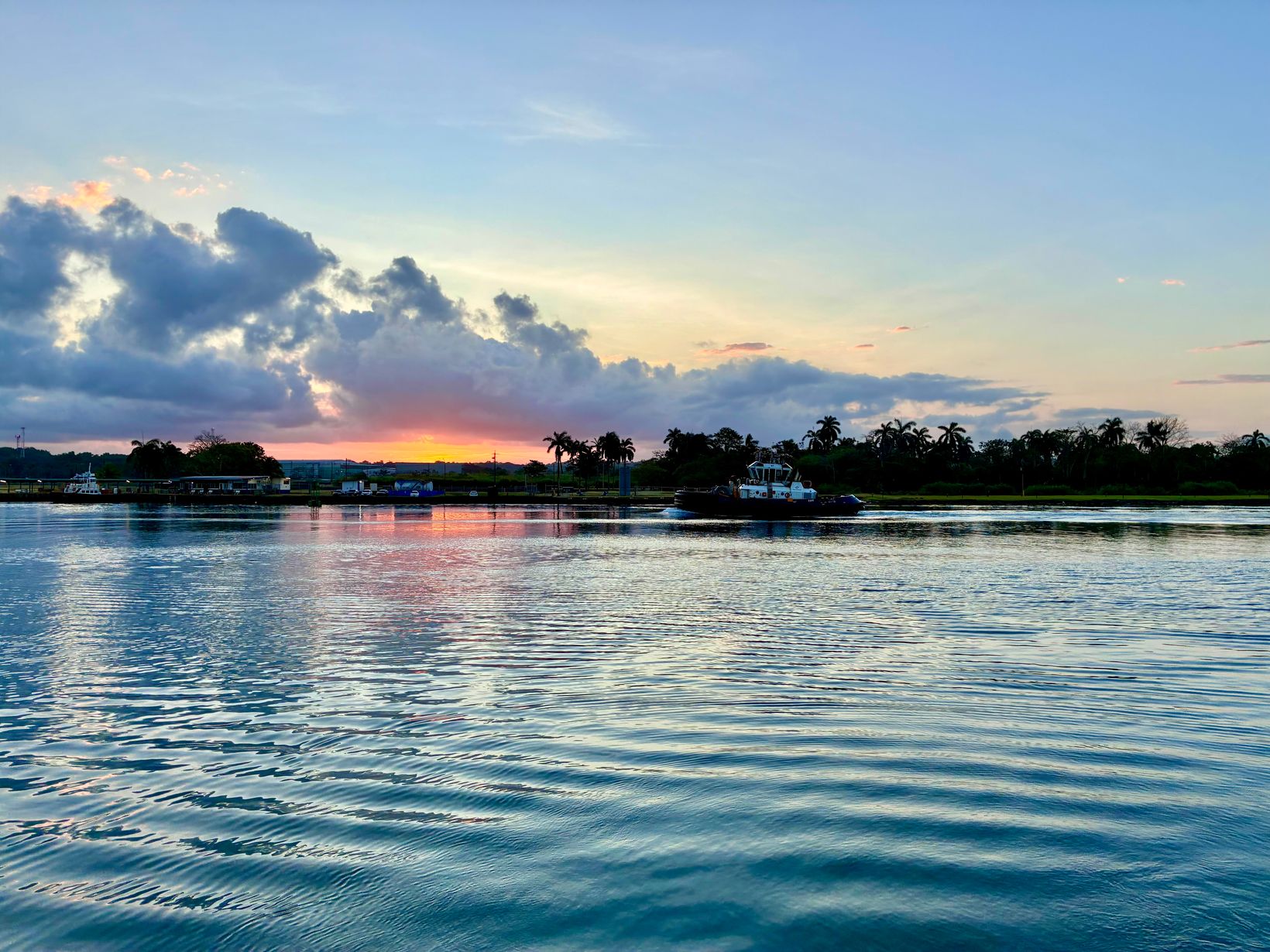
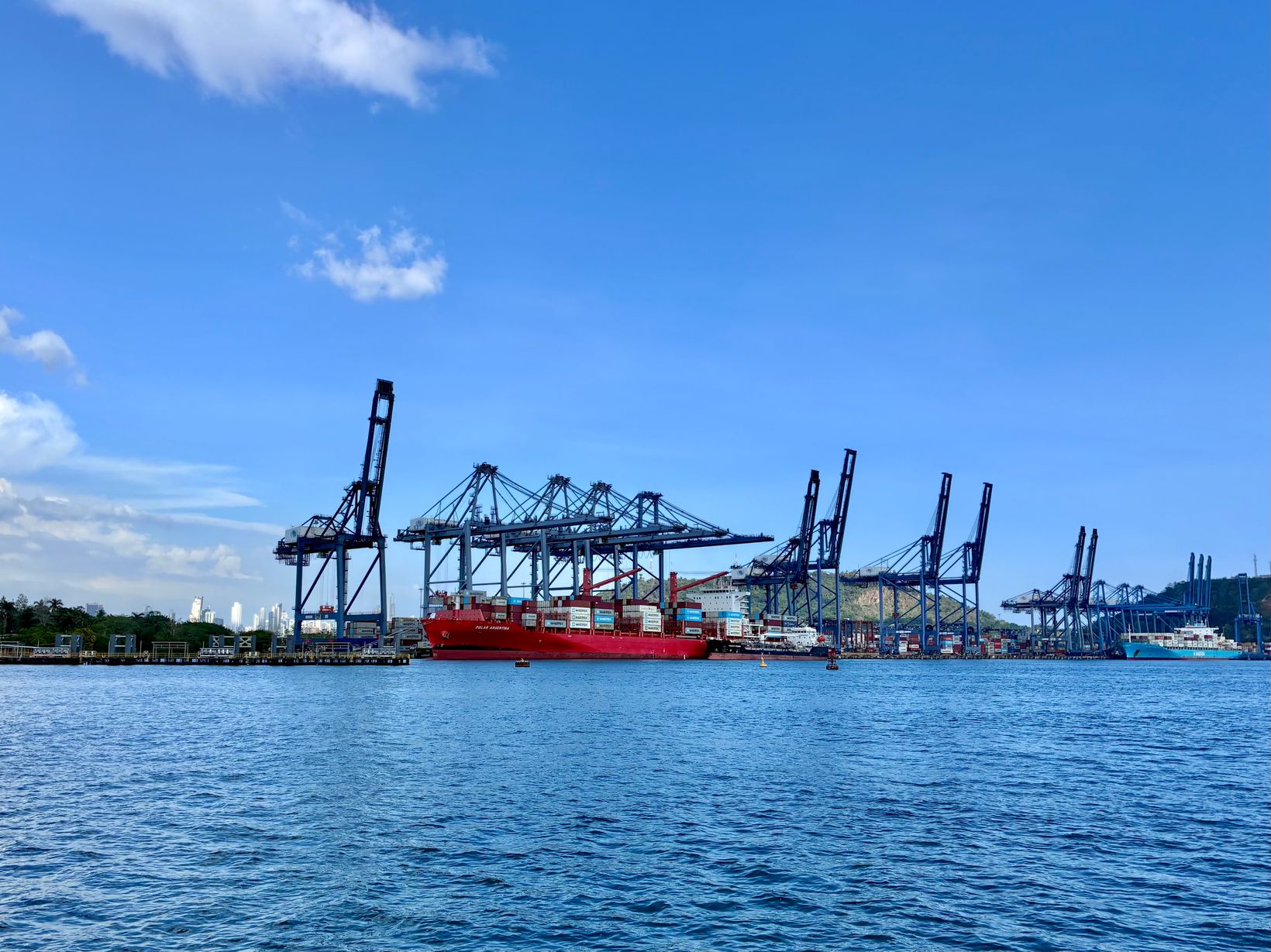
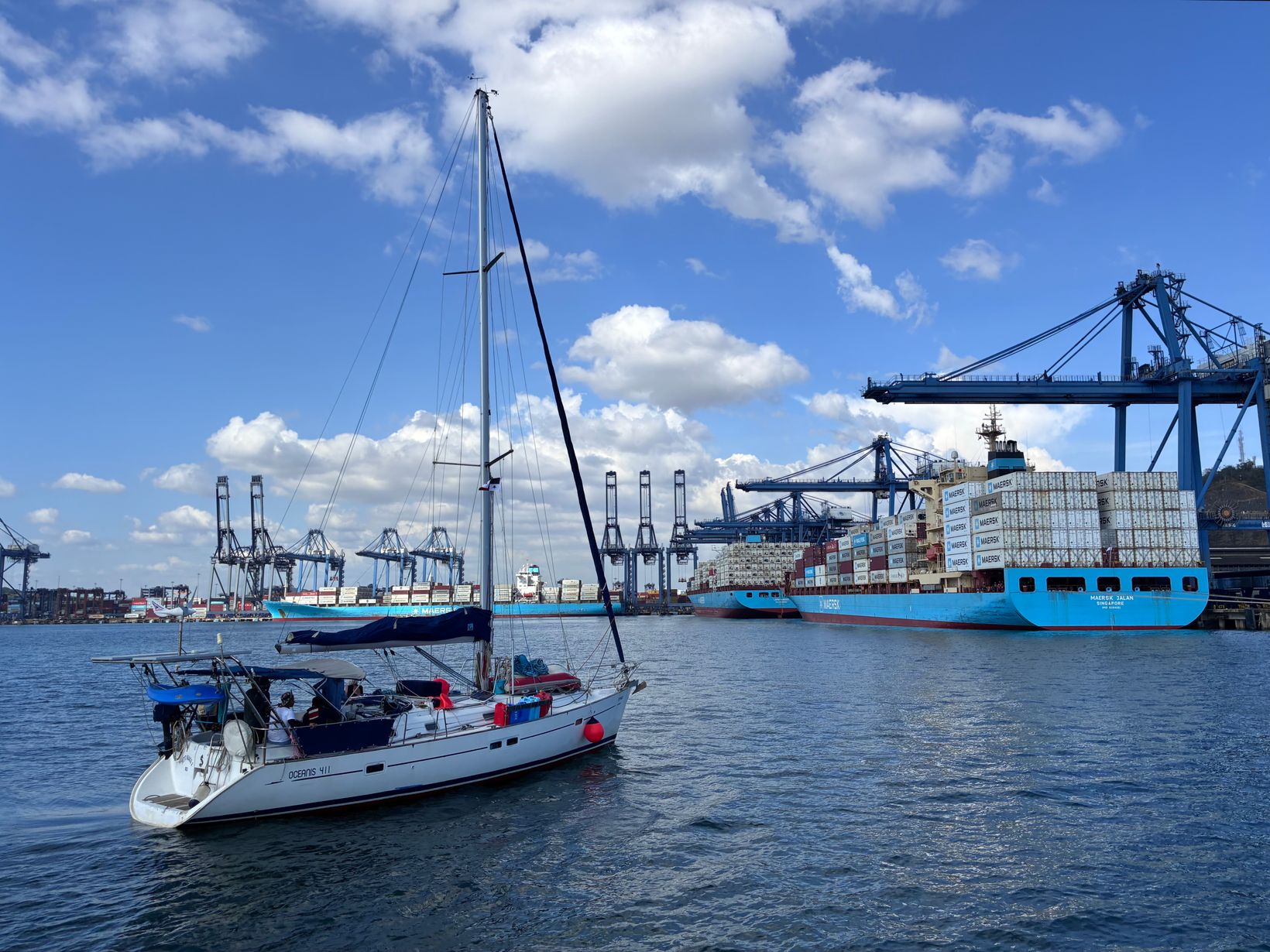
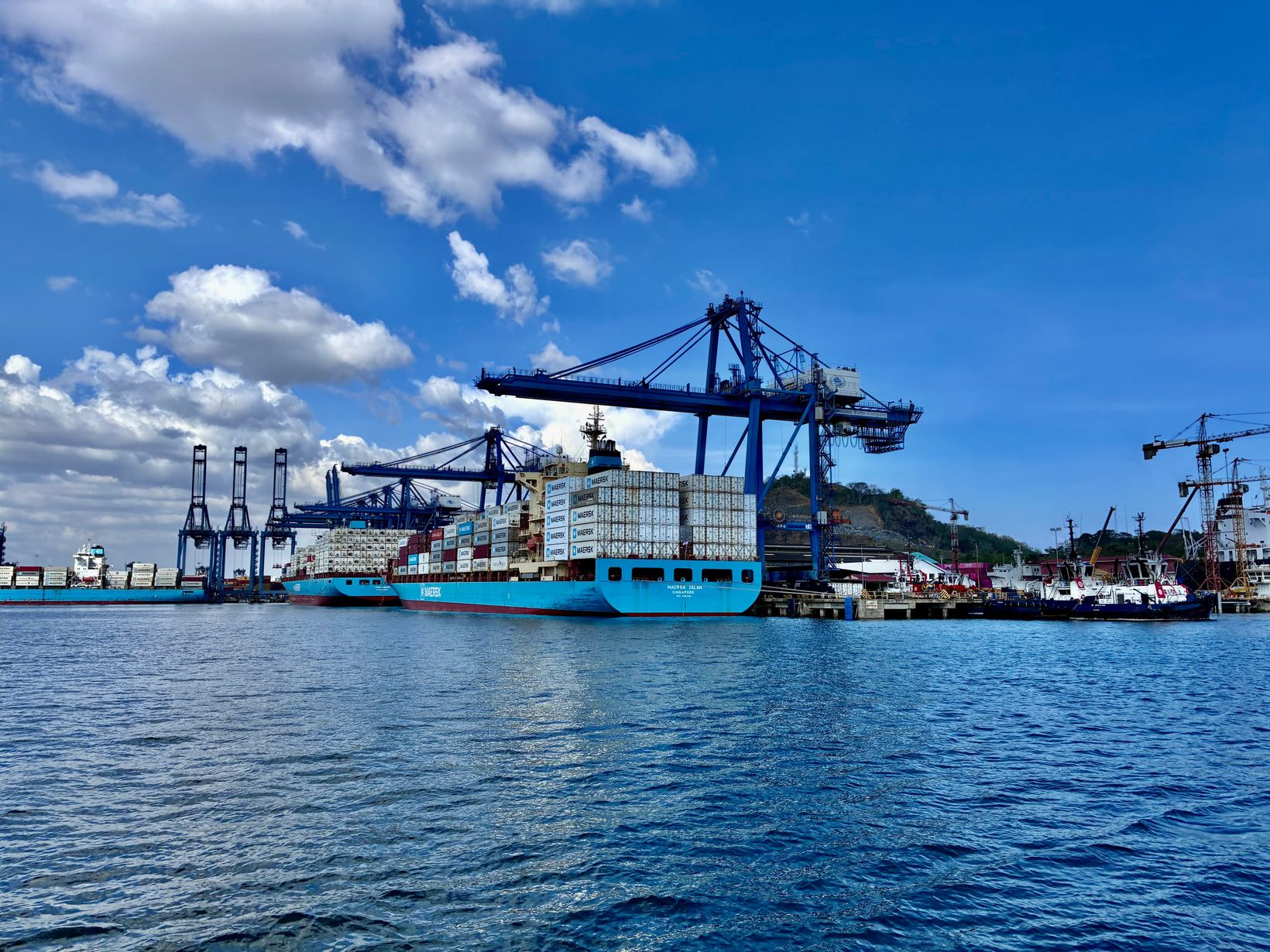
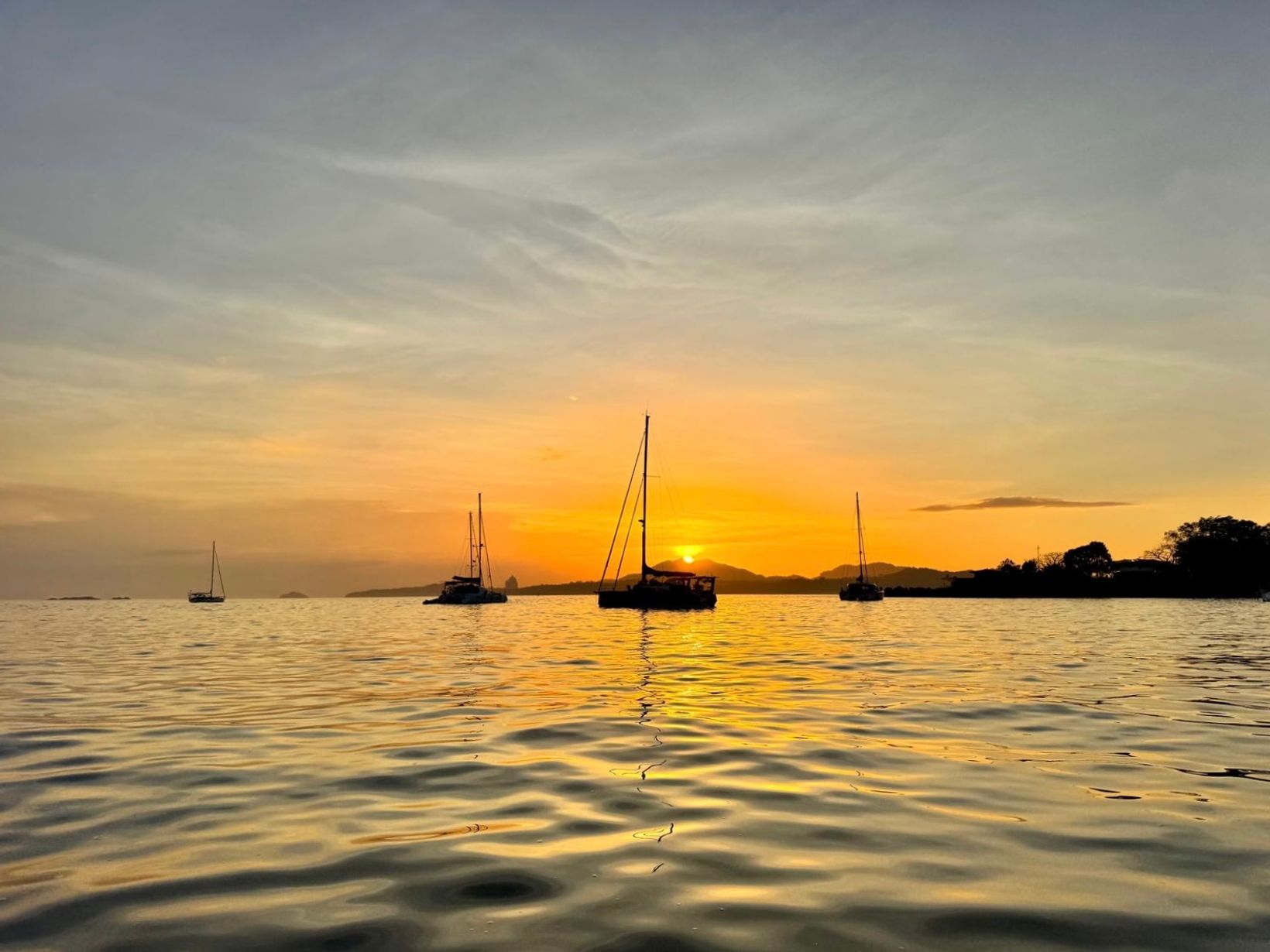
The signs are there; the Panama Canal is getting closer. At sunset, the silhouettes of the freighters waiting for their transit stand out against the sky while AIS is flooded with signals.
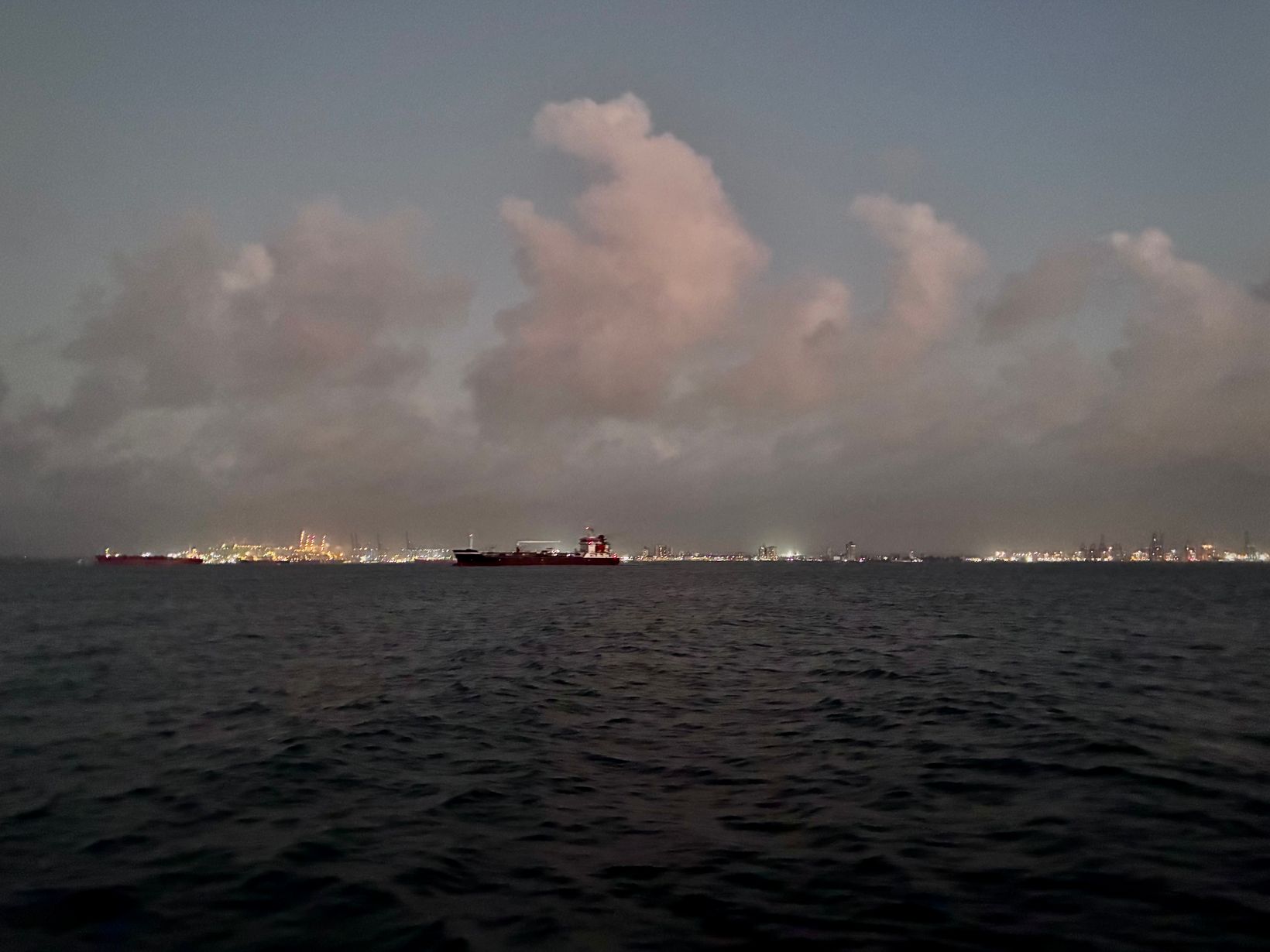
In a few weeks, we plan to join the procession through the locks toward the Pacific Ocean. With a touch of wistfulness, we once more look across the expanse of the Atlantic before turning to what lies ahead.
The Date, the Date
The Panama Canal is a well-oiled machine, and time is money. The more ships pass through, and the bigger they are, the faster money is made. It’s a wonder that small sailing boats like ours are allowed through at all. At around 3,000 USD it’s an expensive affair for us, but nothing compared to the many hundreds of thousands the big ships pay here.
There are two transits a day. The first sets off at dawn and ends in the late afternoon on the other side. The second starts in the afternoon and means a night on a mooring ball in Gatún Lake before arriving on the far side the next day.
Getting the actual transit date is the thing that matters most. We start organizing a good two months in advance. It takes all sorts of documents, proofs, and payments. You can only call the scheduler and be given a date once the full sum has arrived in the Canal Authority’s bank account. We could have an agent arrange the whole thing for a fee, but that strikes us as excessive — especially since there are detailed guides circulating among sailors.
Because we’re early, we get the date we want. Strictly speaking, we shouldn’t book until Nikola is anchored in the bay outside the canal. However, that isn’t feasible: If things go wrong, you can wait weeks for a slot, and time is something we don’t have. So we set the whole process in motion while beeing in the Bahamas. And when we do end up having to push the date back — because the paint for the new antifouling doesn’t reach Shelter Bay in time — we get lucky: we’re given a new date only two weeks later. Others have it much harder, since right around then a rally of catamarans also has to be locked through the canal.
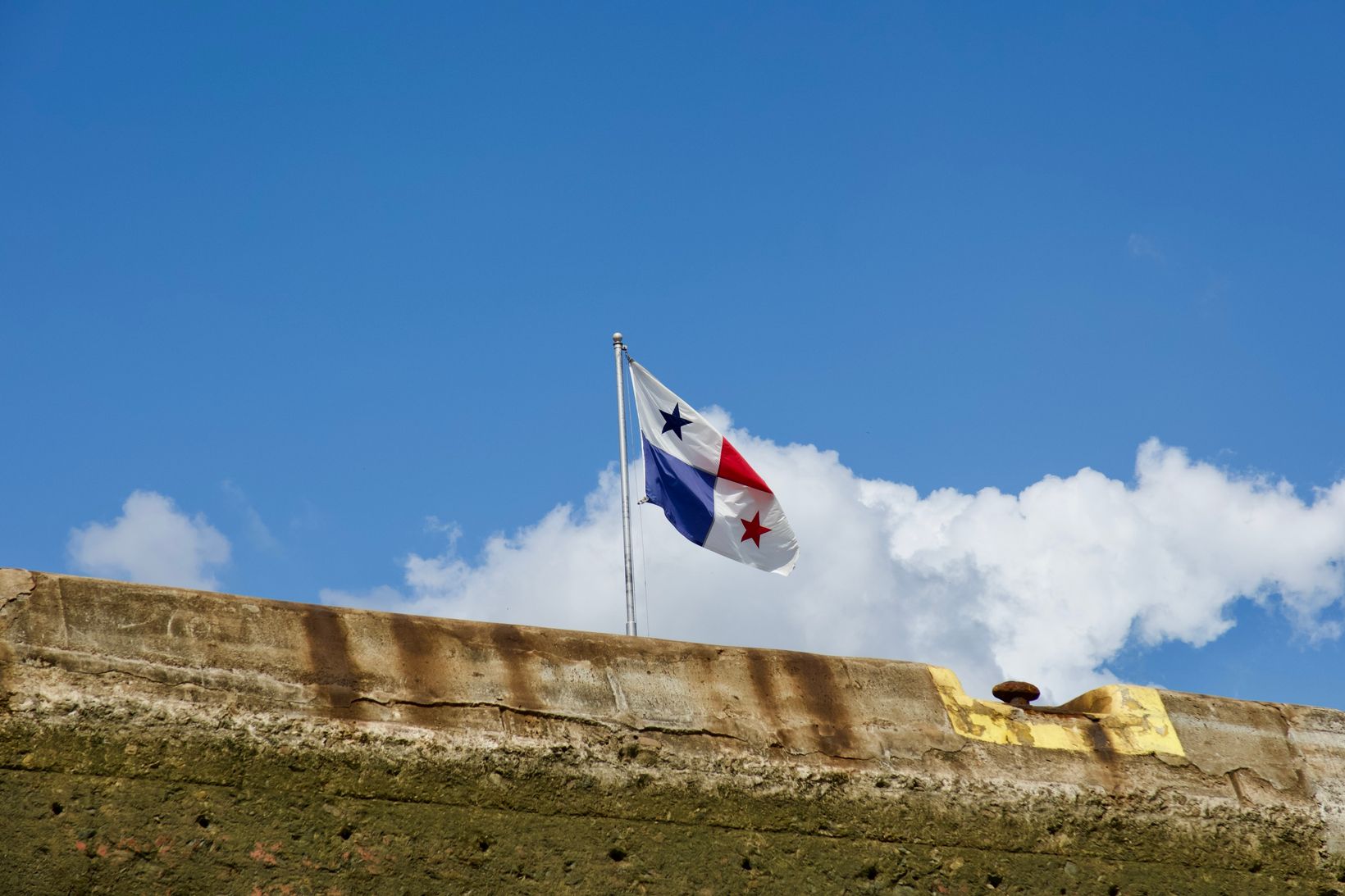
Supervised Line Handling
The other bottleneck is the advisors — the experts who are required to ride along on every boat. They’re appointed by the Canal Authority and handle communication with the locks, pilots, and so on. But the advisors do this as a side hussle. If it happens to be holiday season, or they don’t fancy the extra income, the staff simply aren’t there and no sailing boats get locked through.
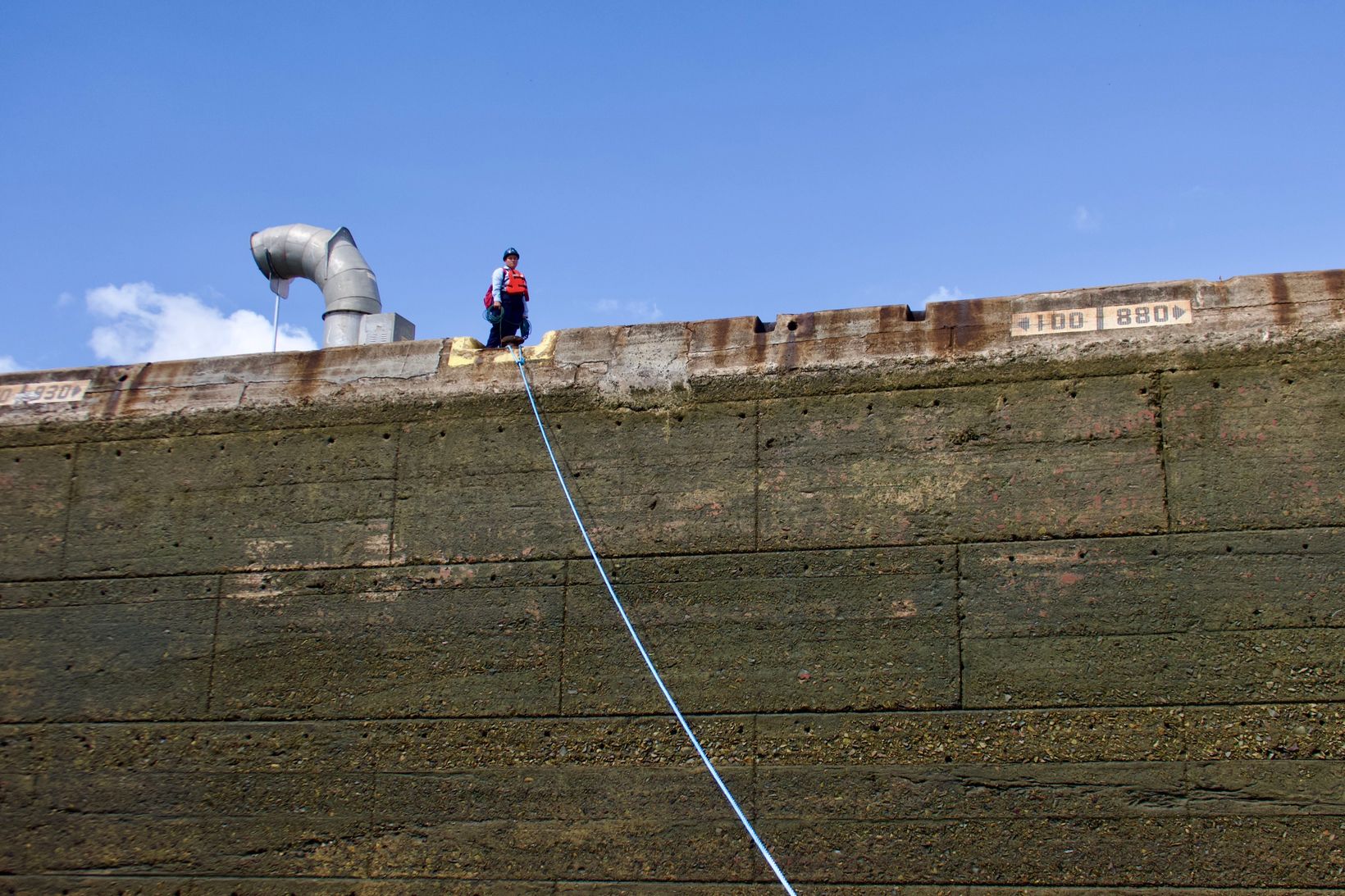
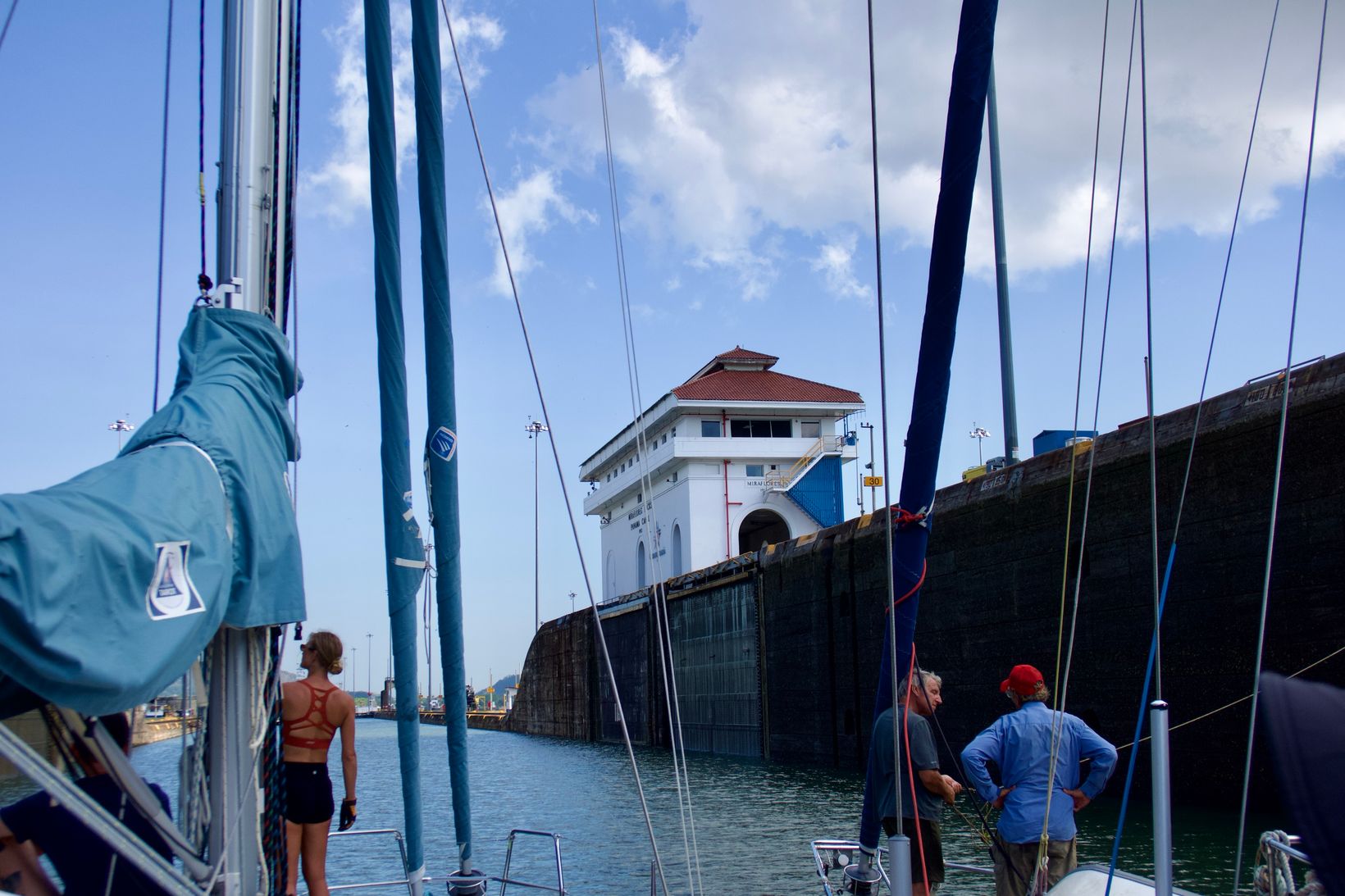
While we’re painting Nikola’s hull in the marina, we have to line up three people to come along and work the lines, plus four enormously long lines and enough fenders. The line handlers are mandatory. In the locks, they have to secure, tighten, release, and ease out the lines. However, it’s unusual for a single boat to handle all four lines since boats are typically rafted together in groups of two or three, and only the outer boats use two lines each.
Open the Gates
The day before our date, we ask the Canal Authority whether we’re up in the morning or the afternoon. And lo and behold: we’re not up at all. There’s a shortage of advisors, so we go a day later. We’re told to meet the pilot boat at the relevant buoy at five in the morning. Luckily, our wonderful line handlers are flexible enough to come along a day later too. Otherwise, we would have been in quite a lot of trouble.
The big day begins in a hurry. At half past four the pilot radios to ask where we are. So we chase the crew out of the shower and rush off. The advisors tie us together with two other boats into a raft of three. Together we now have to steer with real care to line up for the locks. Not easy, but we pull it off.
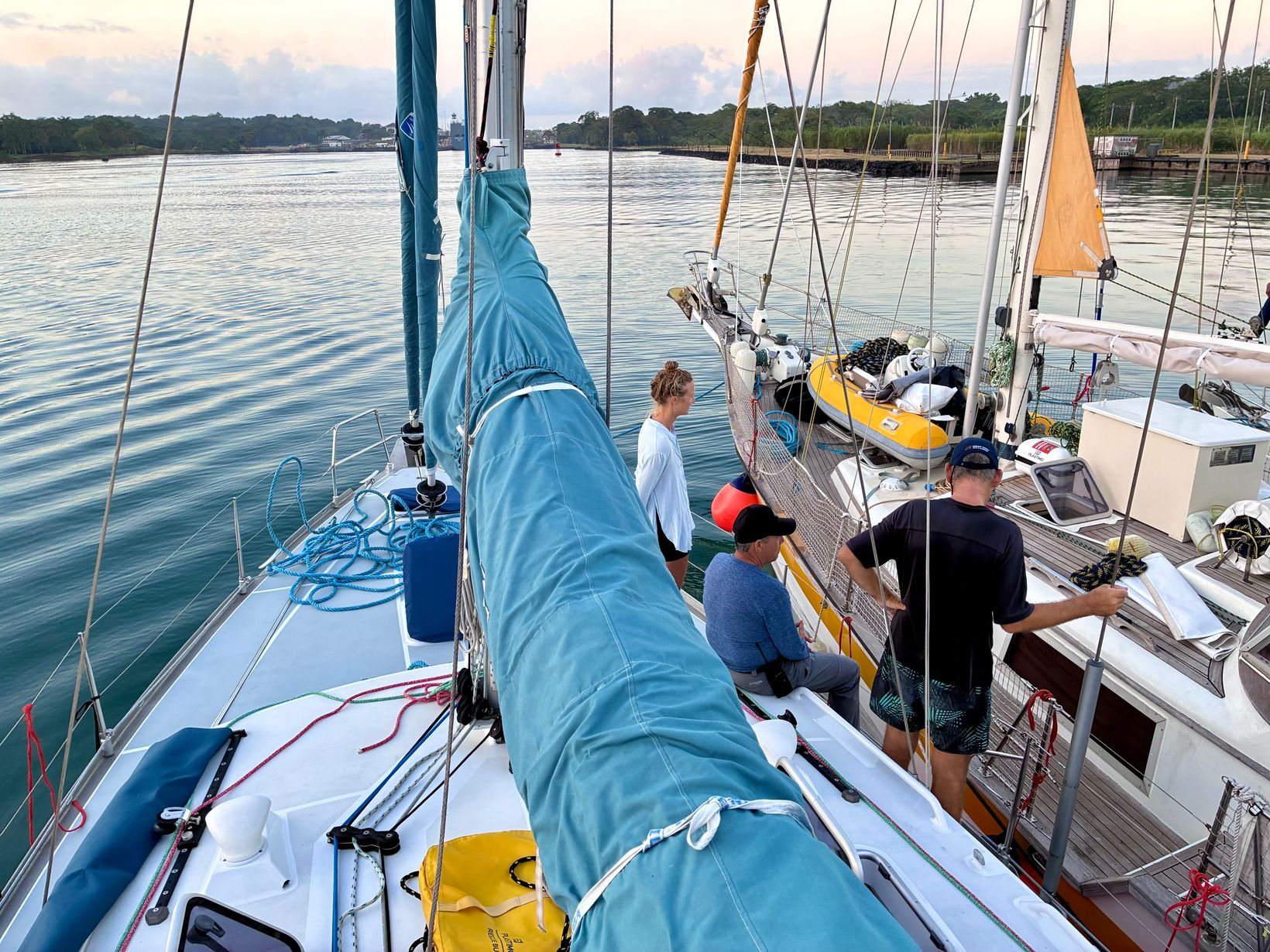
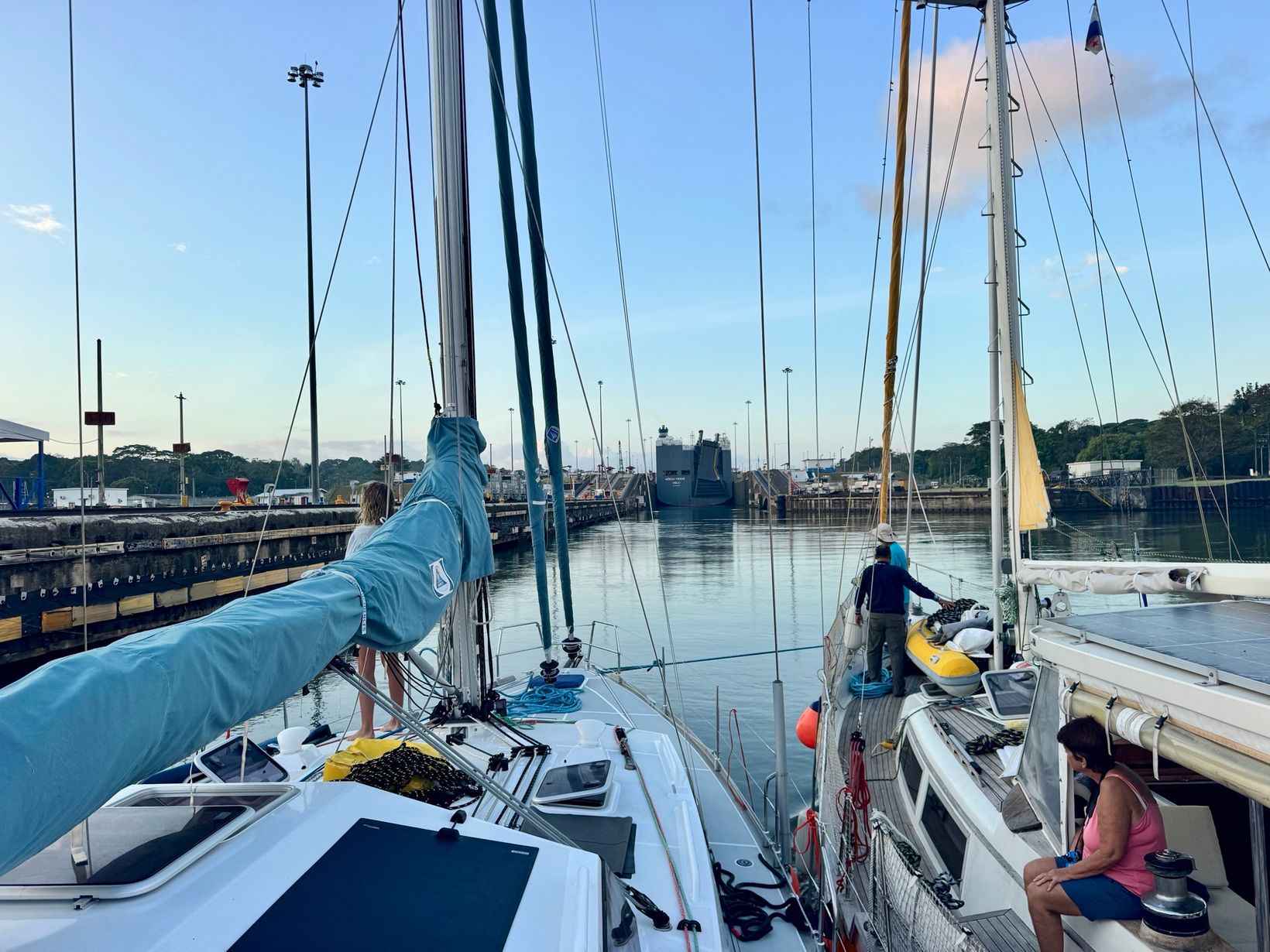
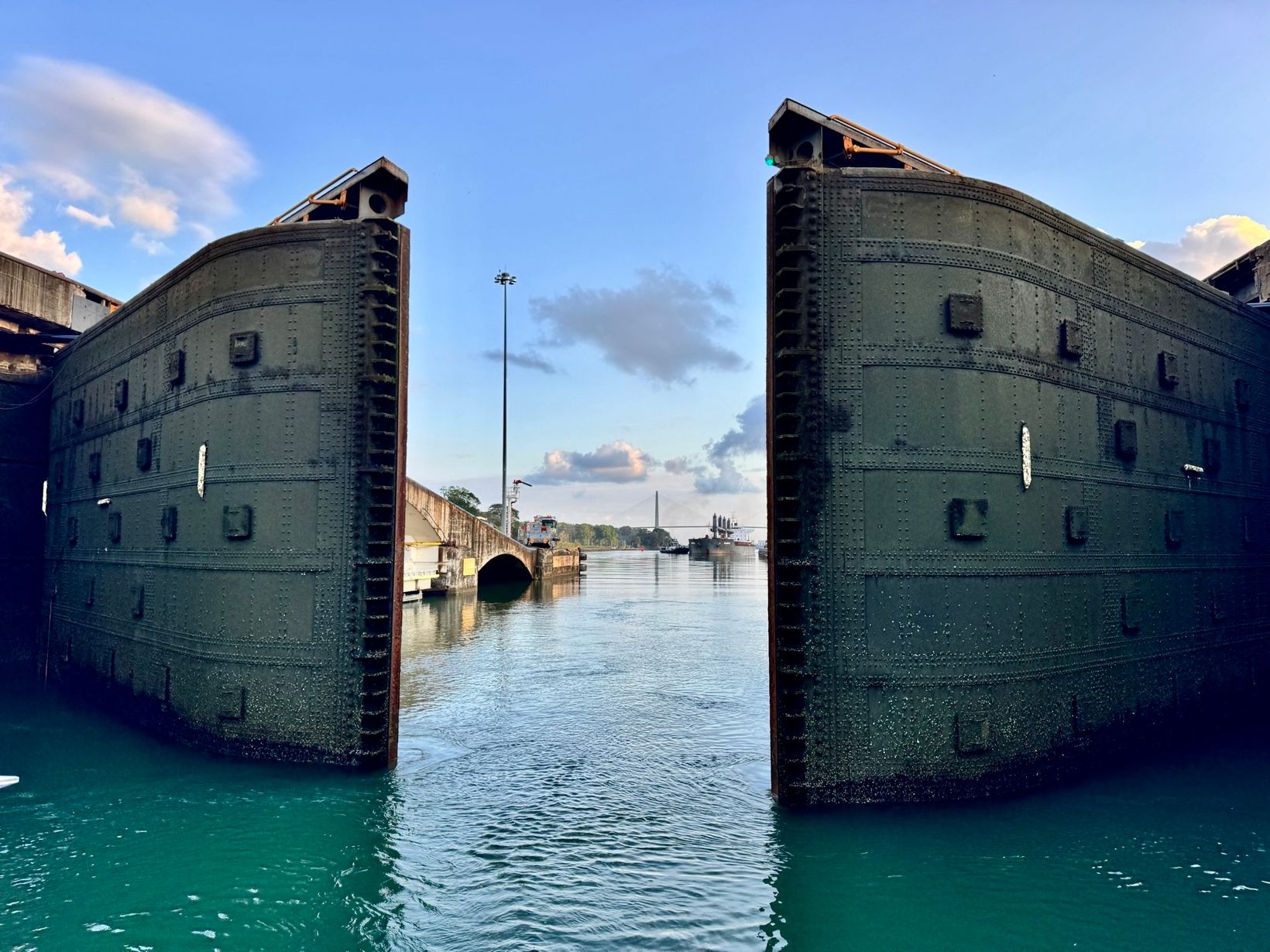
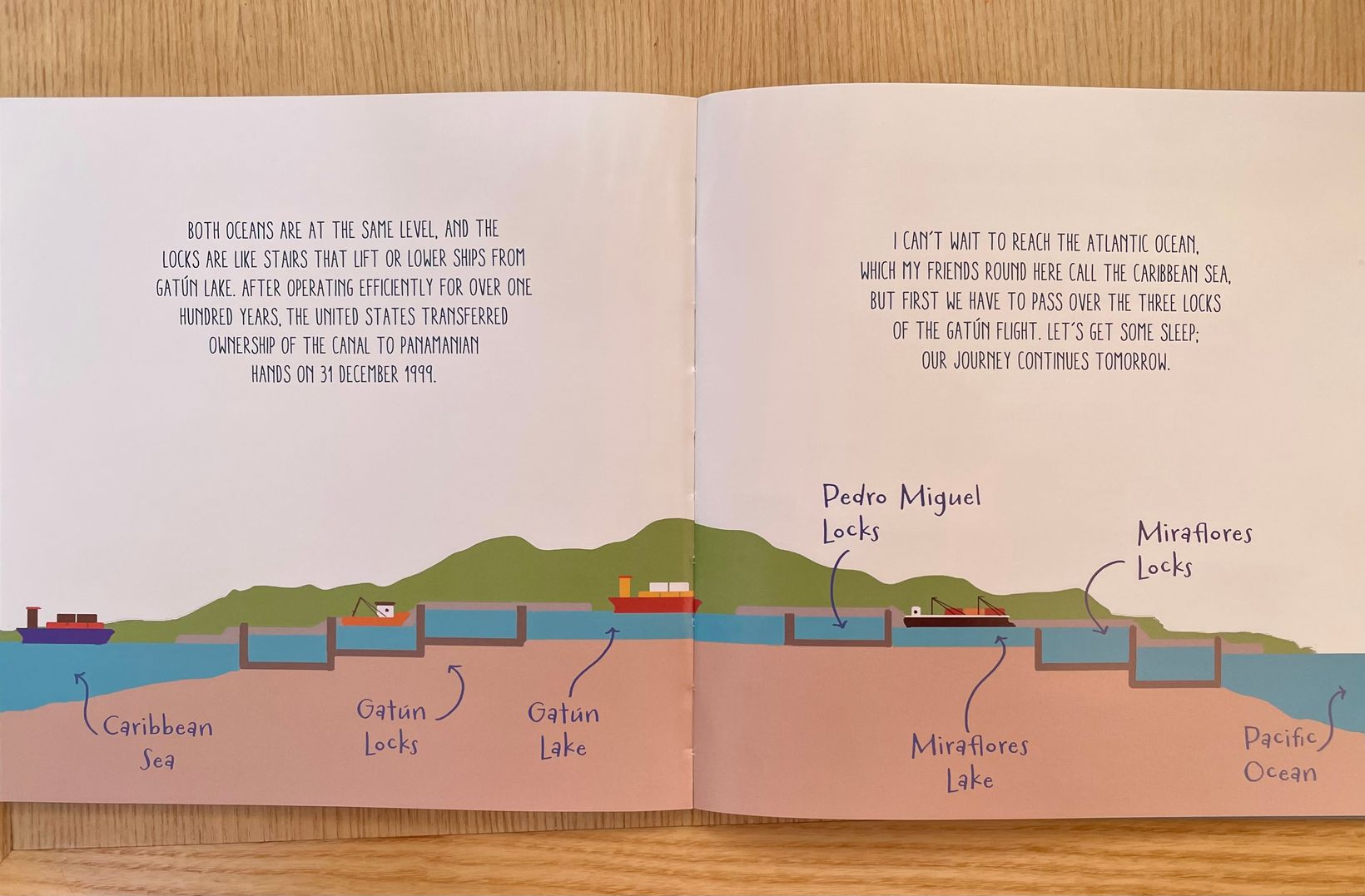
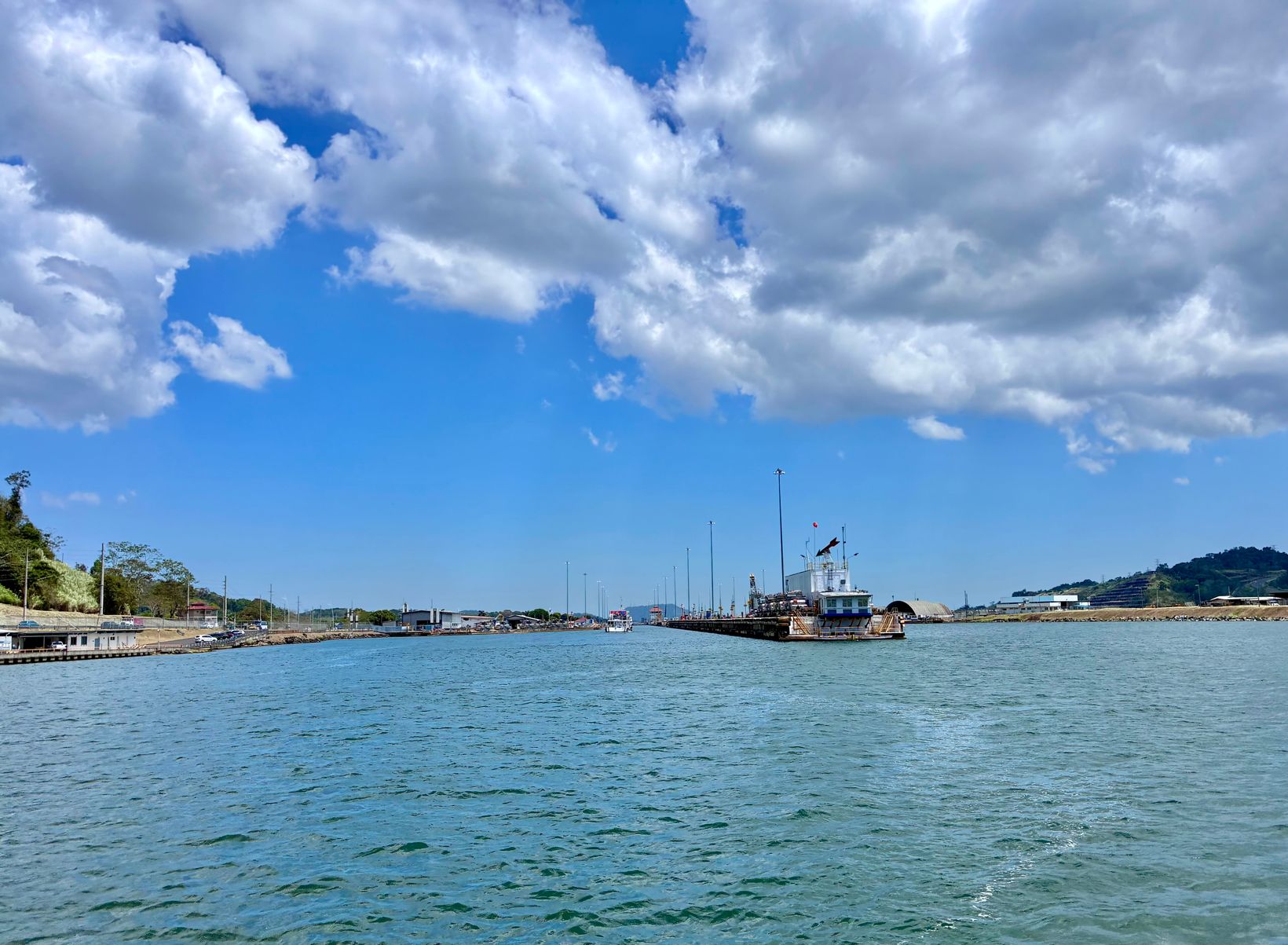
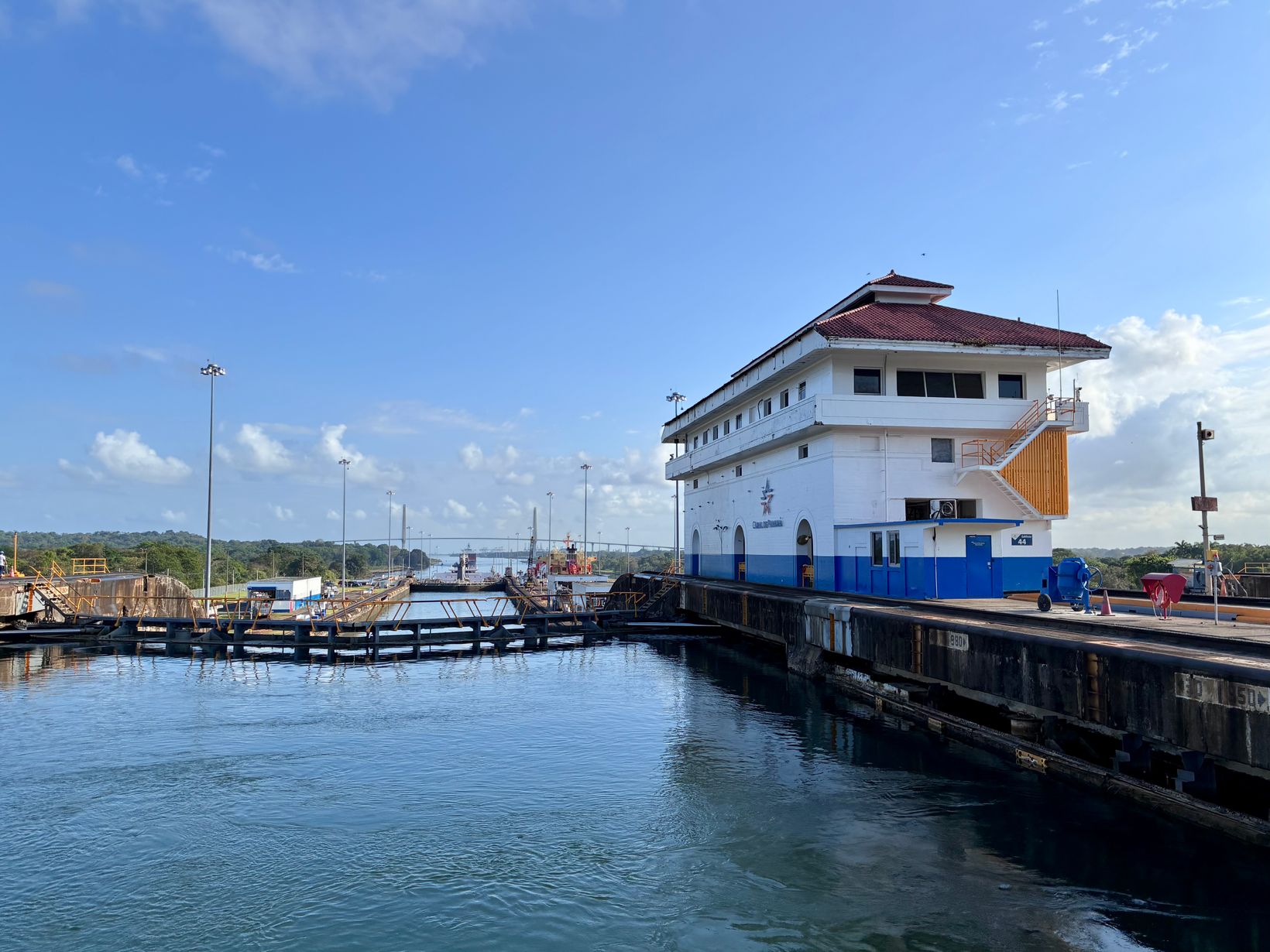
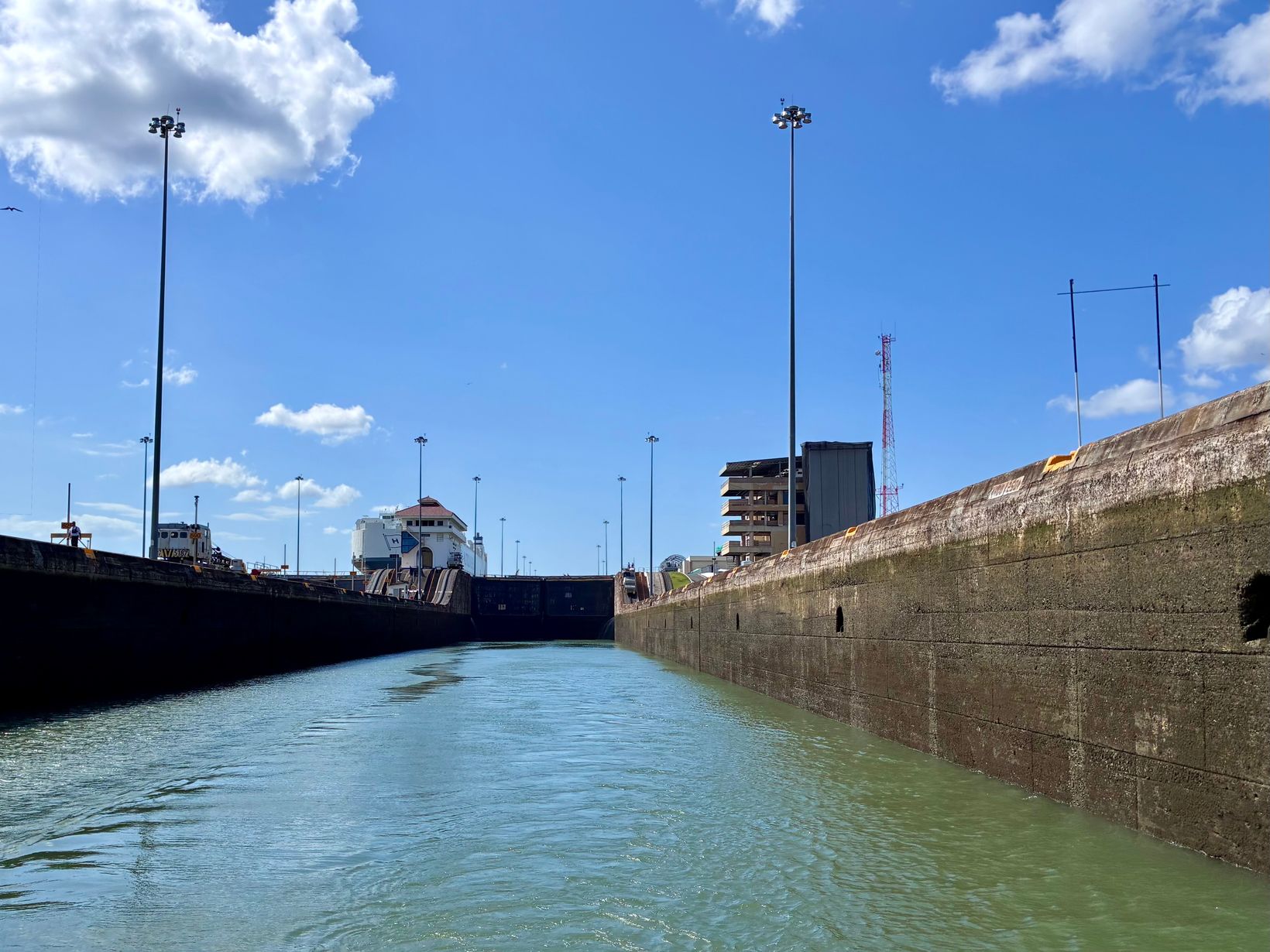
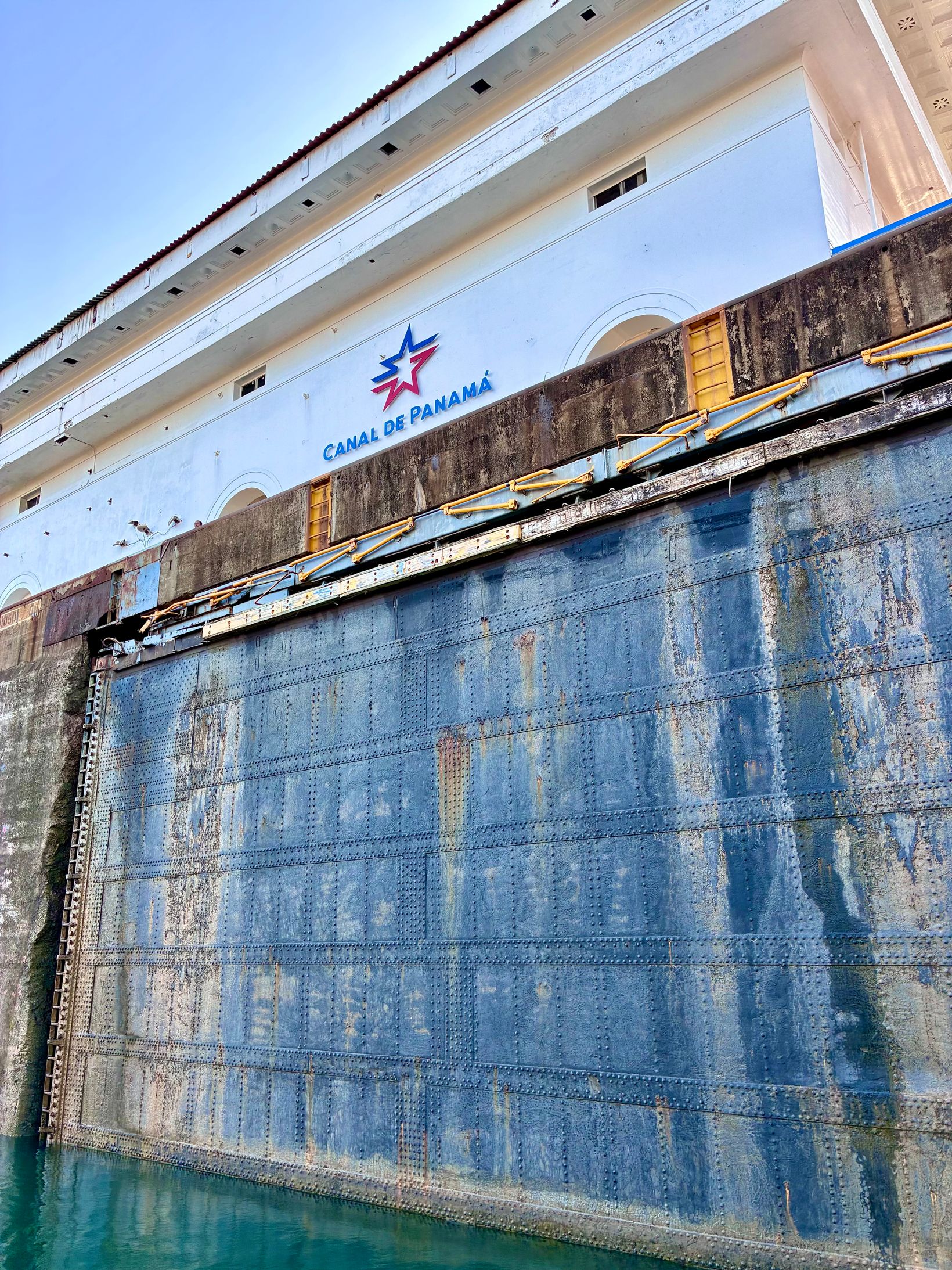
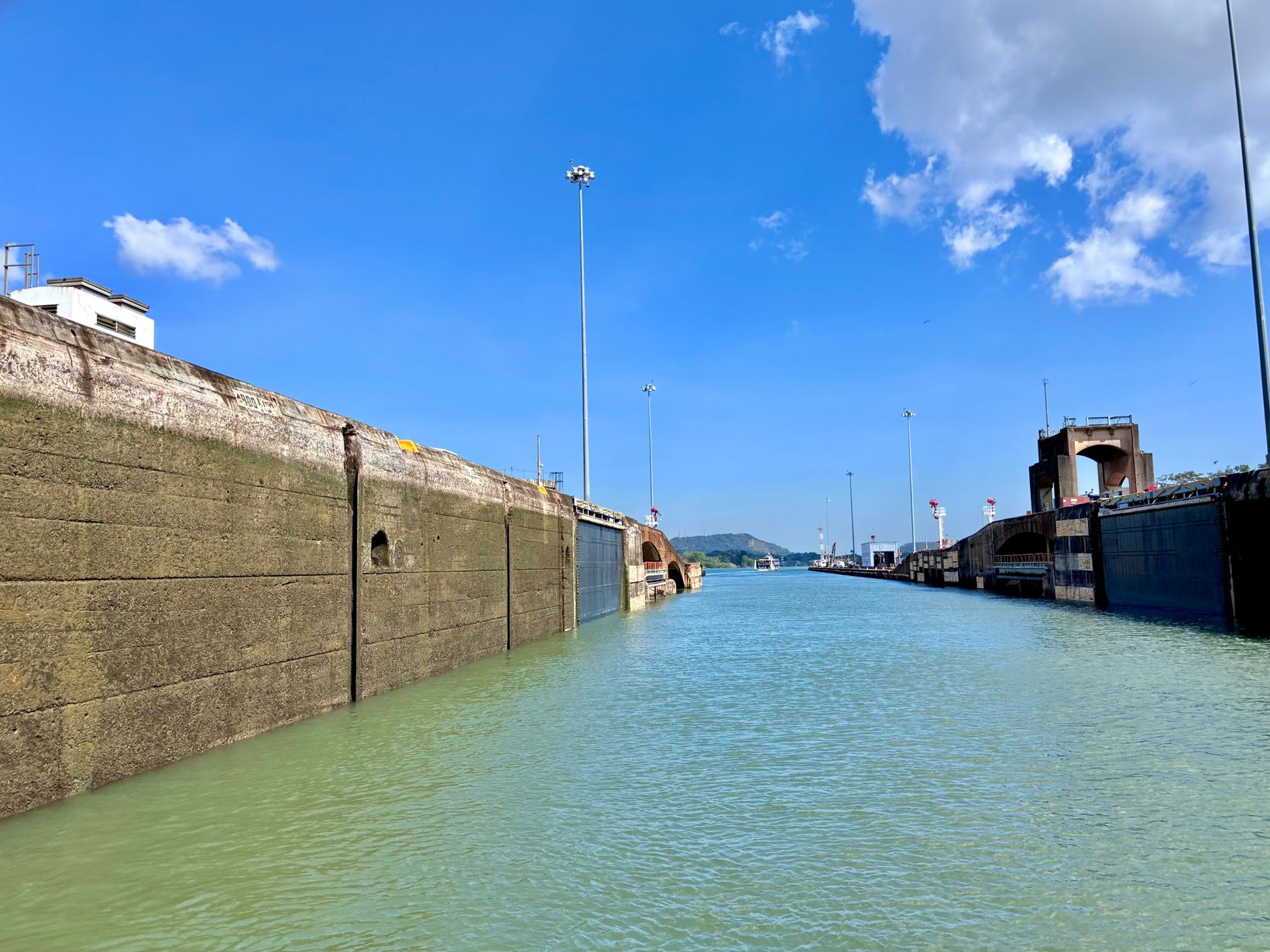
First, it’s uphill. In the Gatún Lock we’re lifted 26 meters and spat out onto the artificially dammed but picturesque Gatún Lake. To gain that height, we work hard in the three lock chambers, hauling in meter after meter of line.
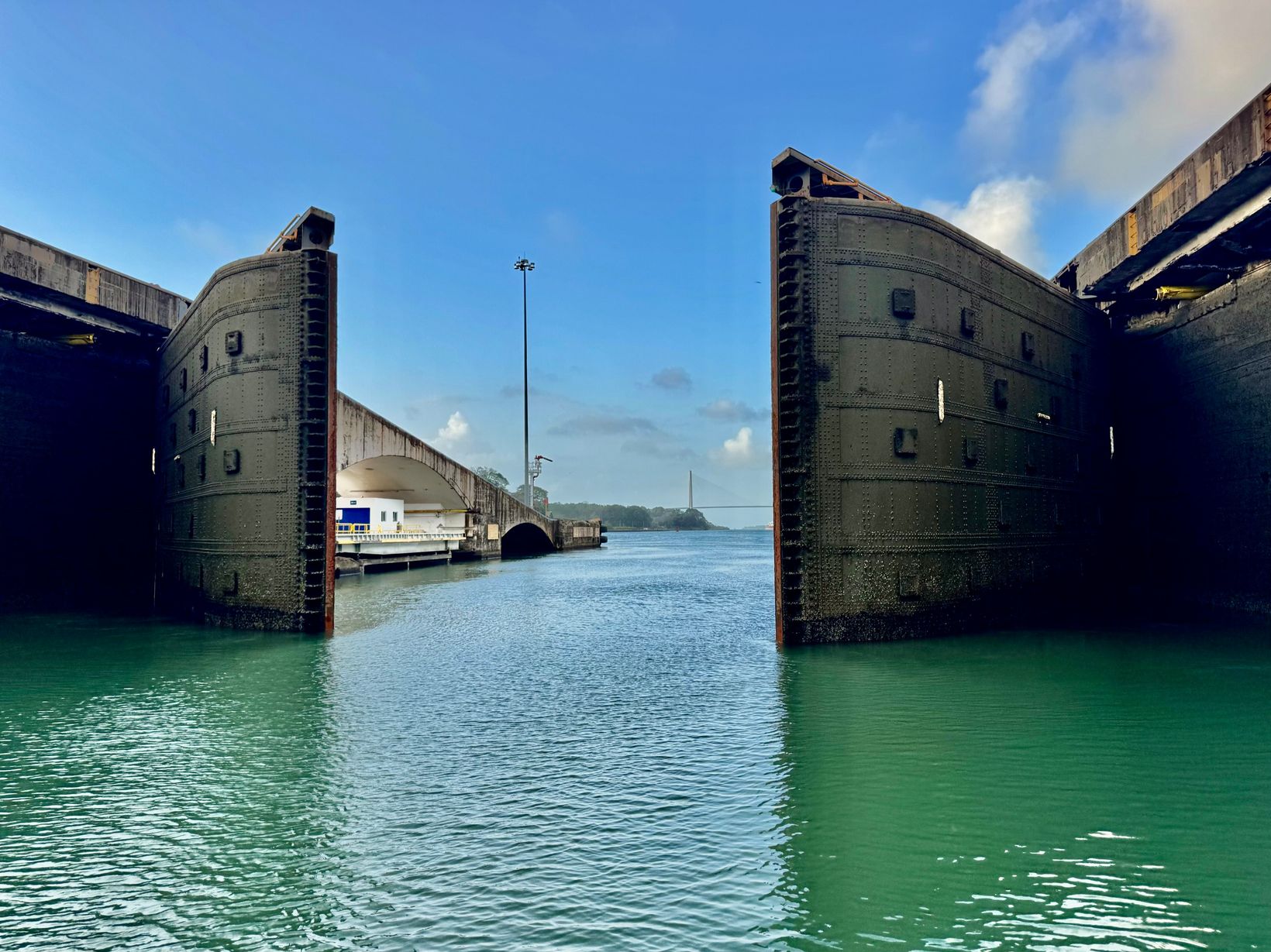
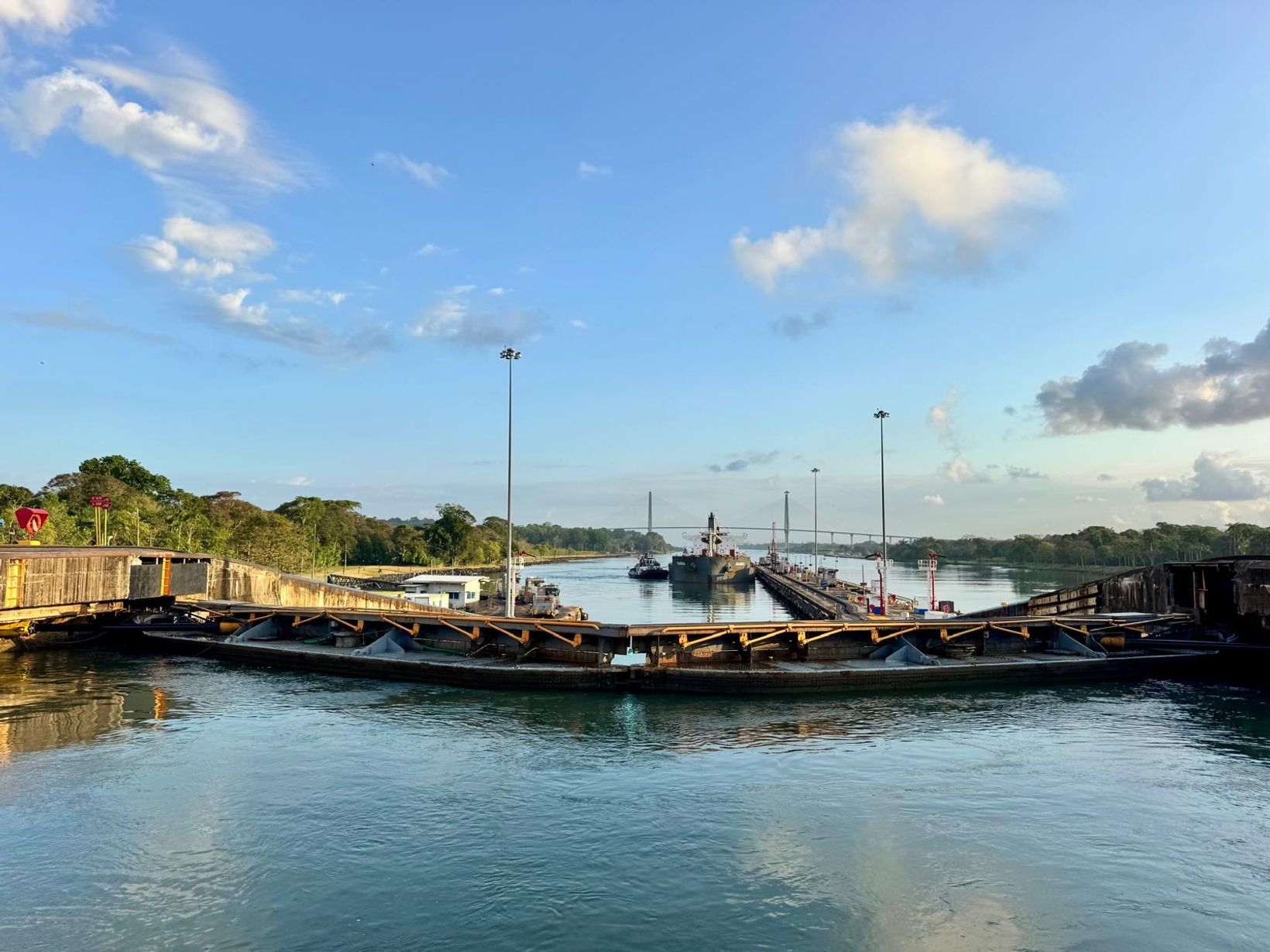
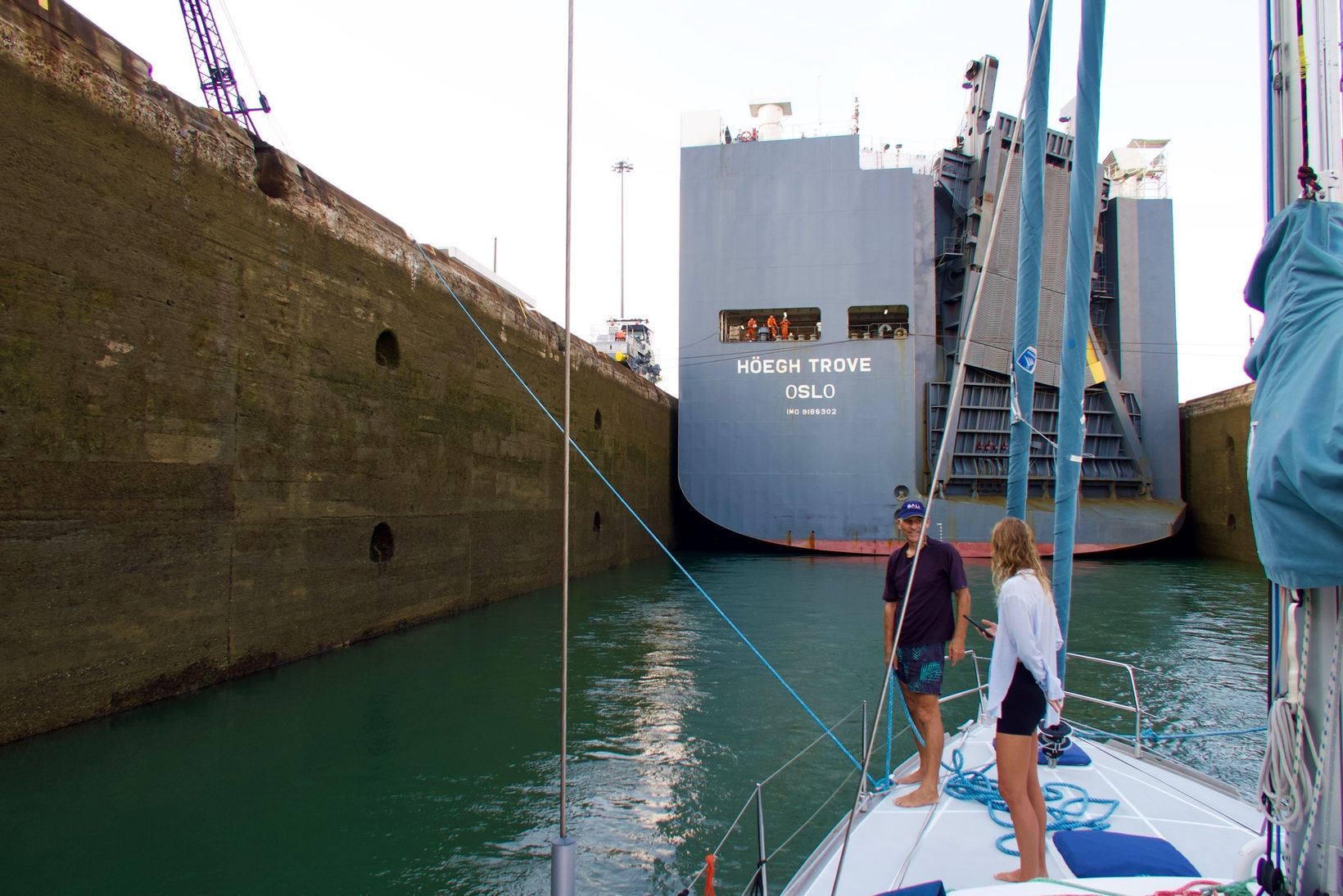
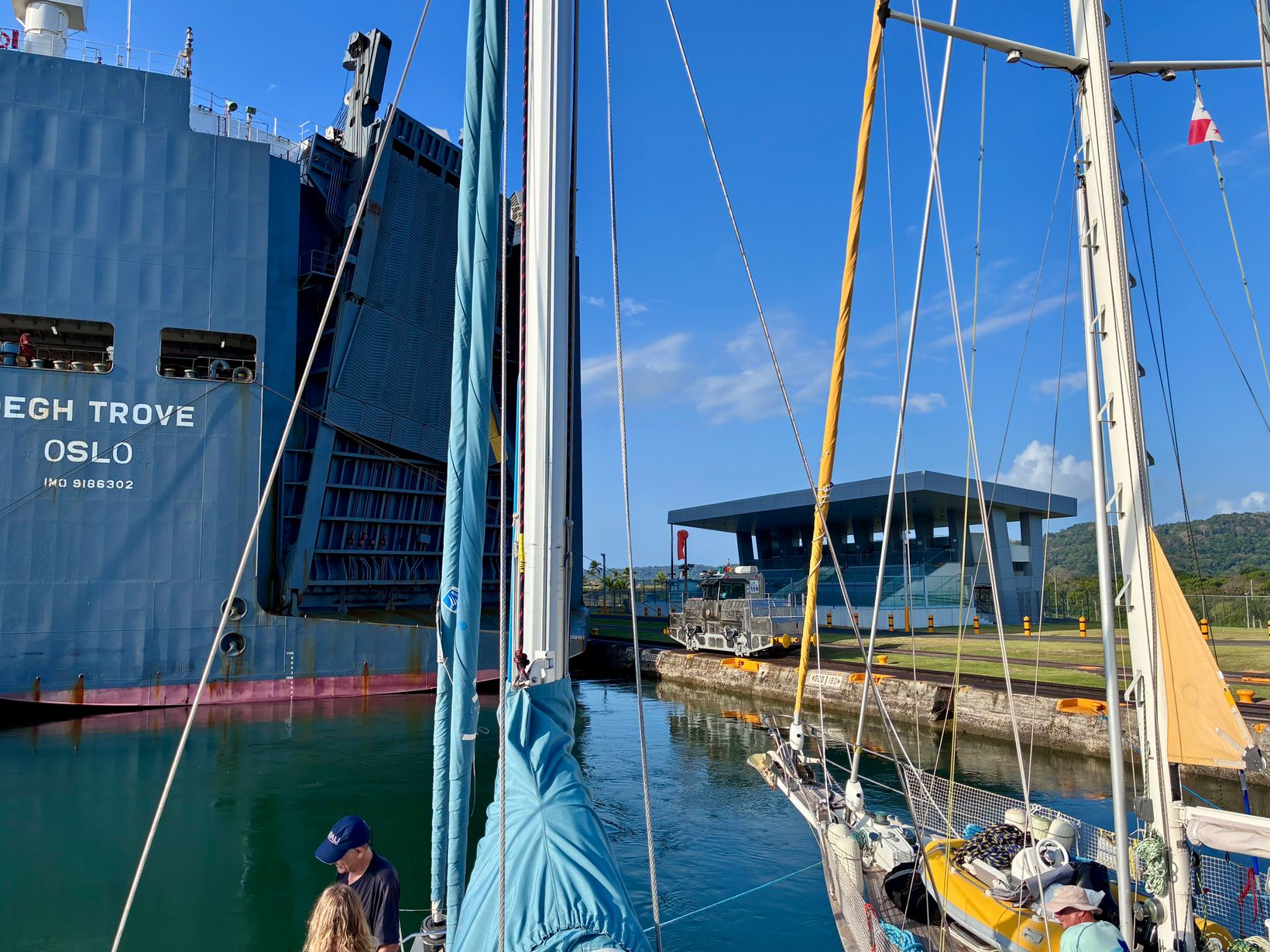
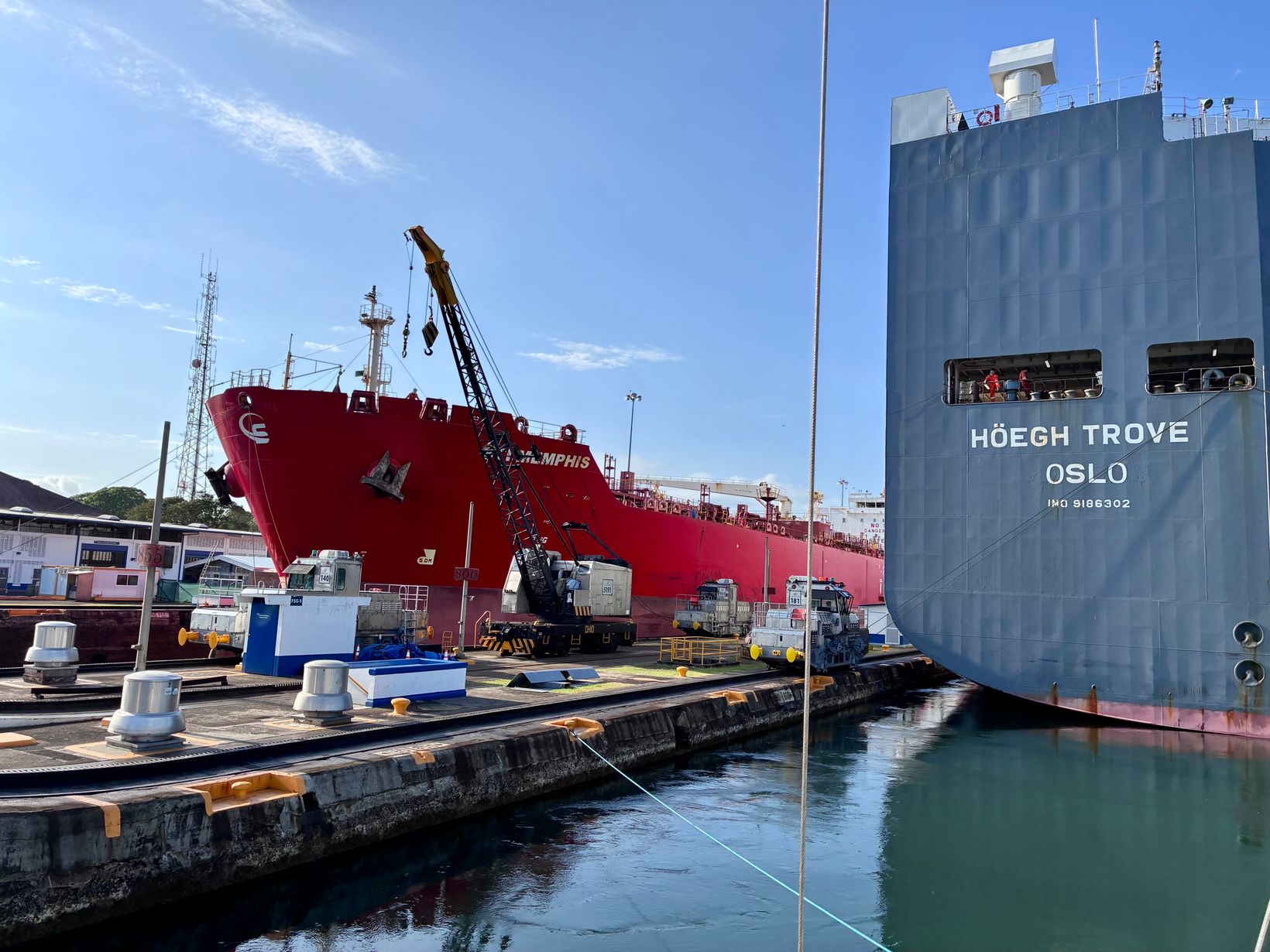
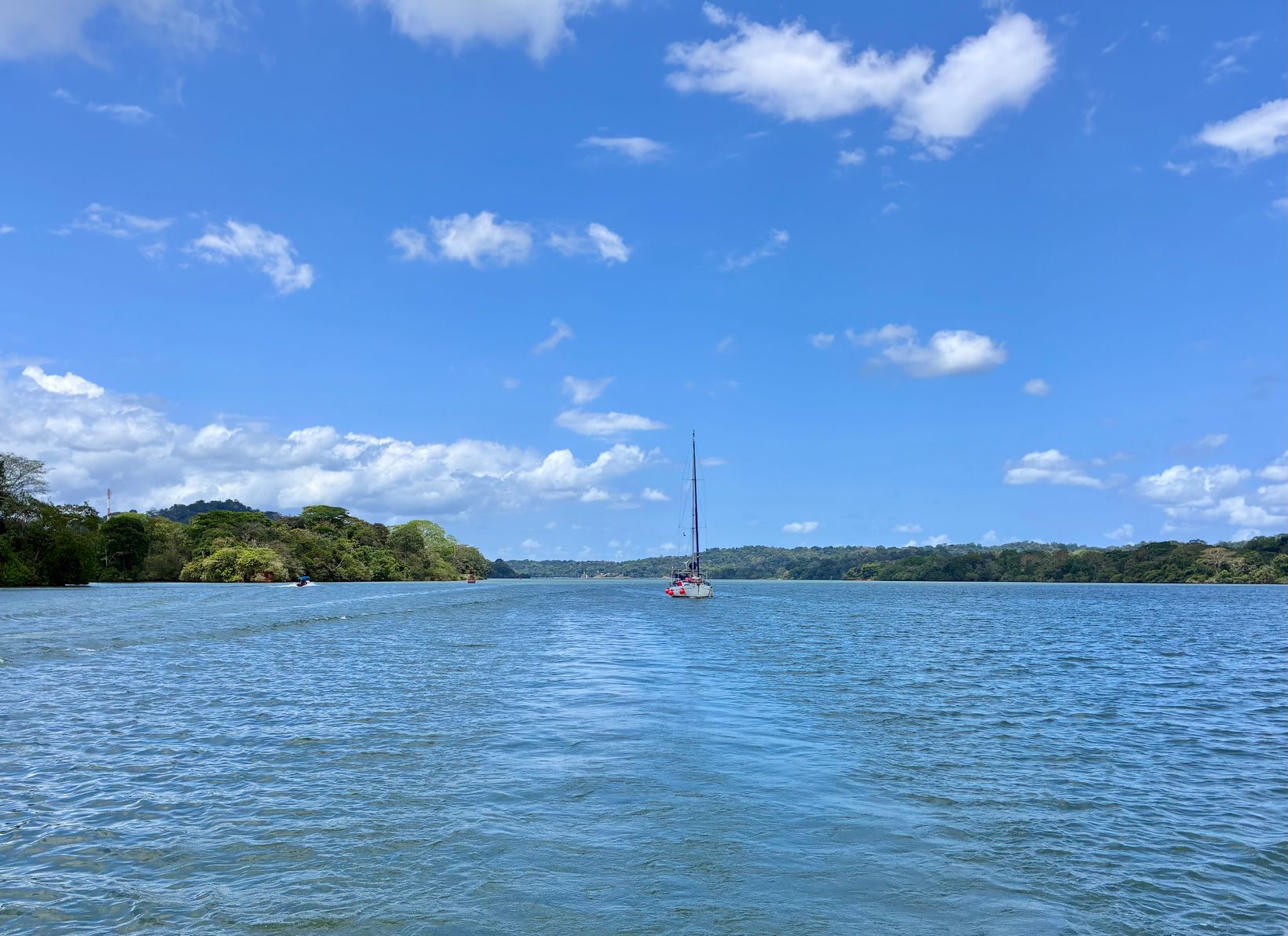
From there, we head through the mountains via the Culebra Cut to the Pedro Miguel Lock. On the long way there, the three boats get separated. One can’t keep up the pace, so from then on we lock through as just a pair.
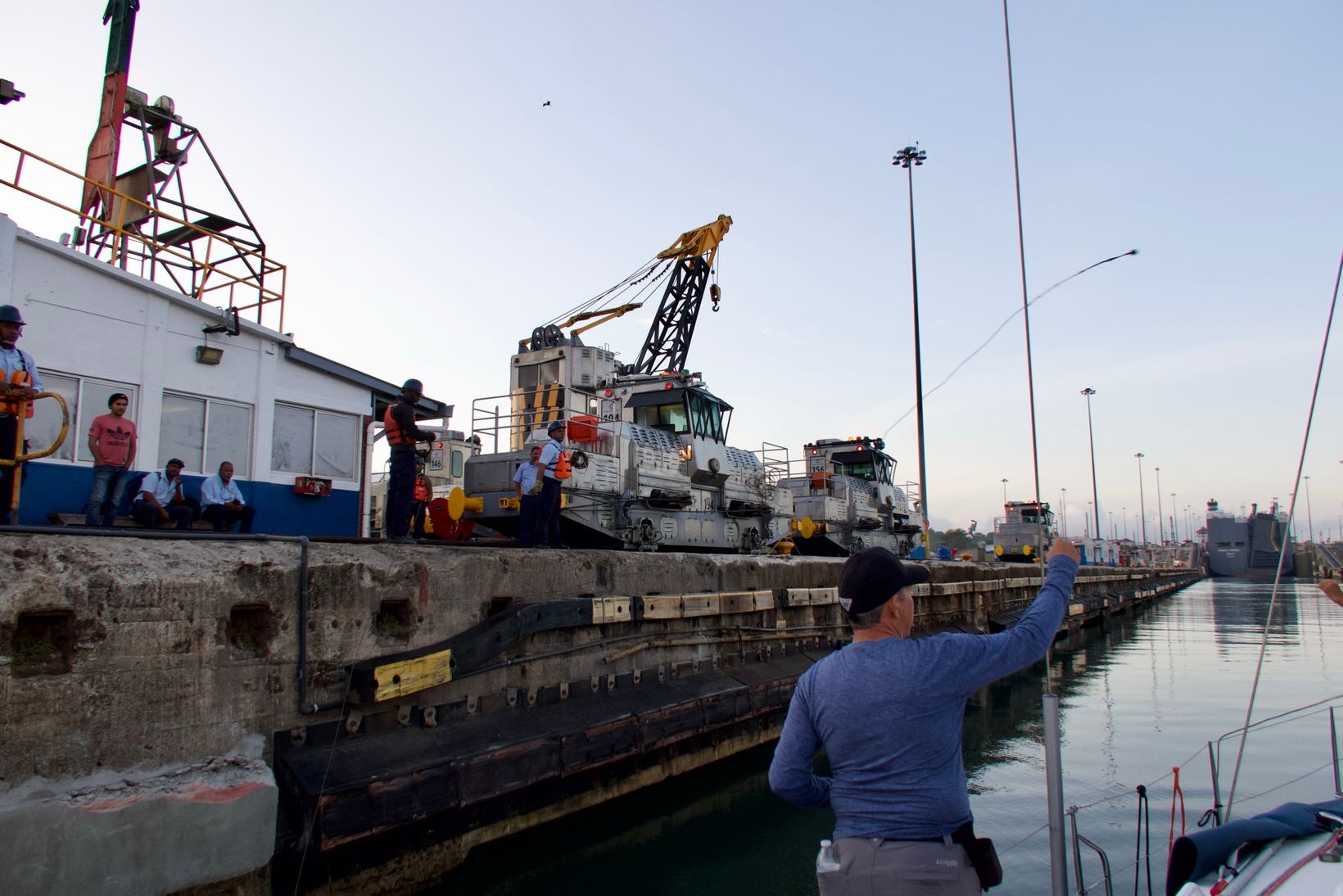
While we wait in the lock, we spot a setup that looks as though the canal workers train there for distance and target throwing with their monkey’s fists. They need those to haul the long mooring lines from the boats to shore and tie them up. The advisor, though, reckons it was built for an annual competition among all the staff, with a motorcycle to be won — a tradition introduced by the Americans. We’d say a little more practice with the monkey’s fists might not have hurt.
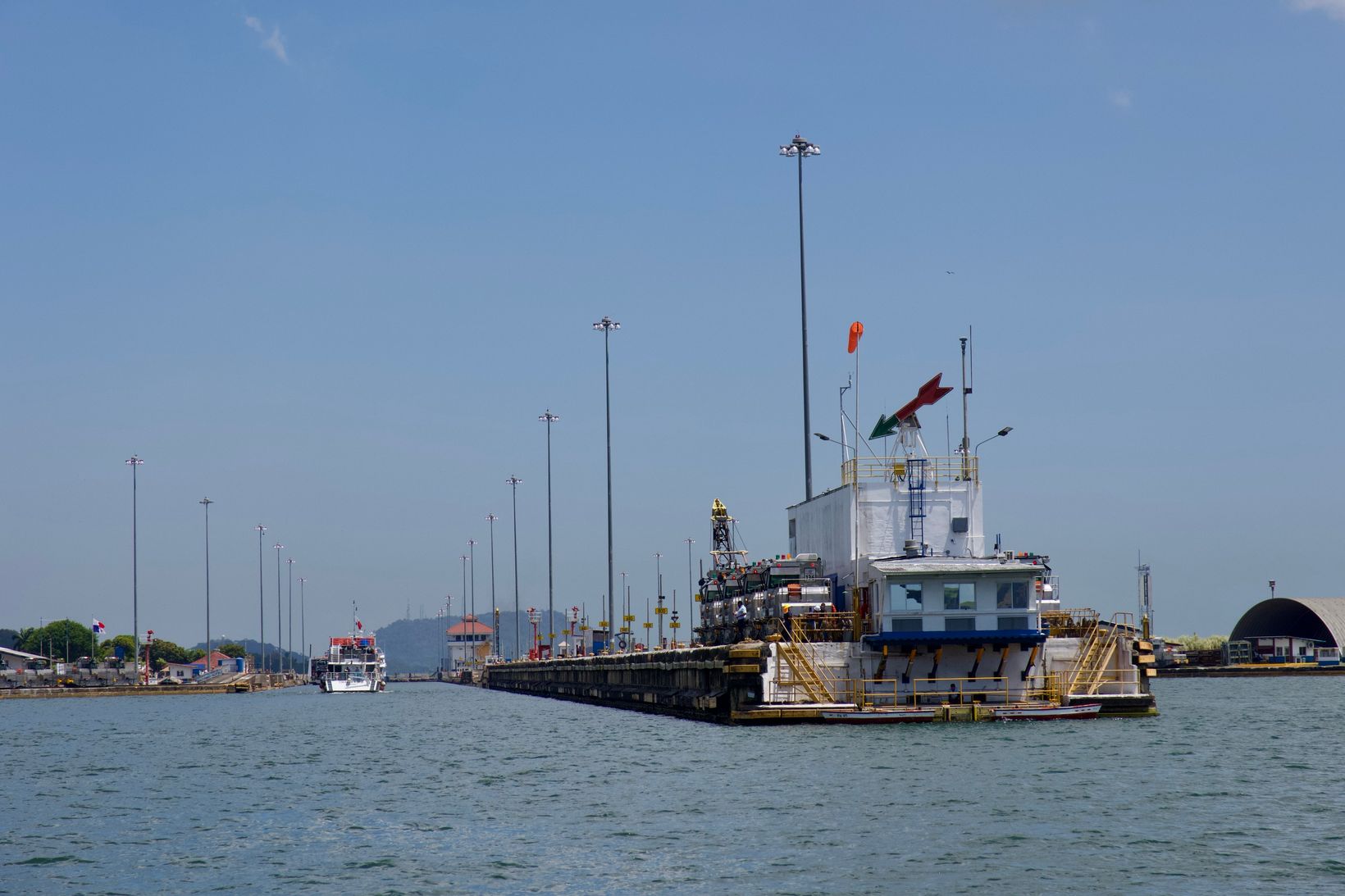
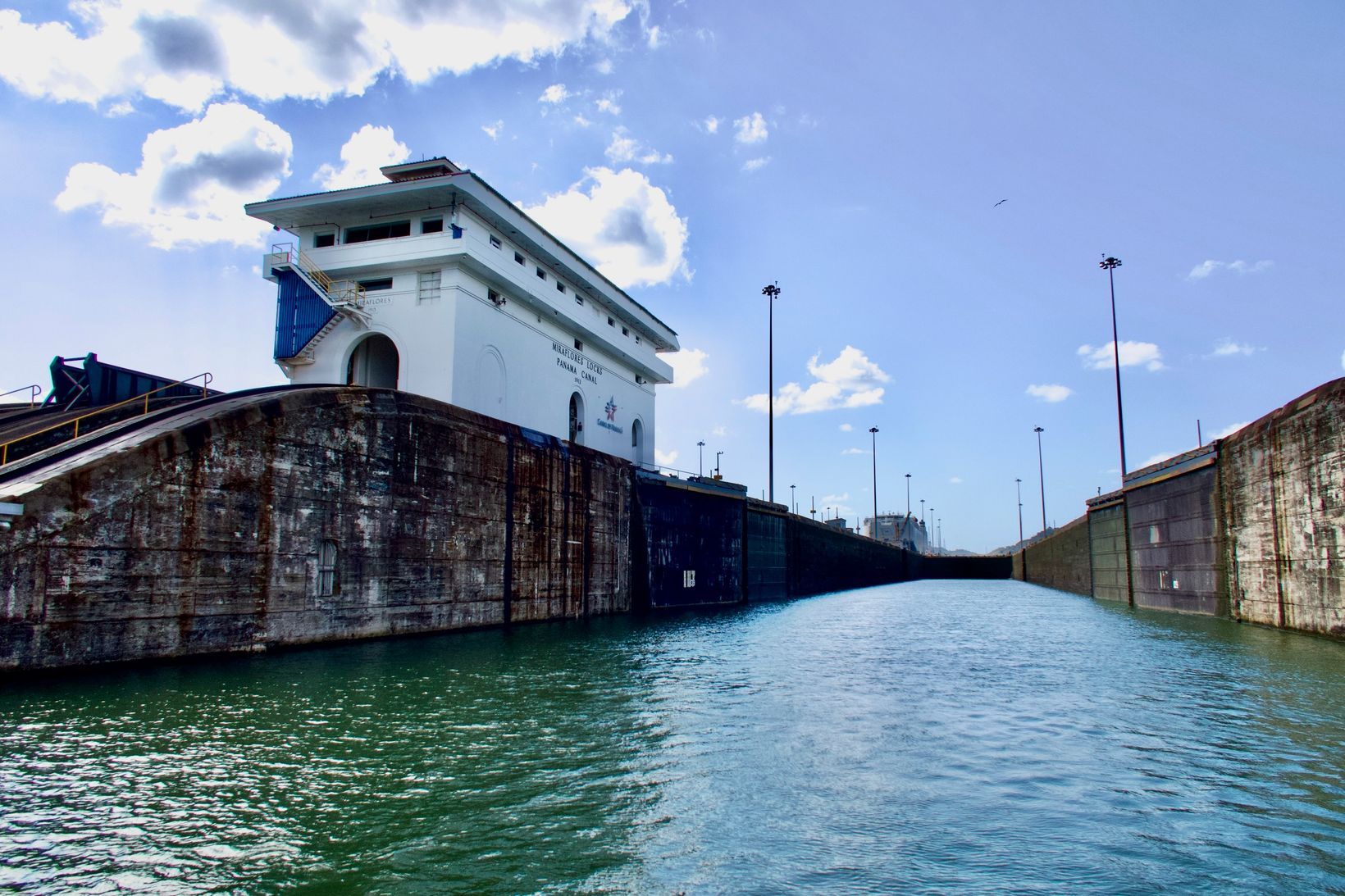
After the Pedro Miguel Lock, it’s back downhill with the help of the Miraflores Lock. Unfortunately, we’re behind an excursion steamer and too far from the visitor grandstand to wave.
Pacific ahead
The day swings between long waits and sudden bursts of activity. In the end, everything goes well, the advisor is happy with our work, and we watch the final lock gate swing open. The Pacific lies before us. We know that this marks a milestone of our voyage and that a wonderful chapter is coming to a close. And yet, out of honest exhaustion, we don’t quite feel it straight away. First we drop our fantastic line handlers ashore, hand back the fenders and lines, gaze into our first Pacific sunset, and fall wearily into our rocking bunks off Panama City.
The Panama Canal with our Electric Motor
Before the transit, we wondered how the Oceanvolt electric motor would hold up. We had a healthy respect for the long stretch under motor power. What if there were a headwind, or some current made life hard for us? Would we be the weak link in the raft, hindering the whole operation? Understandably, we weren’t allowed to use the sails in the canal.
We’d hoped for a transit streched over two days, so we wouldn’t have to manage the 50 nautical miles in one go. In the end, though, doing it in a single day proved more than manageable. To be safe, we’d stated in the documents that we could only hold a minimum speed of five knots. No one really cared, though. The advisor wanted to be home early and set a pace of six and a half knots. Funnily enough, it wasn’t us who couldn’t keep up and dropped out of the raft. Thanks to the waiting times in the locks and on Gatún Lake, we had plenty of time to charge the batteries with the generator. A glance at the state of charge never gave us the slightest worry. And had we also remembered to take the masking tape out of the cooling-water through-hull after painting, the motor wouldn’t even have overheated. All in all, a successful day for us and the electric motor.