How Hard Can It Be
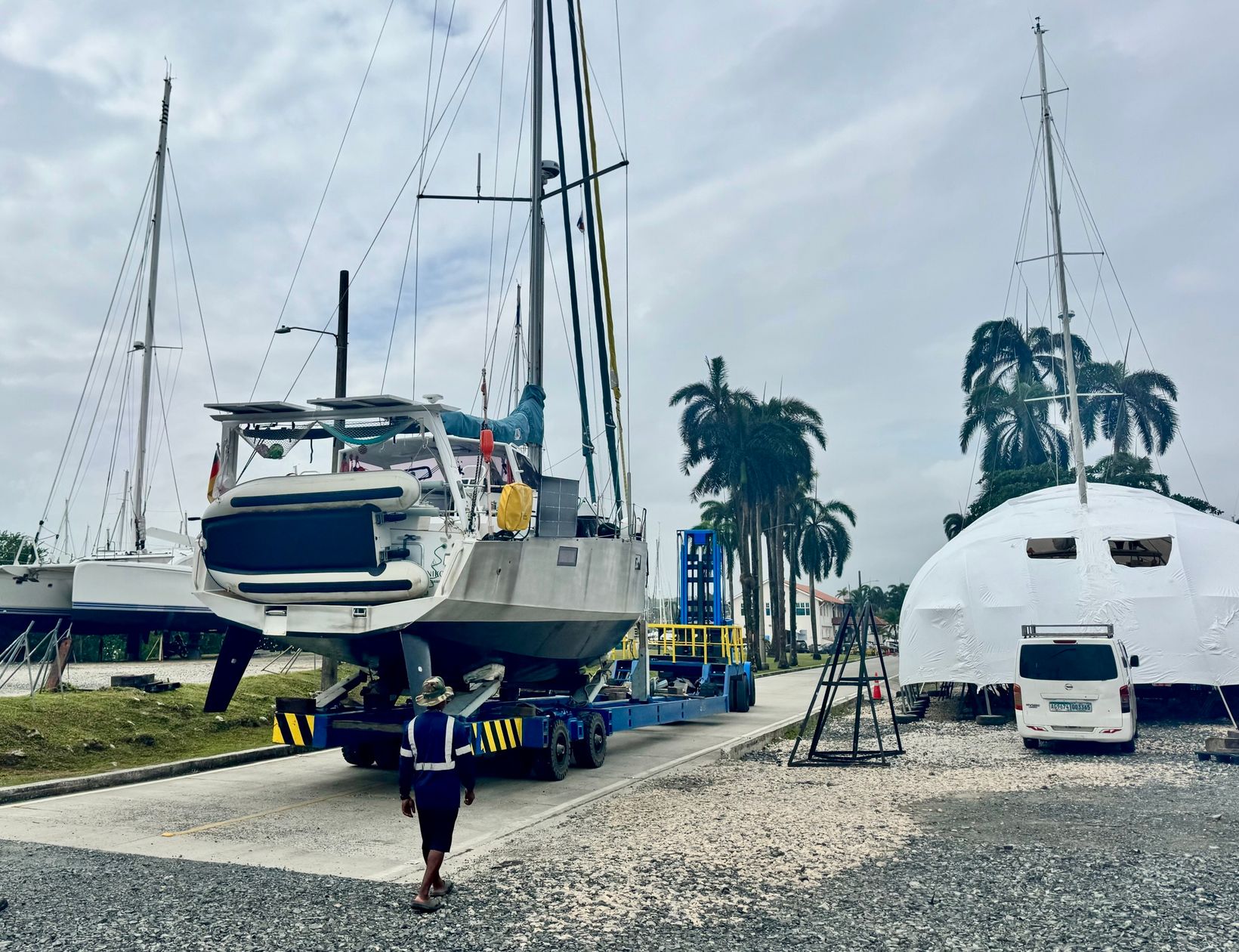
Some lessons are hard and painful. The subject of antifouling is exactly that kind of lesson — one that cost us a good deal of nerve and some seriously sore muscles.
In principle it’s simple. Everything on a boat that sits below the waterline gradually gets alive. Biofilm, algae, and barnacles collect on the hull, keel, and propeller. After a while that’s not just a cosmetic problem — it is like a handbrake. So the smoother the hull, the better, and the faster.
When Nikola was built, we didn’t think much about it and trusted the shipyard’s expertise. After the Atlantic crossing, though, there was not much of the coating left to see, and Nikola was playing water taxi for marine organisms of every kind. How we made it all the way to Canada remains a mystery.
Antifouling — Act One
In Nova Scotia, though, dear Nikola was finally hauled out for a proper fresh coat. After a lot of sweaty work ashore and a few months moving through the water, the hull fouled up again fairly quickly despite the new paint, and the coating didn’t work as it was supposed to. We’d received a faulty batch of the adhesive coat.
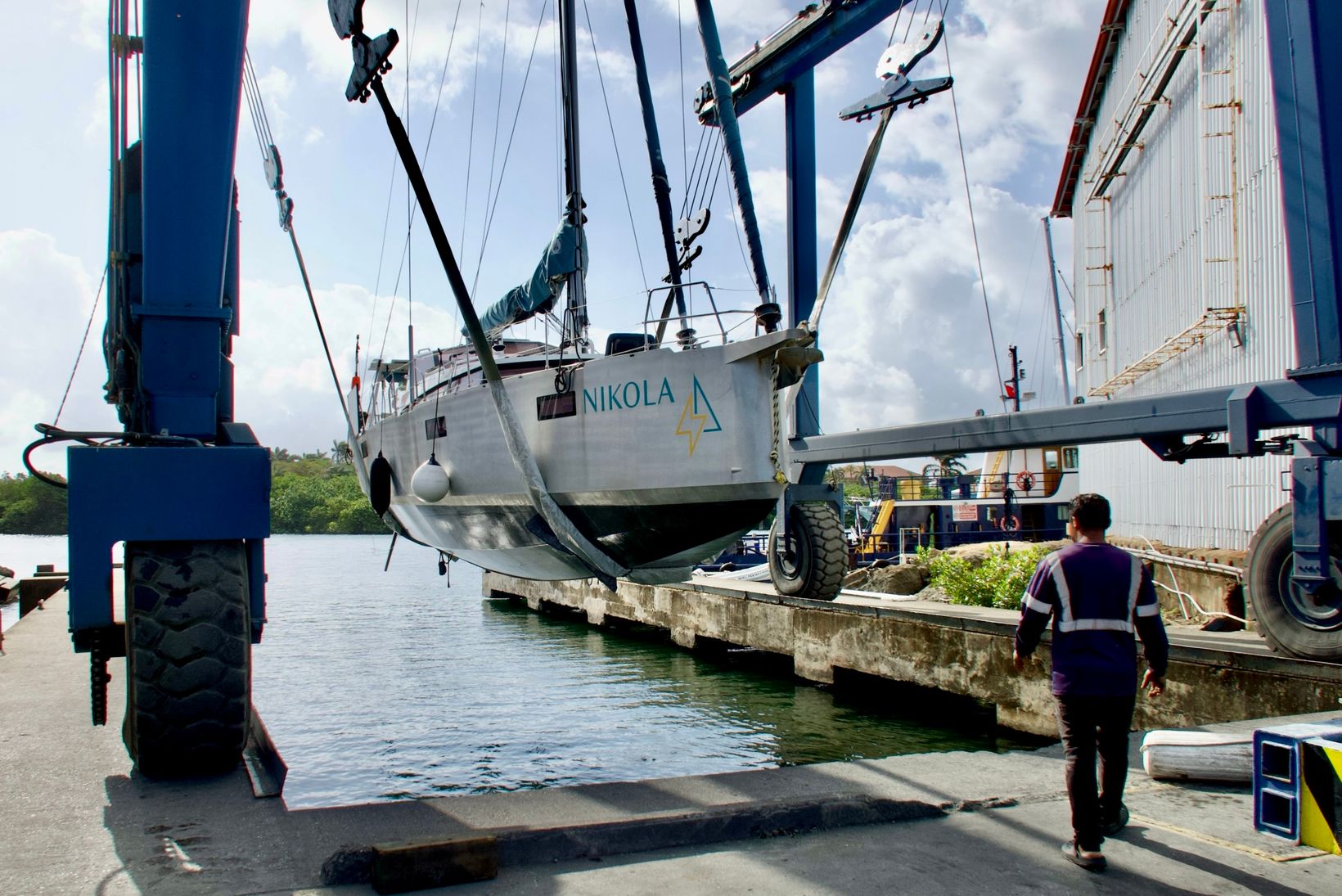
Now what? Should we sail across the Pacific, with no reliable prospect of a marina where we could repaint if needed? It would only get more and more complicated to have paint shipped to remote places. On top of that, the boat had to come out of the water in Panama, at least briefly, to be thoroughly cleaned. Otherwise the stop in the Galápagos, with all its biosecurity rules, would be too risky for us. And hauling out would further damage the soft coating, reducing its effectiveness even more. Which means: if we haul out, we also have to repaint.
Antifouling — Act Two
So we bite the bullet and plan for time on the hard. At least on the Atlantic side of Panama, Shelter Bay Marina is a professional place for boat work. But will the new paint reach Panama in time? Can we hold our slot for the canal transit? Will we make it across the Pacific in one season given the delay?
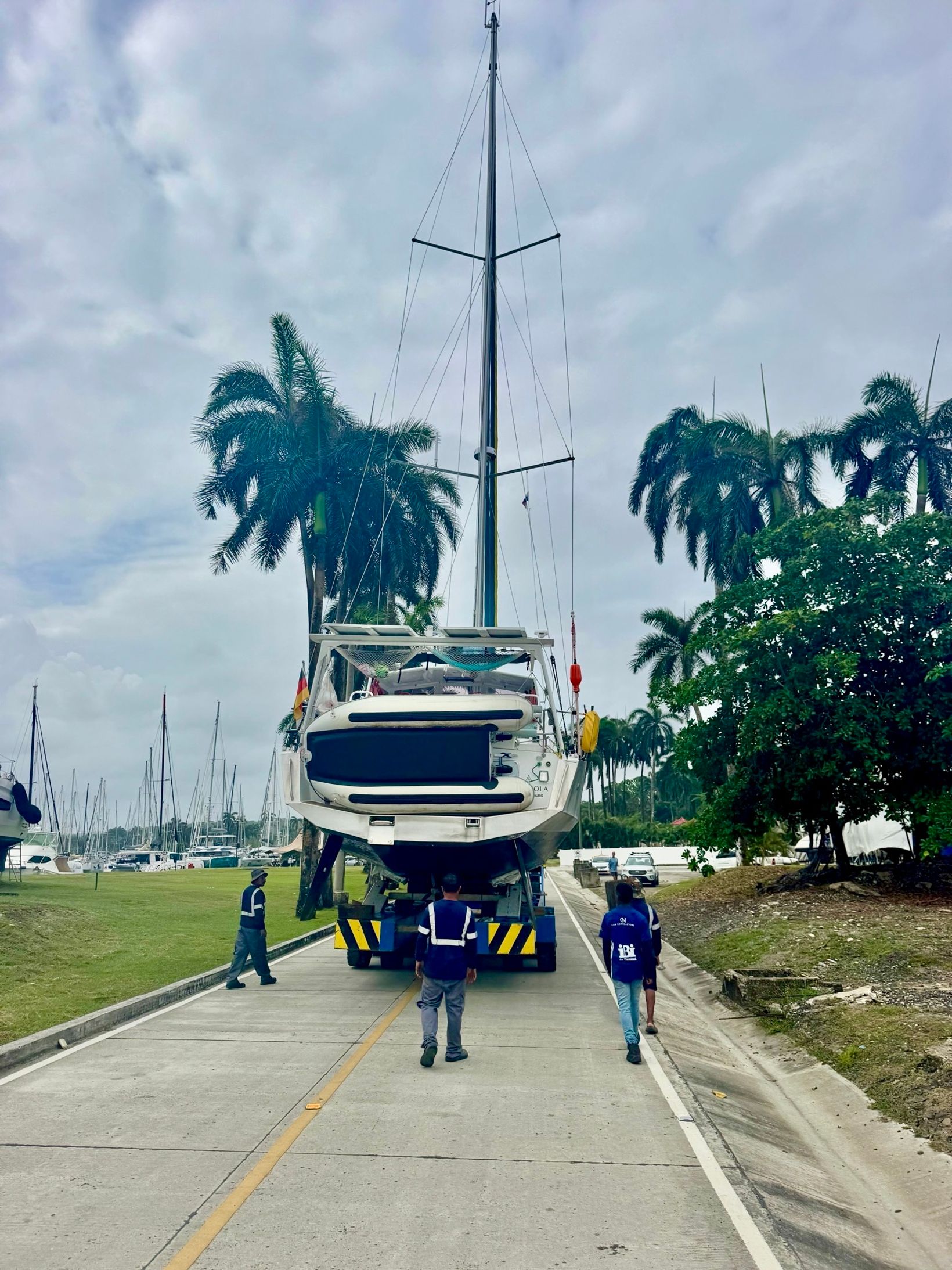
We push the canal date back by two weeks. The painting act turns into a roller coaster of emotions. The paste meant to strip off the old coating doesn’t work. Either we’d have needed far more of it, or we’d have had to cover it with foil after applying. Which we would have taken into account — had we been given correct, up-to-date data sheets for the product. The available instructions were sparse and not much help. So it was scraping and sanding to get the paint off. In Panama’s heat and humidity, truly no fun at all.
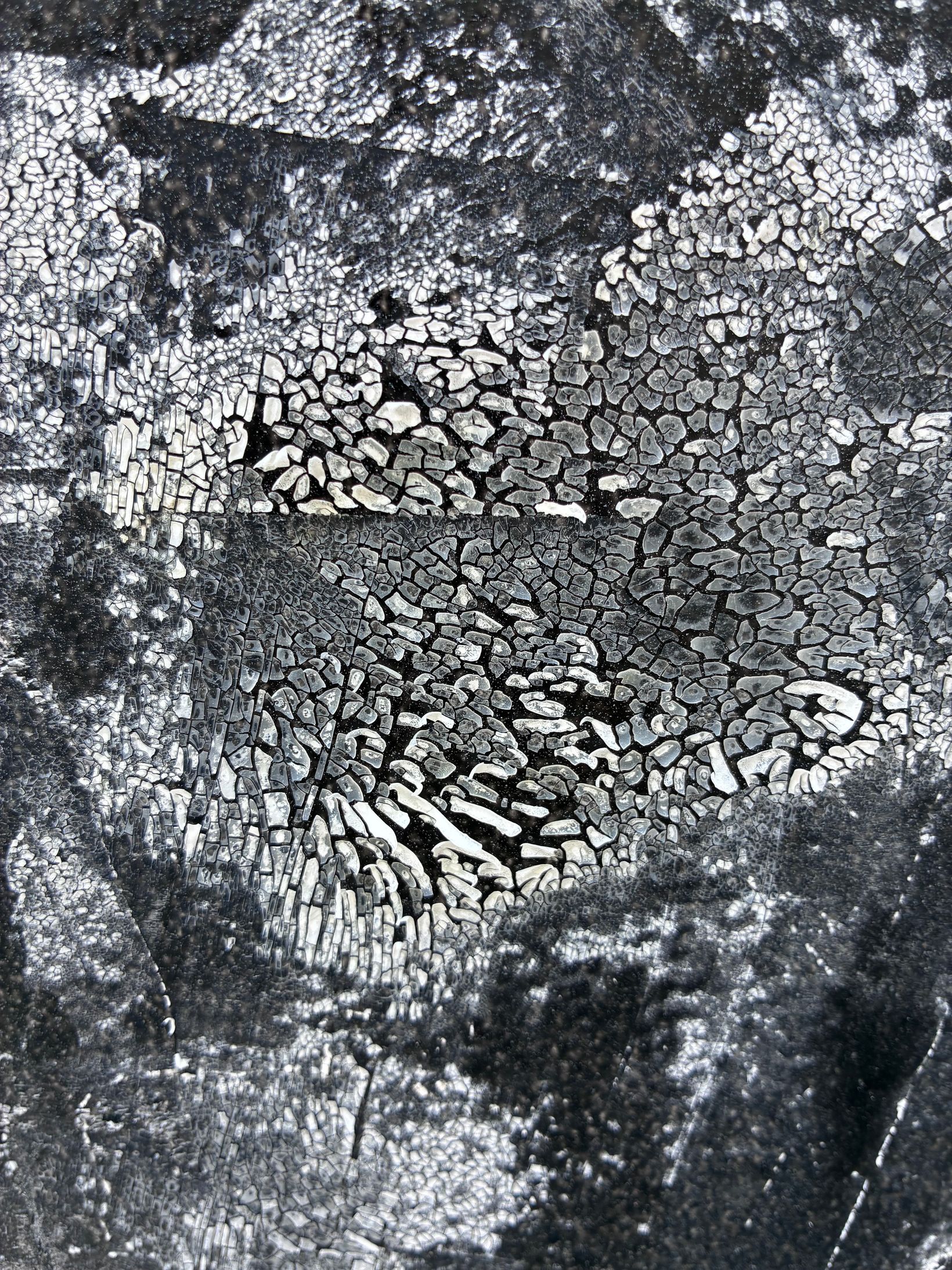
The doubts again. Should we really paint on the same coating once more? Do we trust that this time it’ll work as advertised? Or do we just go with a self-polishing antifouling that’s easier to source and doesn’t have to be shipped halfway around the world every time? With envy we watch all the boats around us using standard products that are readily available and get applied by the marina crew, because the application is simple. What a contrast to our mystery paint, F2 Eco.
Even though it hurts, we decide on the old paint. Partly because, if it works, it’s still a good solution. And partly because it makes little sense to switch to a self-polishing coating right before a Pacific crossing — it’d be worn off by the time you arrive anyway. Plus there was better financial compensation from the manufacturer that way.
So after sanding, on goes a fresh layer of F2 primer, then the adhesive coat. Strange, though, that it looks brown rather than black and doesn’t cover at all. And that’s after we’d already applied more of it than the first time in Canada. Back and forth it goes with the distributor and the manufacturer. We even make videos of our brushwork and get tips on painting technique. We feel a little like we’re back in primary school. But honestly: how hard can it be? Or rather, how complicated should it be? If the manufacturer has to guide me through the entire process, how practical is using the product, really? In any case, the result didn’t change. The look was a horror, and it stayed unclear whether any of it would hold. Now what? Sand it all off again and pick a different paint? After the hours of work invested and the nerves lost, the thought of that was painful. So we push through: top coat painted on, back in the water, and hope for the best. That the coating gets damaged again during re-blocking and craning doesn’t even stress us anymore after the Canada experience. When Nikola is back in the water, we breathe a sigh of relief. When you can’t see it, the mess is easier to push out of mind.
Living and Working in Shelter Bay
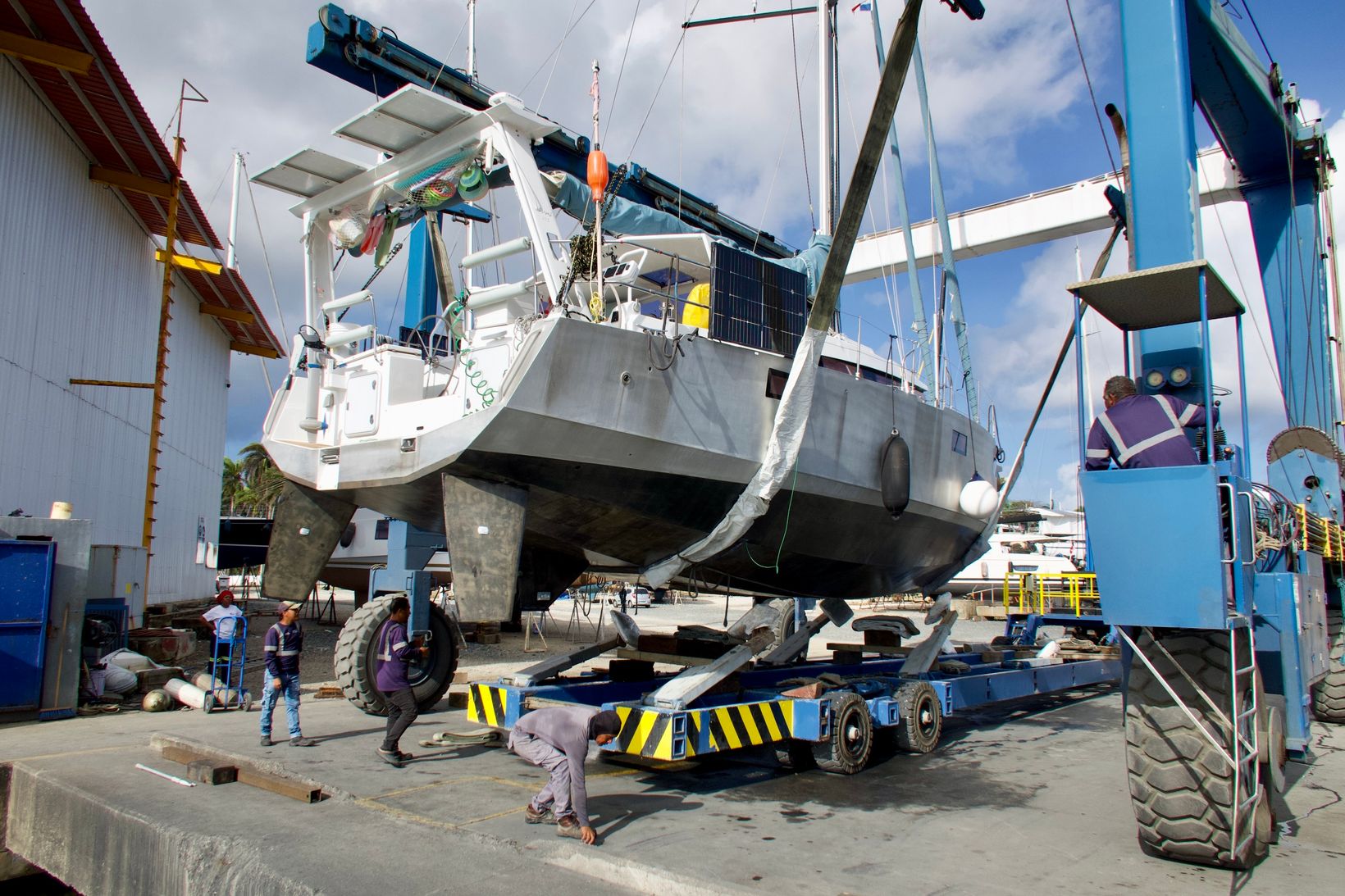
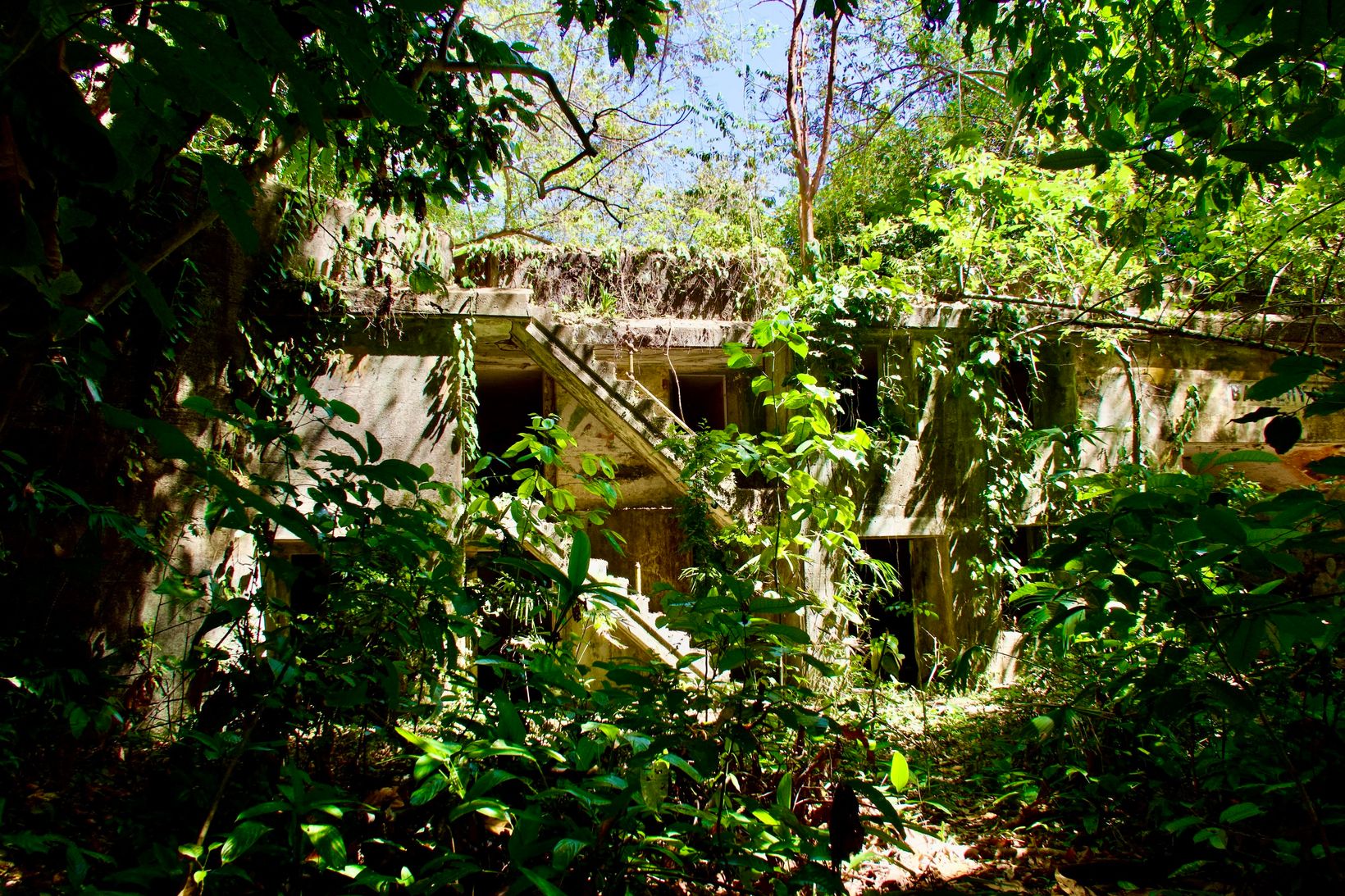
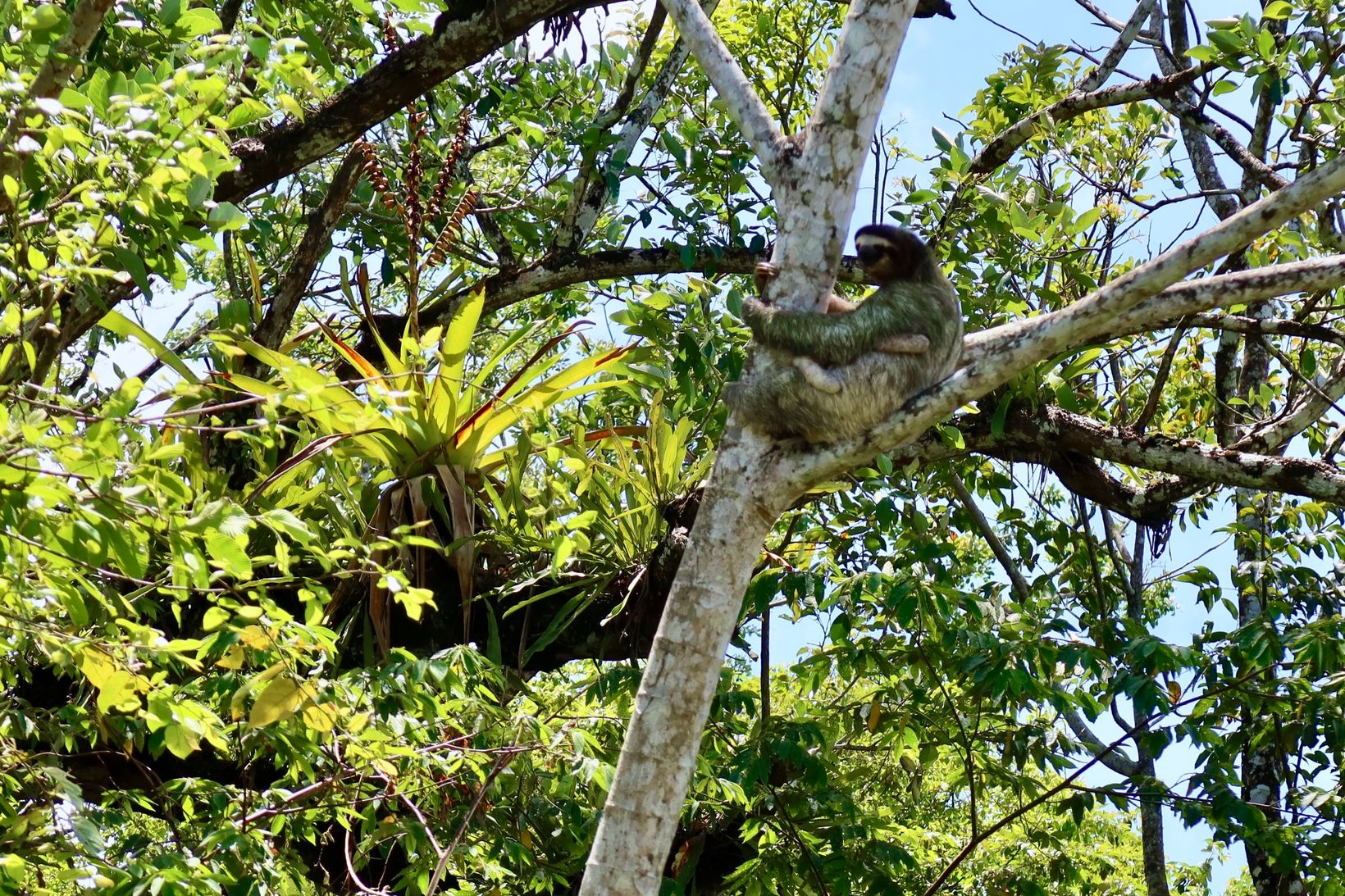
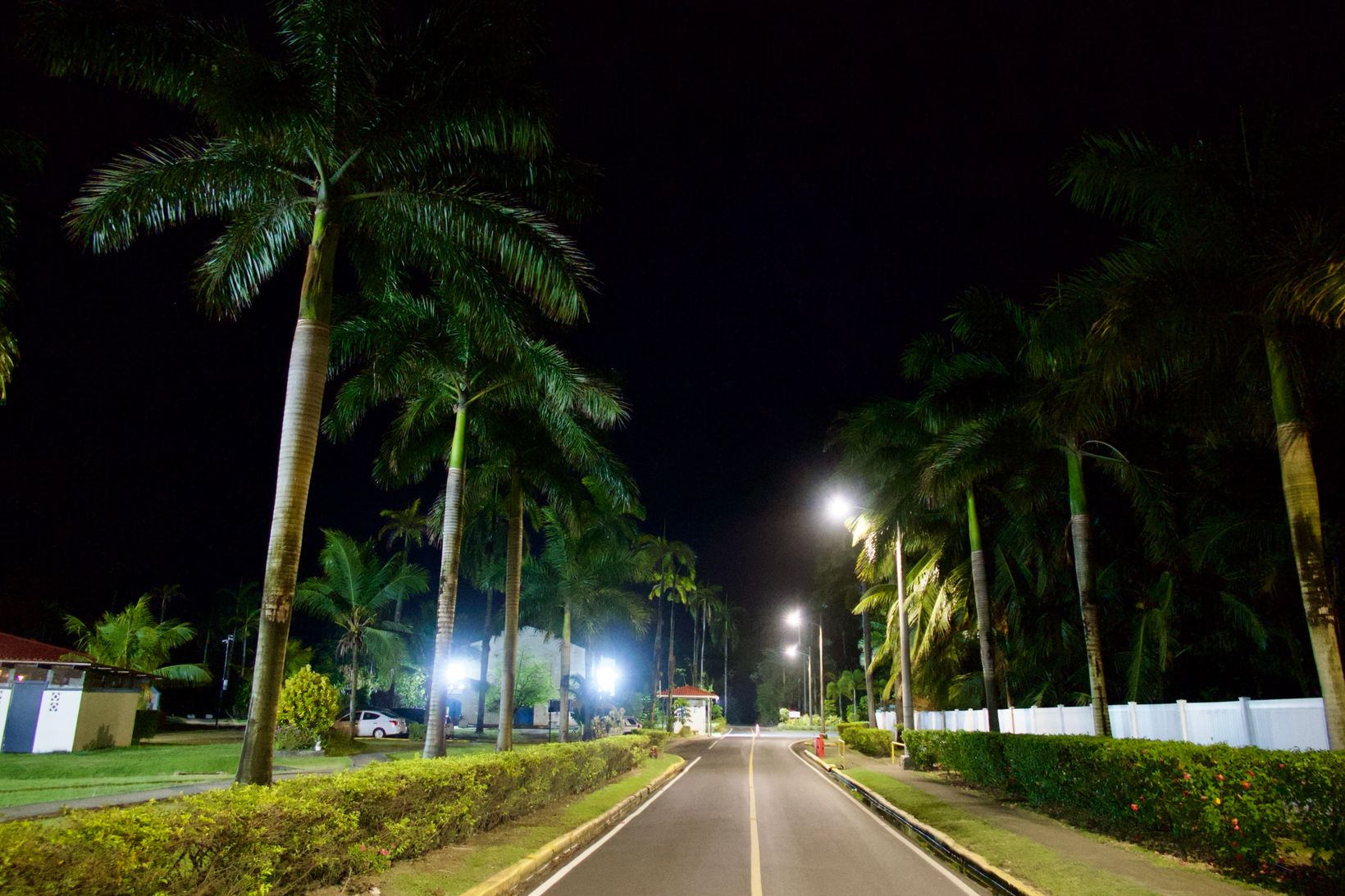
With the marina right at the entrance — or exit — of the Panama Canal, we had a great spot for our paint job. The marina is very remote, in an area used by the military. You notice that occasionally in helicopter exercises or the squads of soldiers in the adjacent jungle with its old ruins. Otherwise it’s green and peaceful. Sloths climb in the trees, toucans fly across the road, and the crocodiles keep mostly out of sight.

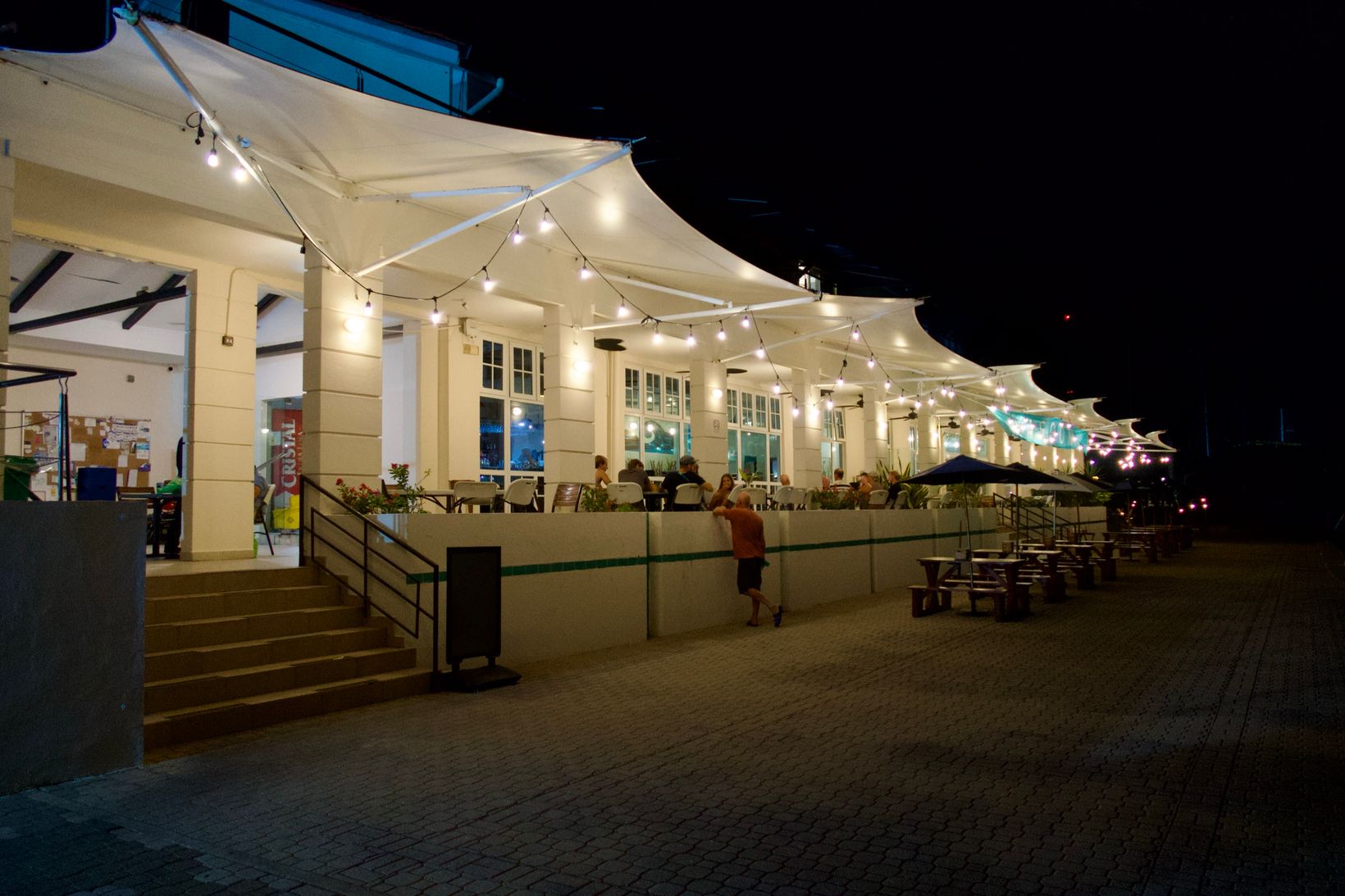
The grounds are full of like-minded people. After the work is done, you cool off in the pool and in the restaurant over a beer. When it gets too hot at midday, we hop in the rental car and drive to Colón to cool down in air-conditioned restaurants or hardware stores. We could truly have ended up in a worse place.
Fascinating how, despite all the stress, it’s mainly the beautiful things and moments that stay in your memory.
September 2026: a few more thoughts on F2 ECO