Stretching Legs in Galápagos
On the seventh day of our passage from Panama City to the Galápagos Islands, an official stamp drops into the water in Puerto Ayora. And it gives us quite a fright.
Neptune’s Baptism
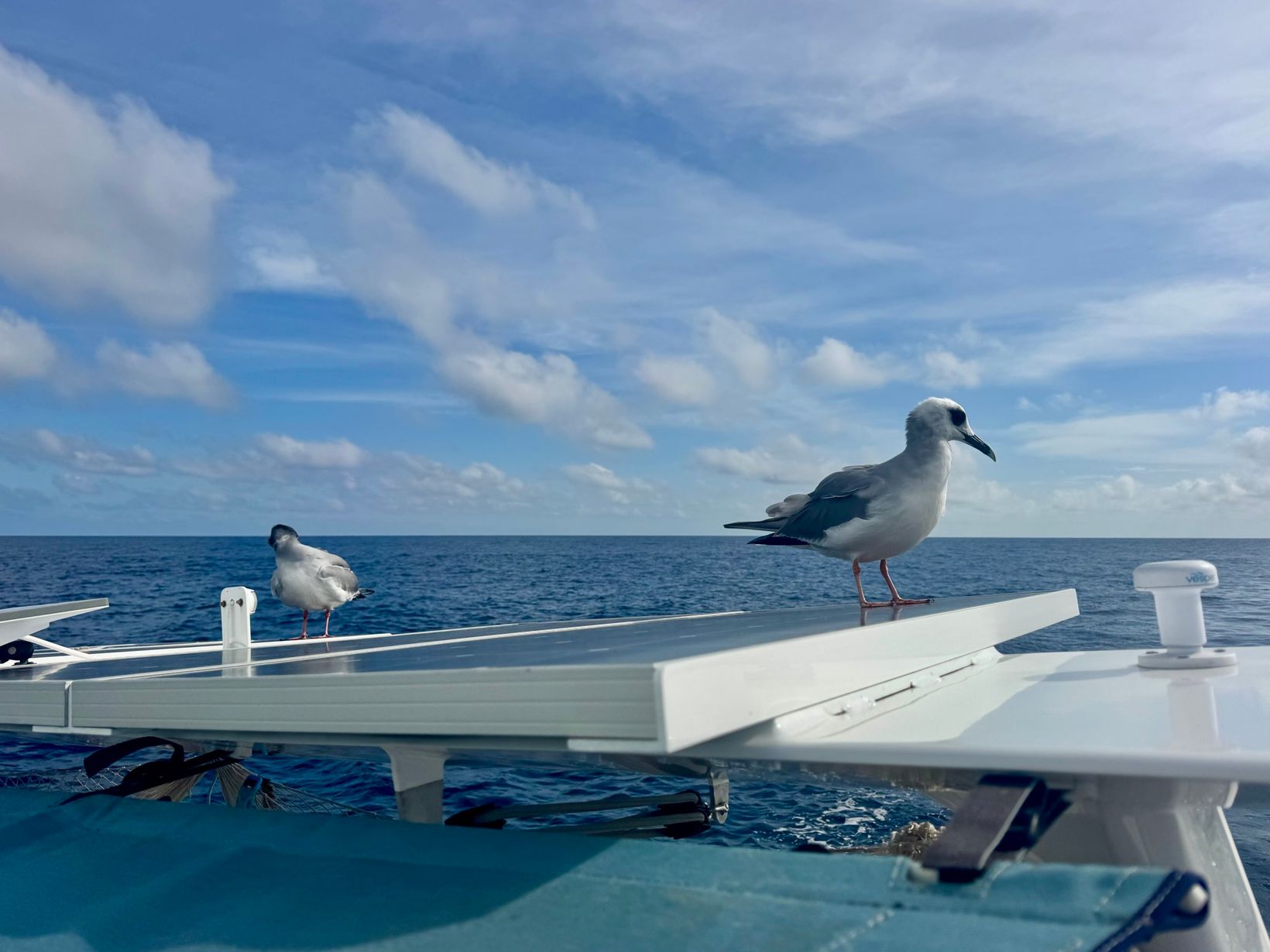
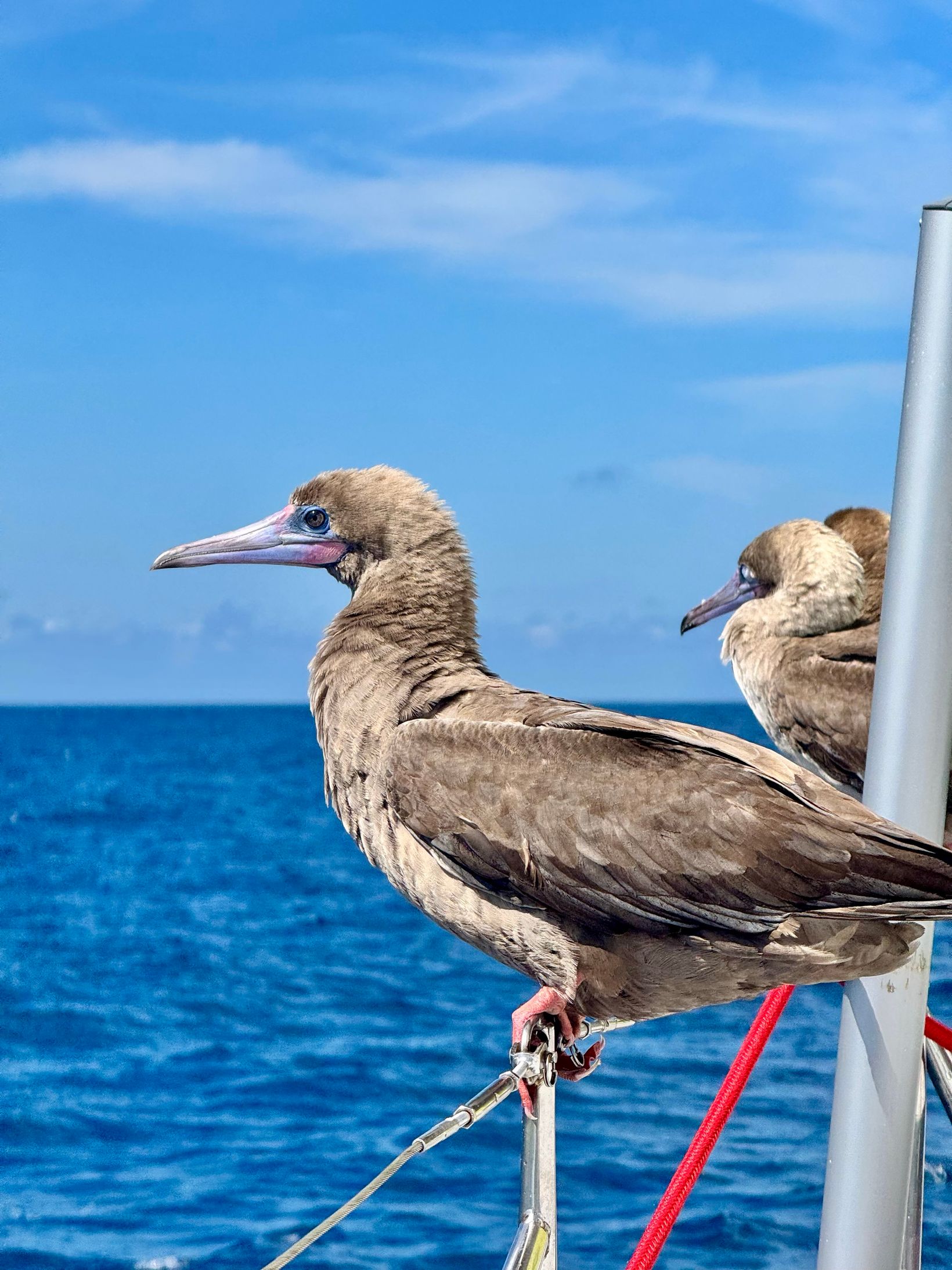
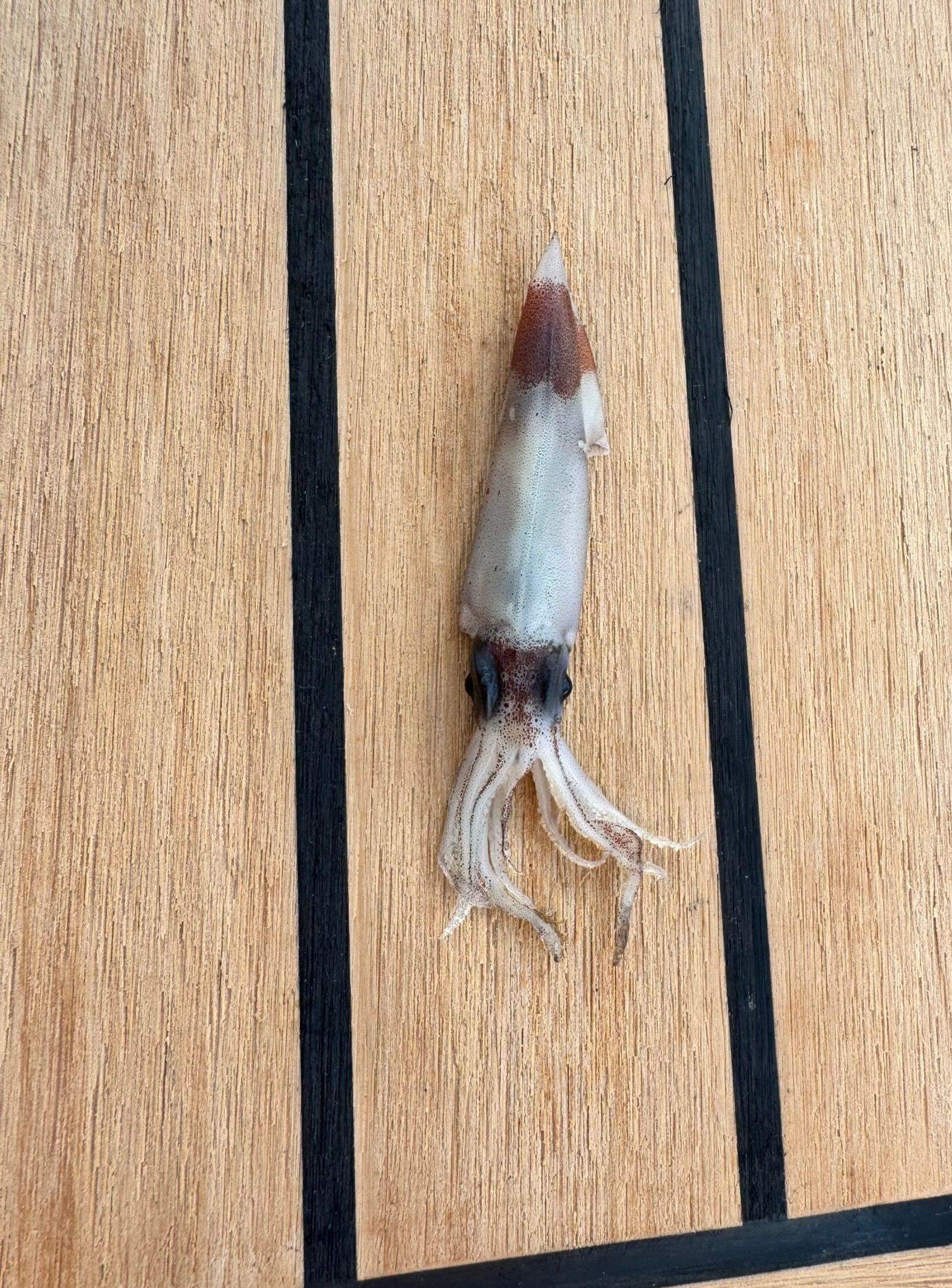
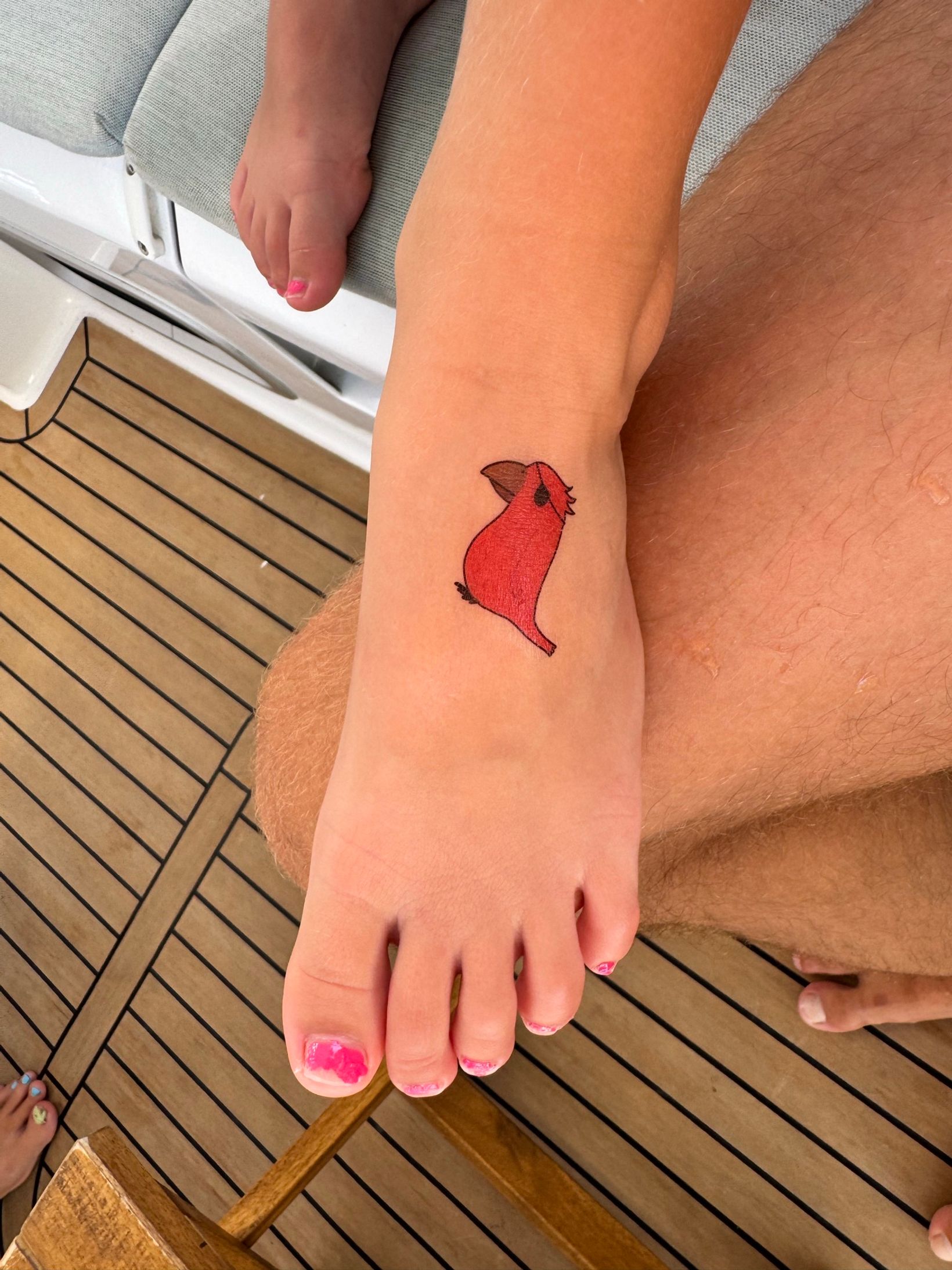
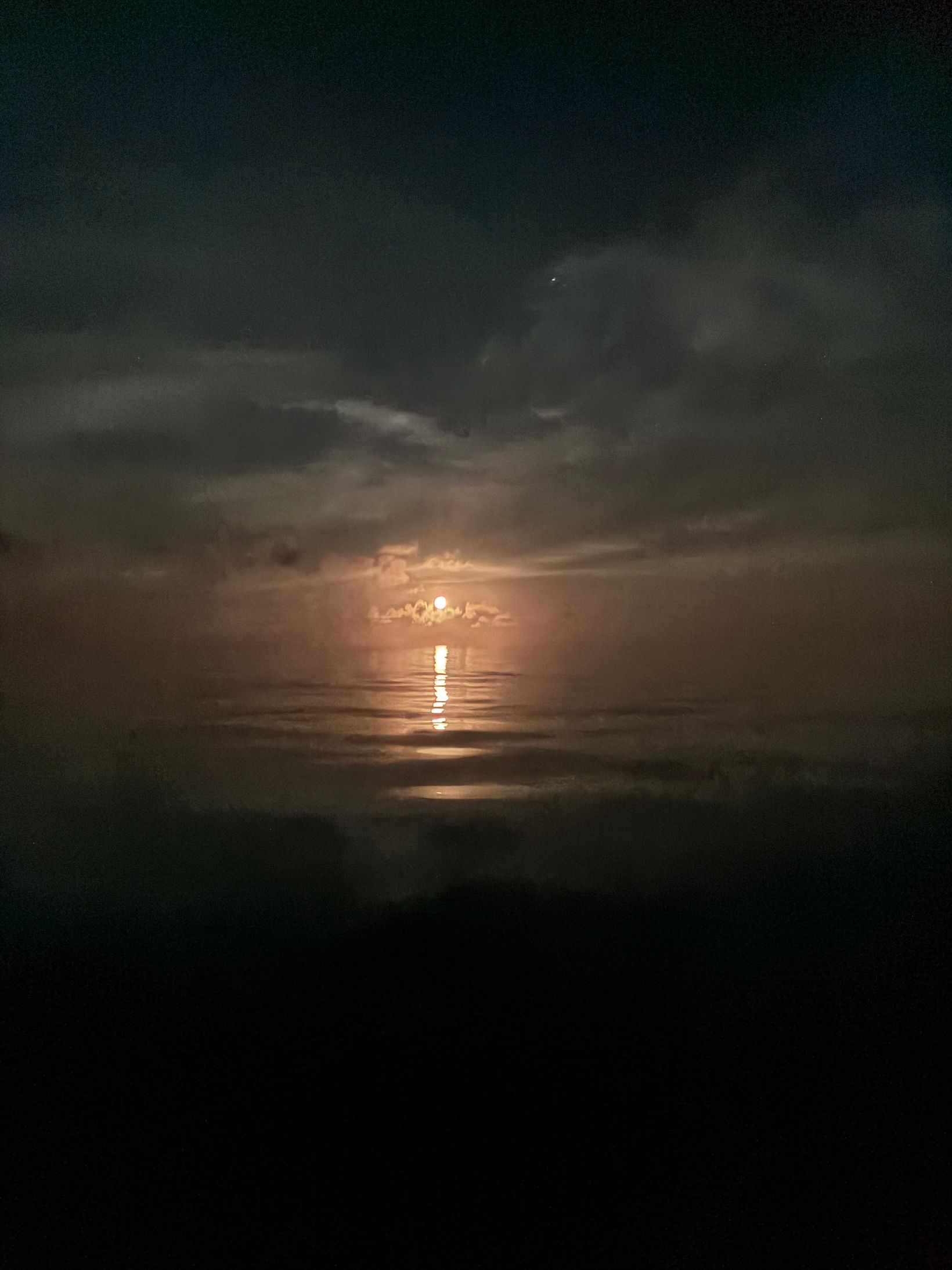
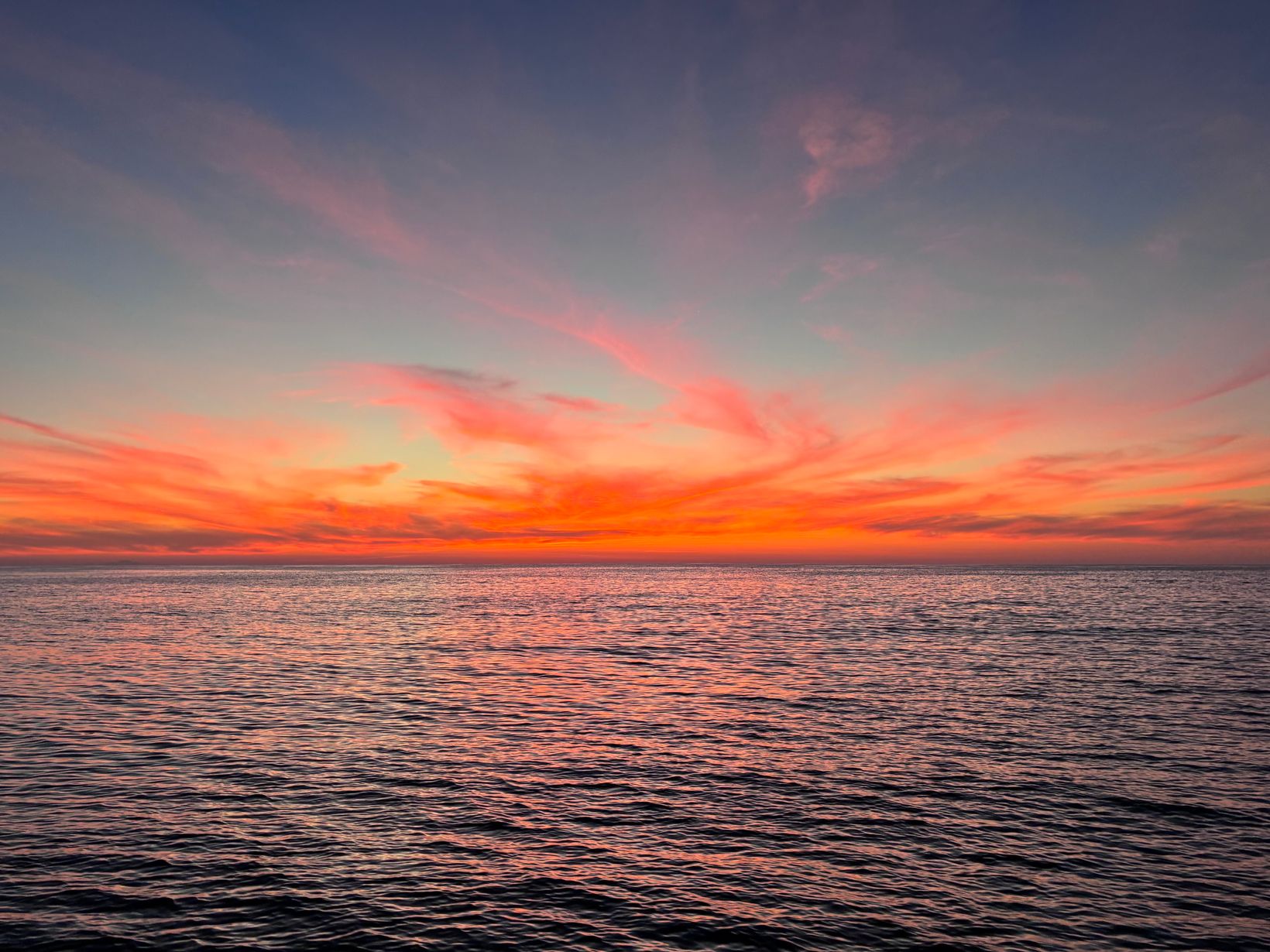
And that’s despite the fact that we are well rested and in good spirits after a few fantastic days of sailing. Panama had sent us off with good weather and spared us thunderstorms. Motoring through the doldrums of the ITCZ was a minor evil we could easily endure. The only problem was that the fish refused to bite and the birds used us as a transport vessel. Never mind—crossing the equator made up for it with some entertainment. It’s a milestone in every sailor’s life and justification for many sailor’s tattoos. Since there were only novices on board, there was no experienced mariner available to stand in for Neptune and perform an unpleasant baptism ritual. So, we baptized ourselves by swimming across the meridian and treating ourselves to a temporary tattoo and a beer or juice. Against an orange-red sky, we savor our achievement and watch a thresher shark shoot out of the water.
A Nerve-Racking Entry Procedure
Back to the stamp. The very one you need in your passport for an official entry. Through one careless movement, it slips out of the official’s hand who has come aboard Nikola with her colleagues and falls into the water. For us that means merely an unscheduled trip to the immigration office. For the official, however, it’s a real problem. Apart from the loss itself, a passport stamp in the wrong hands can have dire consequences. What puts us on high alert, though, is our agent’s remark that we still have to wait for divers. This can only mean that Nikola’s hull will be thoroughly checked for algae and barnacle remains. Until now, two people with GoPros on poles have been inspecting the boat’s underwater condition from above the surface.
To protect the Galápagos Islands’ biosphere, no organisms from elsewhere should reach them. This means that boats coming here must be spotless, a fact that is rigorously checked. This is also why a certificate proving a professional hull cleaning is required. We have one, and while swimming at the equator, we scrubbed it once more. However, no matter how well we scrub, Nikola’s centerboard case simply can’t be completely cleaned. If it were inspected, it would surely fail, and we would have to leave the Galapagos Islands immediately. So, we are nervous about the announced divers. Despite the brief scare, we meet all the requirements: insurance, logbooks, safety equipment, a waste-separation system, medications, and a fumigation certificate. The divers are only supposed to dive the stamp back up. After making all those preparations and working the printers and laminators, we breathe a sigh of relief. We are also relieved that we got our crewmate to the islands. She surely wouldn’t want to continue to the Marquesas anyway.
Formalities to the Horizon
When traveling by sailboat, formalities really only come up on entry and exit. Sometimes it’s more complicated, as in Jamaica with its endless paper documents; sometimes simpler, as in the French overseas territories. We only depend on the opening hours of the authorities involved.
The Galápagos Islands play in a league of their own. One to two months in advance, you have to appoint an agent who handles the communication and logistics with the individual authorities. Then the whole procedure takes its course. You send numerous proofs, documents, and papers, and keep the agent updated on your arrival time.
Before departure in Panama, a diver has to clean the hull, and any potential pests on board must be fumigated. All within a short window before leaving, and with an official certificate. The time during the crossing can be used for further preparations. Eating up banned food, printing out signs, labeling things, updating lists, preparing waste separation, and so on. Once the arrival time is known, the clearing-in appointment is arranged.
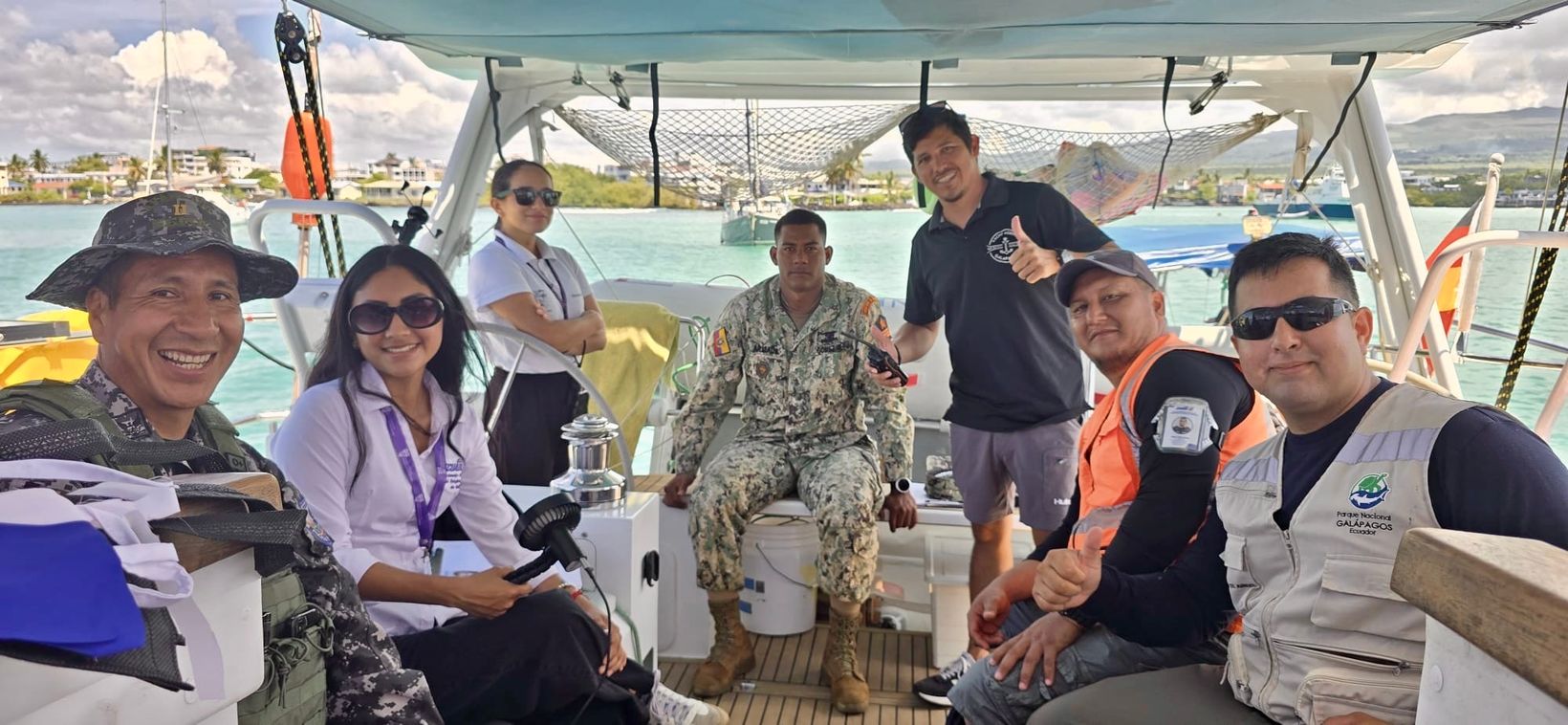
As soon as the anchor drops, the boat with the officials is already coming. Navy, biosecurity, the national park authority, the health department, immigration, and more. With some of them we’re not sure exactly what they do or what they’re looking for in our drawers and cupboards. But they carry out their task with appropriate seriousness. We hand out cold drinks and fans to make existence in the heavy uniforms more bearable in the sweltering heat. In the end, all is well.
A Sheltered Island World
The daily routine is different here. Instead of taking a dinghy, you take a water taxi ashore. Trash is separated and collected by boat. You can only fuel up with a certificate from the agent. A boat comes for that, too - We could have spared ourselves the trip to the fuel station with two small jerry cans. Before and after every ferry trip to another island, there’s a biohazard check where bags are X-rayed. Moving between islands with your own boat requires prior registration and an additional fee, which is organized through the agent.
We slowly get used to the very specific island rhythm and procedures. We have accepted that we do things together with land tourists and that everything simply moves more slowly here. Instead of motoring Nikola back and forth over the long distances between the islands in windless waters, we book day tours or take the ferry to explore other islands. And there’s plenty to explore.