Mother of All Passages
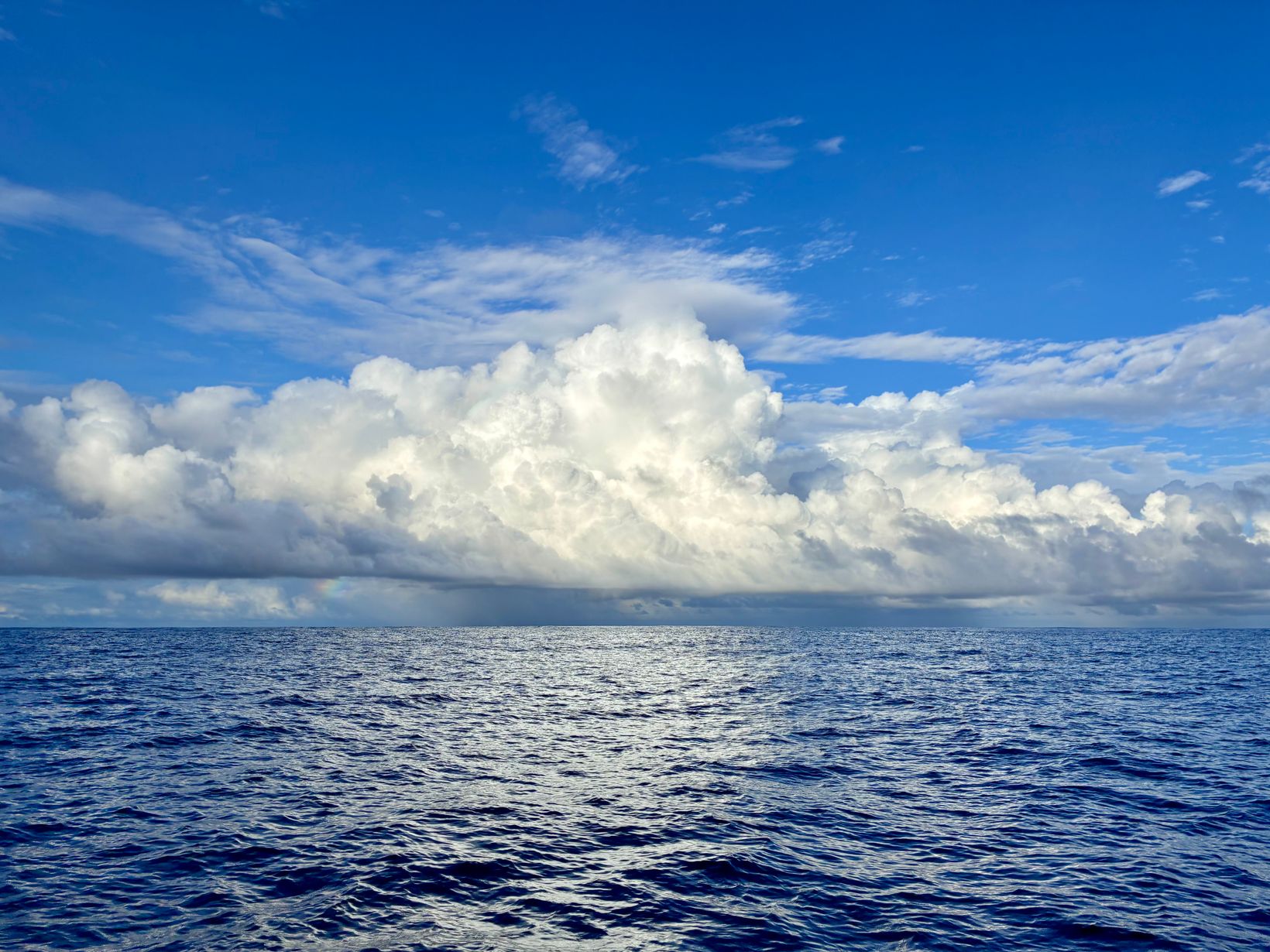
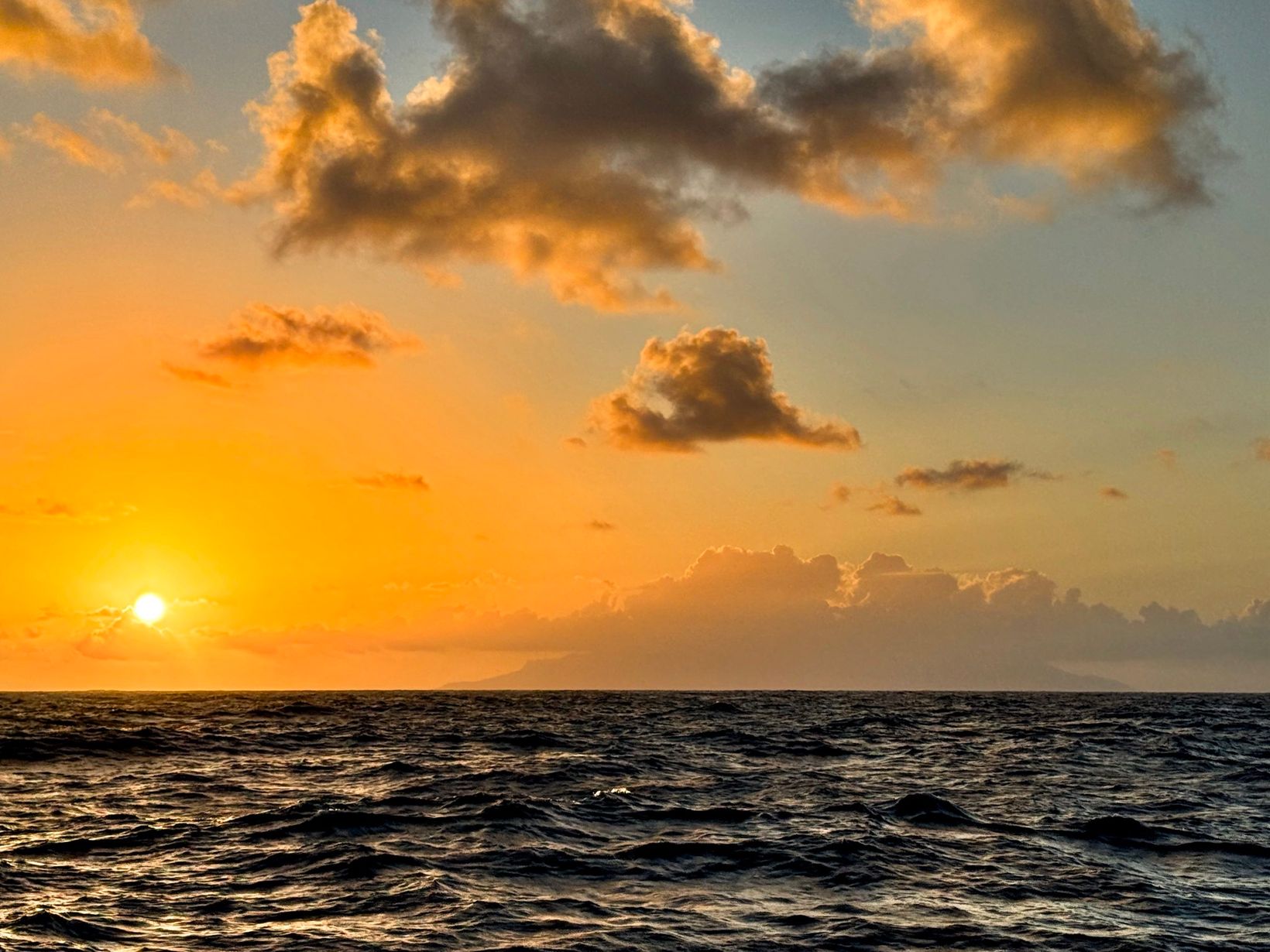
Here we go again! Out to sea, into the endless blue. Off to the Marquesas. Accompanied by the ceaseless sound of the waves and, with a bit of luck, by a dolphin or two.
Considering how immensely huge this undertaking seemed to us just a few months ago, the preparation for the leg of 3,000 nautical miles is quite unspectacular. With the stopover in the Galápagos, we’ve already done a fair bit to make the Pacific crossing as pleasant and as short as possible. Nevertheless, it will be our longest passage yet.
The Easter Disaster
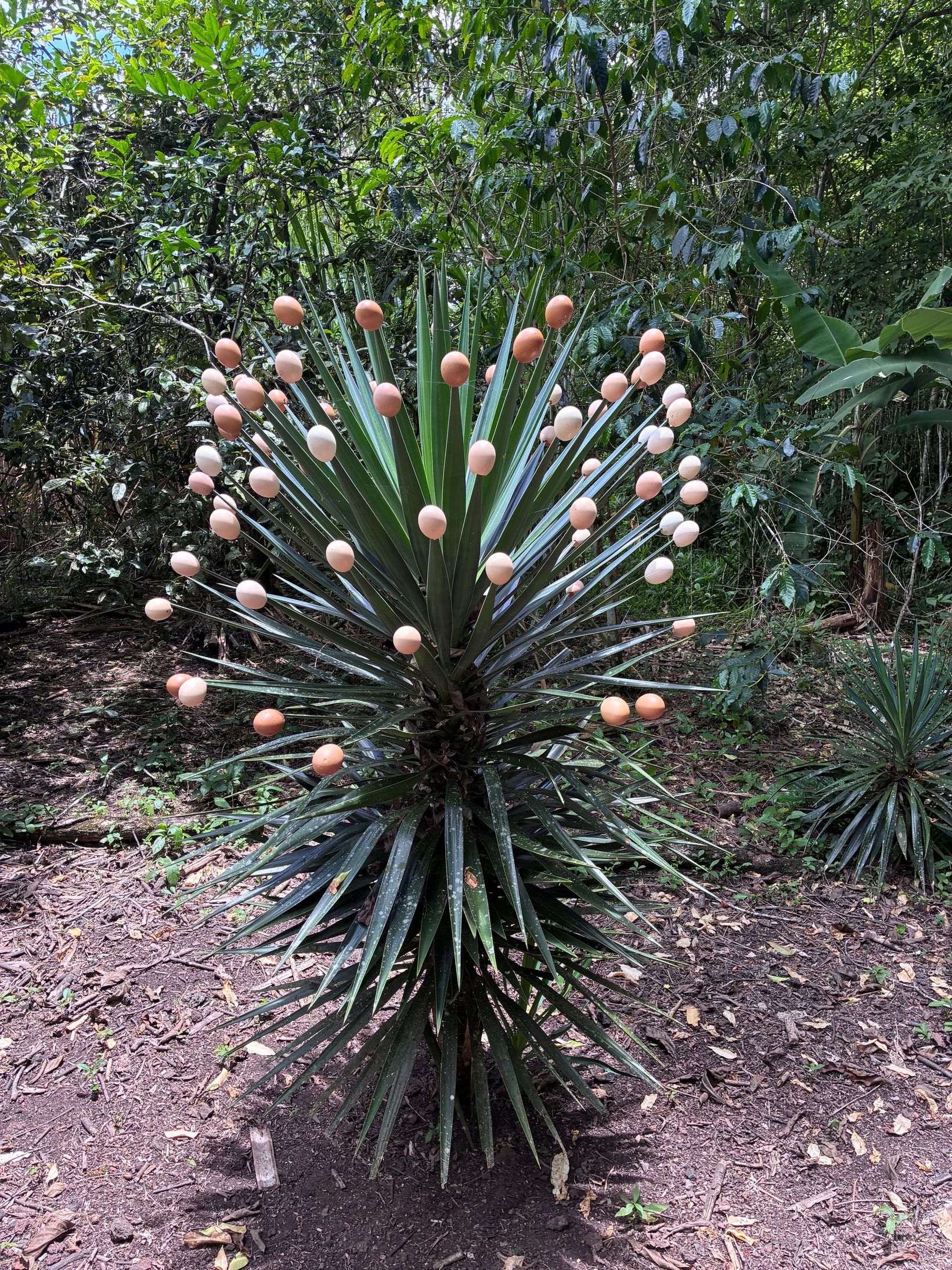
Long before we weigh anchor in the Galápagos, we have a problem: Eggs. Or rather, the lack of them. And right at Easter, of all times. The egg-dye we brought back in Germany is ready, the brushes poised. But there are no eggs. At first the shortage is only noticeable in the empty supermarket shelves, but it quickly spills over to the breakfast cafés, which take their egg dishes off the menu. Not only does the current supply ship fail to show. Another ship, carrying chicken feed, never has arrived either. Now the local hens have stopped laying, no resupply is coming from the mainland, and the egg crisis is complete — on every one of the islands.
Provisioning for the Pacific
Easter eggs are one thing; provisions for an unknown stretch of time are another. Here and there, boats set off for the Pacific crossing — cursing, and without eggs aboard. The bad mood is understandable, because the best and quickest meals on board happen to contain eggs: banana bread from the bananas all ripening at once, pancakes, omelets, or simply hard-boiled eggs. All quick to make dishes at sea.
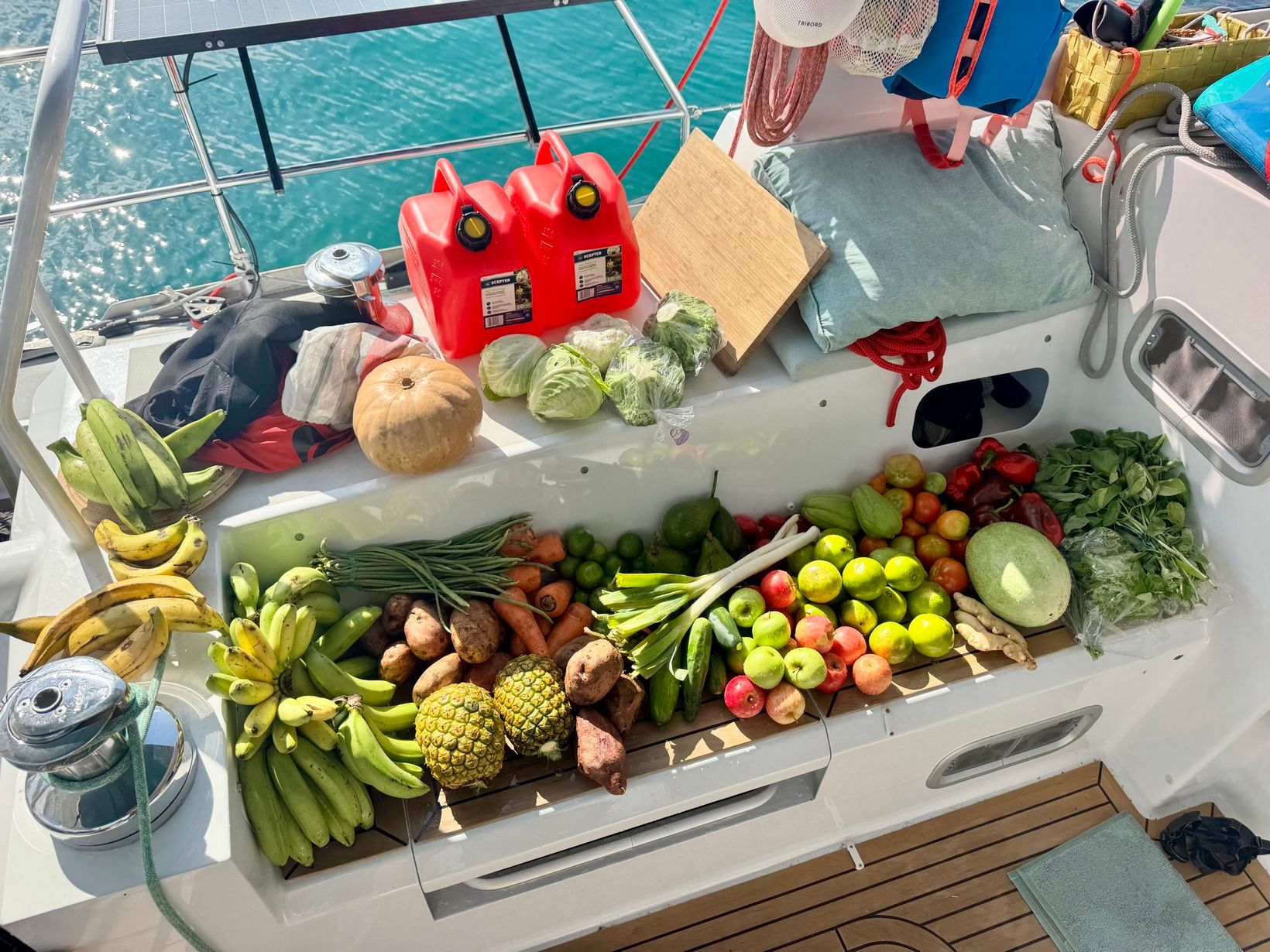
We get lucky. A few days before we leave, the shelves are restocked. We celebrate Easter belatedly and buy a decent amount of eggs for the passage. We do our final shopping round at the farmers market. For that we get up early and load not only plenty of fresh fruit and vegetables, but also various herbs. Since a surprising amount of fruits and vegetables grow in the Galápagos, it’s definitely not a bad place to provision with fresh food for a longer stretch.
Hello Again, Flat Calm
For about a day and a half we motor through the doldrums. The Intertropical Convergence Zone (ITCZ) snatched the wind away on the approach to the Galápagos Islands, and it does so again south of the island group. Apart from the missing wind and the heat, we have little to endure. There are no heat thunderstorms or downpours. Only at night does a flash of lightning occasionally light up the horizon.
Life on board couldn’t be more pleasant. We could put up with this forever, we think — though we also know that other kinds of days almost certainly lie ahead. Three weeks is a long time.
Sweet Spot in the Middle of the Pacific
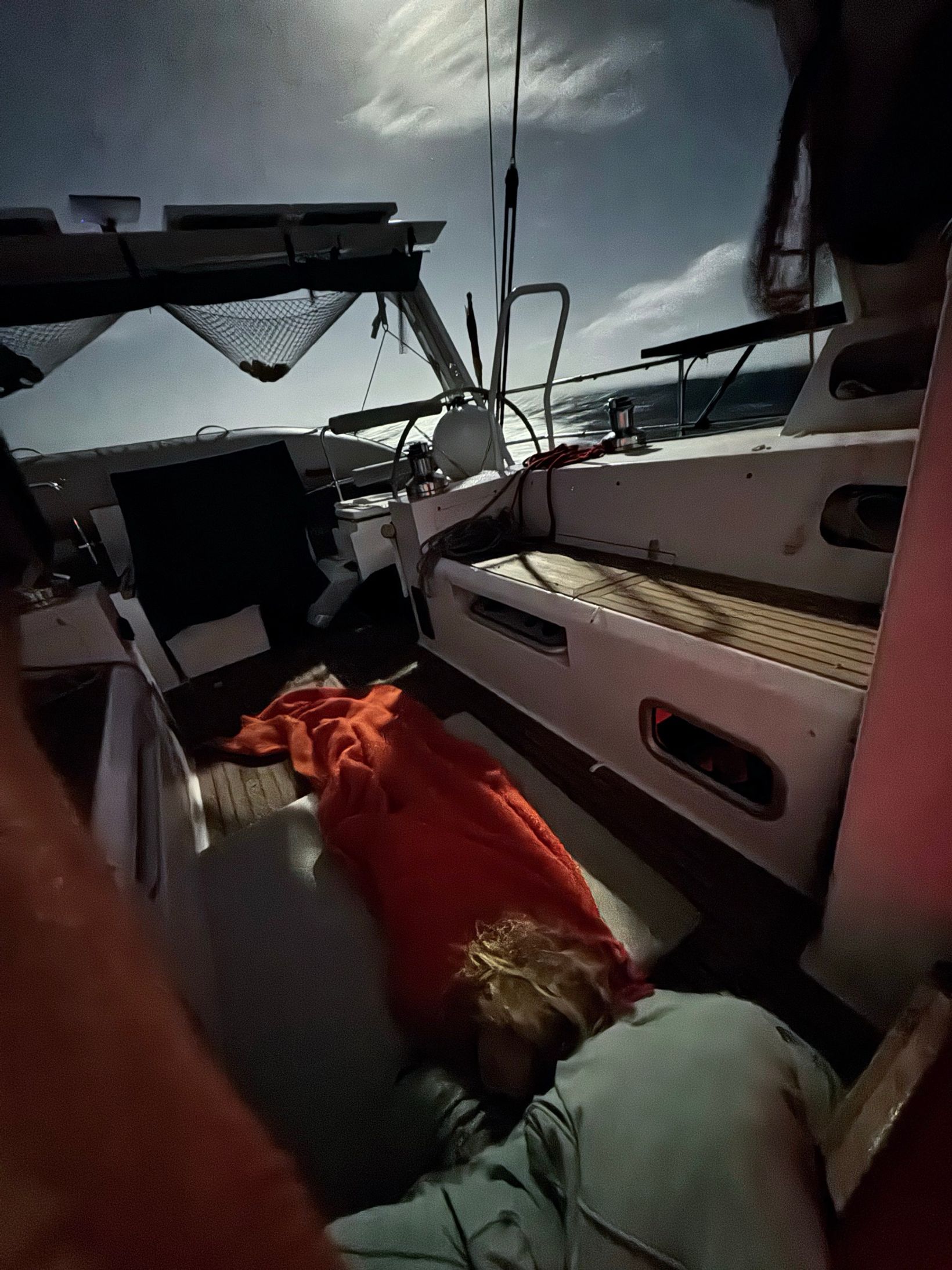
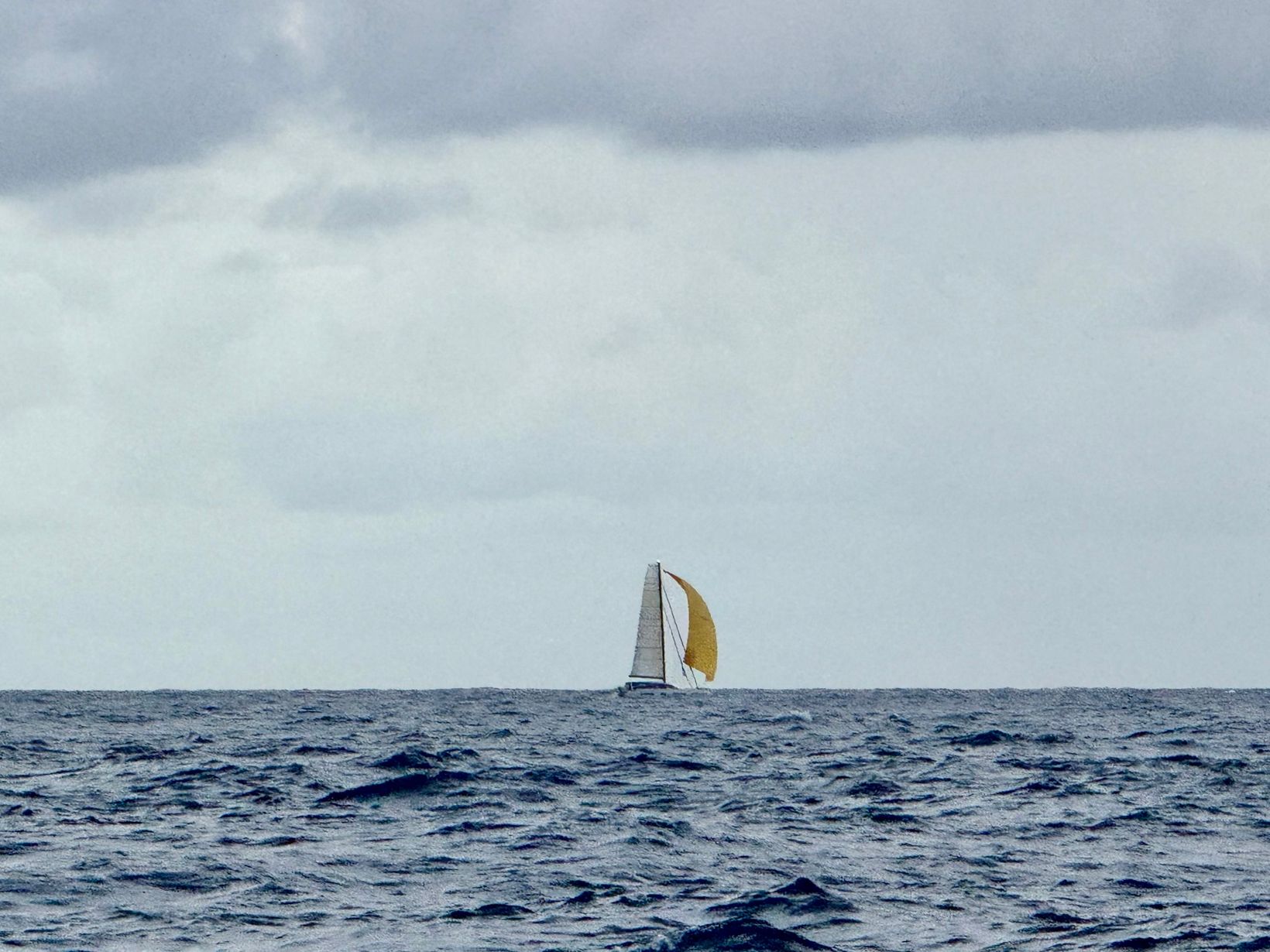
We’ve settled into life at sea and found our rhythm. Around the sixth latitude the wind returns. It blows fairly close to a reach at first, but at least there are no uncomfortable waves. At night, rain cells pop up regularly. Apart from wetness, though, they have nothing to offer — no gusts or nasty wind shifts. When in doubt we reef the mainsail overnight, and that’s about it. So far, so uneventful. We do cross paths with two ships, the only ones we’ll encounter.
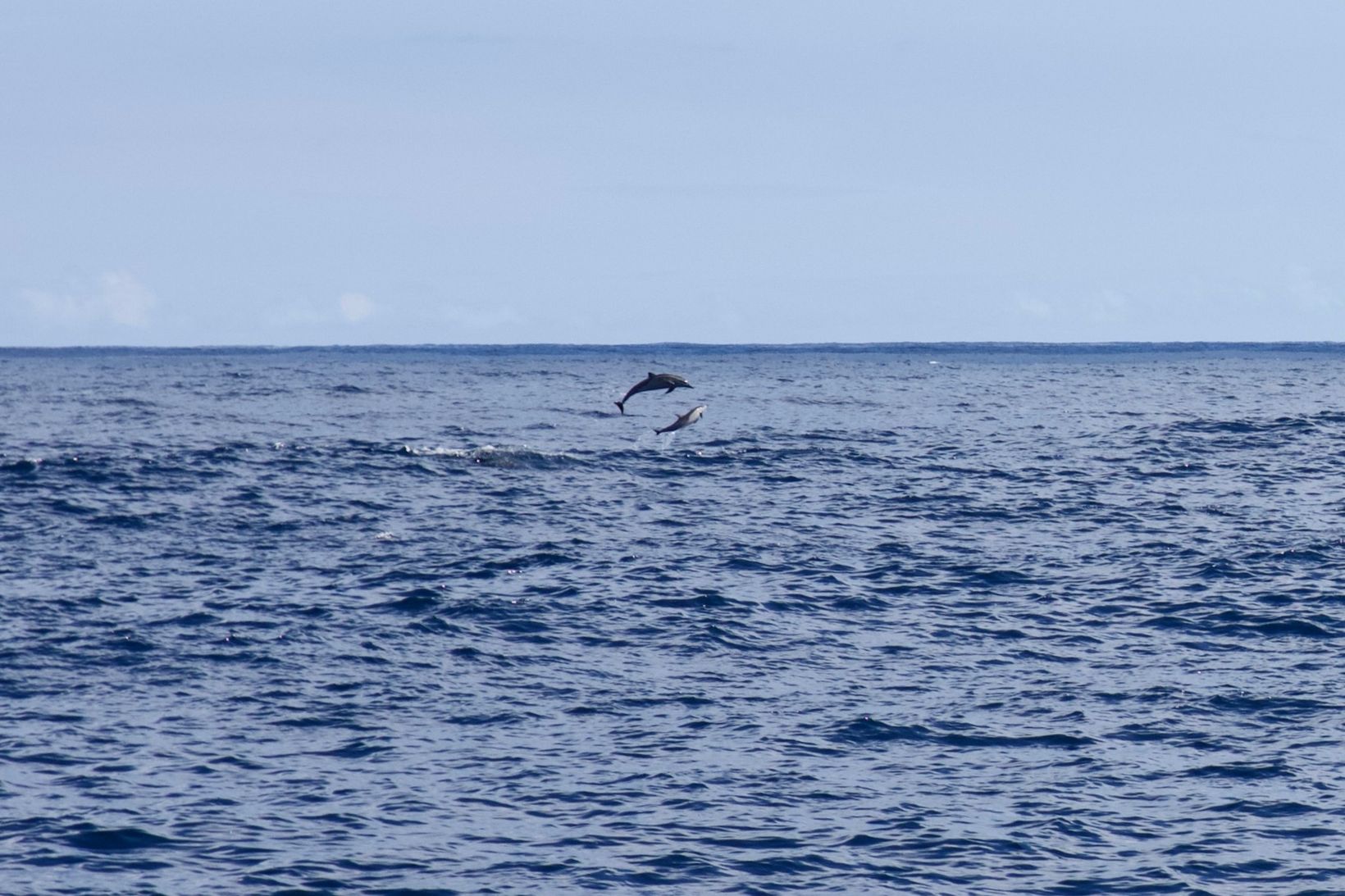
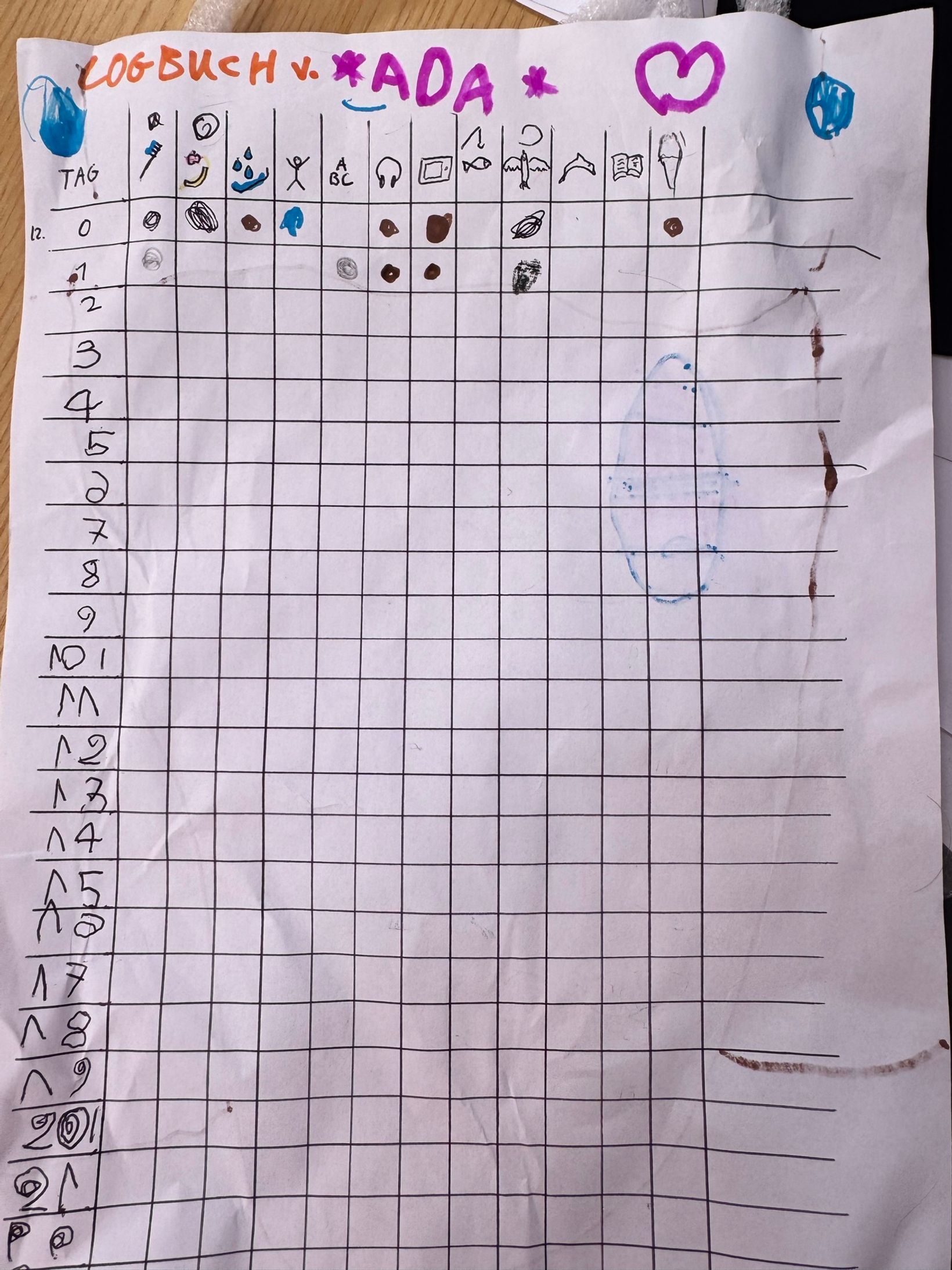
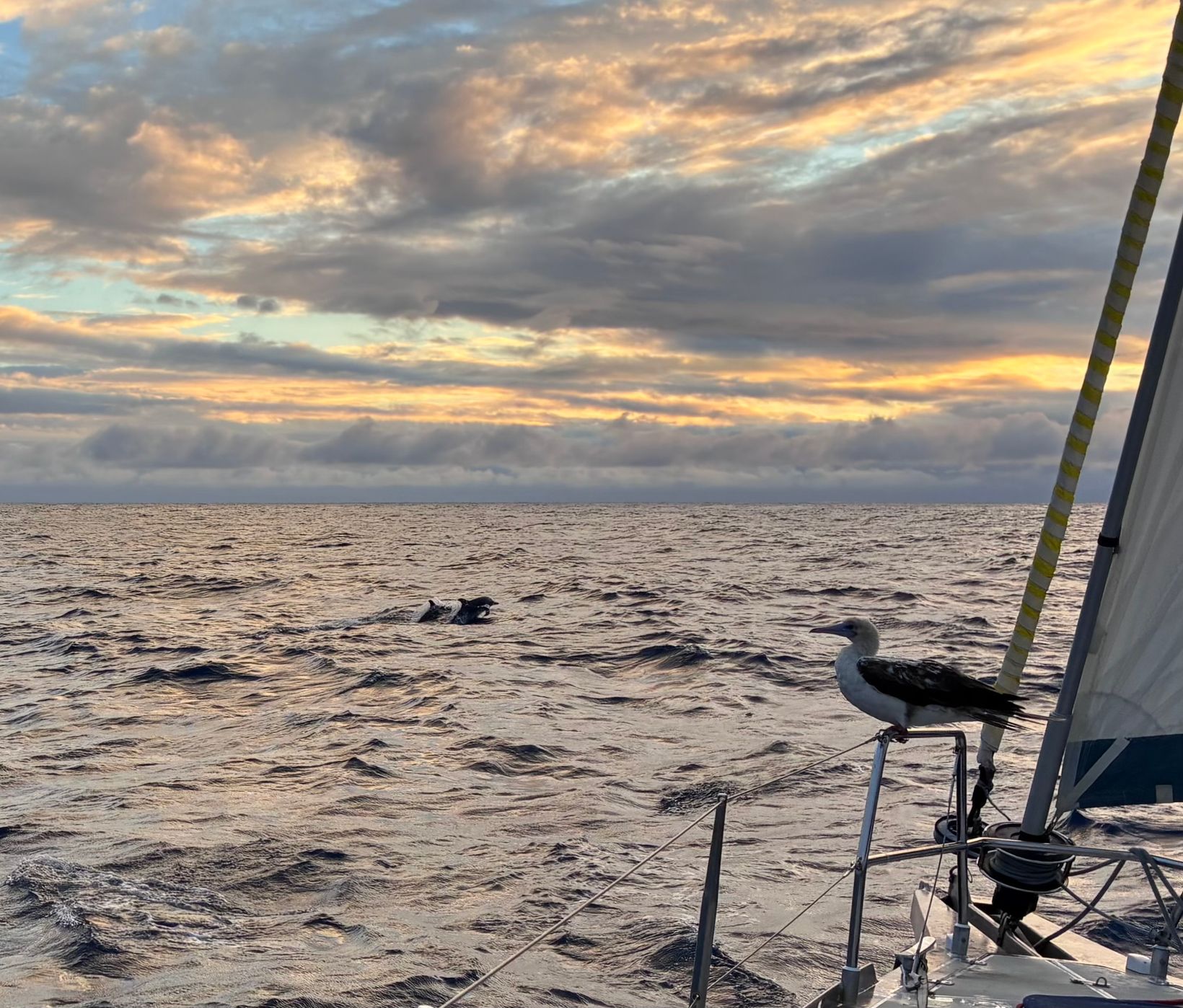
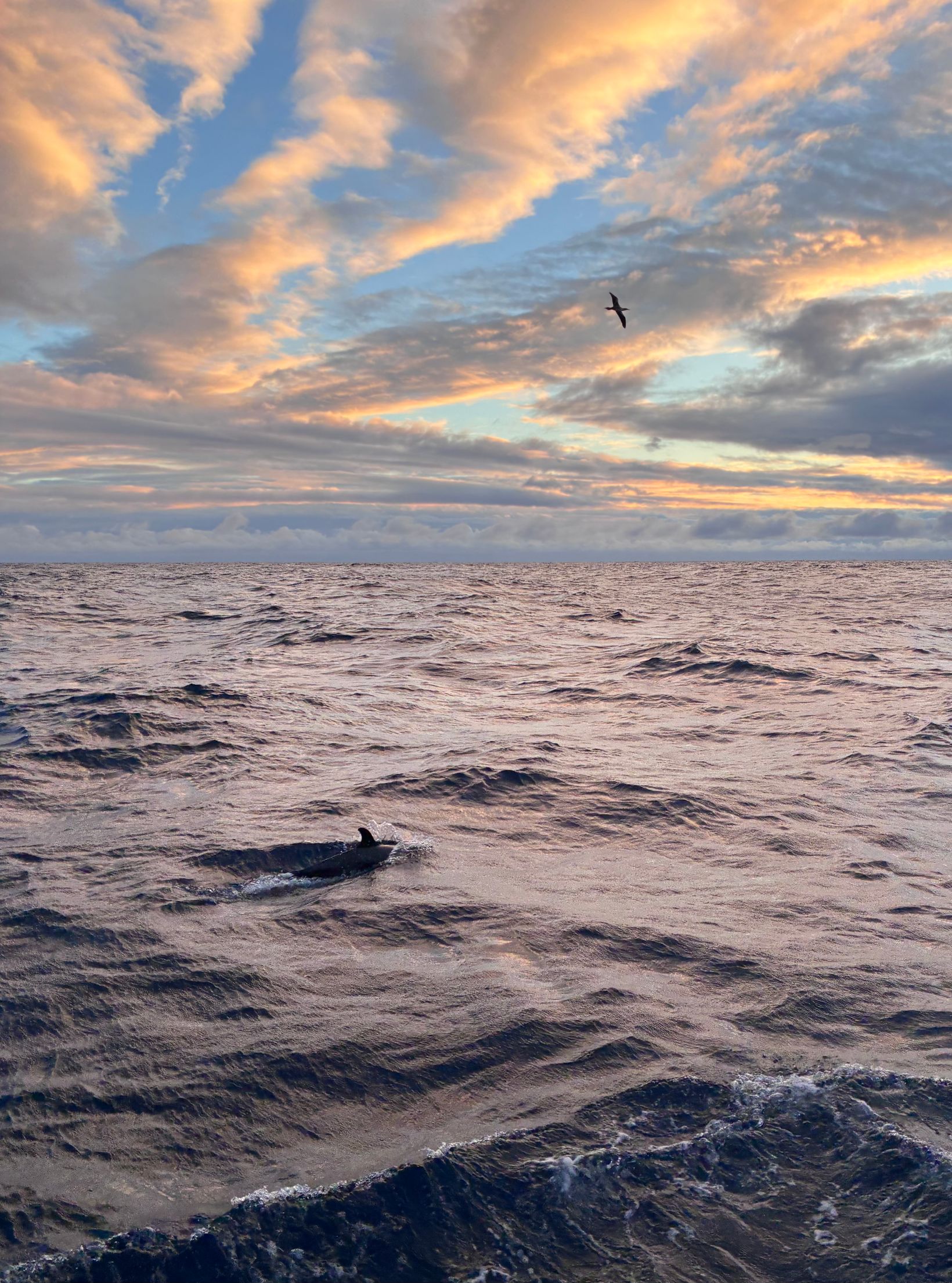
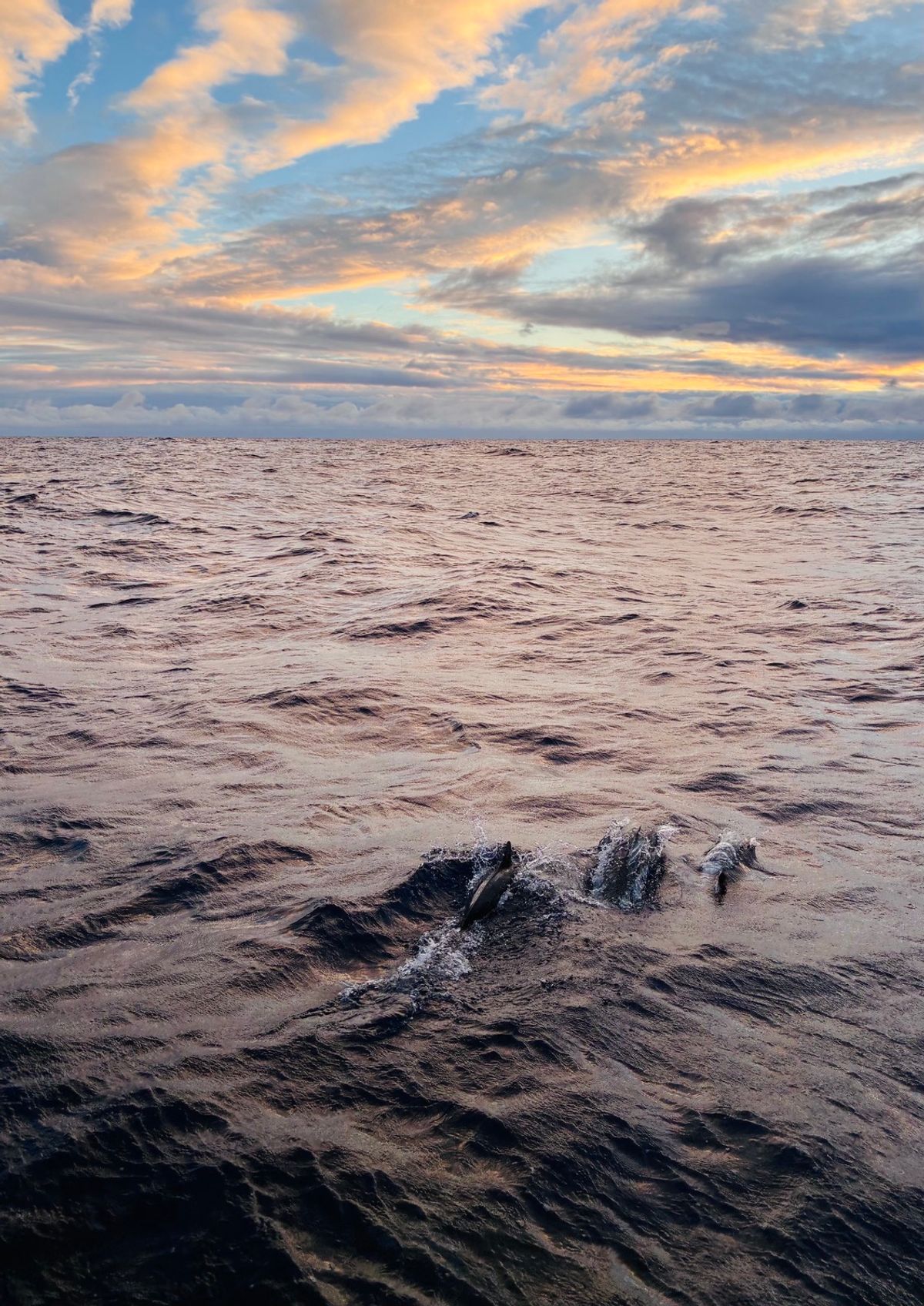
With few people around, many dolphins show up to entertain during these otherwise uneventful days.
A Rougher Kind of Ending
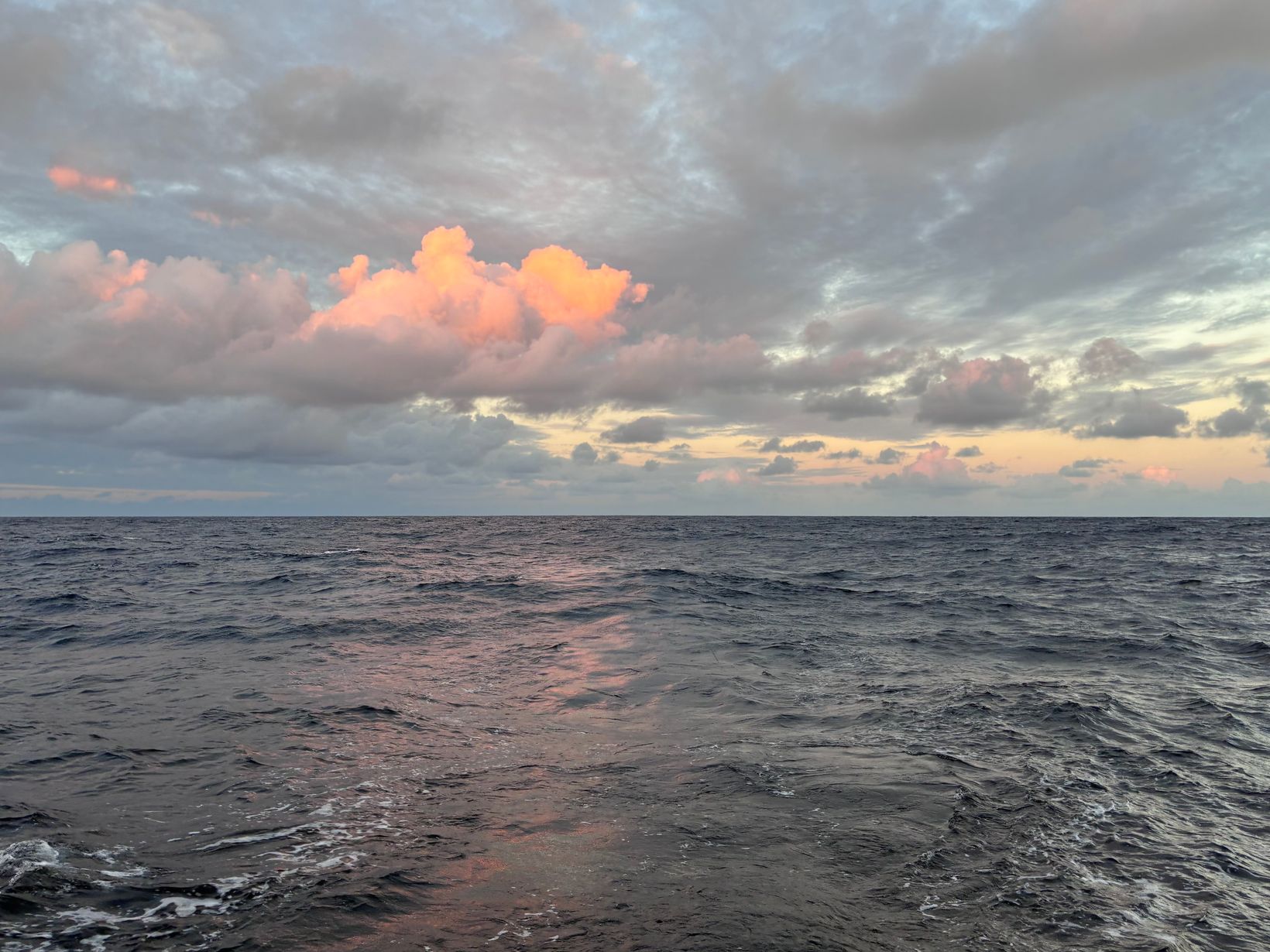
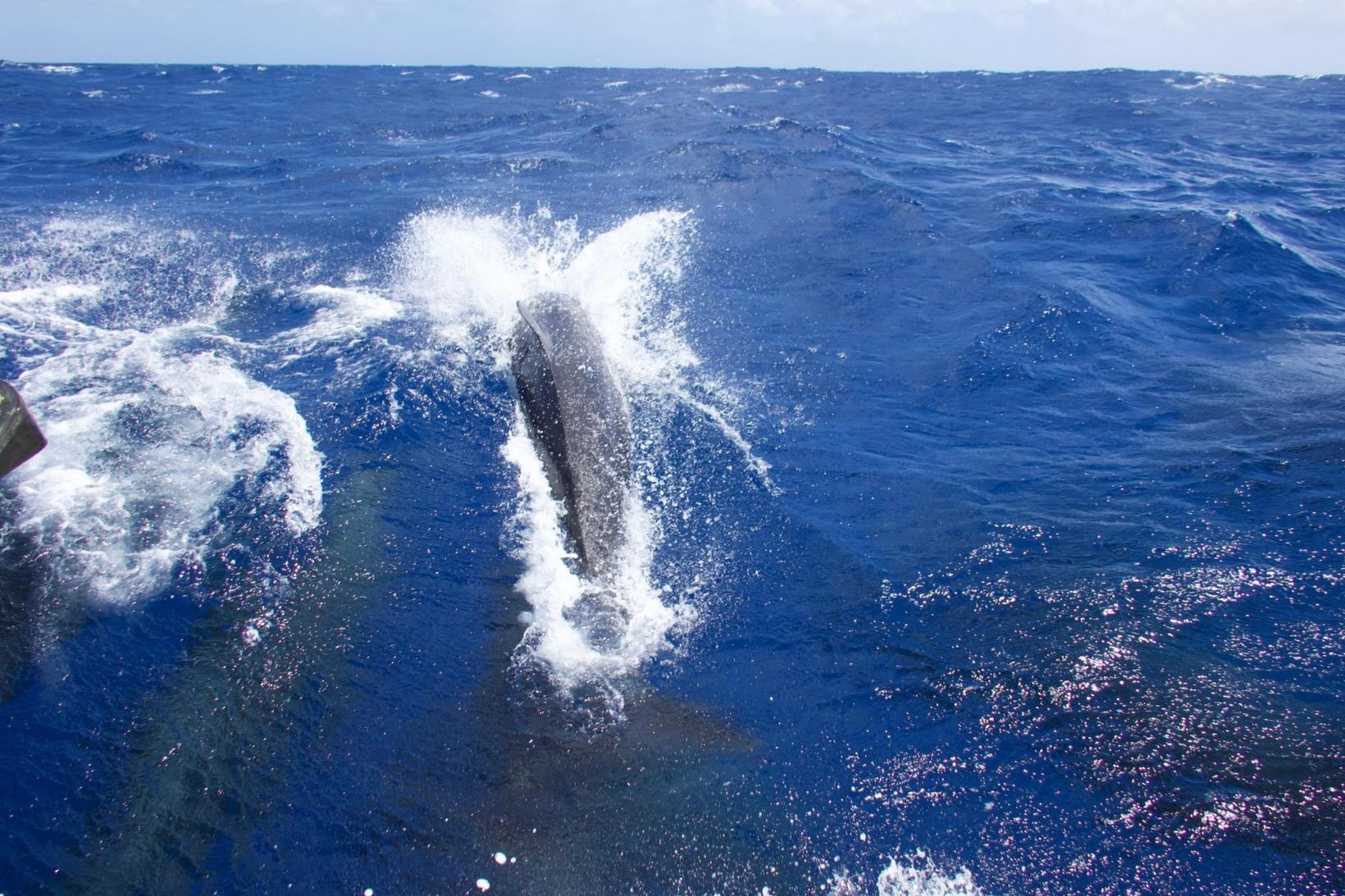
And so hour after hour, day after day goes by. Monotonous, yes, but fast, because in the final third the wind picks up. It gets sportier and the cross seas toss us around. It’s all bearable, but it’s tiring to constantly hold on to something to prevent falling. The distance to our destination melts away. On average we manage a 169-nautical-mile day’s run. We’re going fast, and a pod of dolphins has taken notice of us. They swim back and forth under the bow for hours. After a few passes, we can distinguish the animals by the algae and barnacles on their backs and count how many laps they swim.
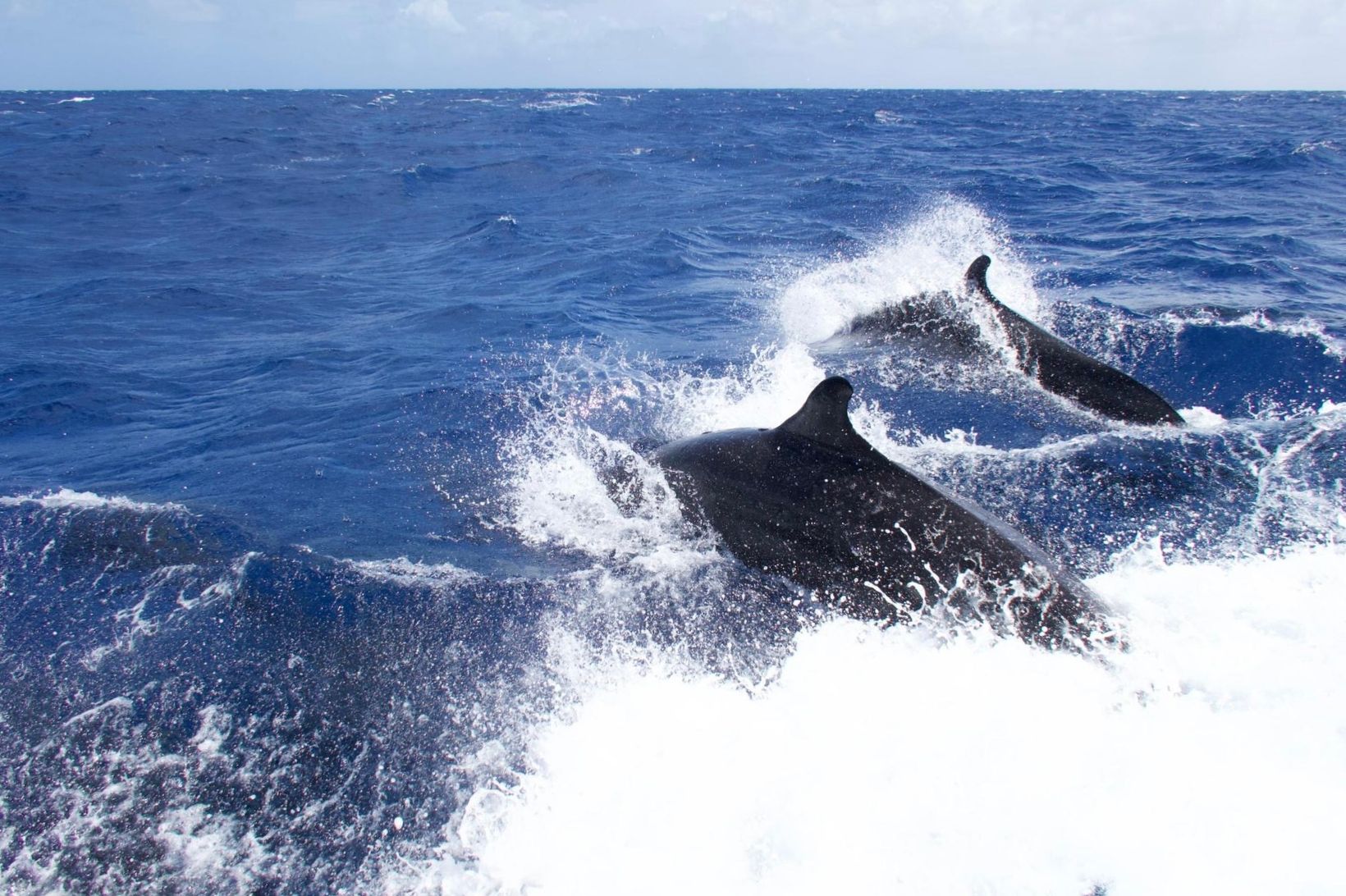
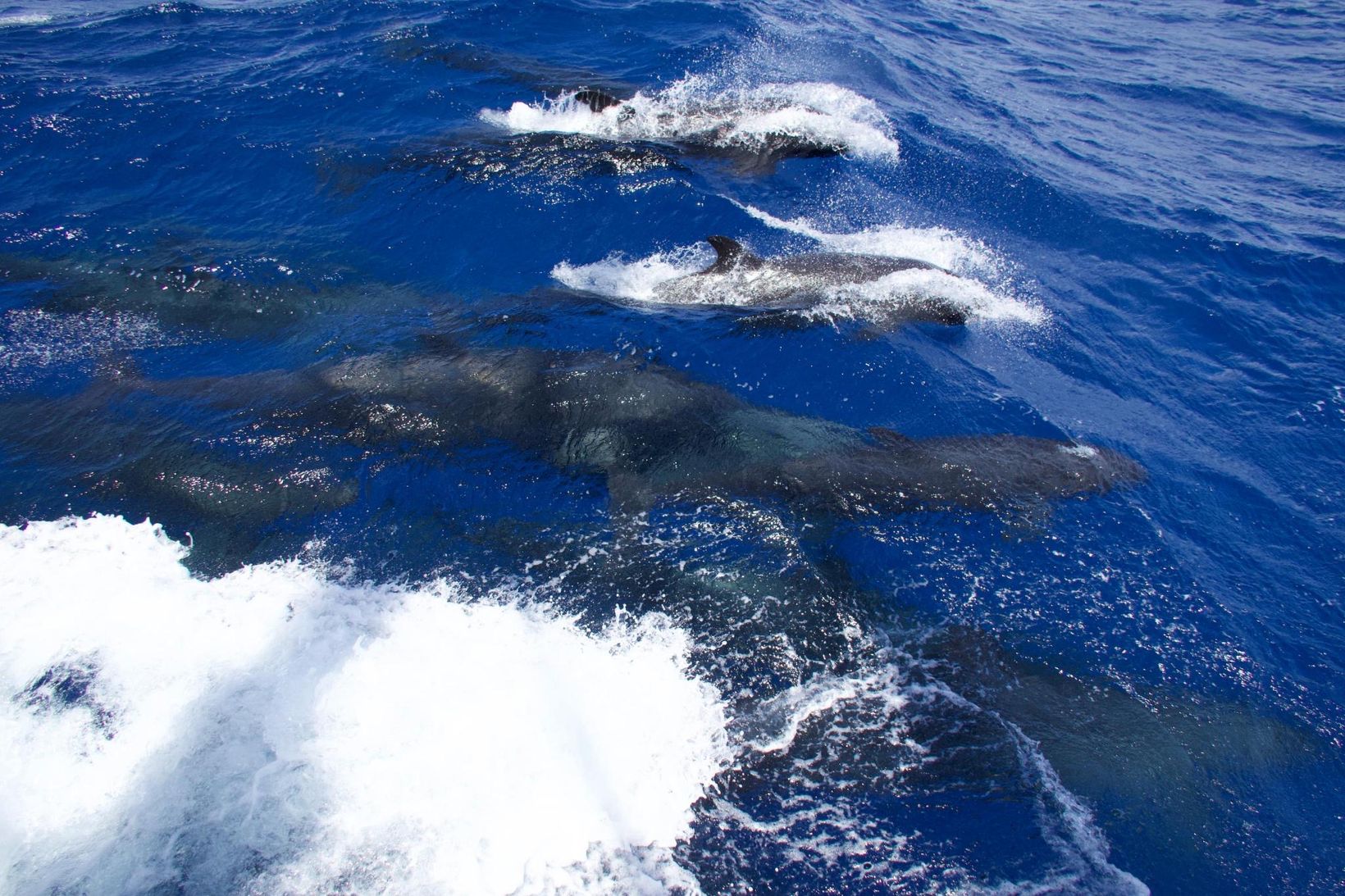
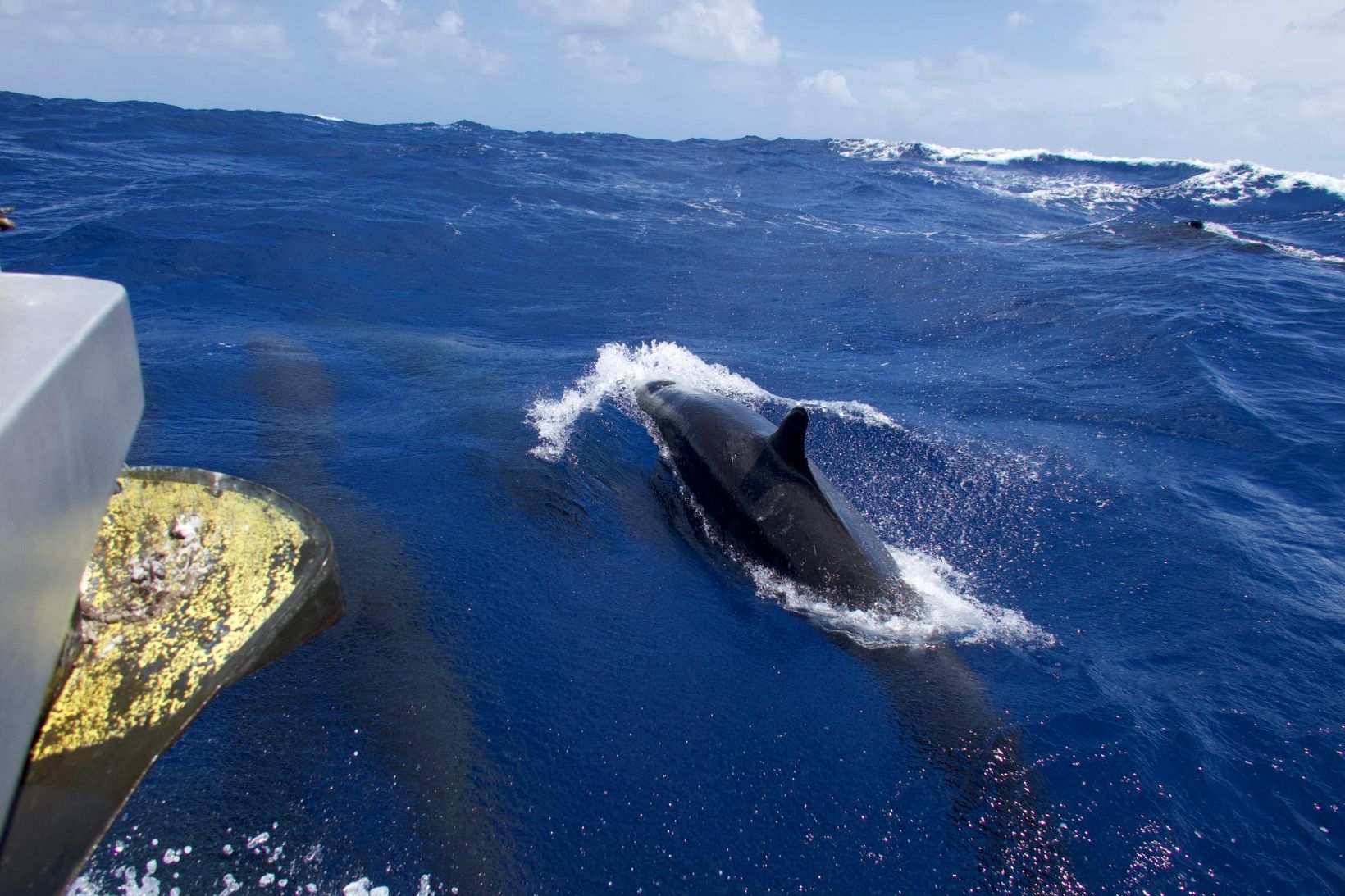
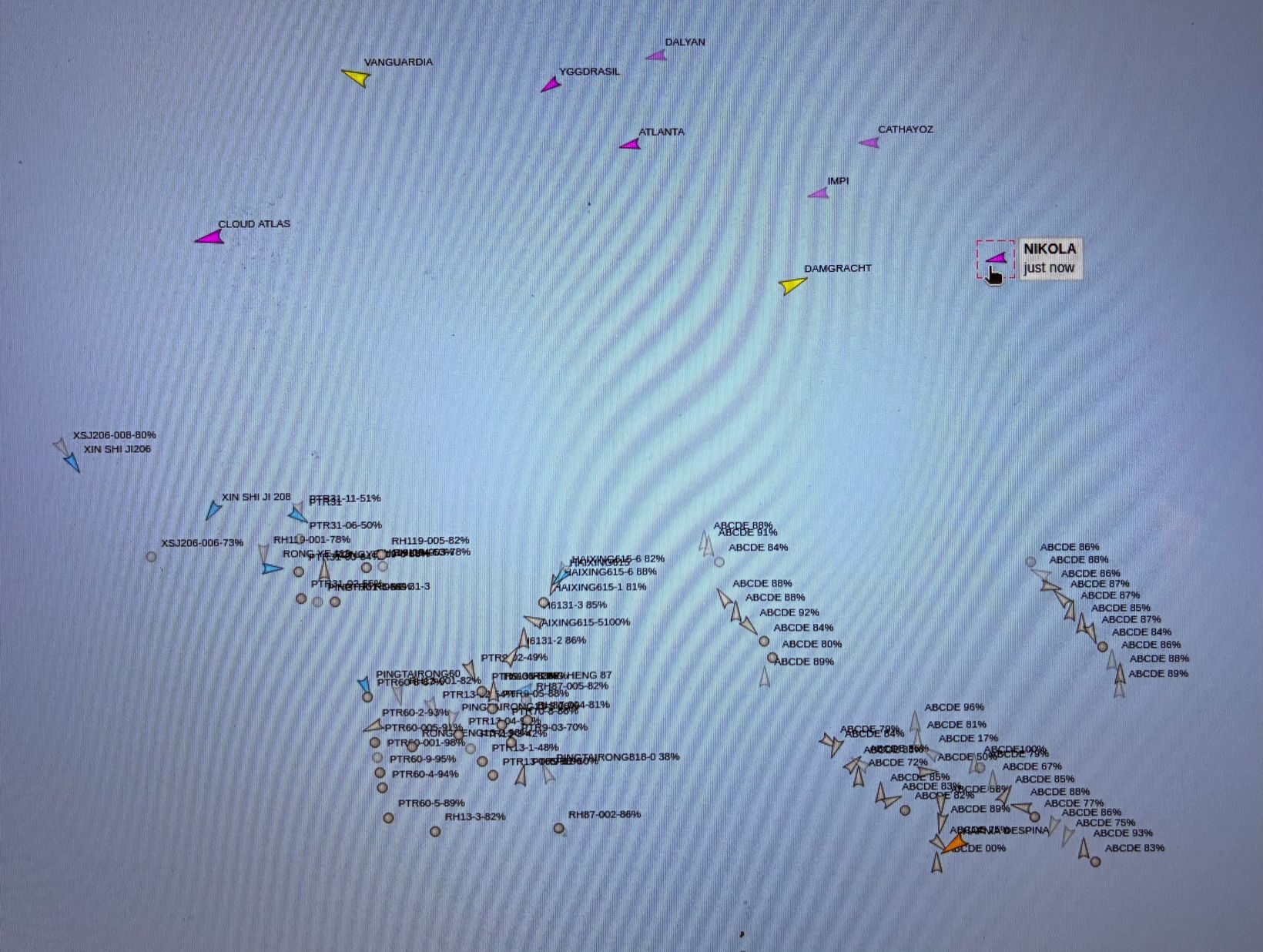
After more than two weeks at sea, we have to ask the question: where have all the fish gone? Unlike in the Atlantic, not a single fish bites here. Are we doing something wrong, or has the Chinese fishing fleet fished the Pacific empty? The fleet, with its kilometer-long lines, is certainly easy to spot on AIS.
We settled on Fatu Hiva as our exact destination, which has no office for clearing in. Strictly speaking, we’d therefore have to go to either Hiva Oa or Nuku Hiva, but on the Marquesas our semi-legal status doesn’t seem to bother anyone. The advantage is that we get to enjoy the spectacular bay of Hanavave right at the start, and don’t have to sail back against wind and waves.
Land Ho
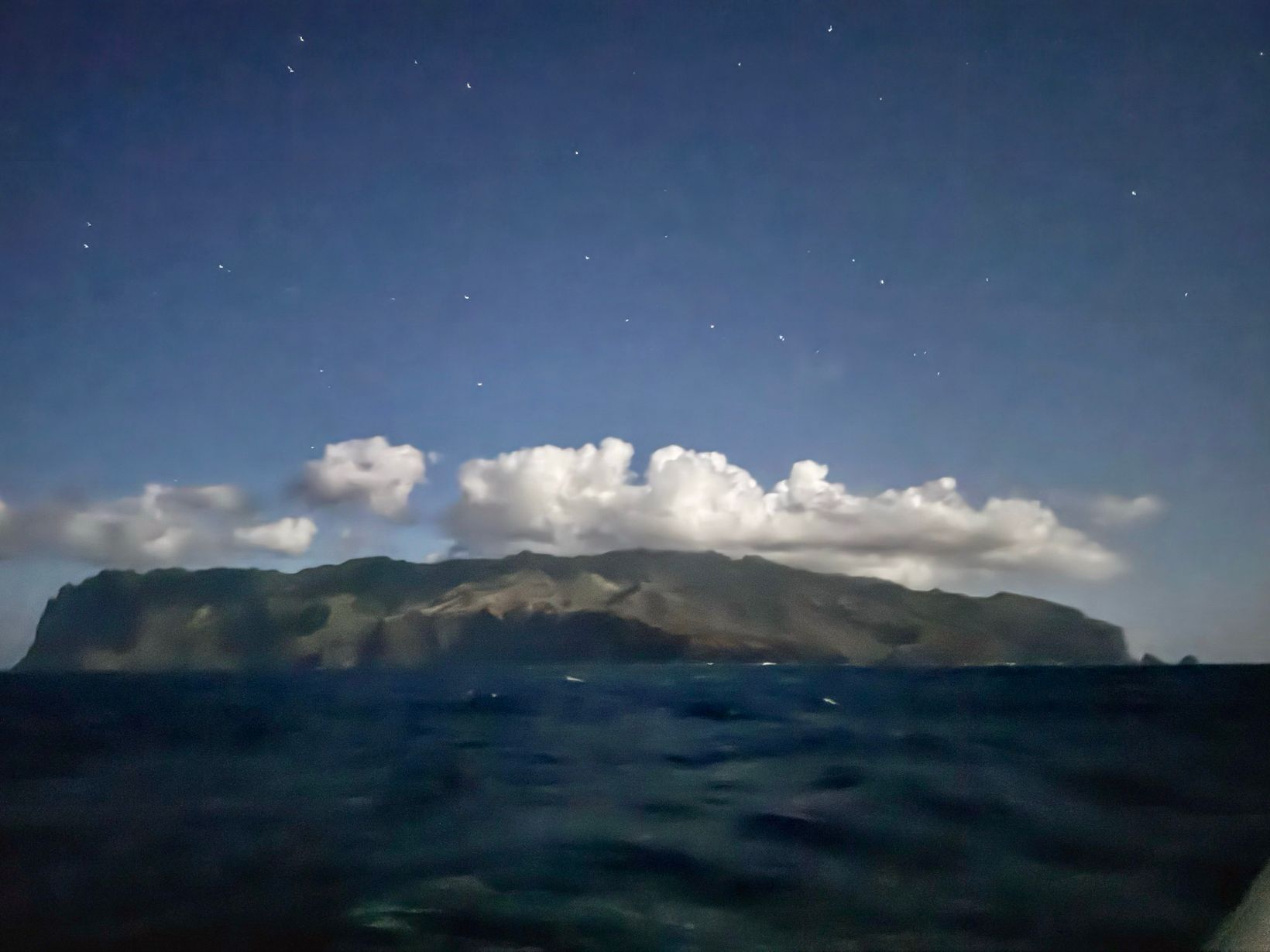
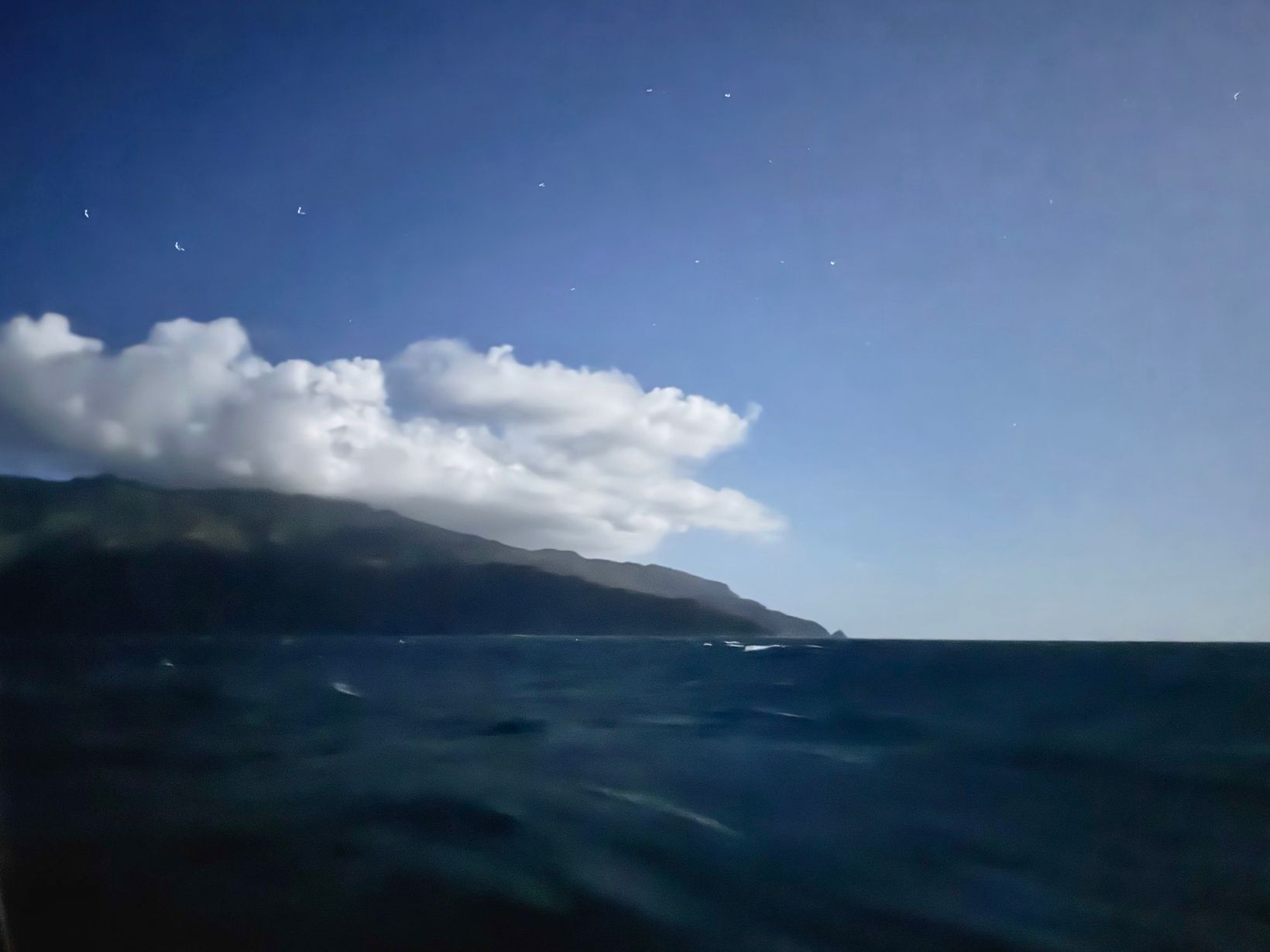
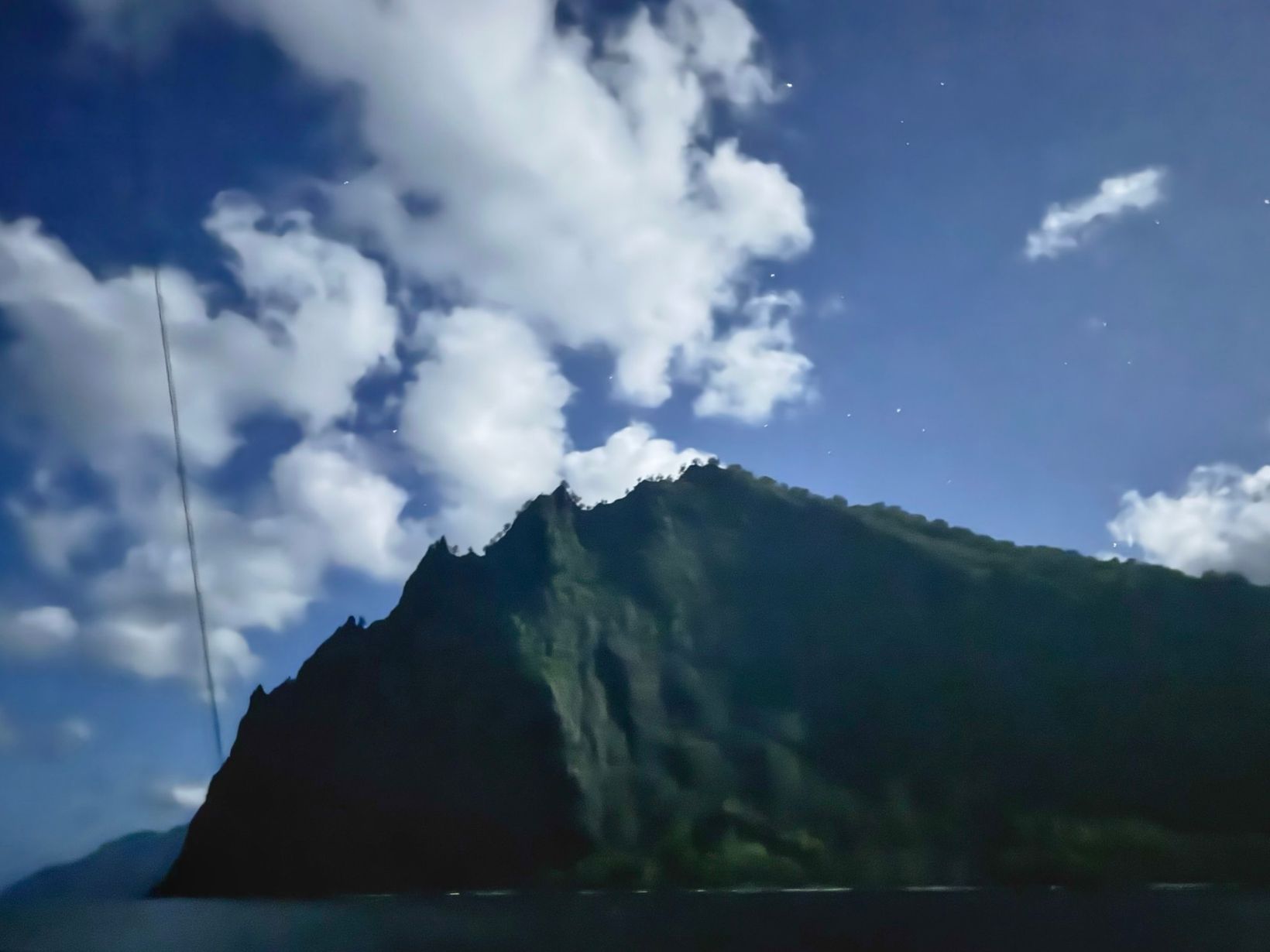
On the afternoon of the twentieth day, we sight land. The mind can’t quite grasp that we — the three of us, in our own boat — have actually crossed the world’s largest ocean. At the moment of arrival, it doesn’t feel like a big deal as we approach the island in the dazzling light of a full moon. The silhouette of the rugged mountains looks surreal. It would take a few more days before our minds fully arrive on the island.