The Way to Paradise
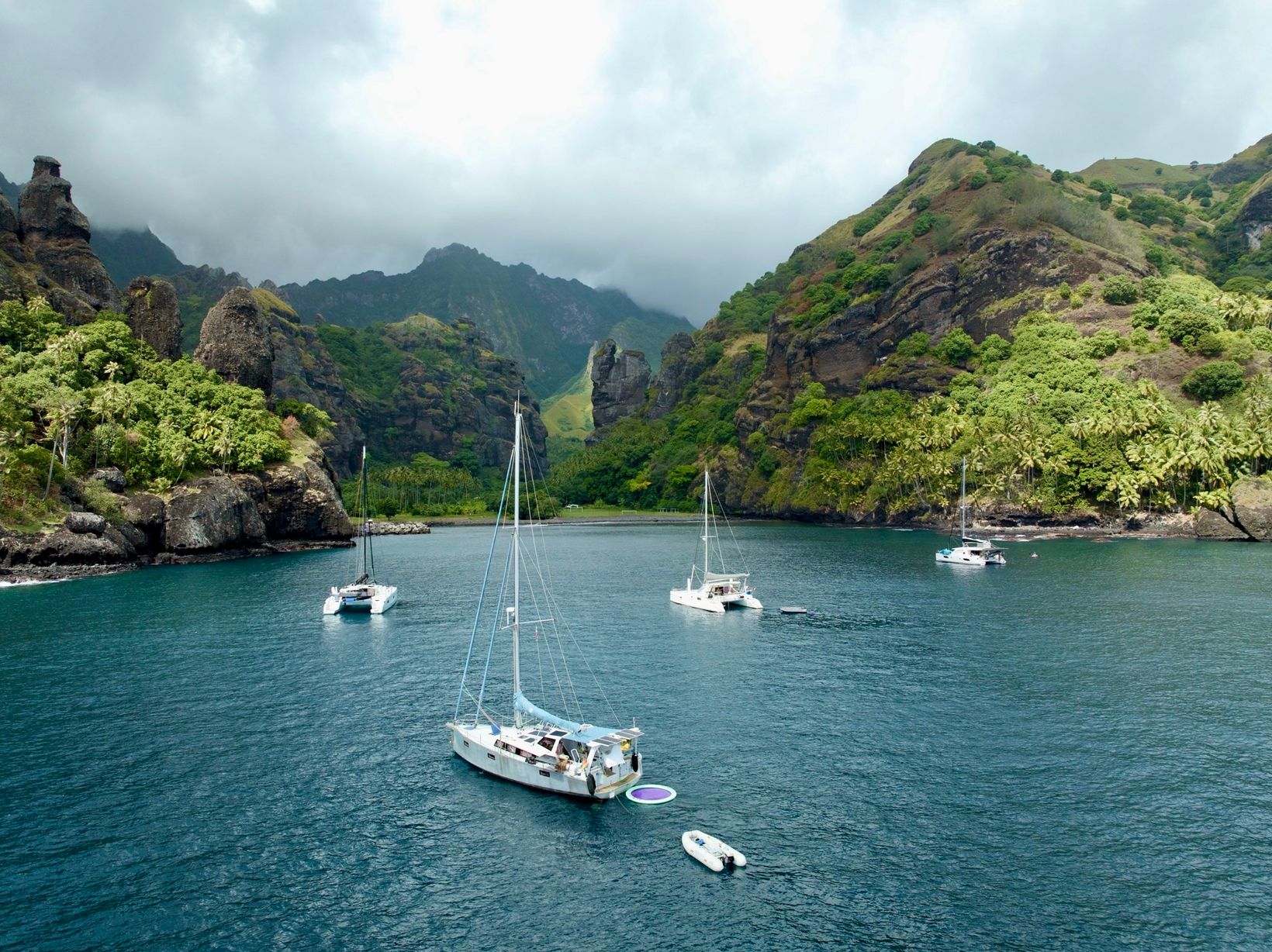
The Marquesas are a place of longing. Not only for us crossing the Pacific, impatiently waiting to spot land on the horizon at last, but also for some well-known names from old Europe.
Thor Heyerdahl fled civilization on Fatu Hiva, where he developed his theory that Polynesia was inhabited from South America. His book about his time in the Marquesas Islands was a great read during the Pacific crossing. Jacques Brel, who spent his final years on Hiva Oa, provided the soundtrack to the trip.
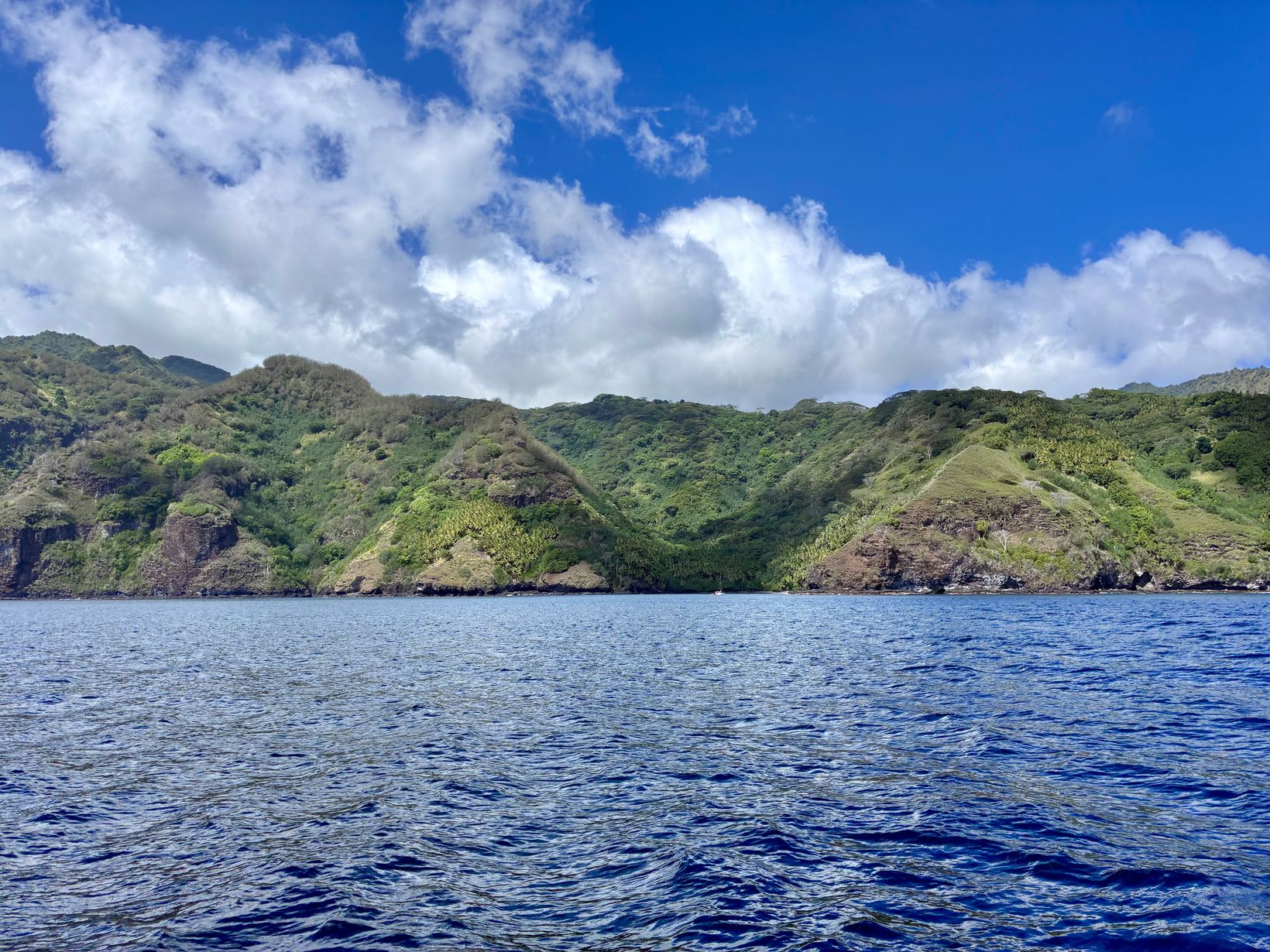
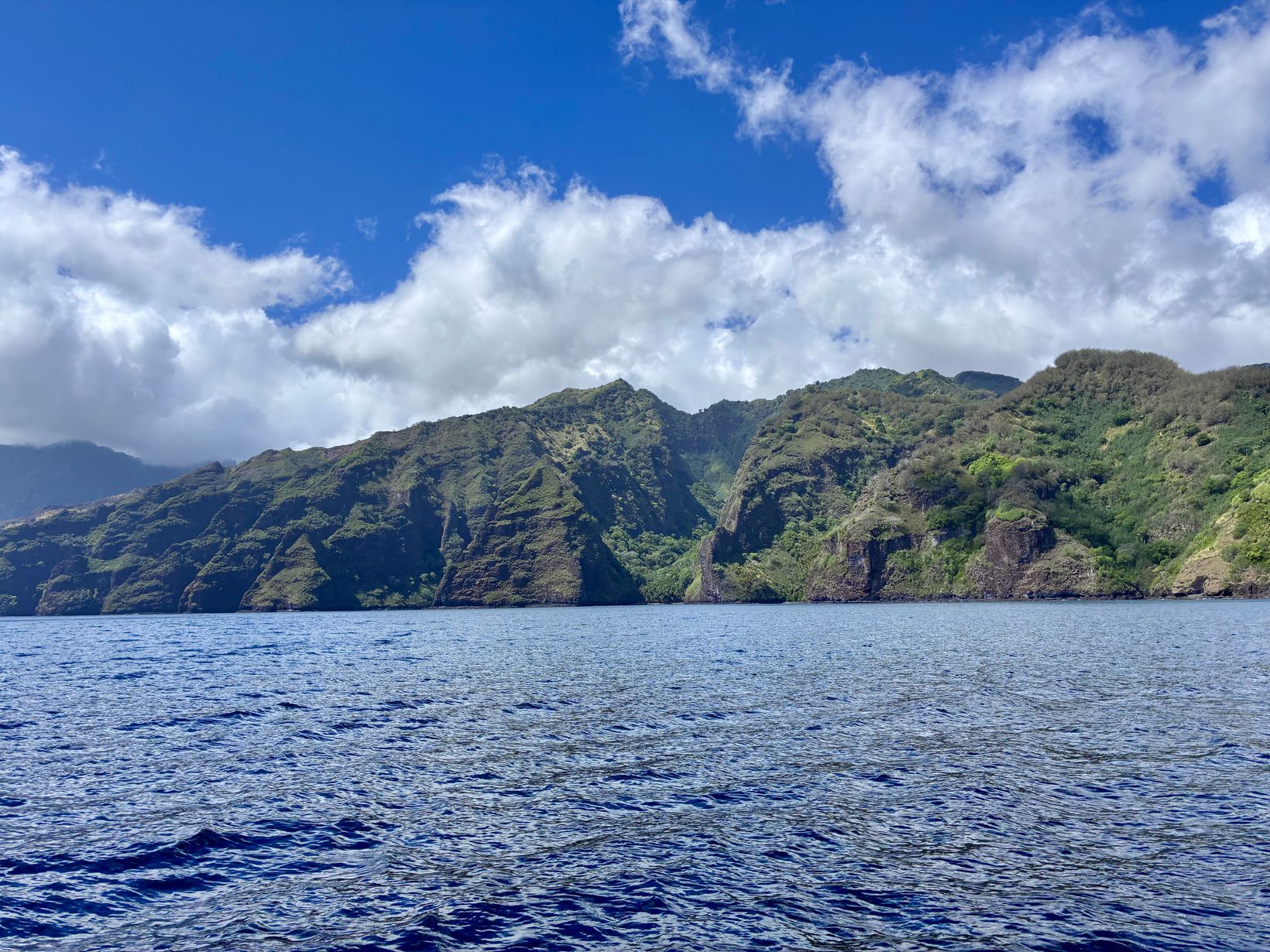
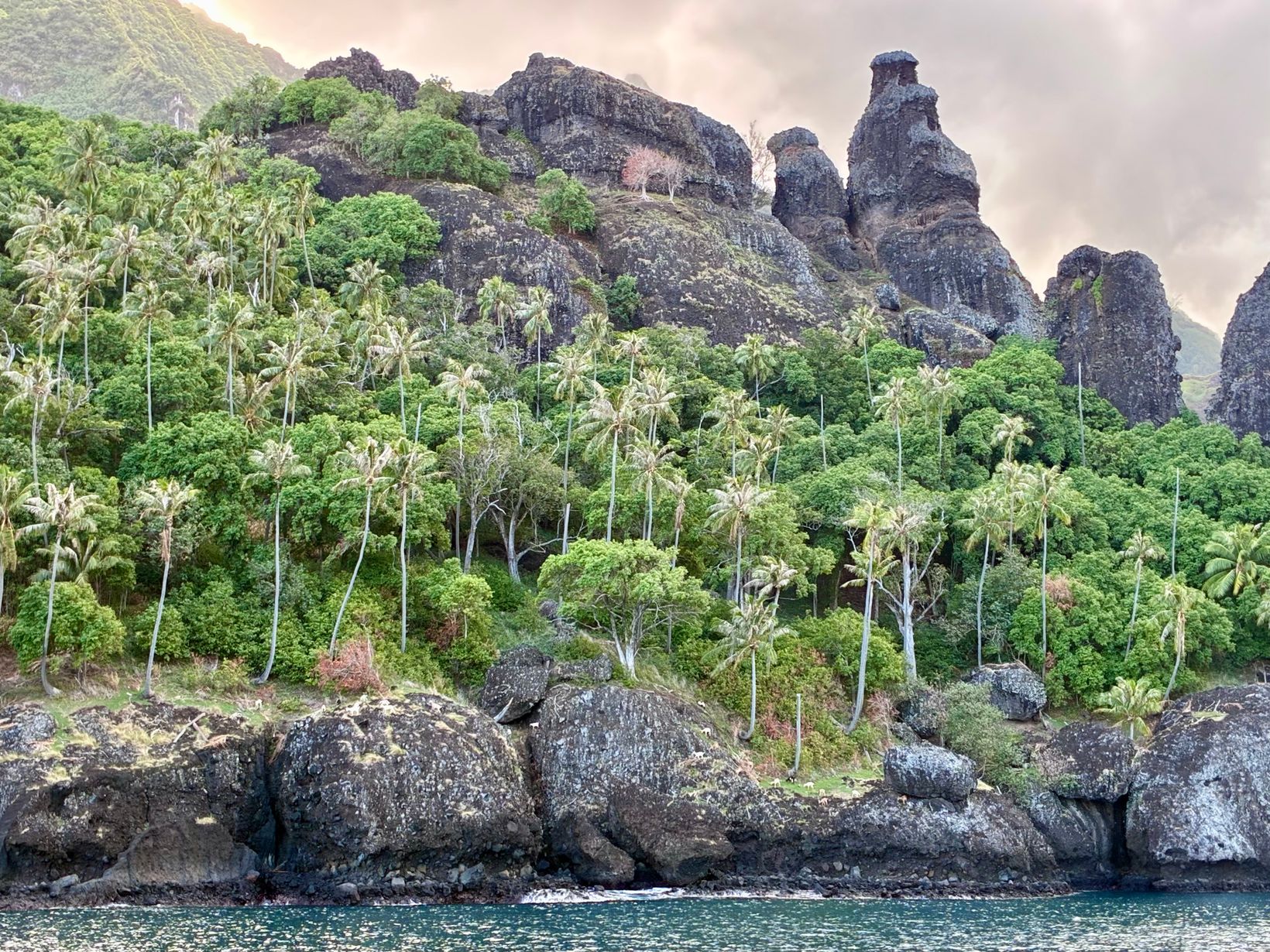
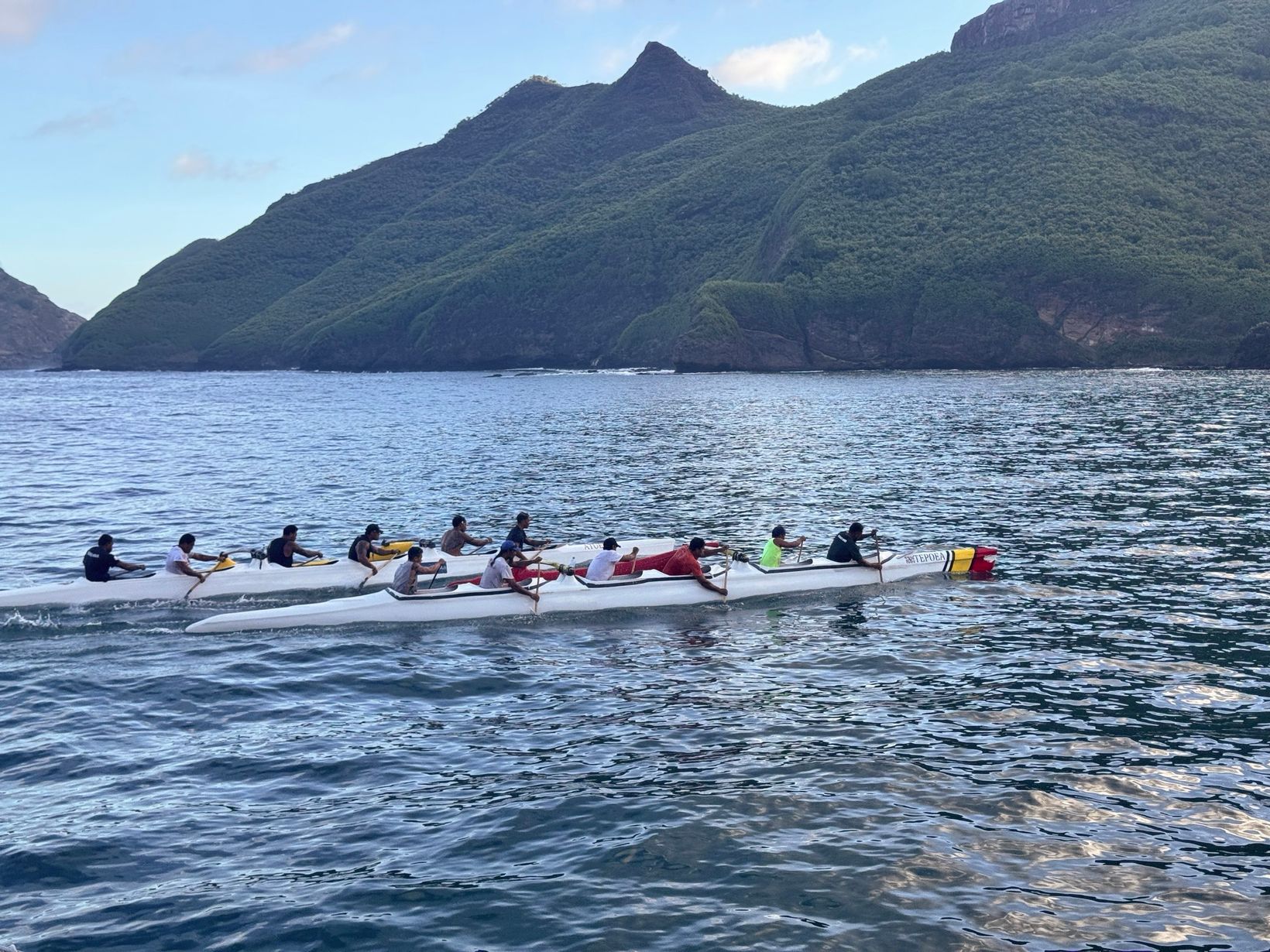
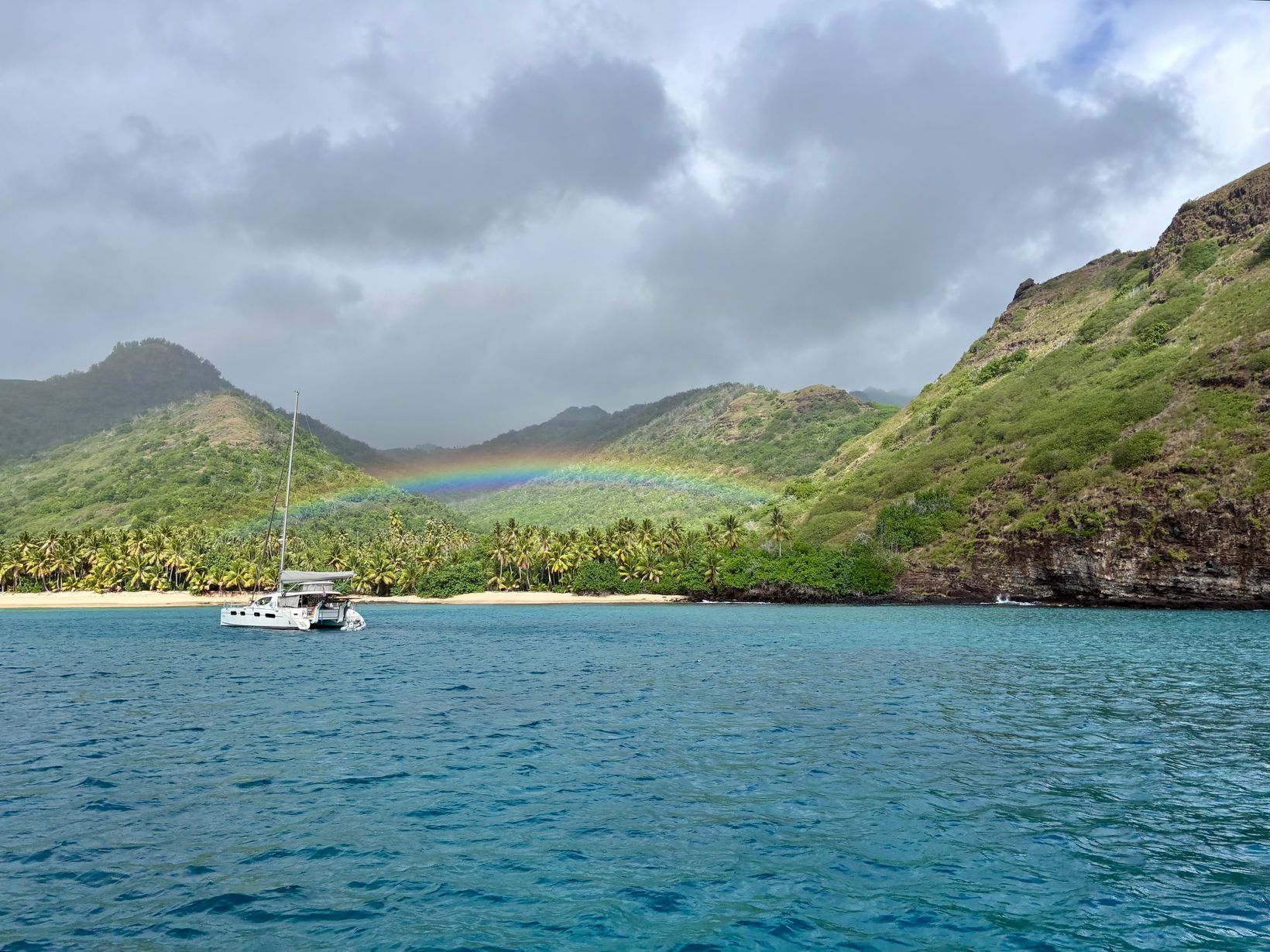
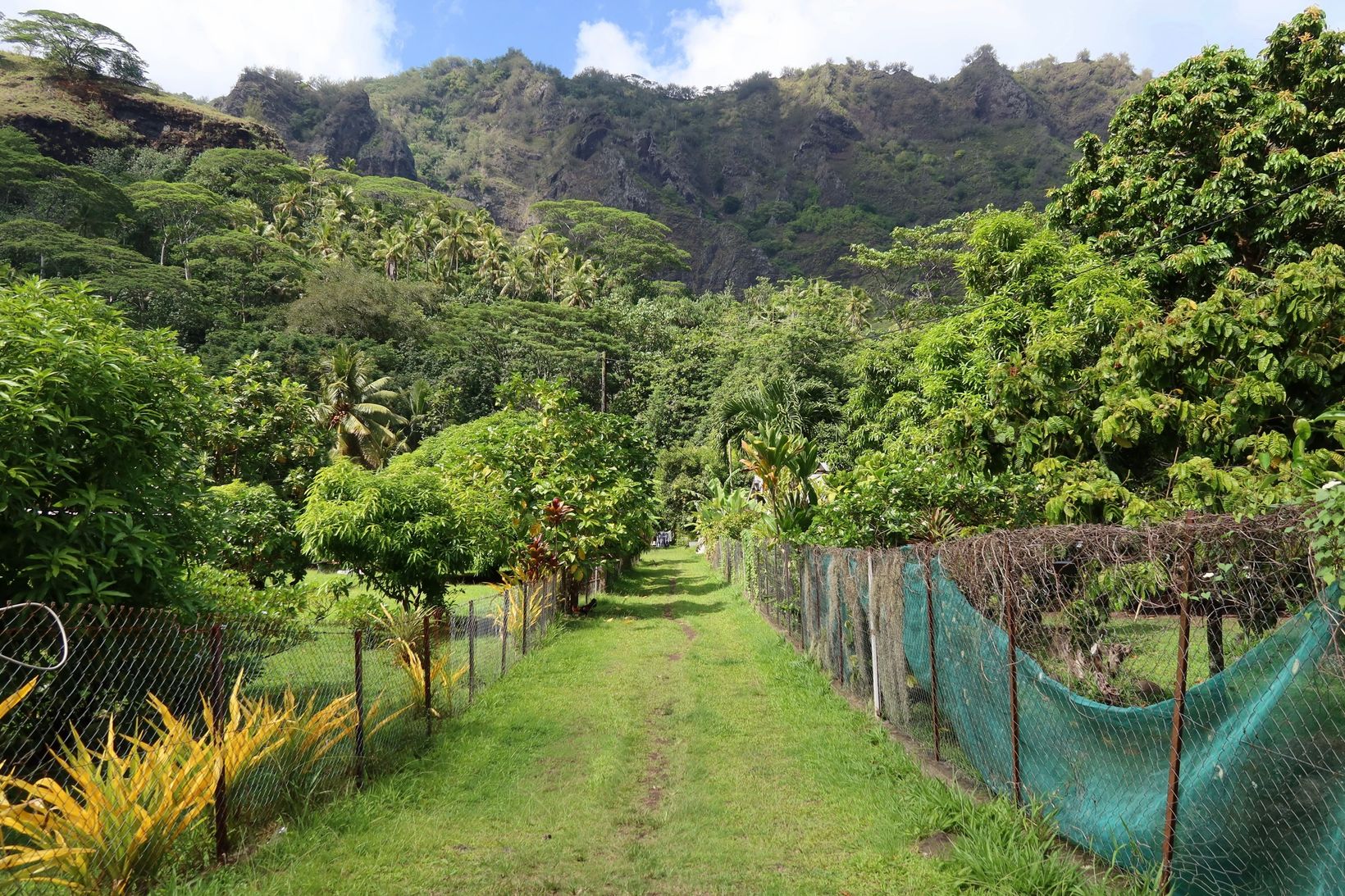
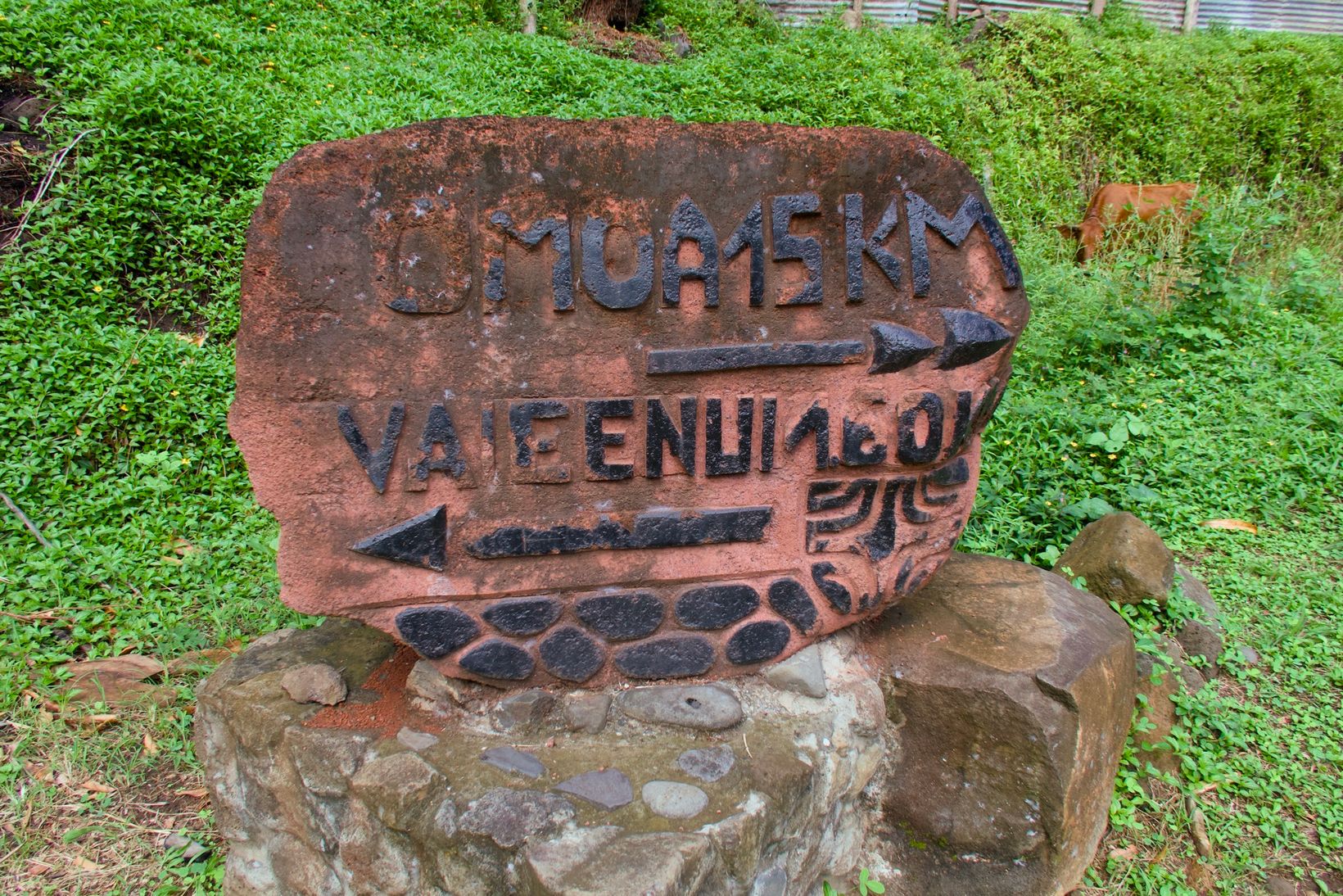
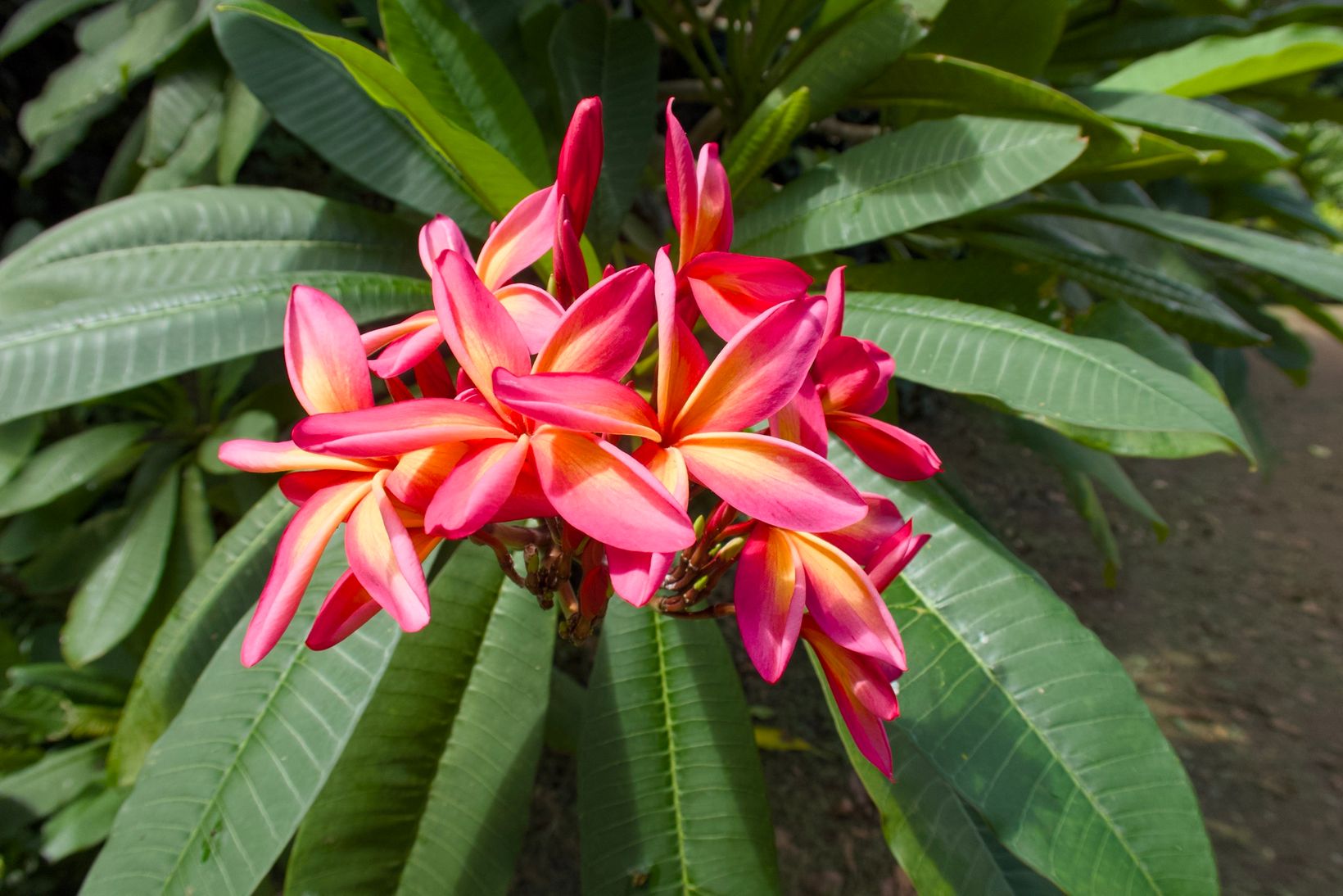
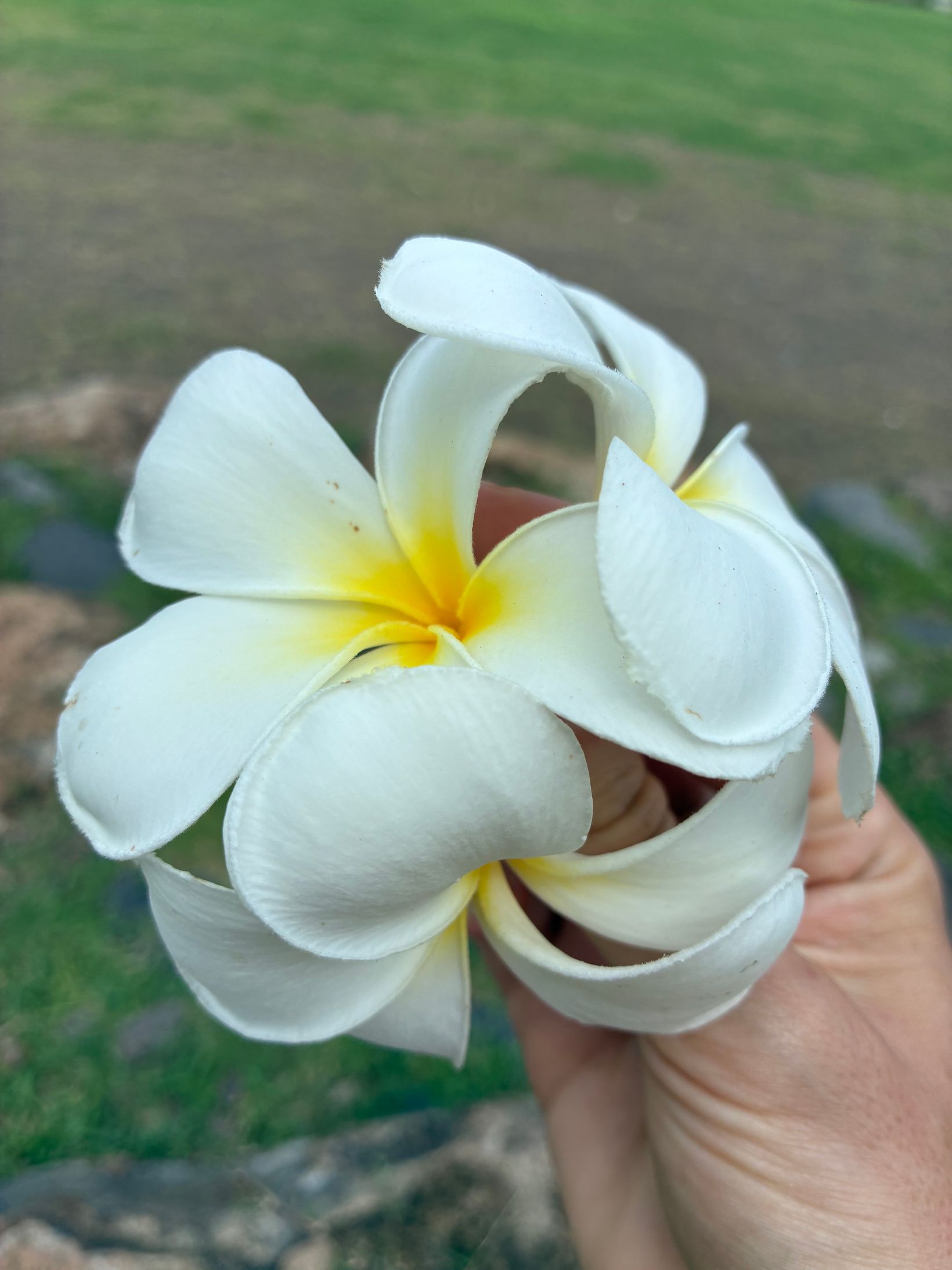
We get an idea of how Jacques Brel must have felt when he arrived by boat back then. We too, after weeks of monotony, are captivated by the sudden flood of sensory impressions and the abundance of this island world. The green is overwhelming, the mountains rugged and mystically veiled in clouds, the starry sky glows dramatically and the air is thick with the scent of frangipani. We’re happy with our decision, after 3,000 miles at sea, to have chosen Fatu Hiva as our first stop. Since we arrive at night, we make for Omoa, the larger of the island’s two villages. With full-moon light and easy holding ground, we fall quickly and peacefully asleep here. The first long, deep sleep in ages.
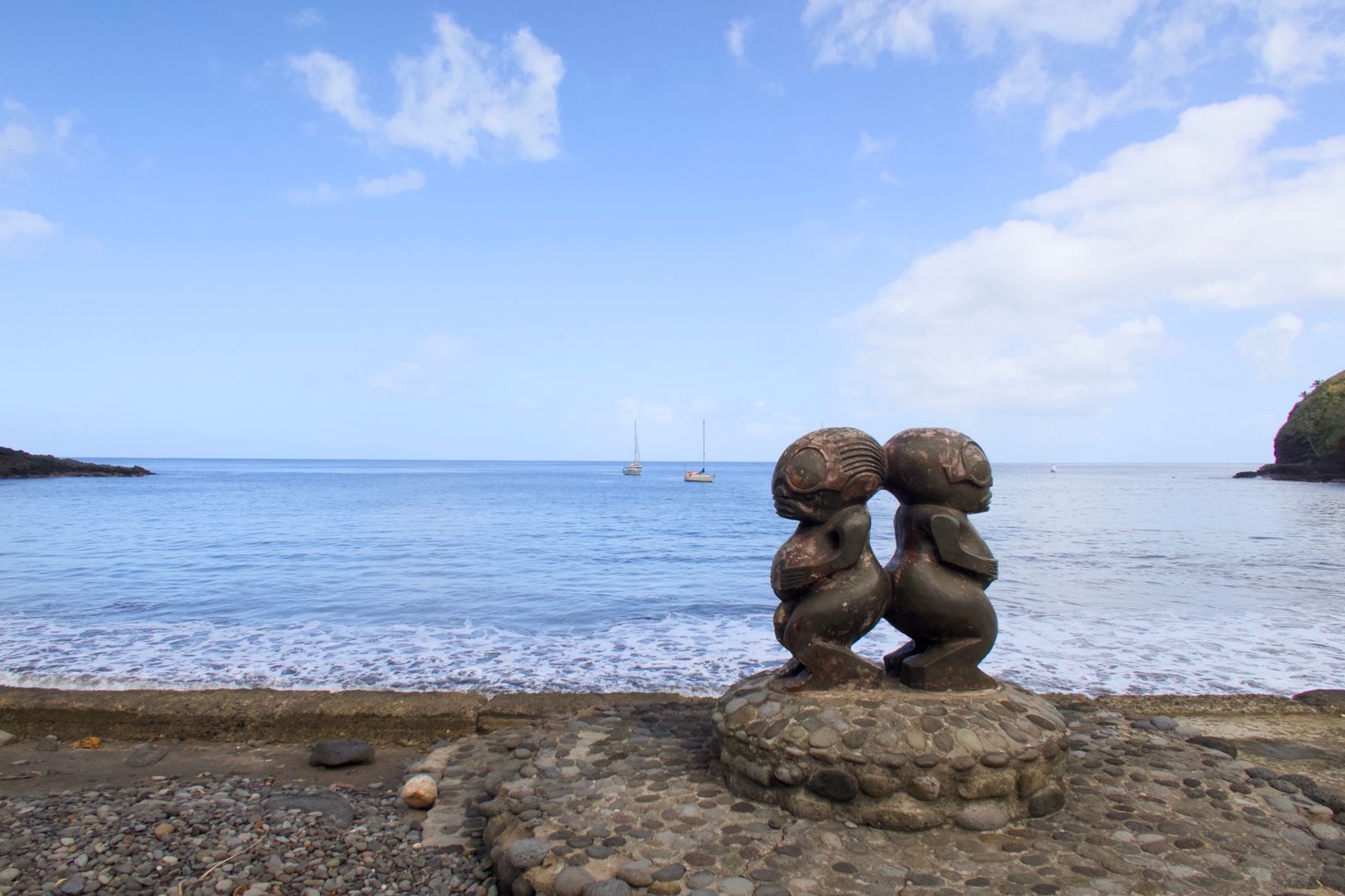
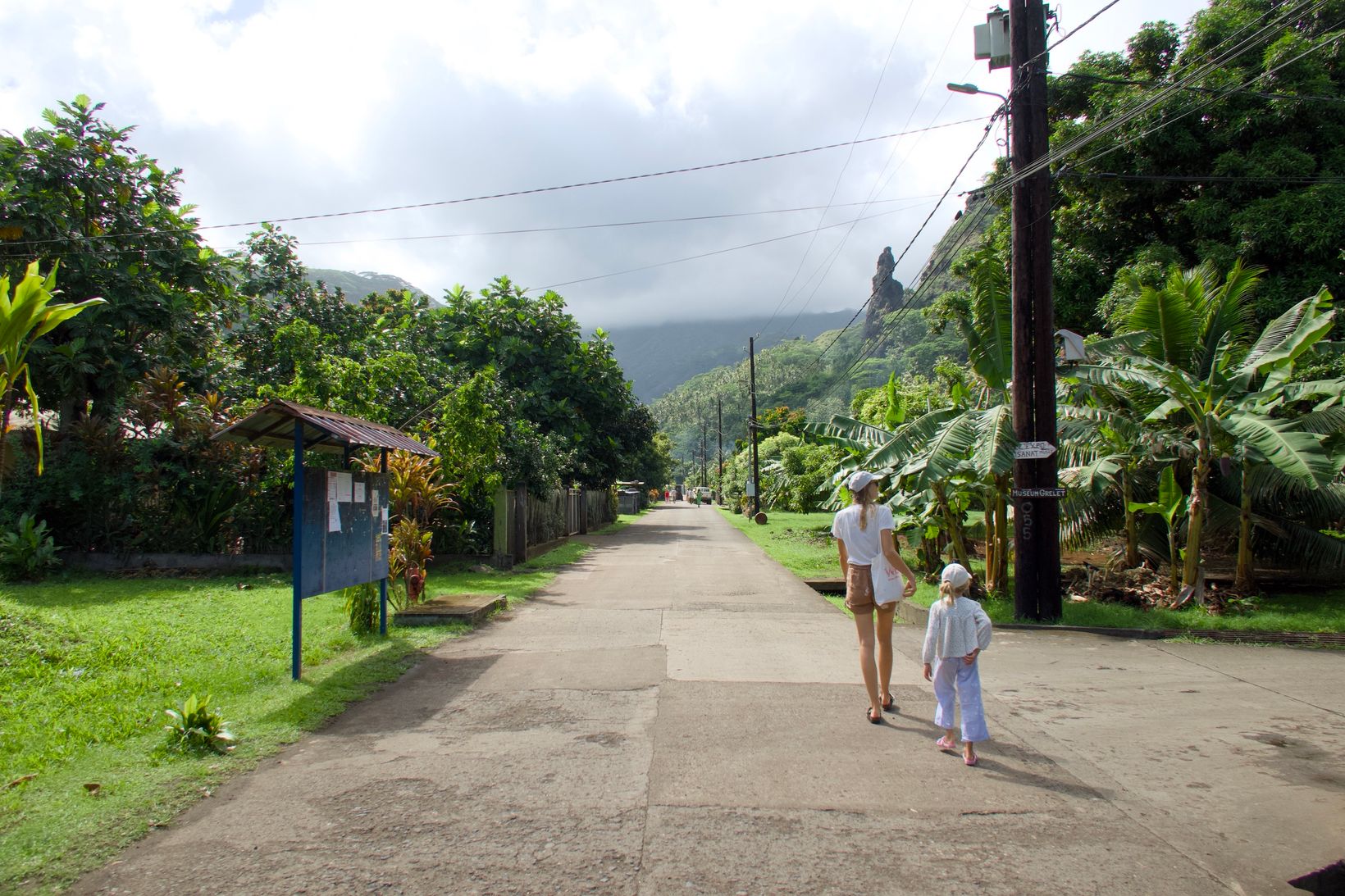
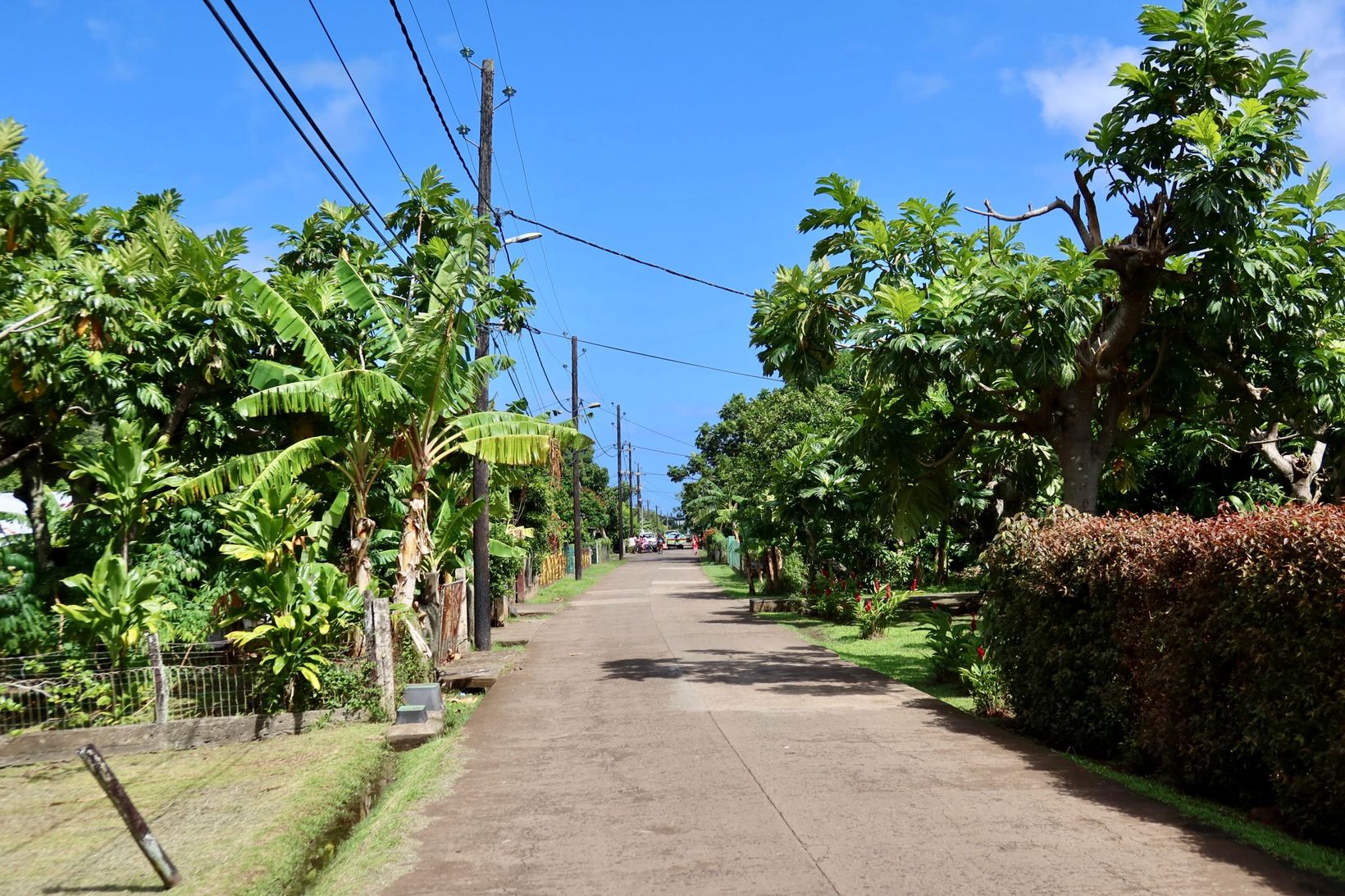
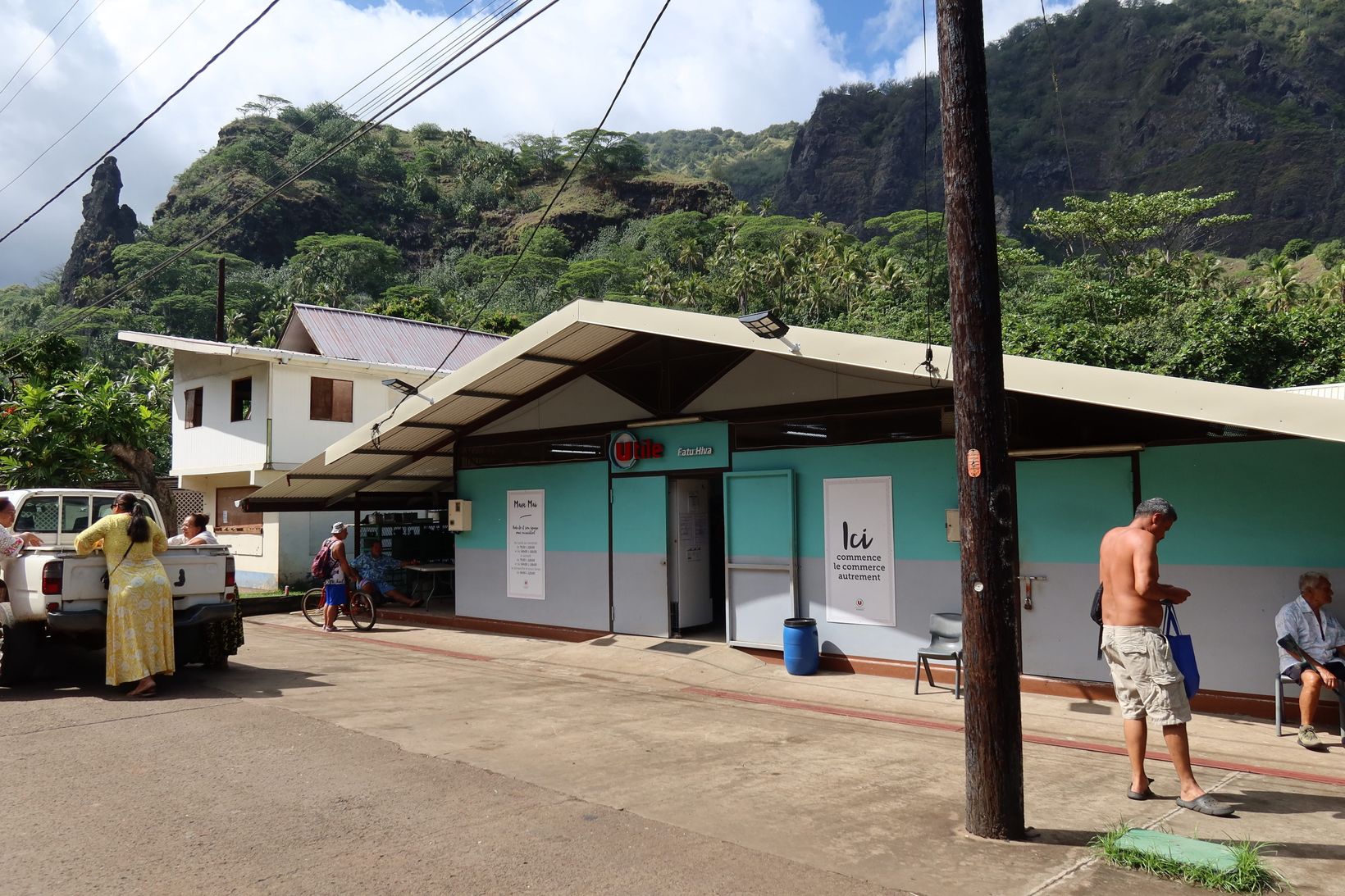
Since this village is the only place we can get cash, we do a quick supply round before daring the short hop to Hanavave, probably the most famous bay in the Marquesas for its beauty.
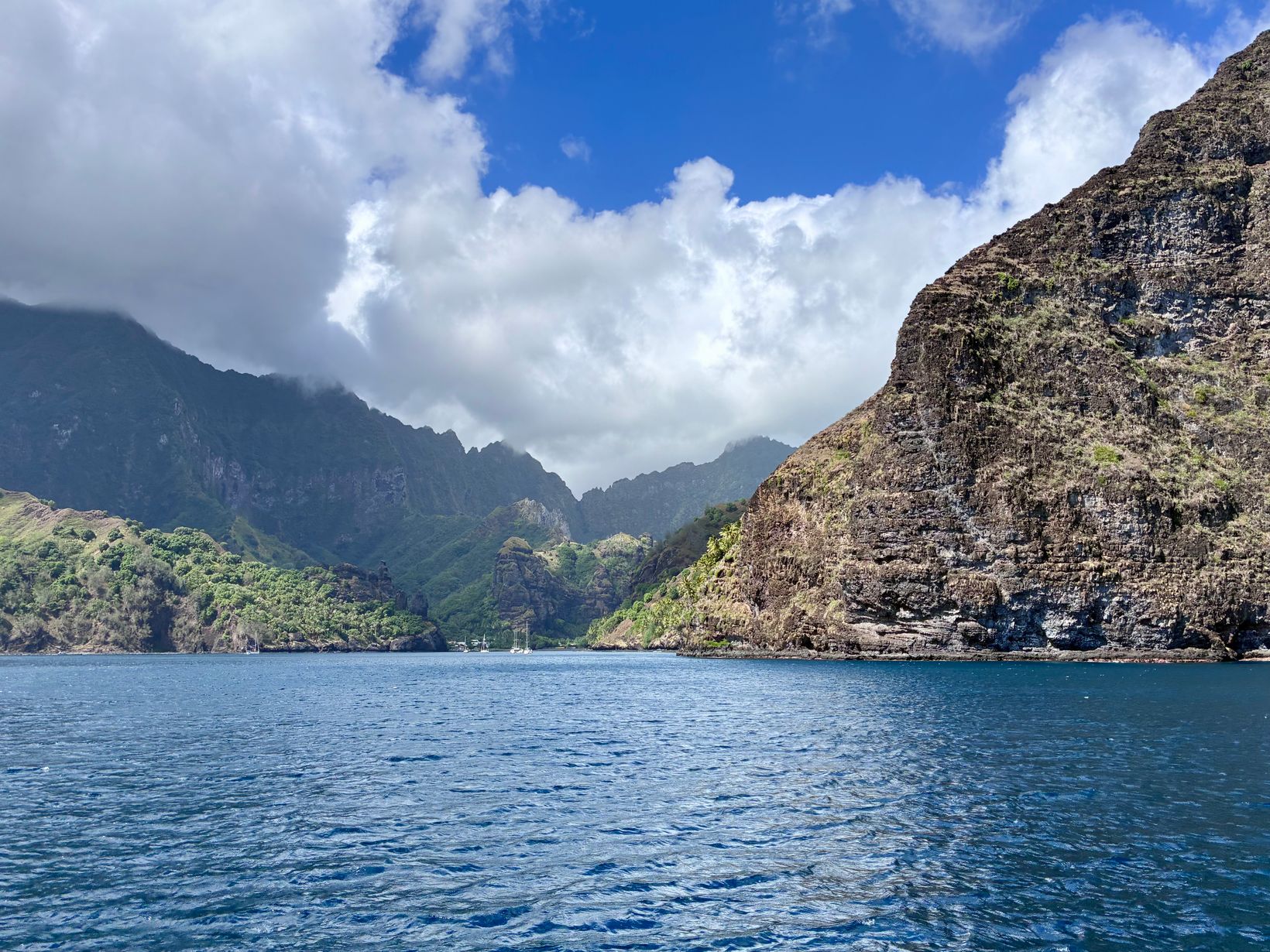
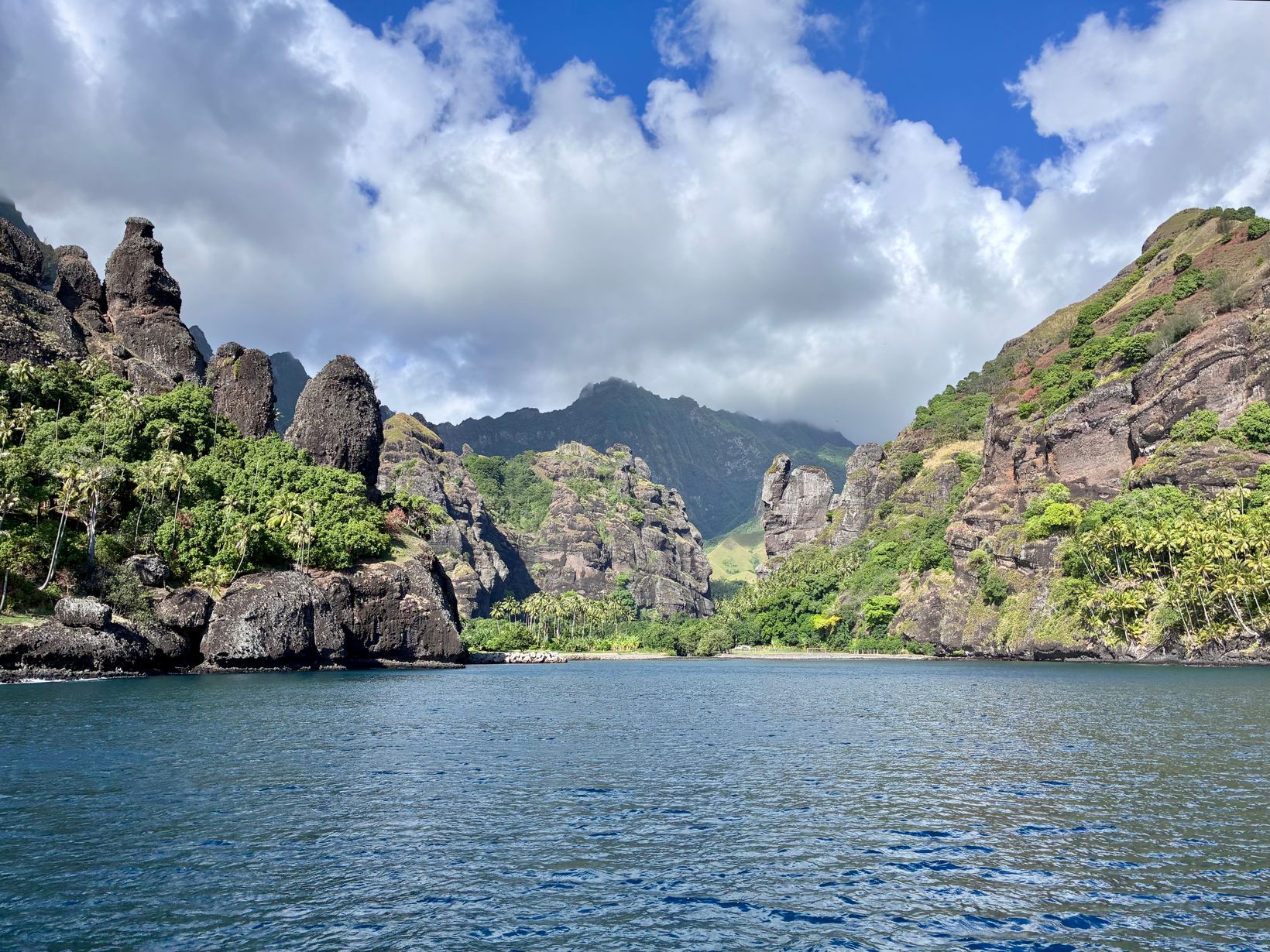
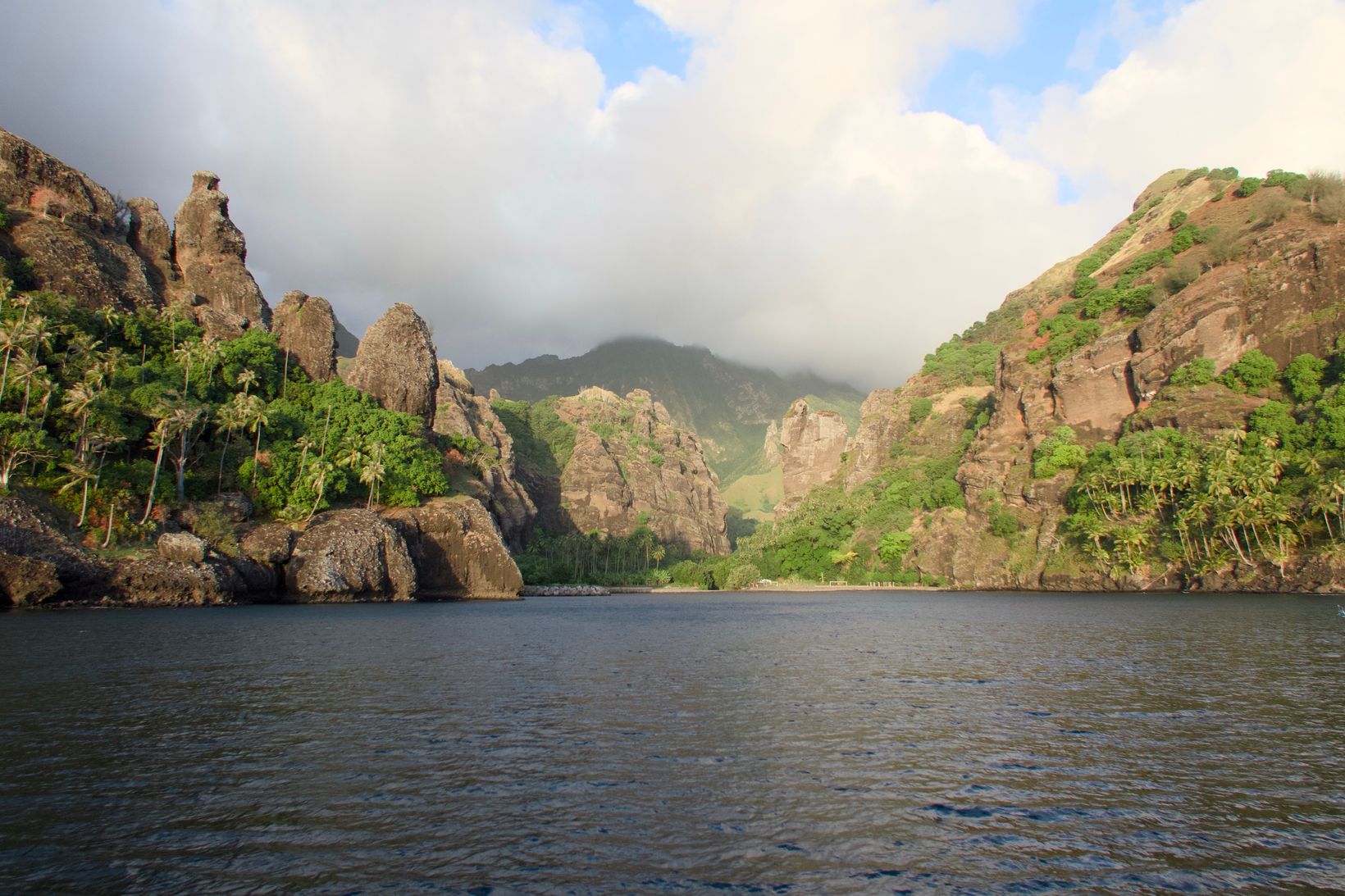
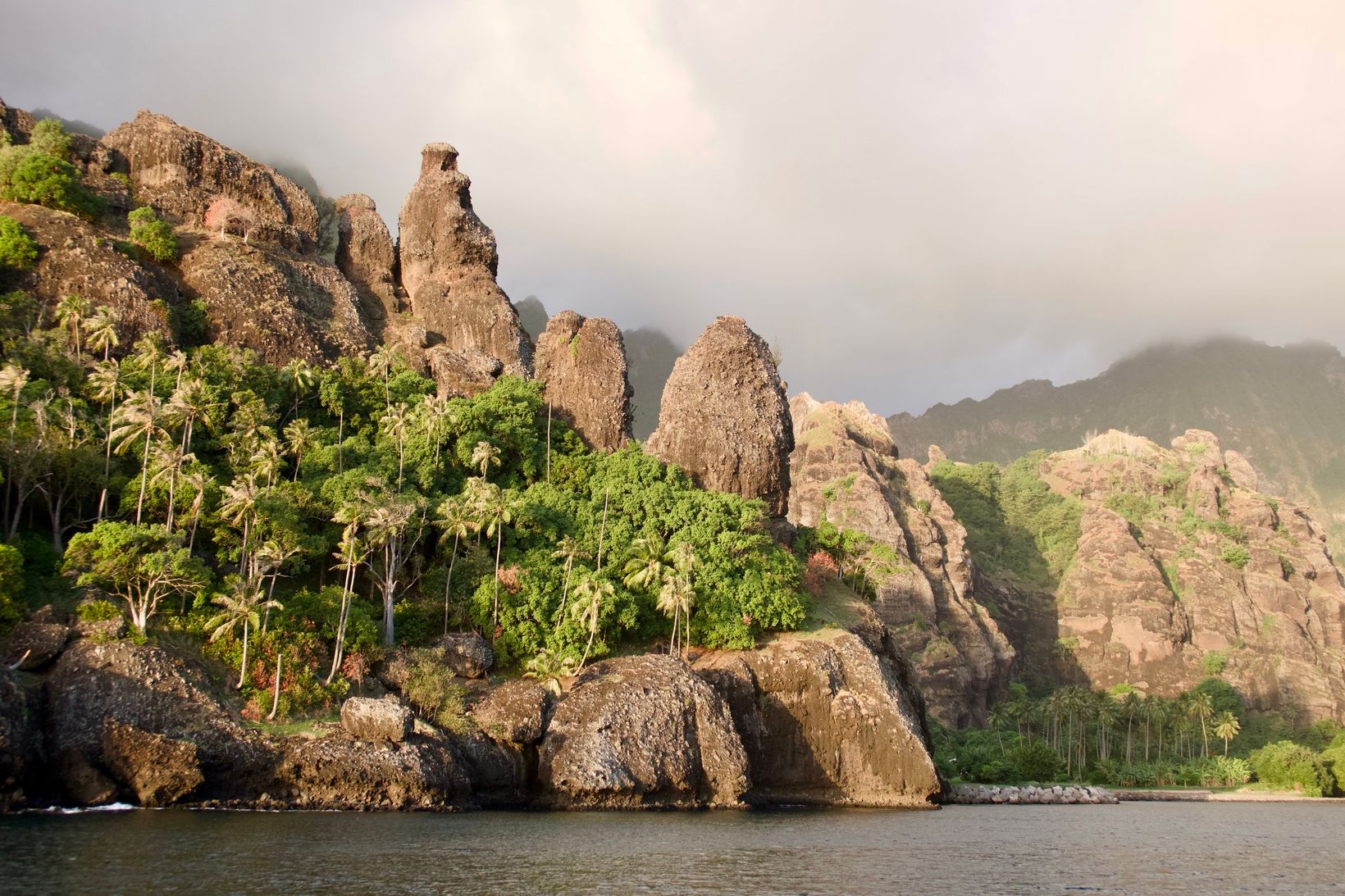
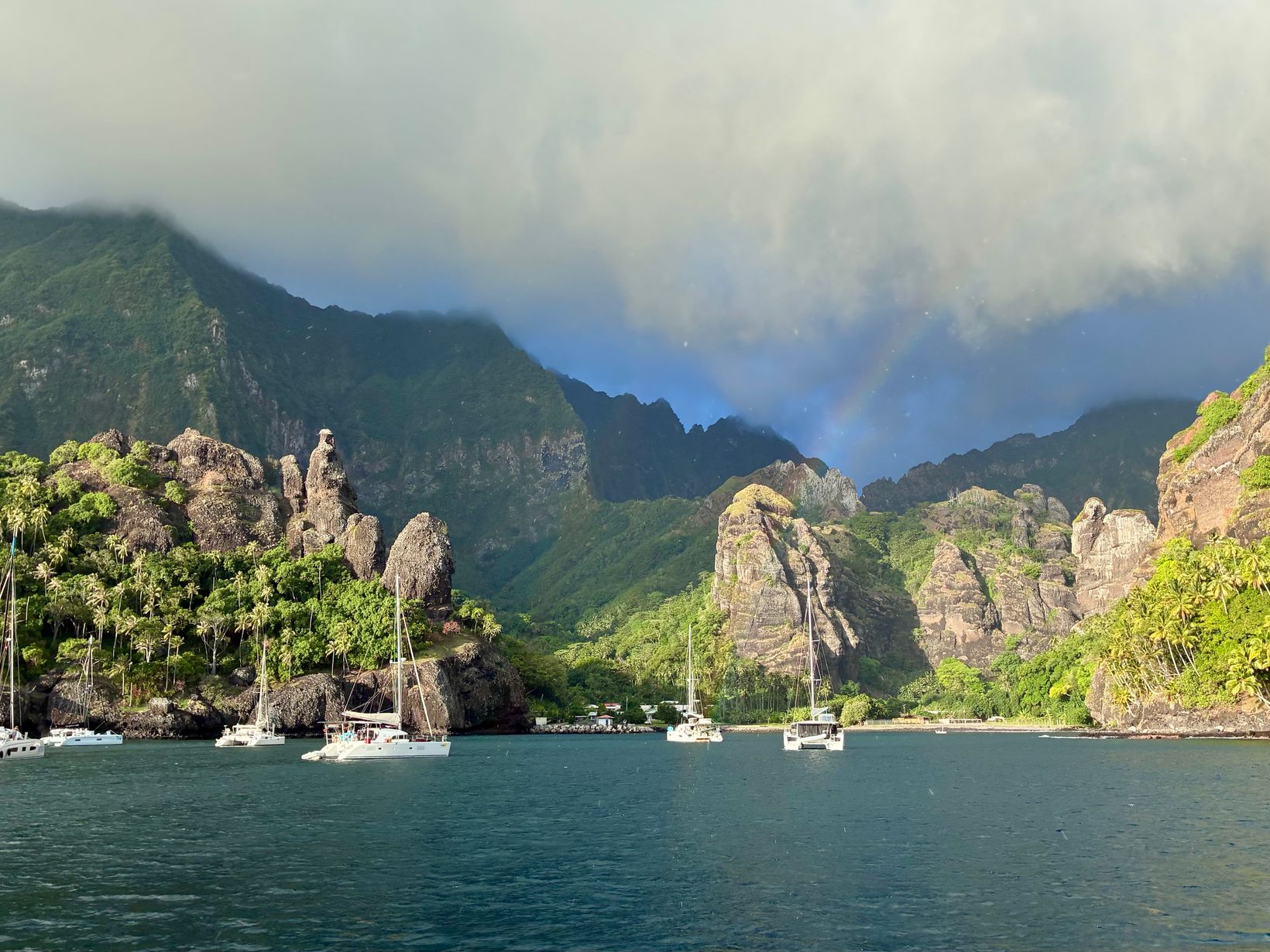
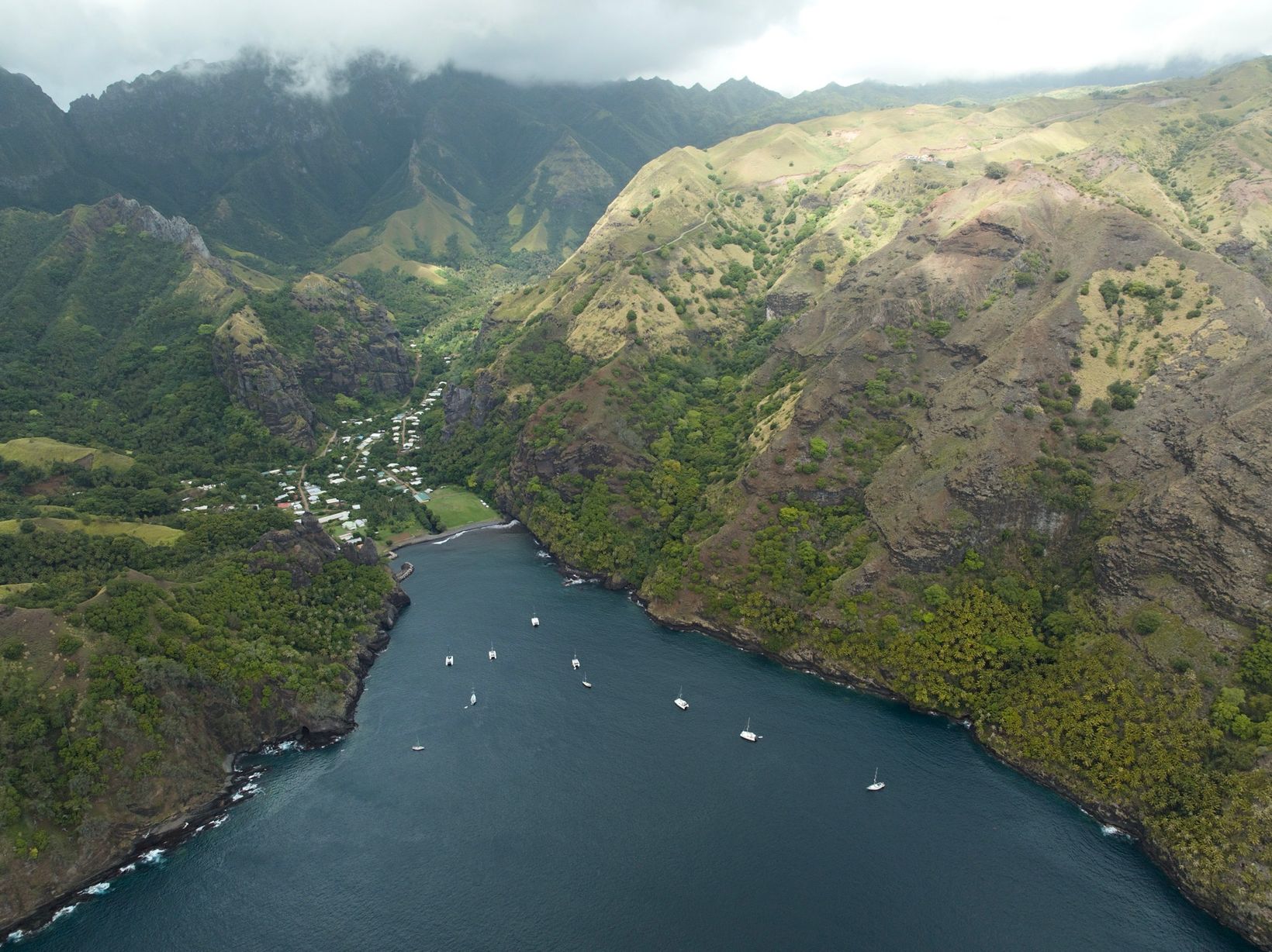
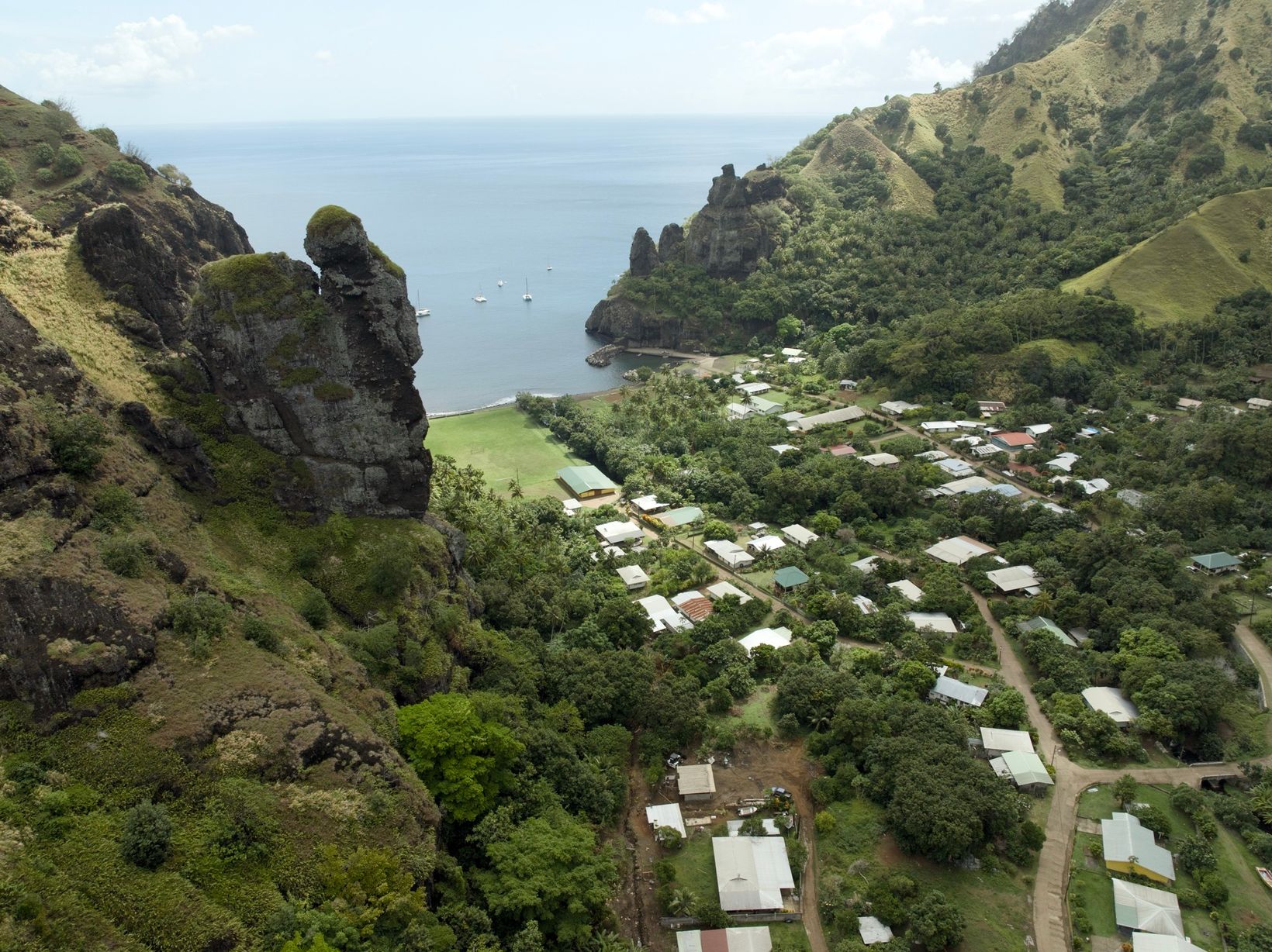
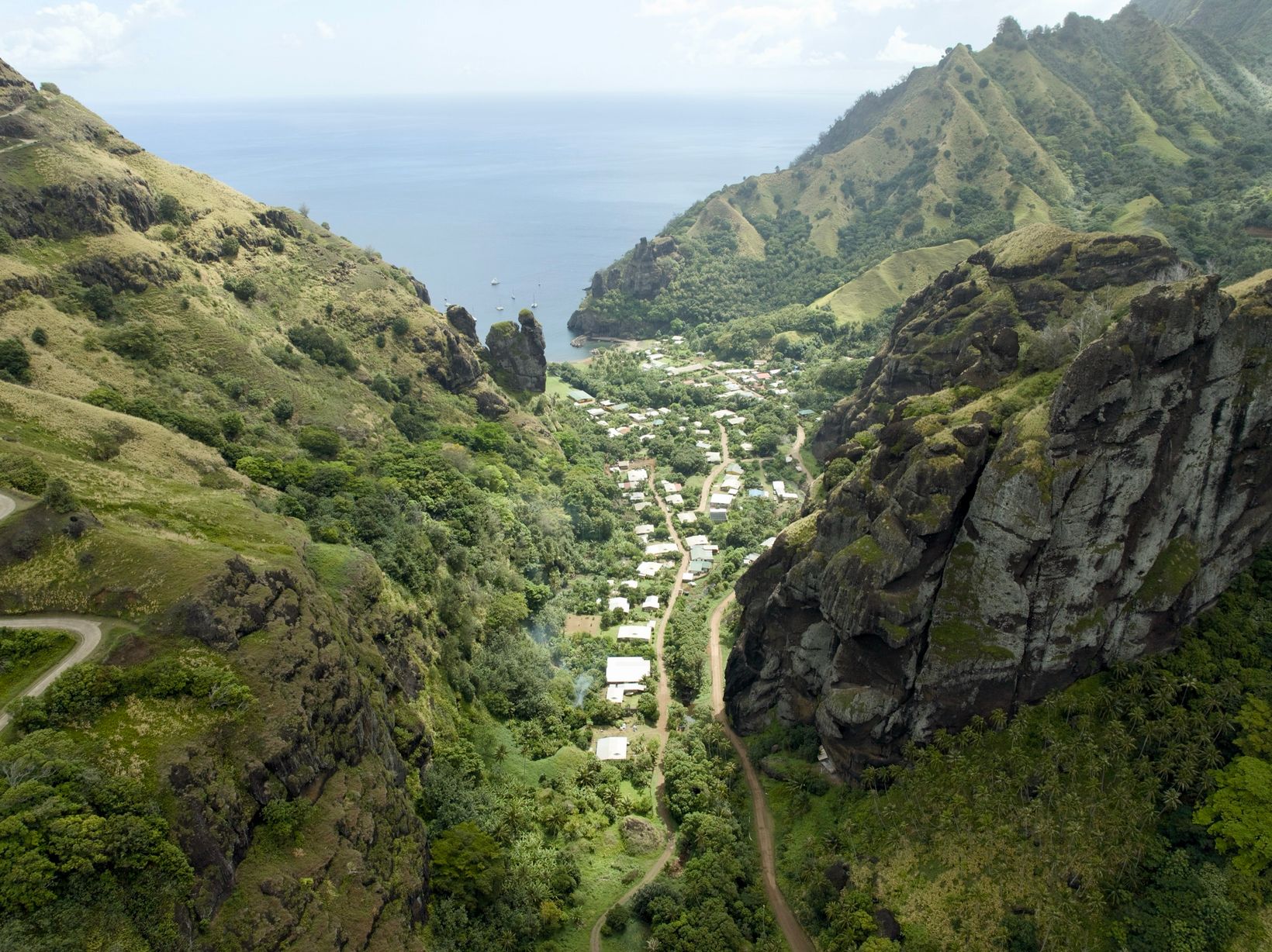
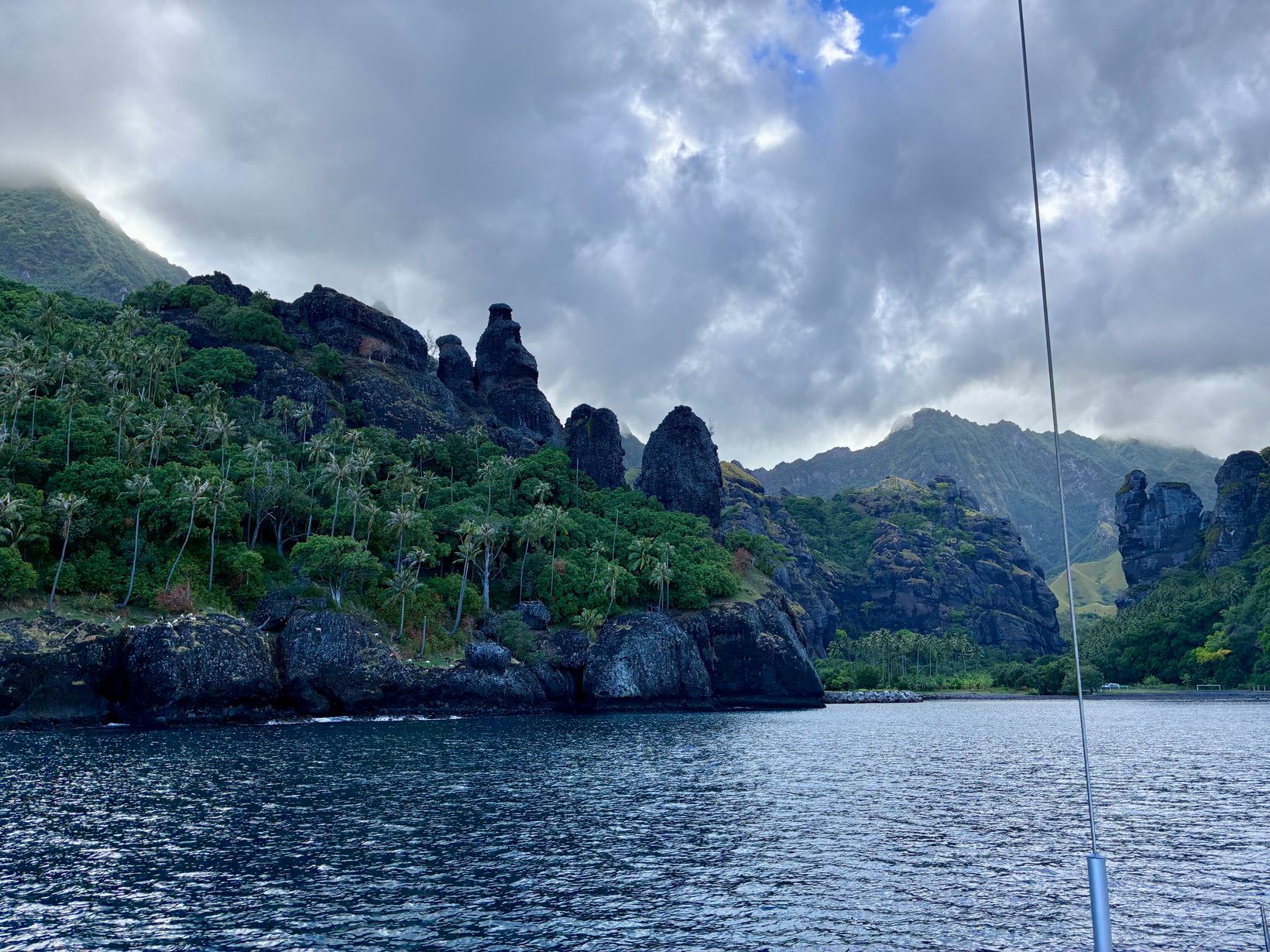
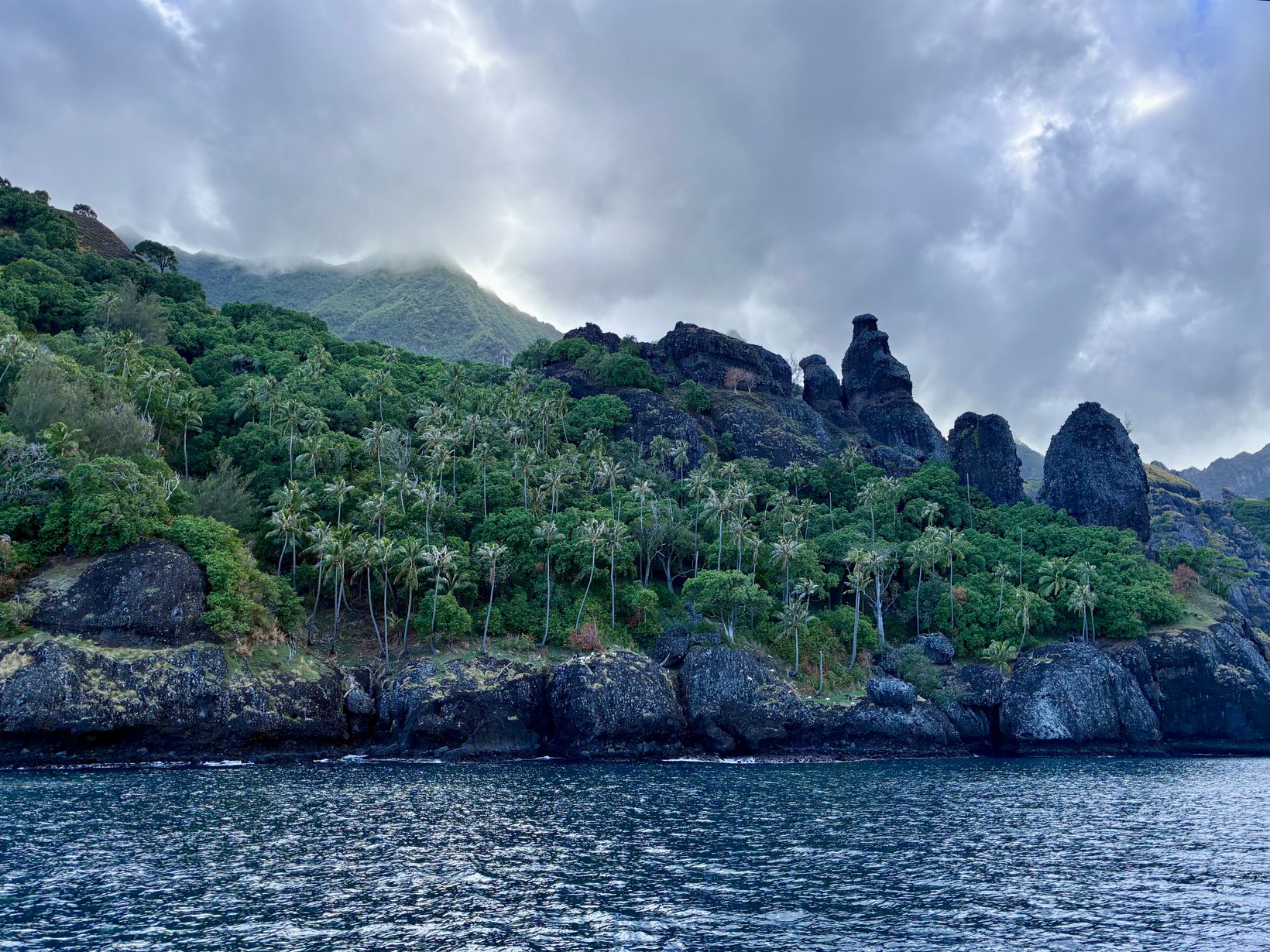
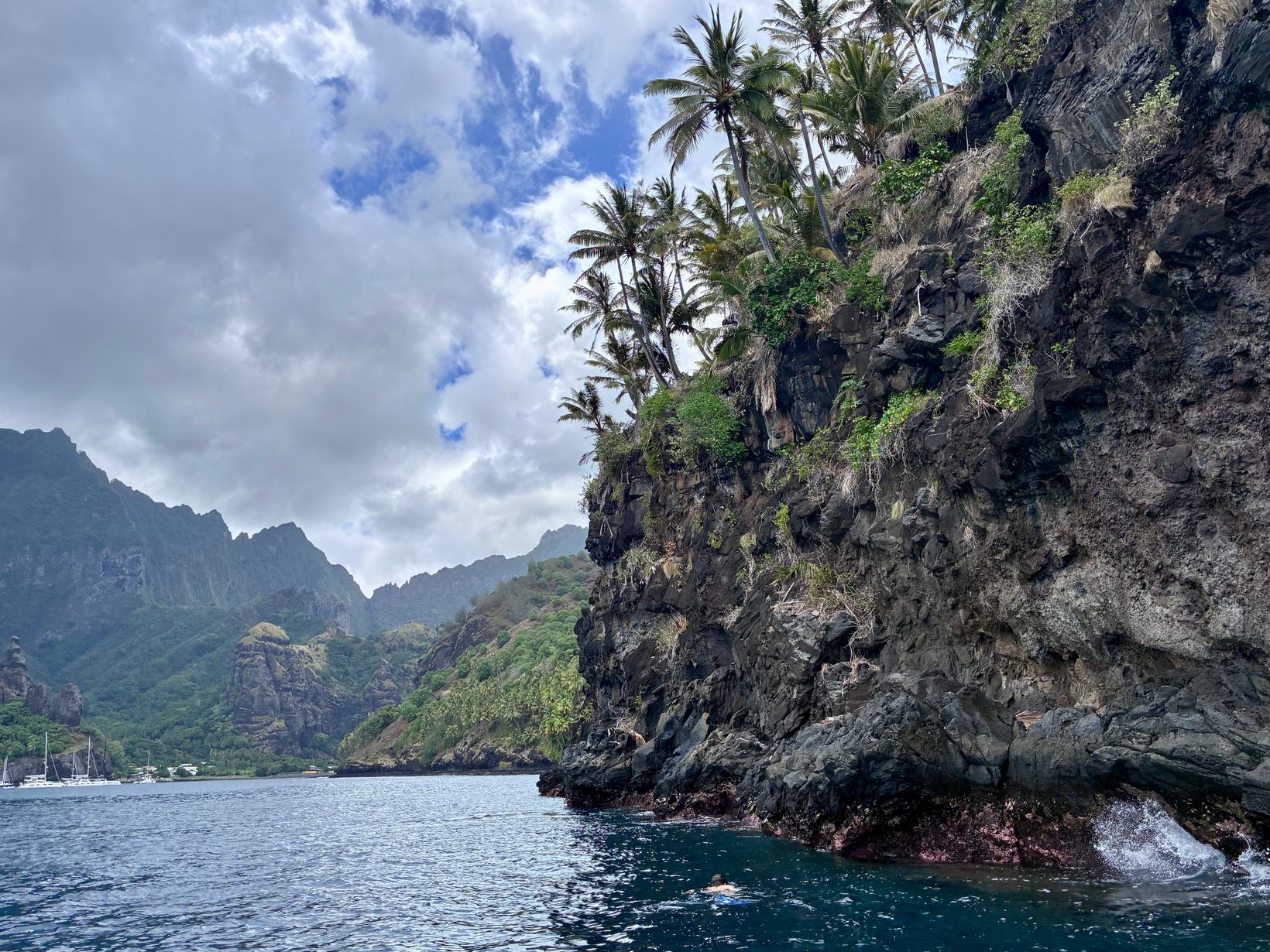
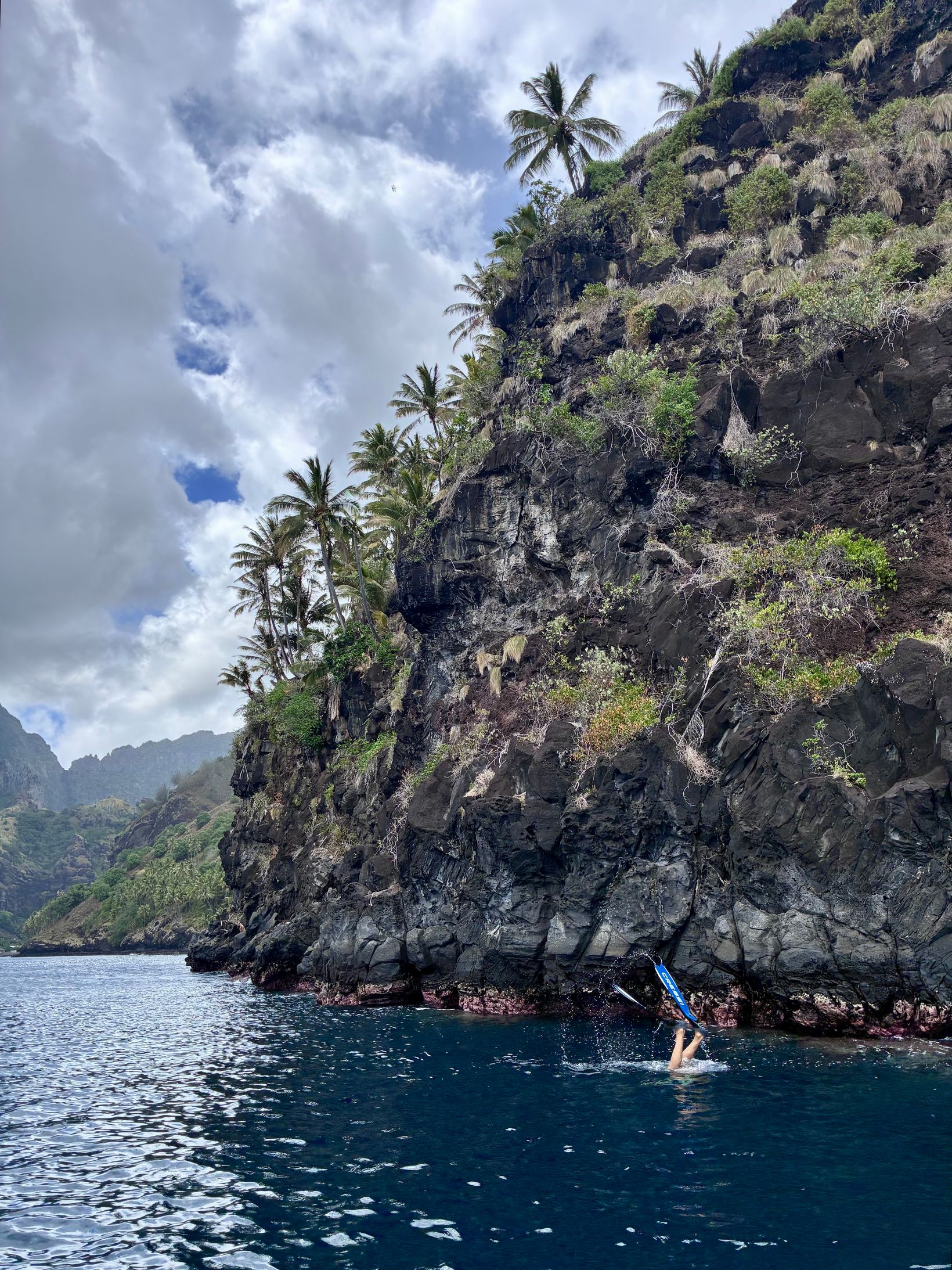
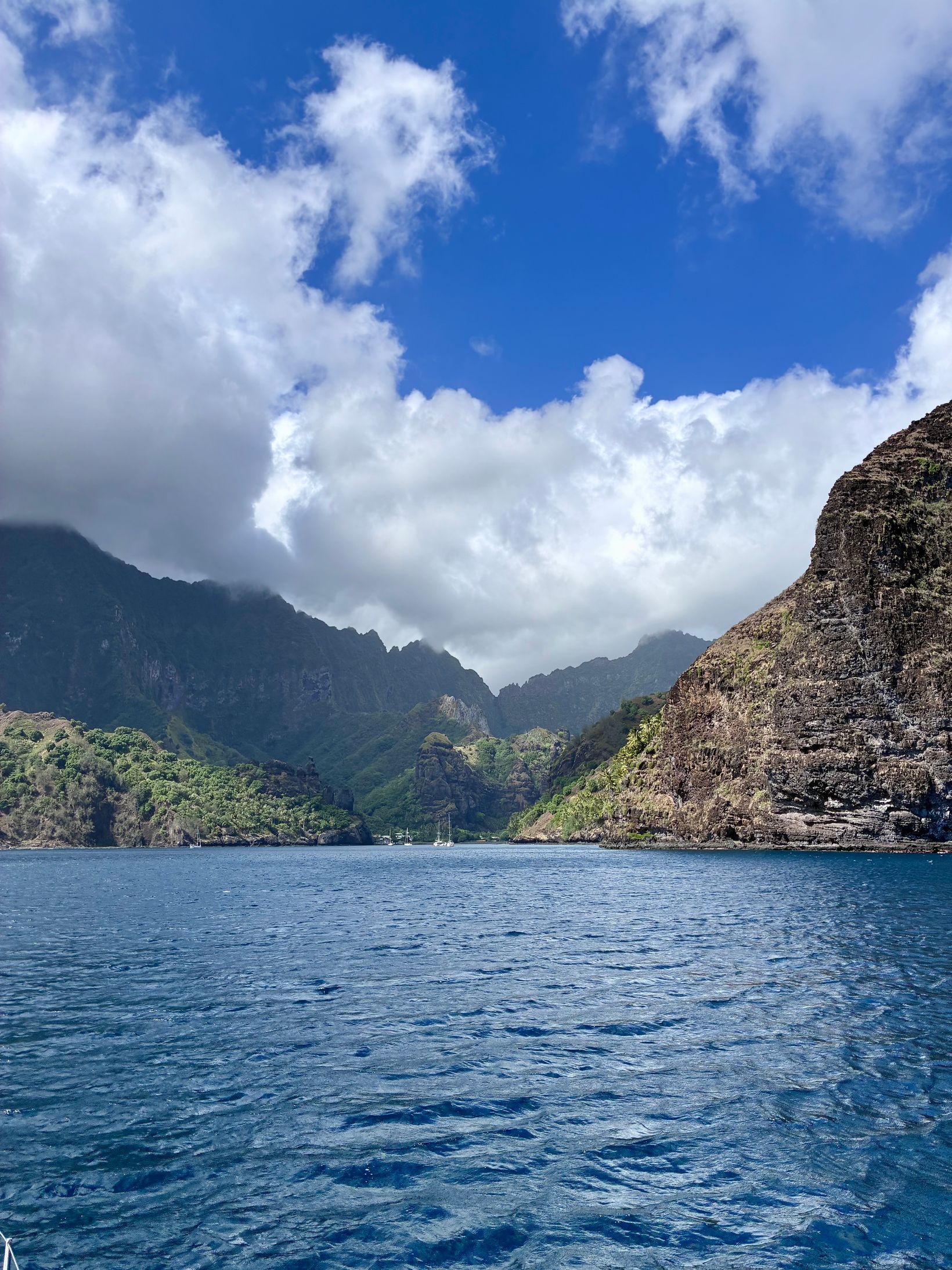
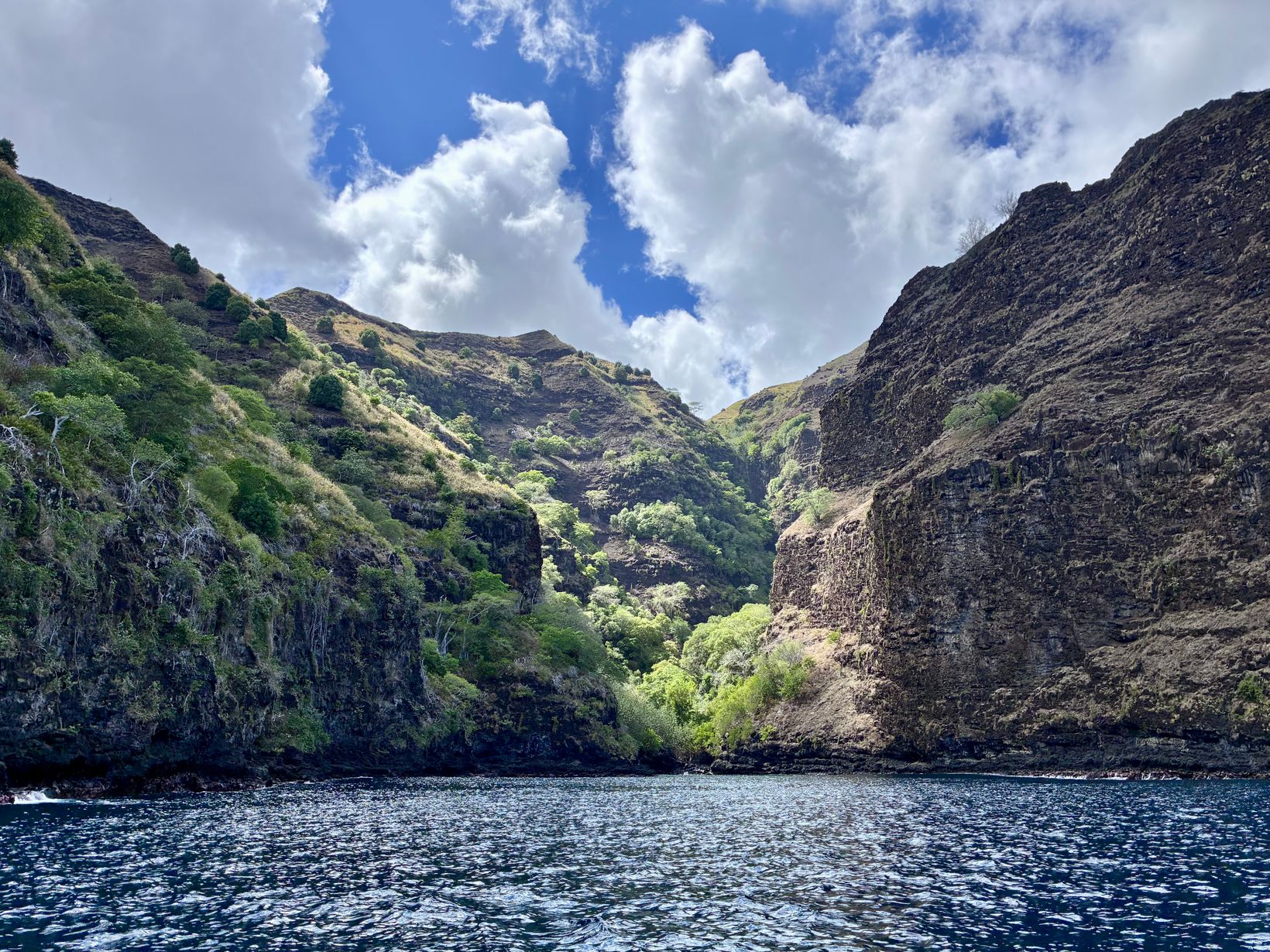
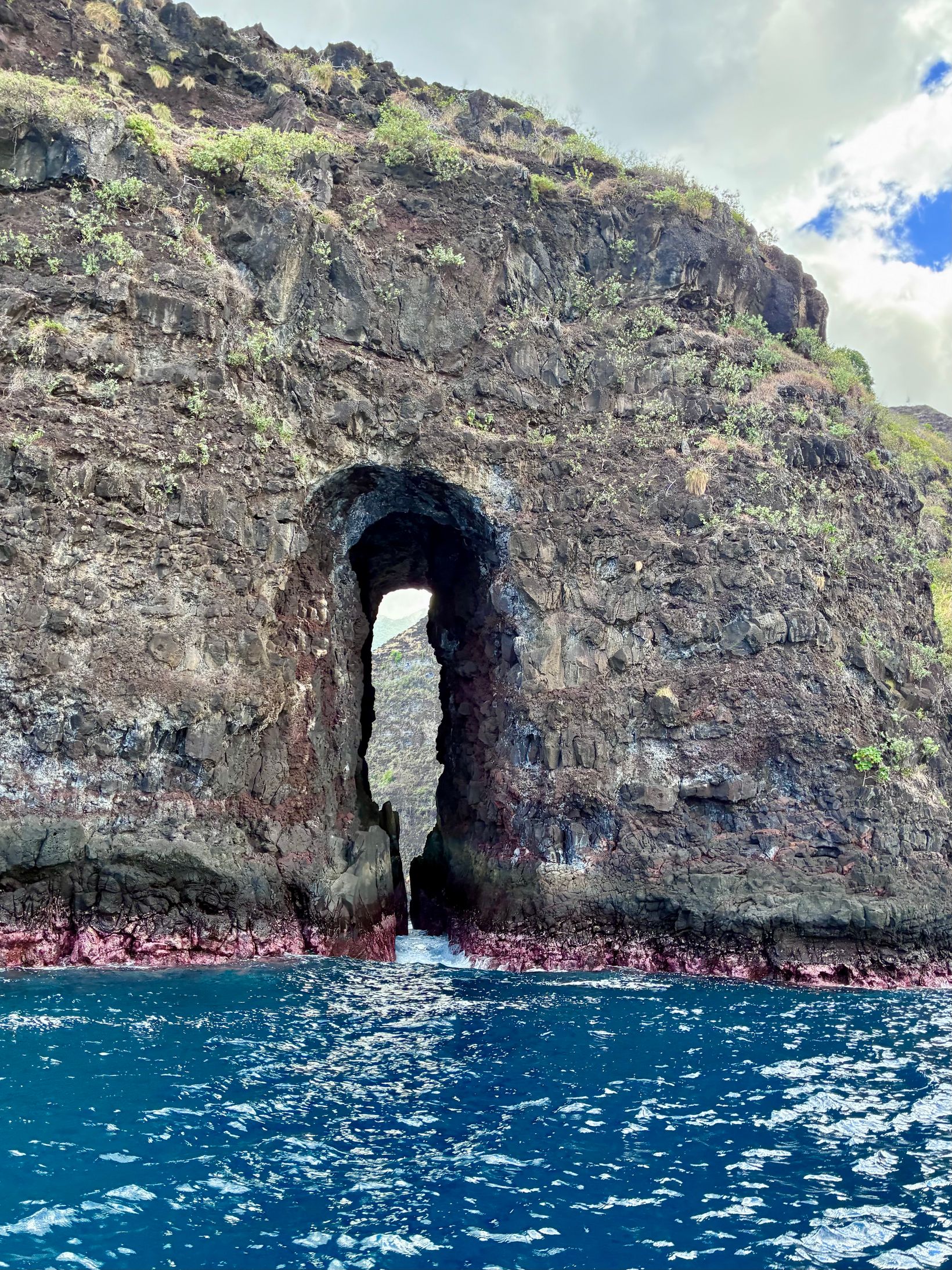
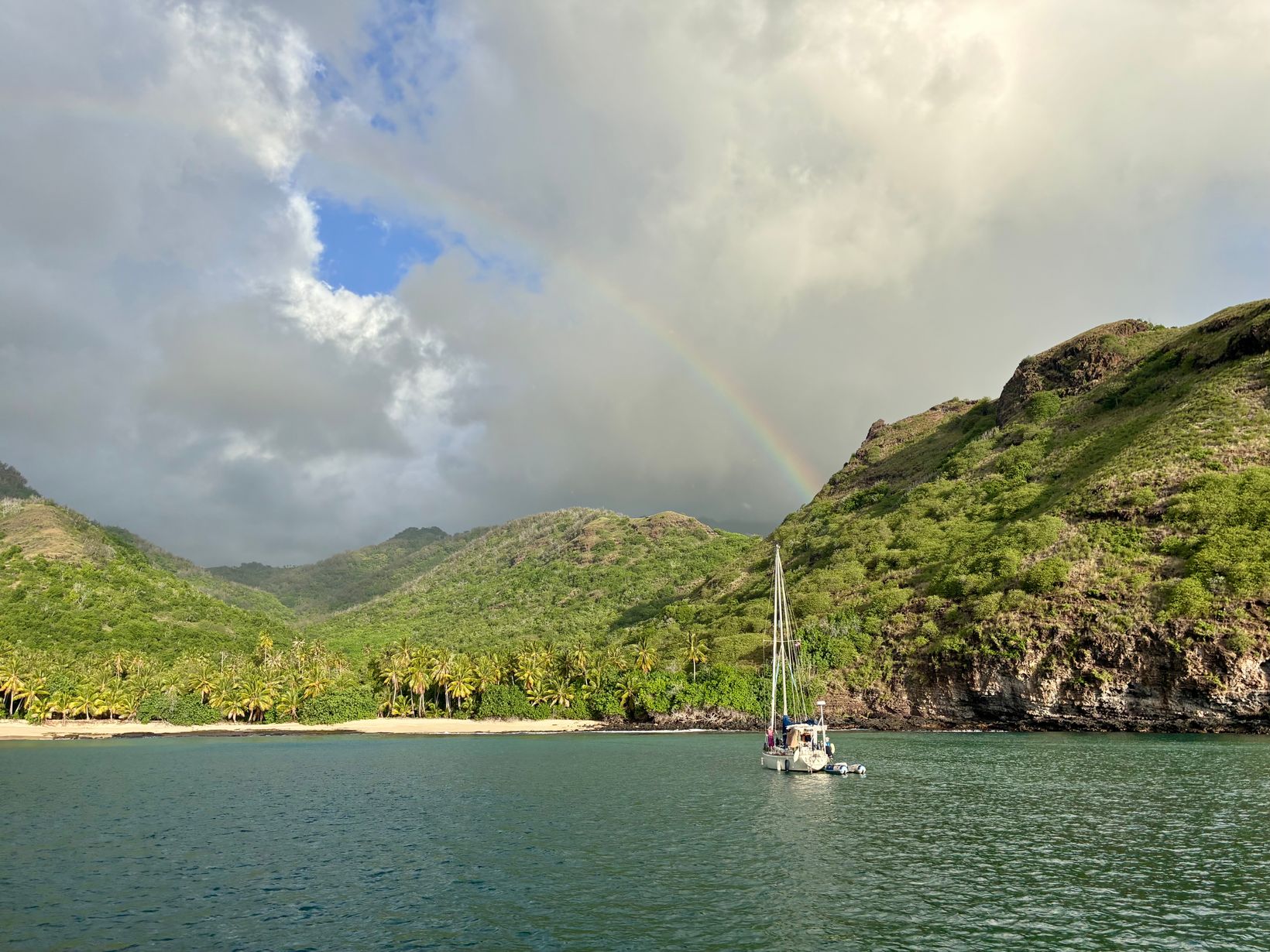
In 20 meters of water we drop the anchor with all 80 meters of our chain and lie snug, despite the impressive gusts that come tearing down through the mountain valley. It’s time to restore and recover ourselves and the boat. The first steps ashore aren’t nearly as wobbly as we’d feared. Yet even a little hike to a waterfall pushes us to the limits of our fitness.
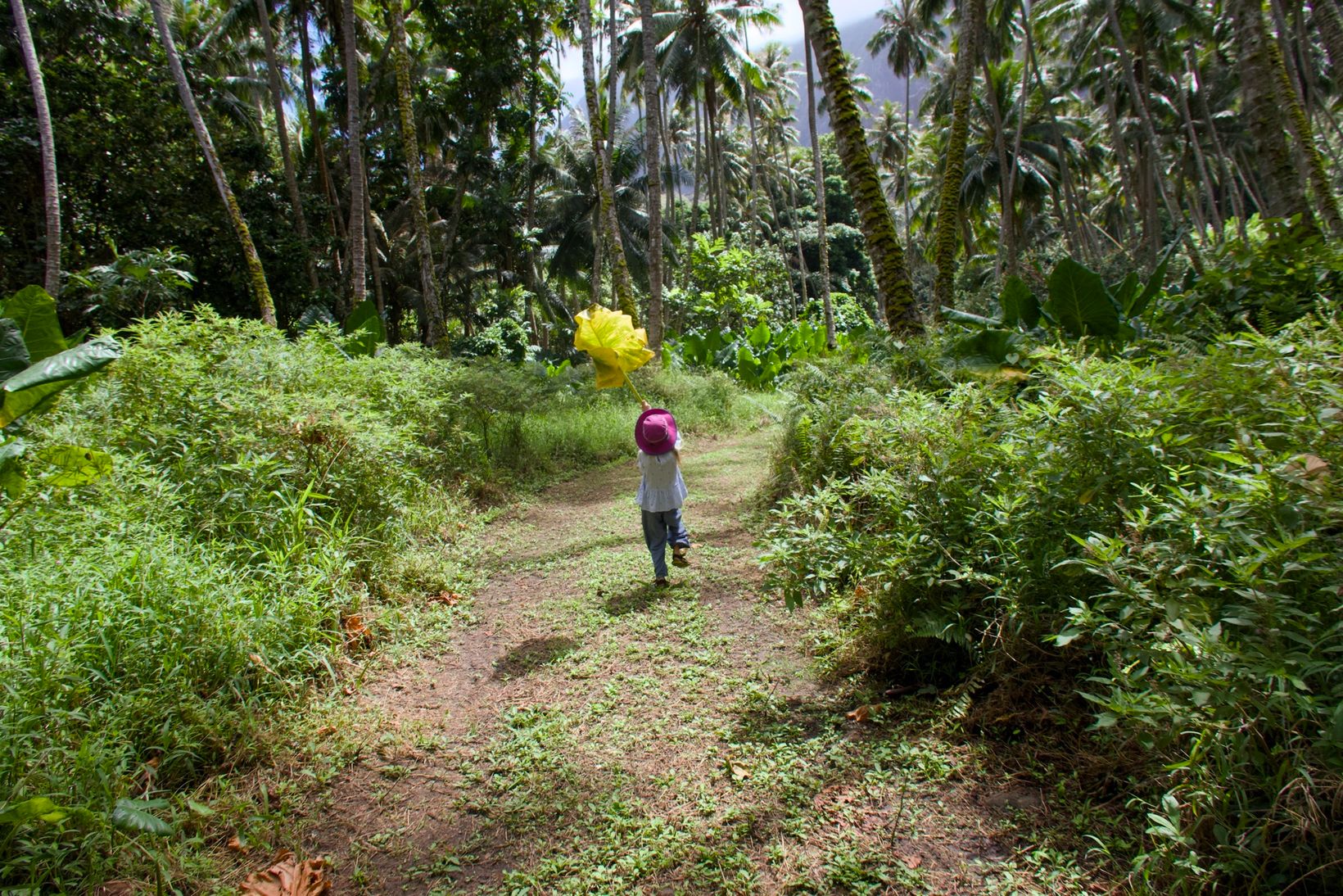
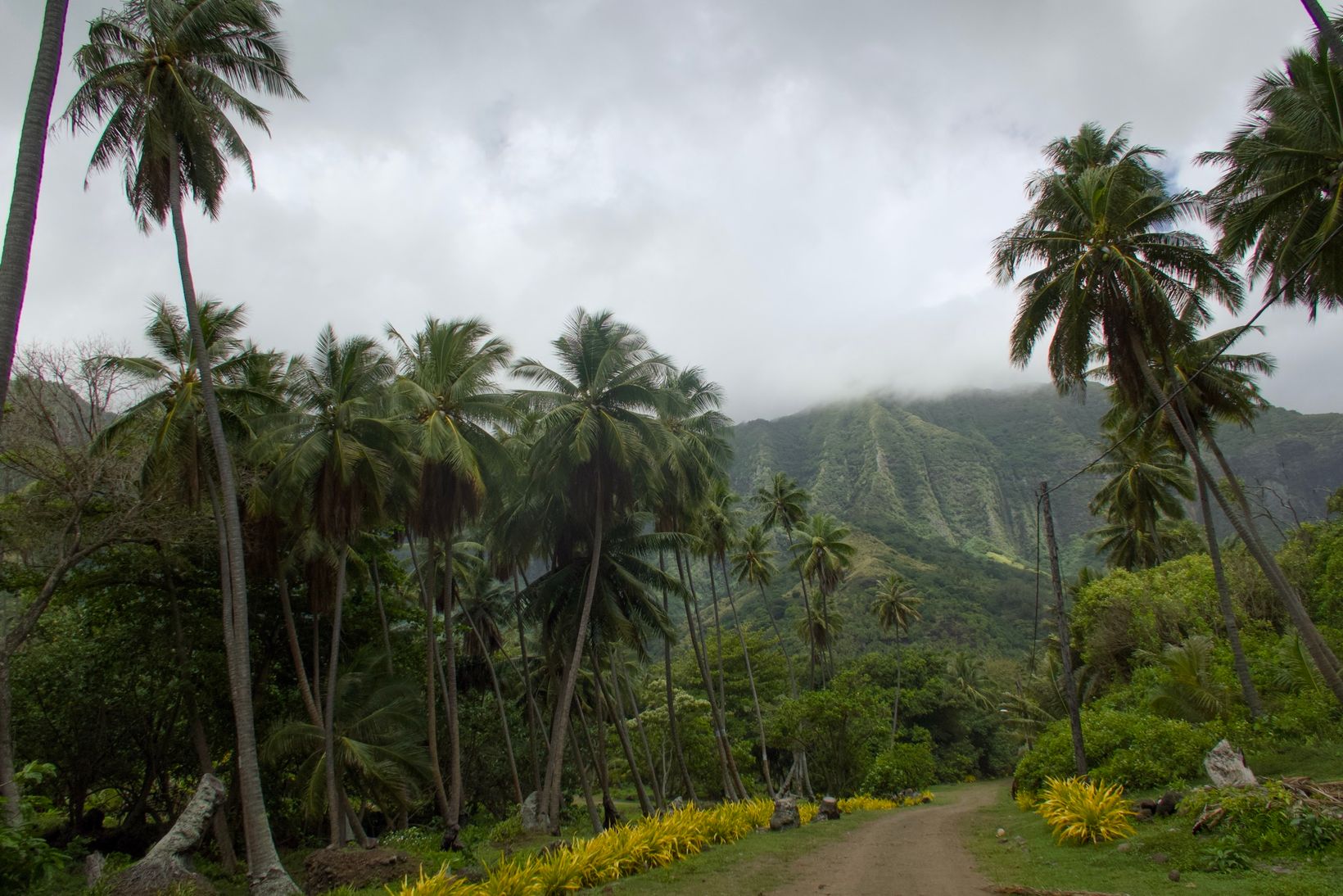
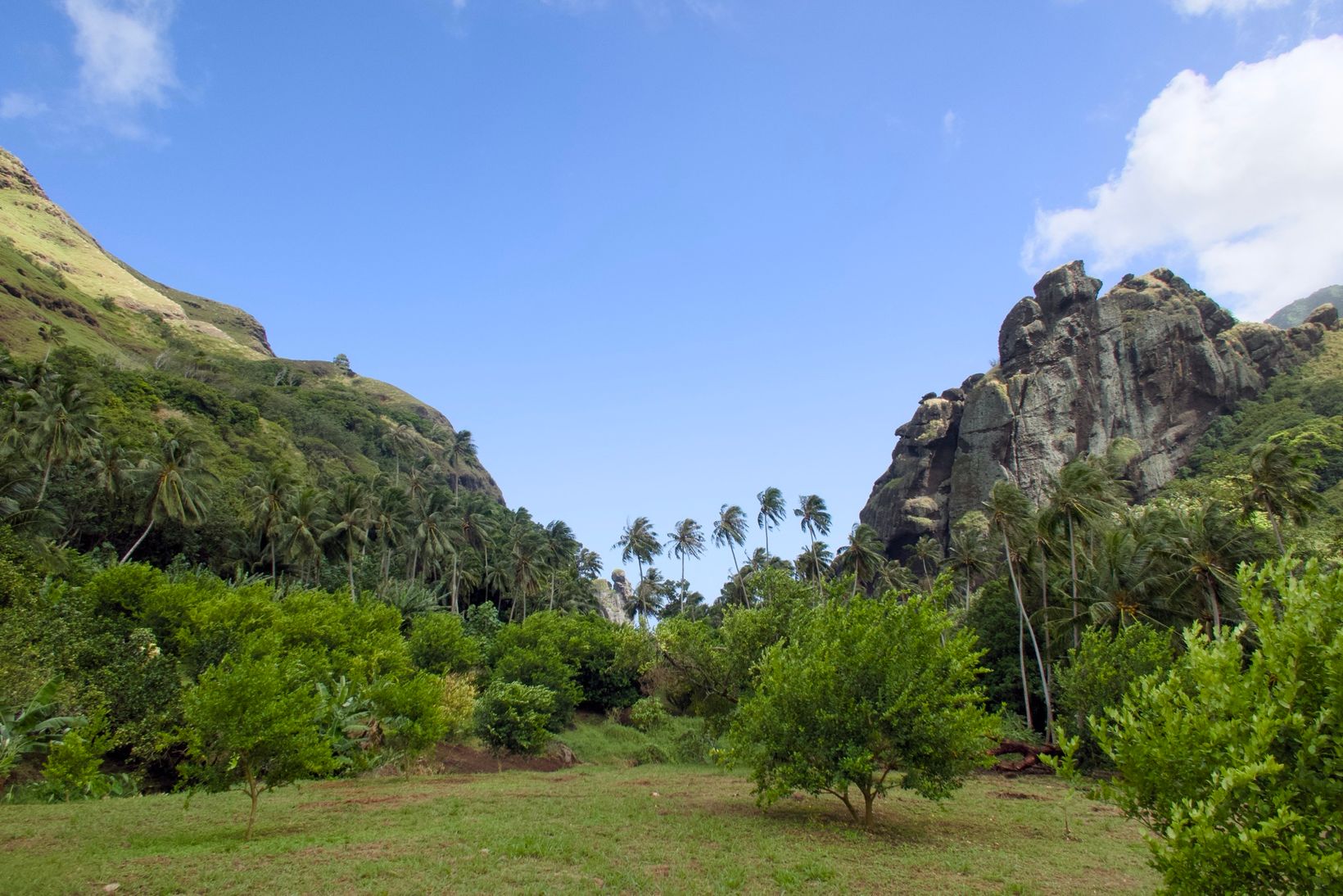
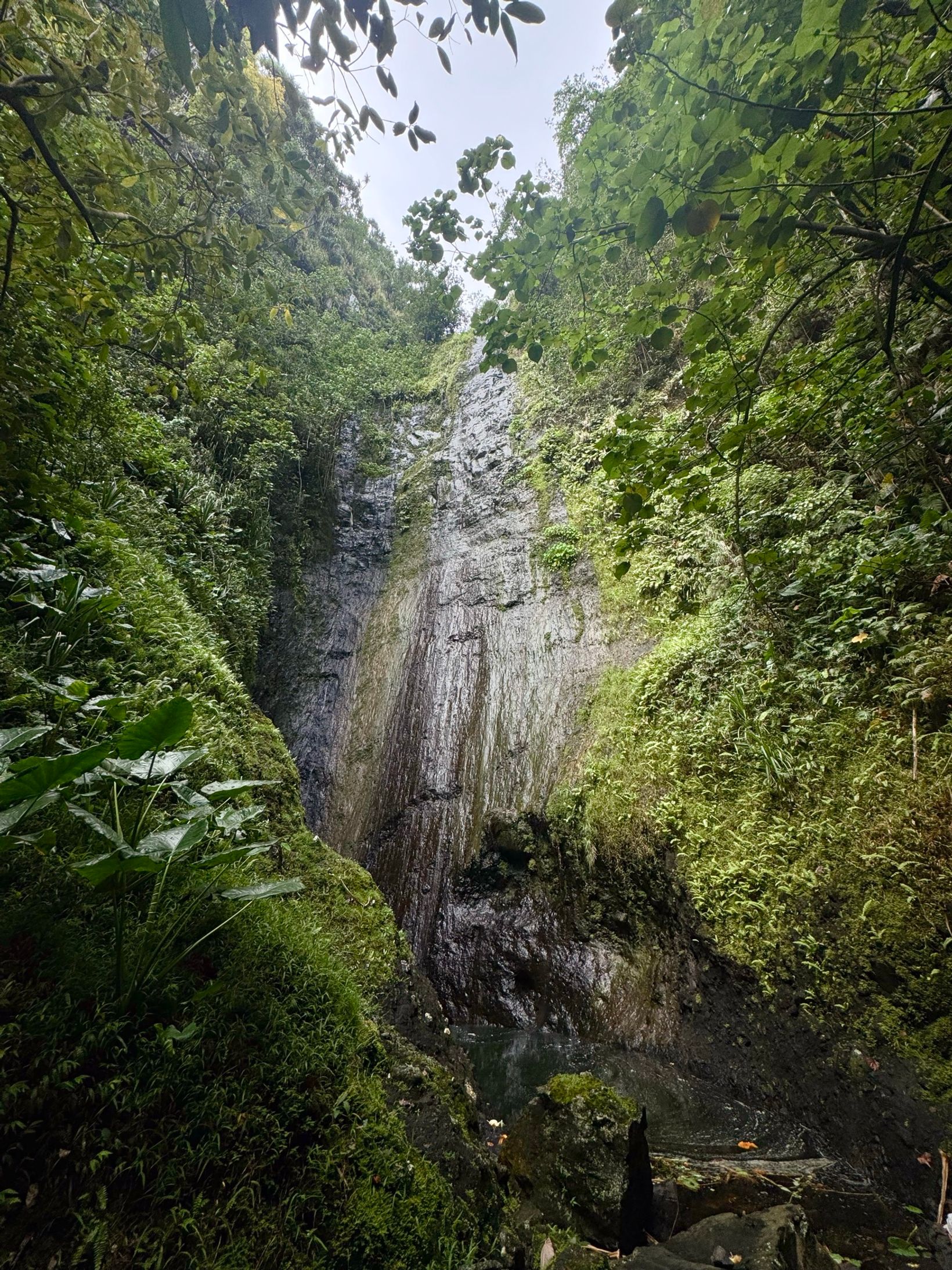
For a few days, we get the ship in order and marvel at the stark change of scenery we experience. In the Galápagos we left solid ground; on the Marquesas our feet touch land for the first time since. And although we had more than enough time to prepare for it, our minds only slowly adjust to the change.
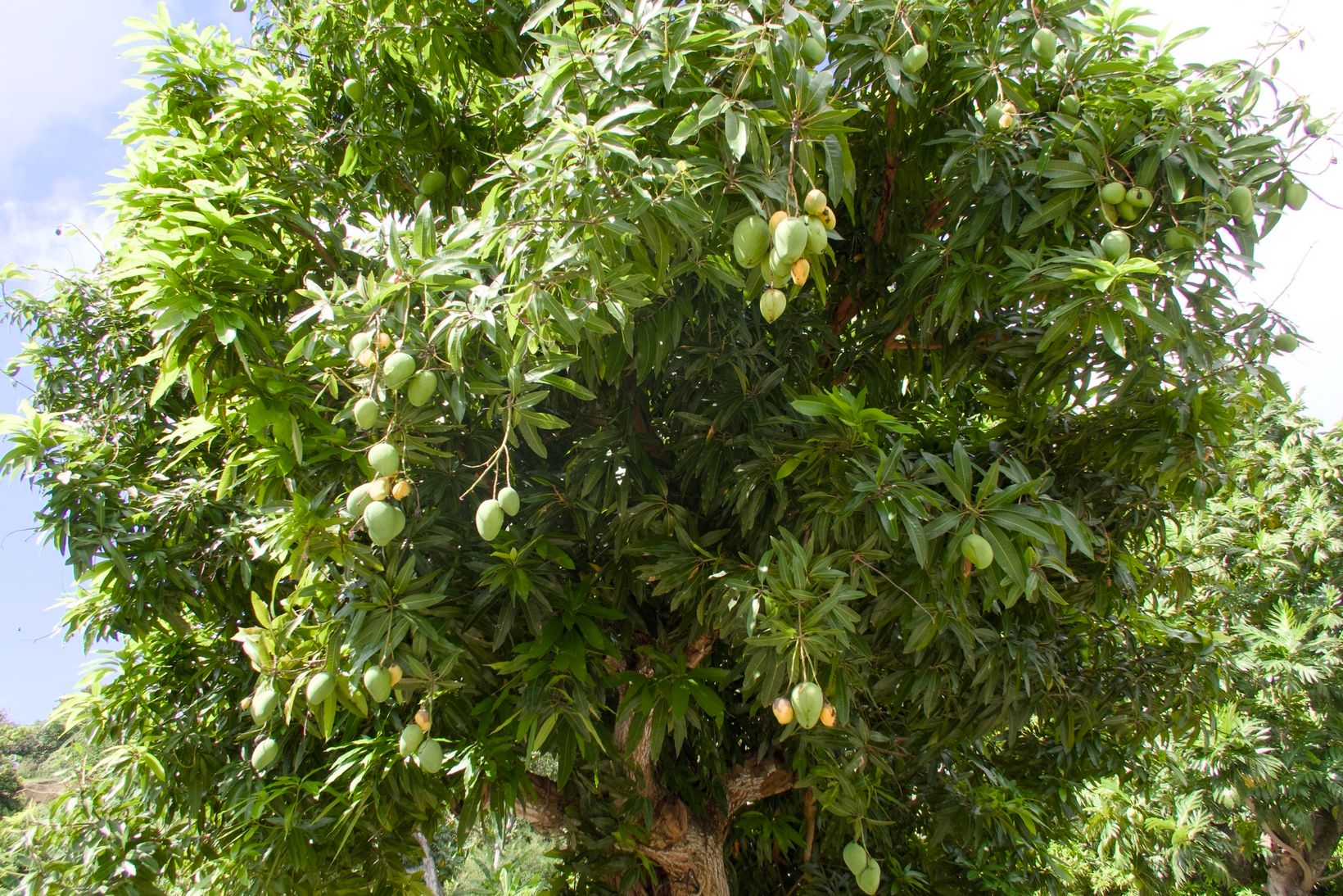
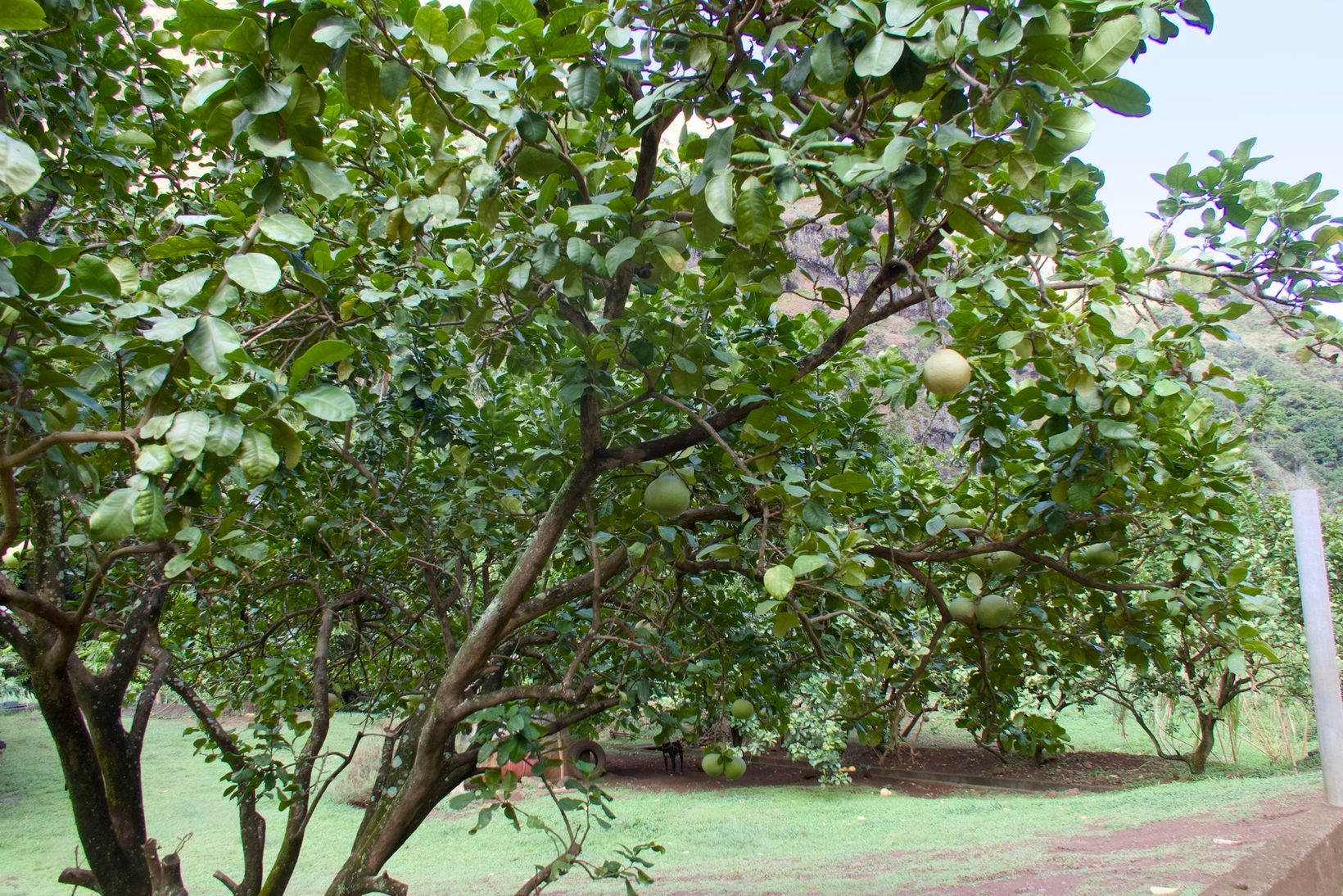
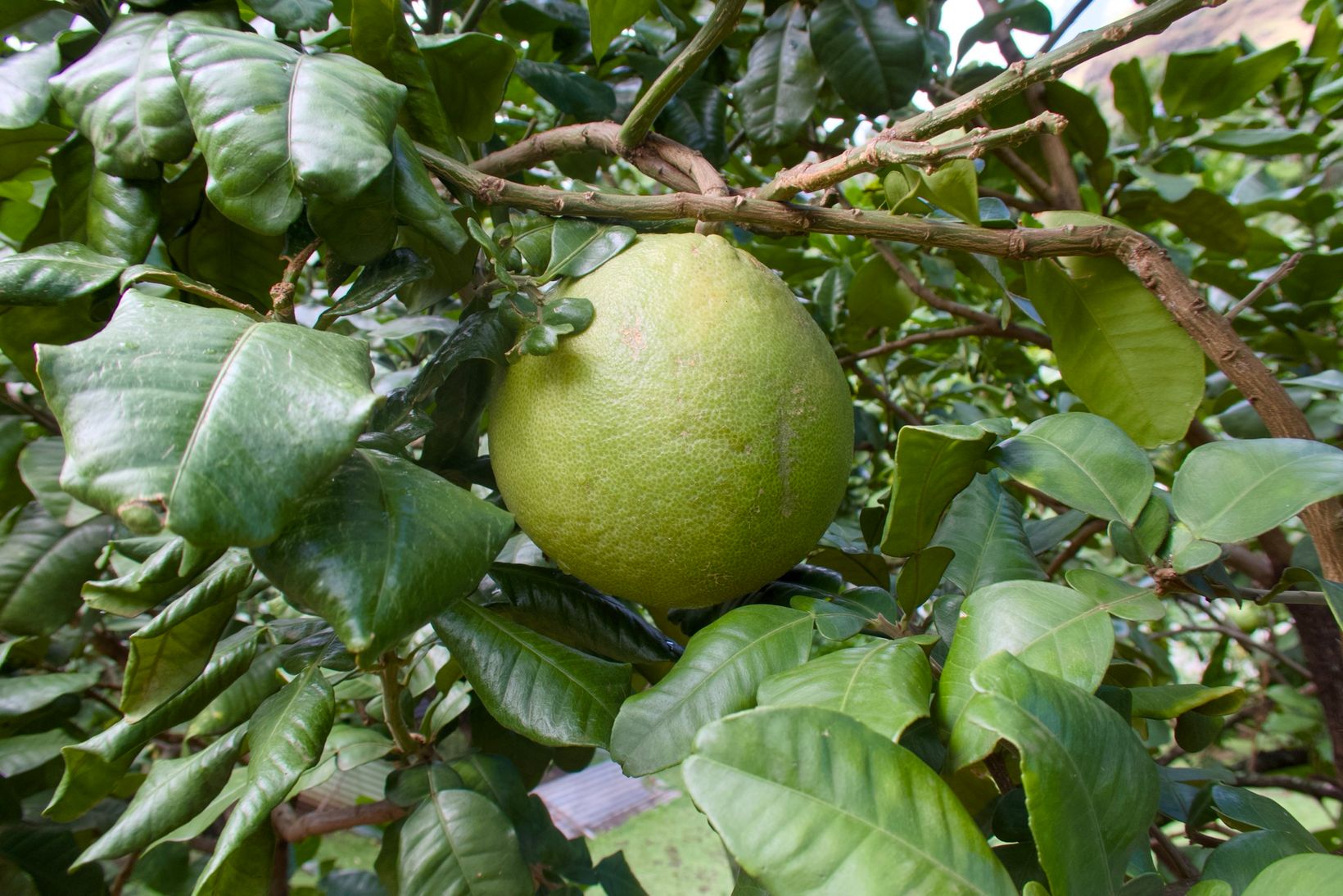
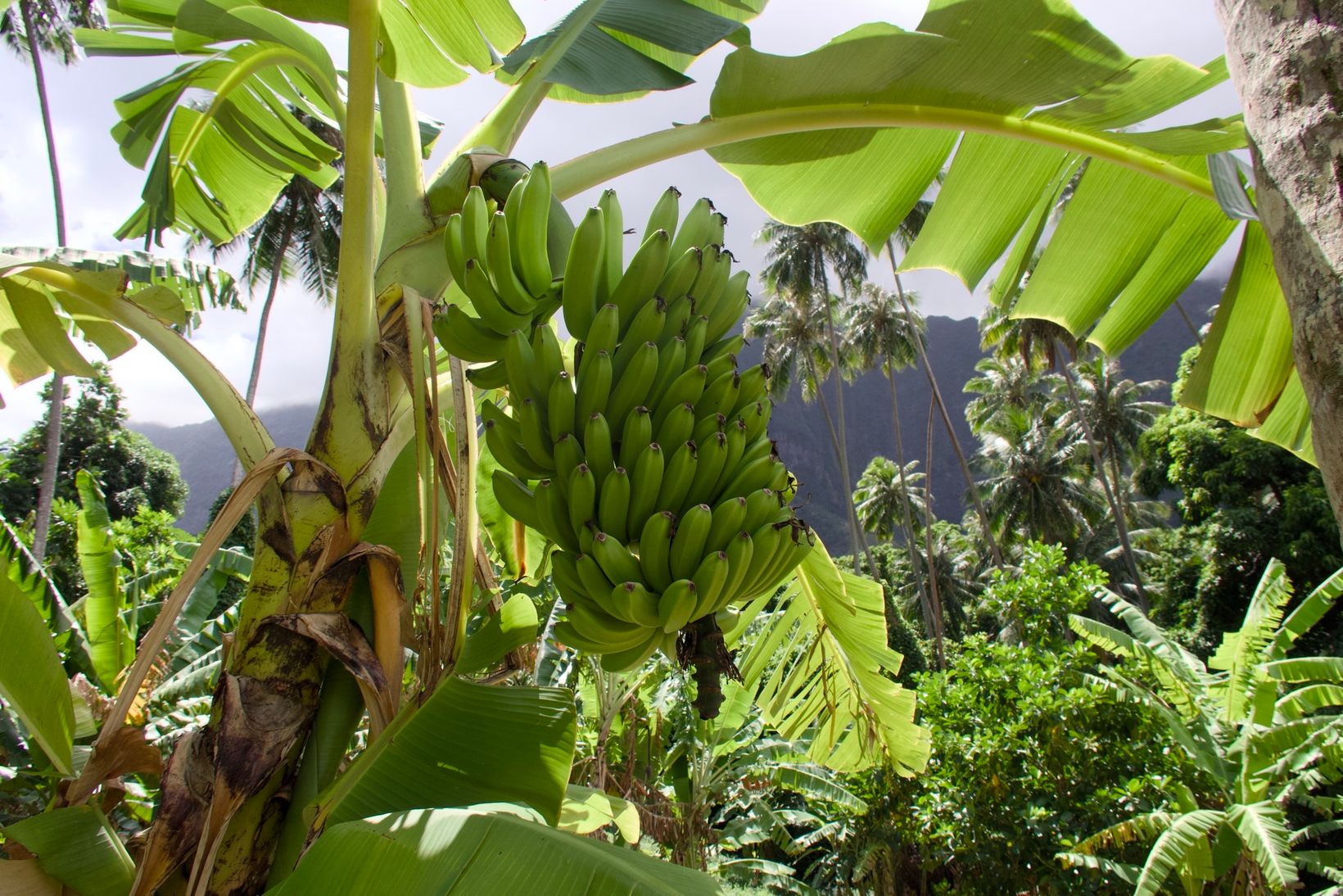
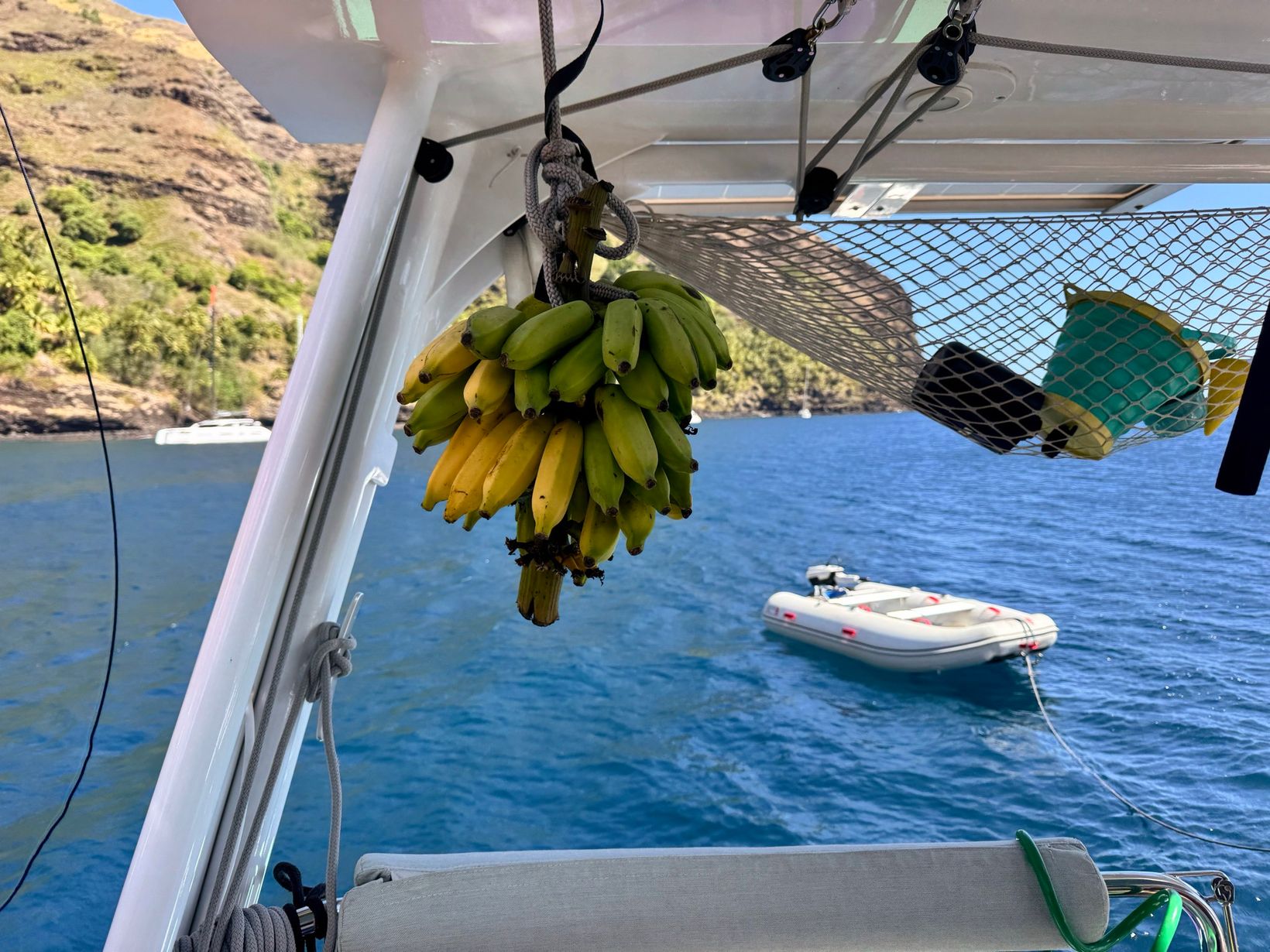
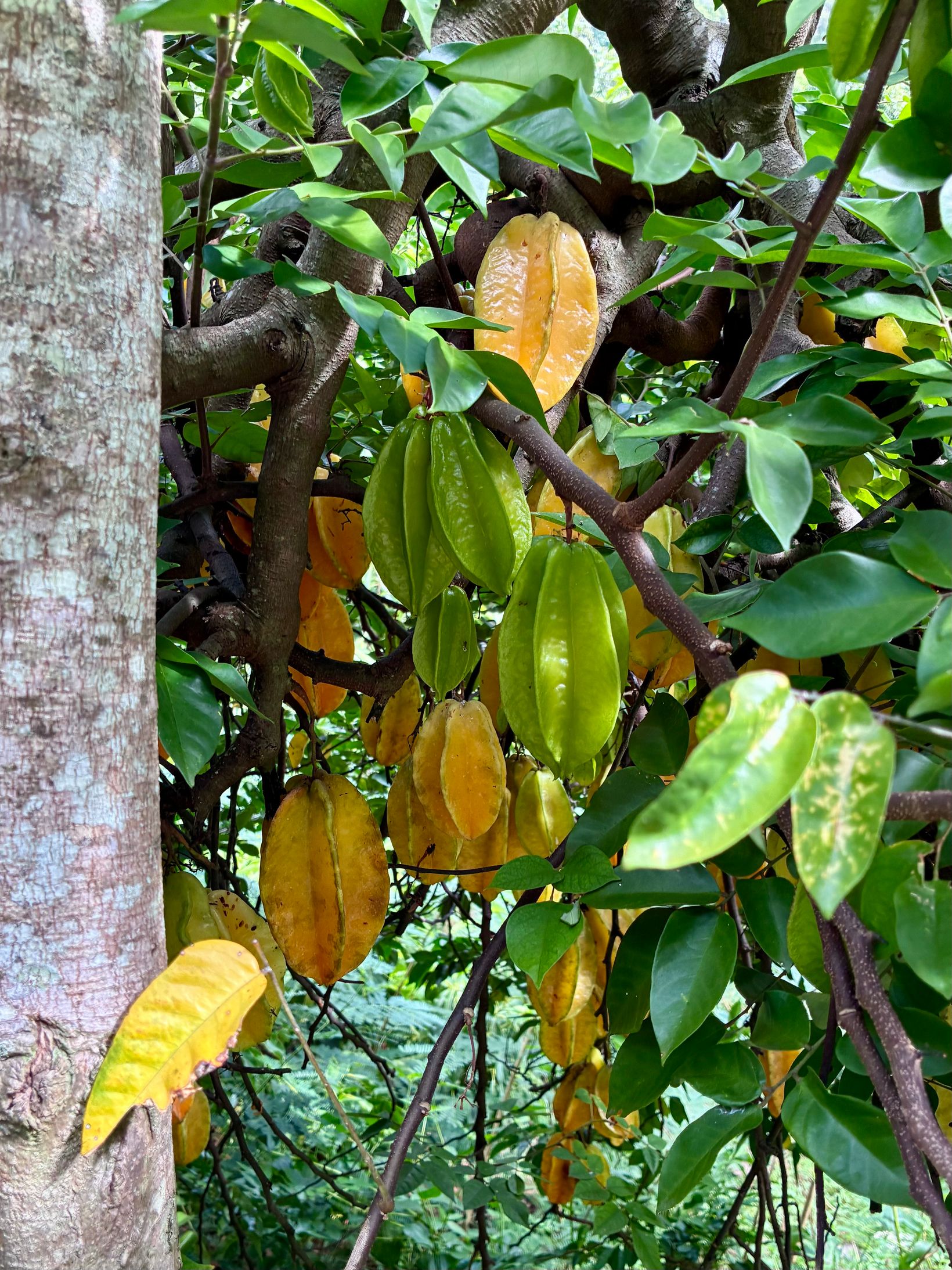
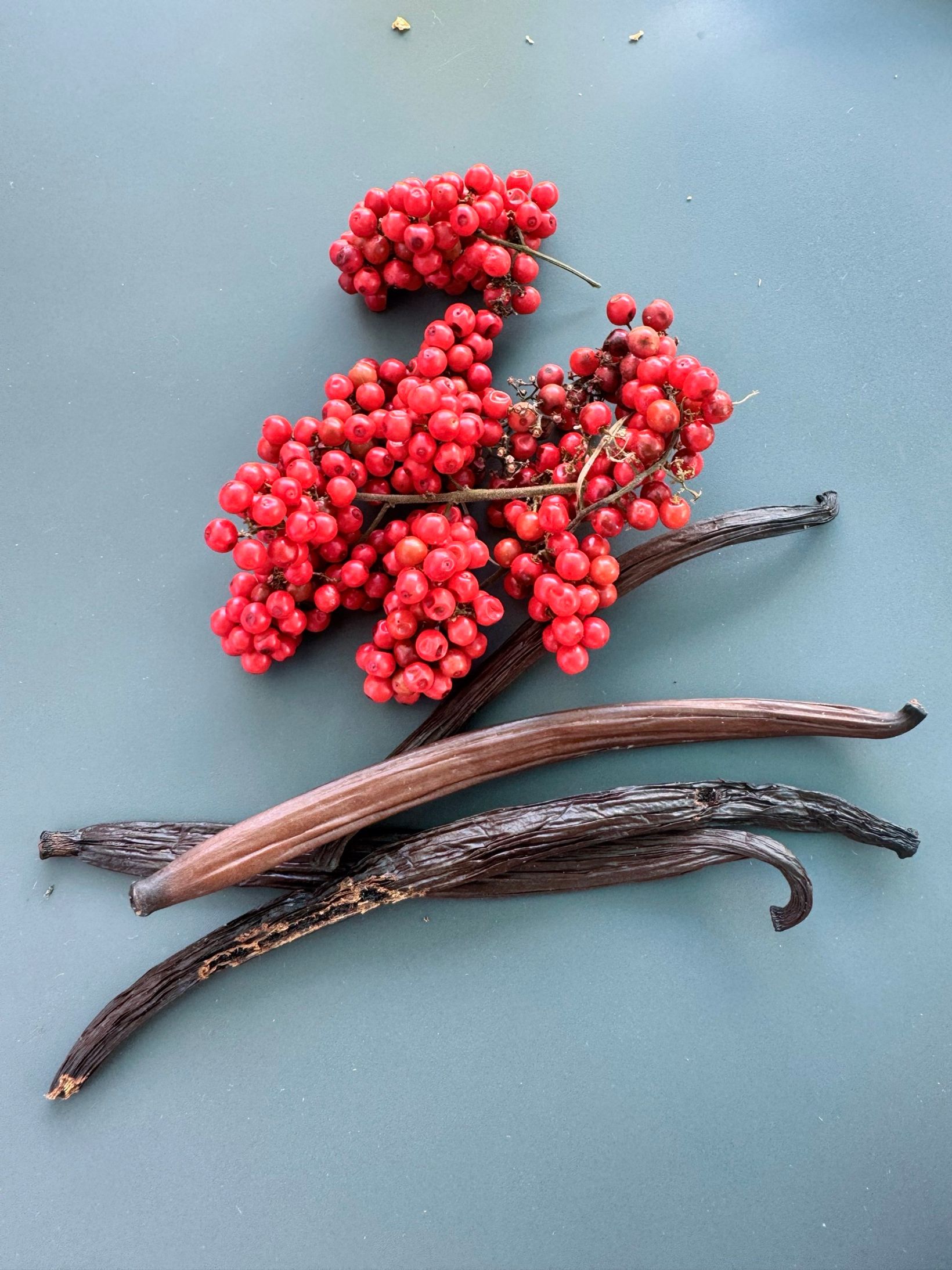
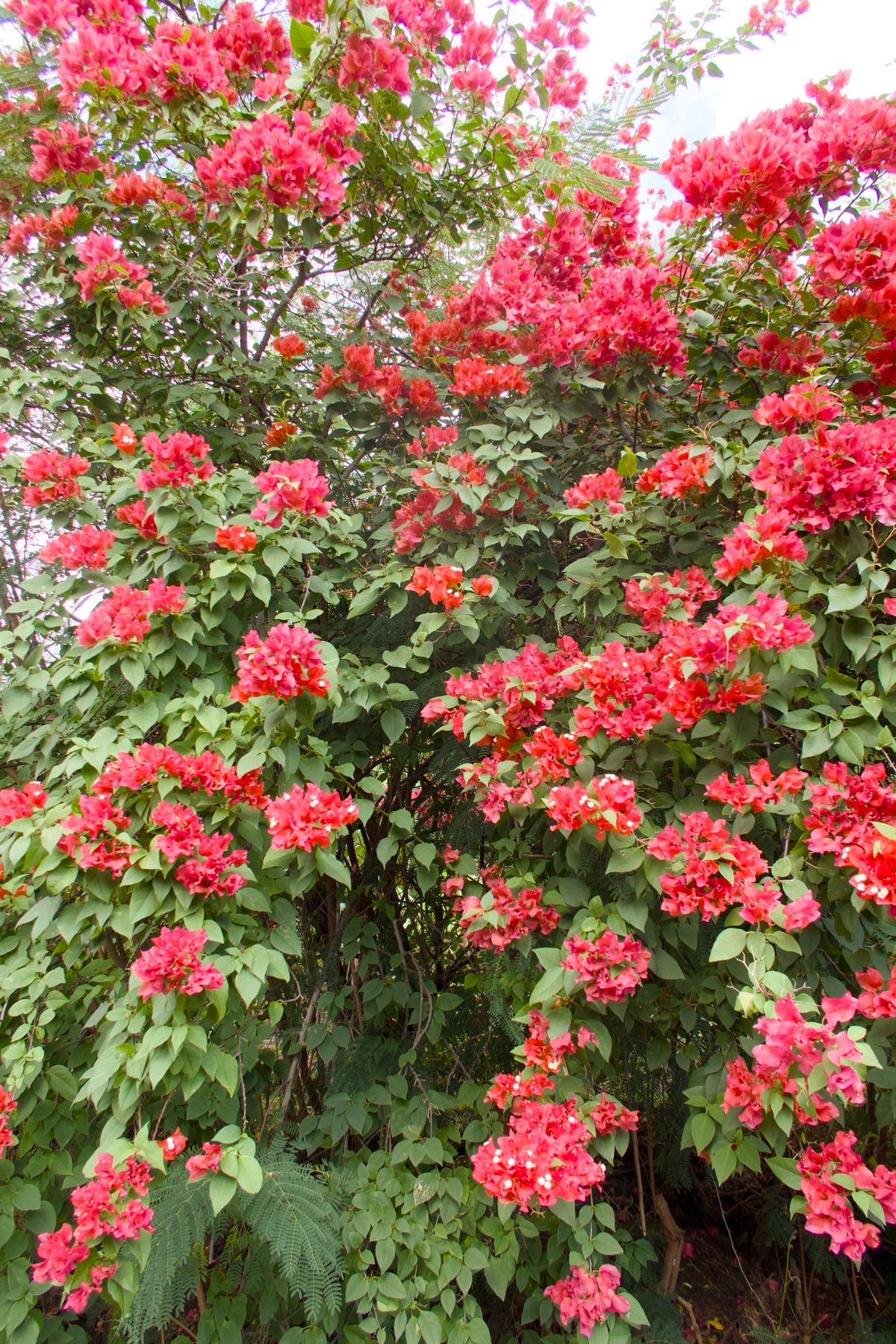
Everything seems to grow here, flowers and fruit are in abundance. In every garden the trees bow under the weight of the famous pomelos, limes, mangoes, breadfruit, star fruit, bananas and avocados. In exchange for something useful – headlamps in particular seem to be in demand – or for a modest sum, you get what you need handed over the fence, or fetched from the forests the next day. Bananas come only by the whole stalk. Which is no bad thing, because they taste wonderful.
It’s much the same with fish, tuna especially. Often enough you see them hunting through the bay, chasing the little fish, which then leap from the water in great numbers making funny noises. Since our slow dinghy doesn’t exactly meet the requirements for tuna fishing, and since we caught nothing on the Pacific crossing either (for whatever reason), we later buy tuna from the fishermen on Nuku Hiva. At four euros for two kilos of freshly caught fish, the effort of chatching and gutting hardly pays off.
After the first days in paradise – there’s no other way to describe it – the guilty conscience grows. We set off for Hiva Oa, to enter the country officially and be allowed to fly the flag of Polynesia lawfully. Atuona is a charming place, though the anchorage in the little harbor is a horror. We’re lucky and the swell gives us no real trouble on the one night we spend there. But the very next day it turns rough: space is tight, the swell rocks even the catamarans thoroughly, and to top it off it takes two hours to get into the village and back.
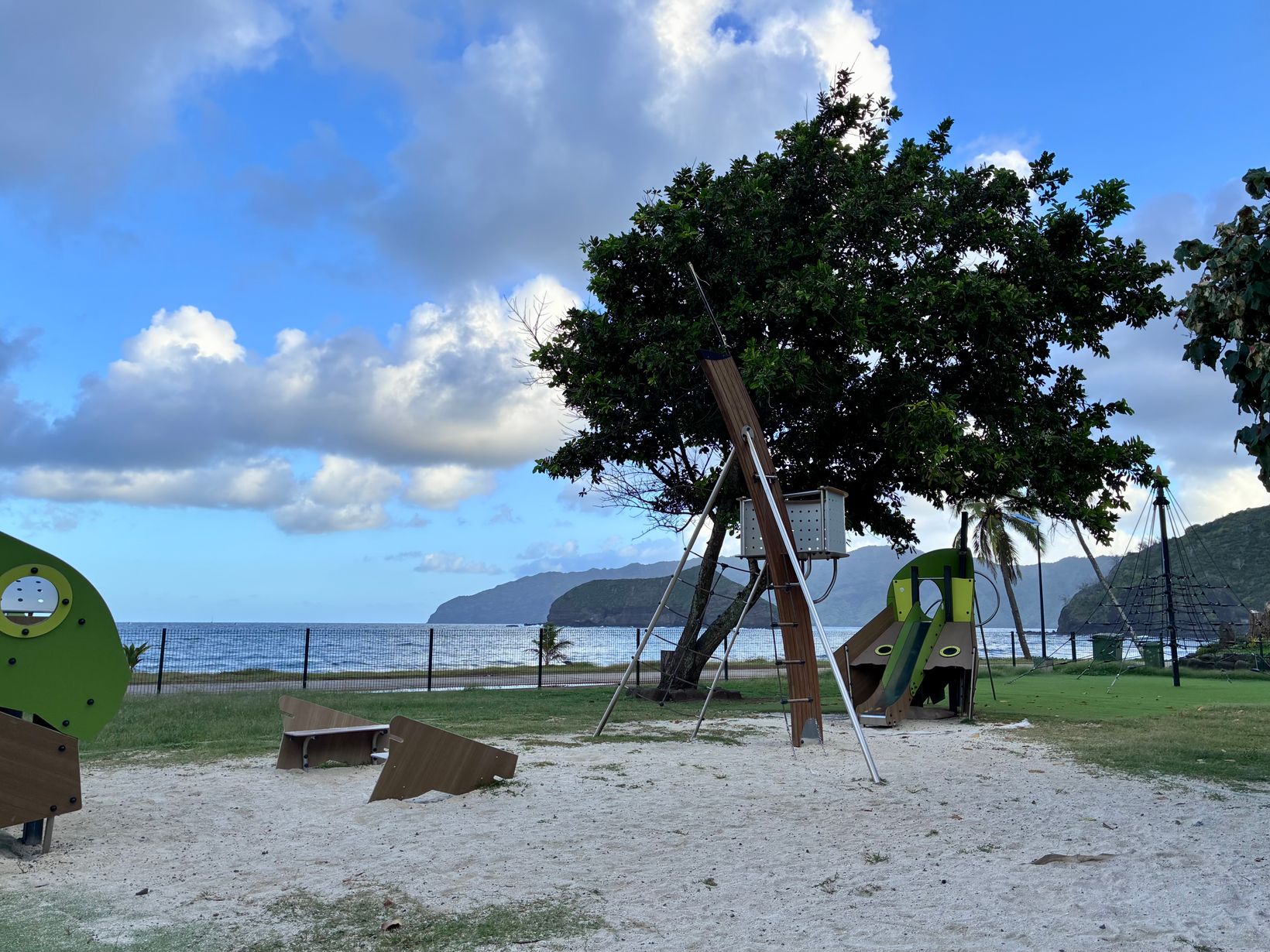
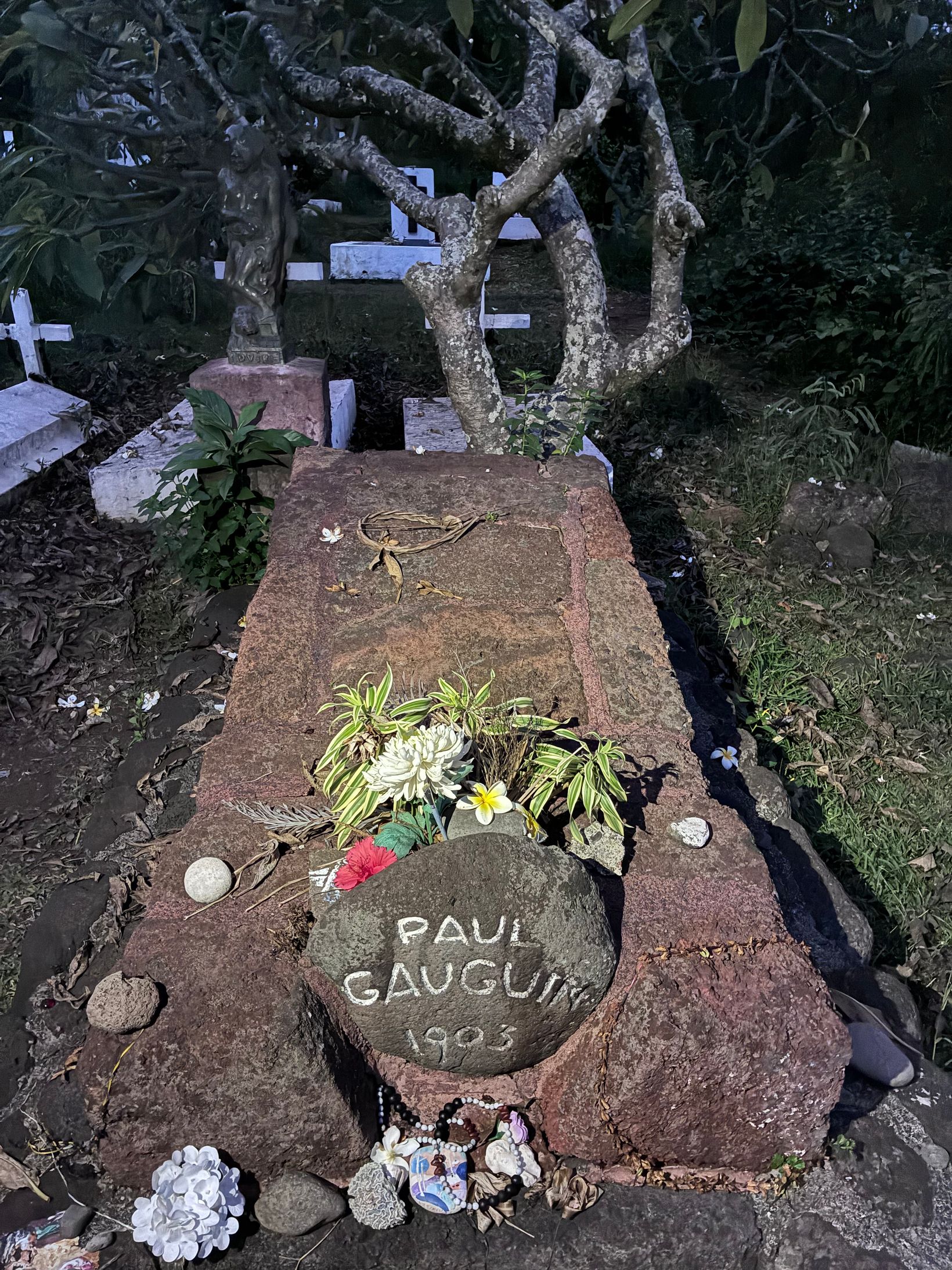
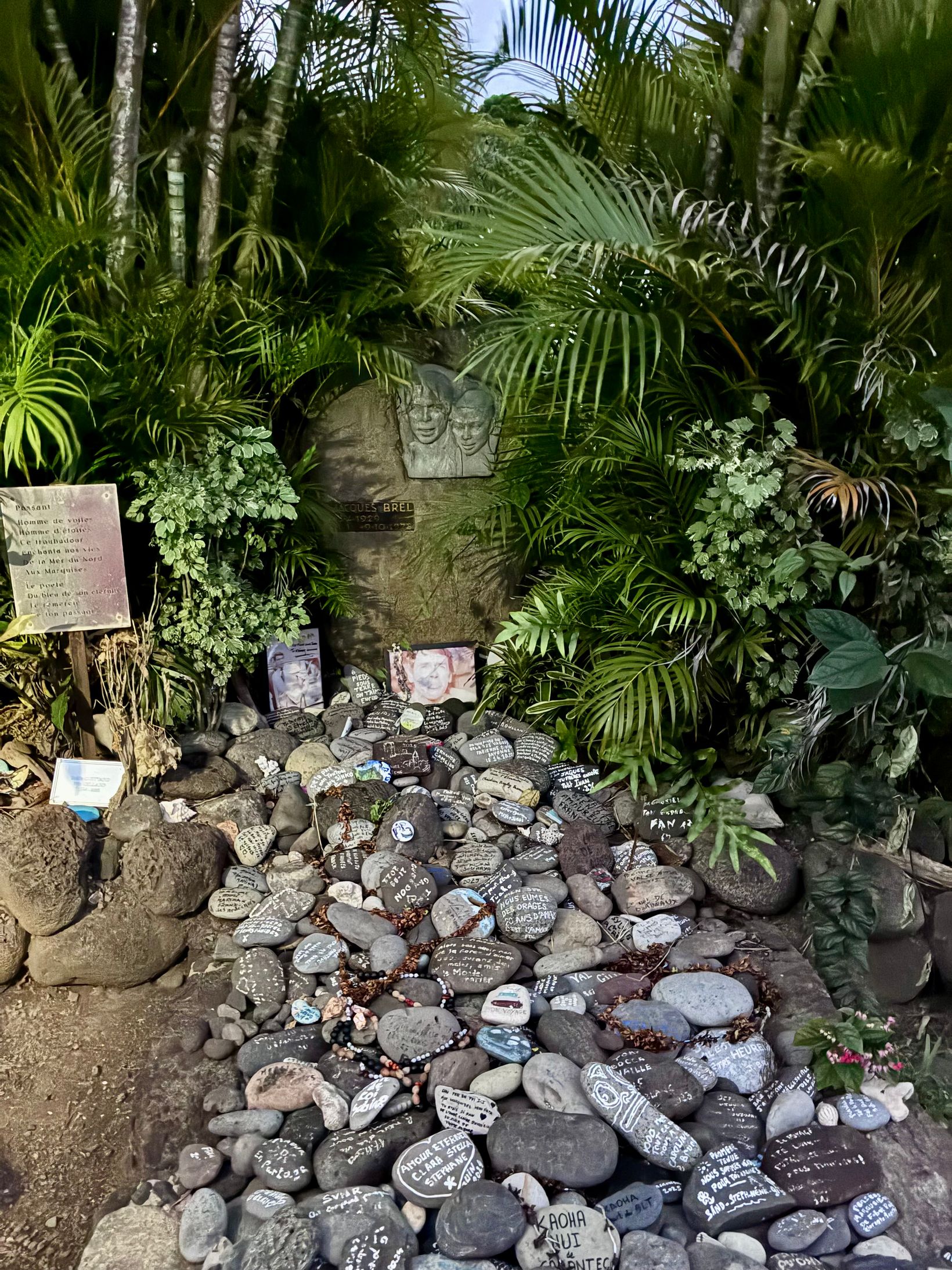
Without wasting any time, we set straight off on a first exploratory tour. Since the gendarmerie already closes at noon, we make for the playground. It’s probably one of the most beautifully situated playgrounds in the world. At dusk we quickly visit the graves of Jacques Brel and Paul Gauguin. The painter, too, found his place of longing on the Marquesas and spent his last years on the island. For Europeans in search of freedom, even Tahiti was too colonized and spoiled. On these remote islands, by contrast, they seemed to find what they were after.
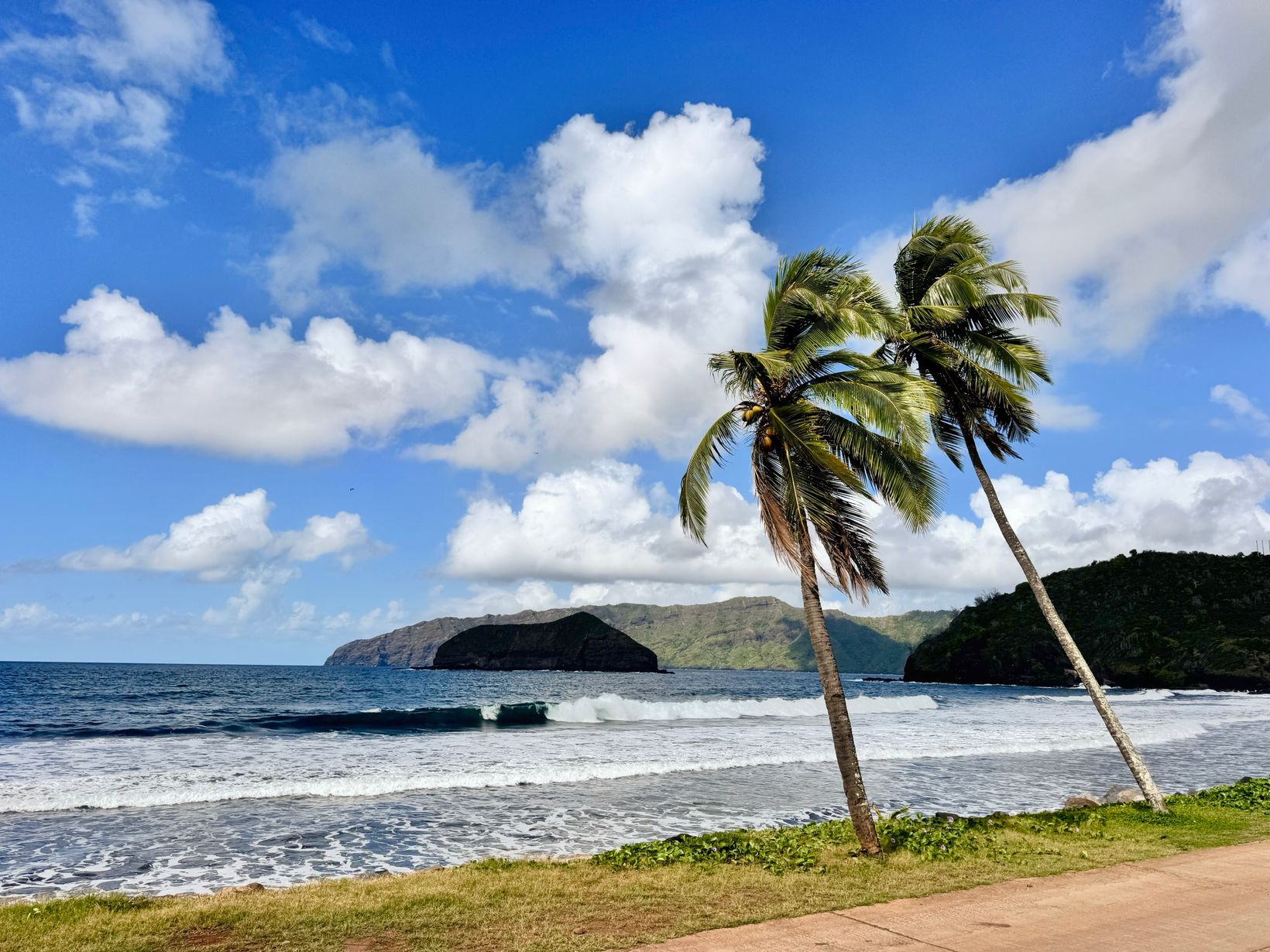
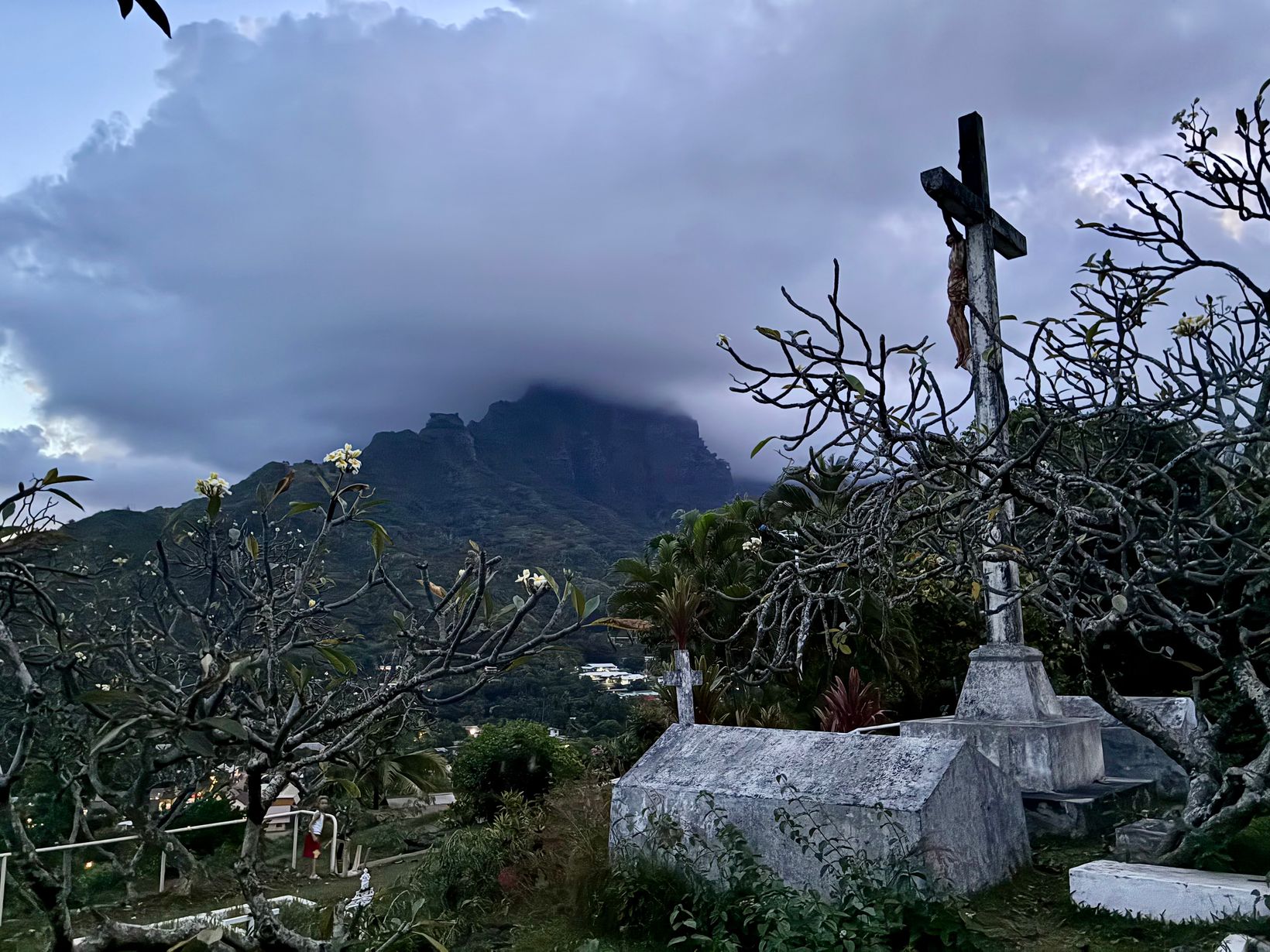
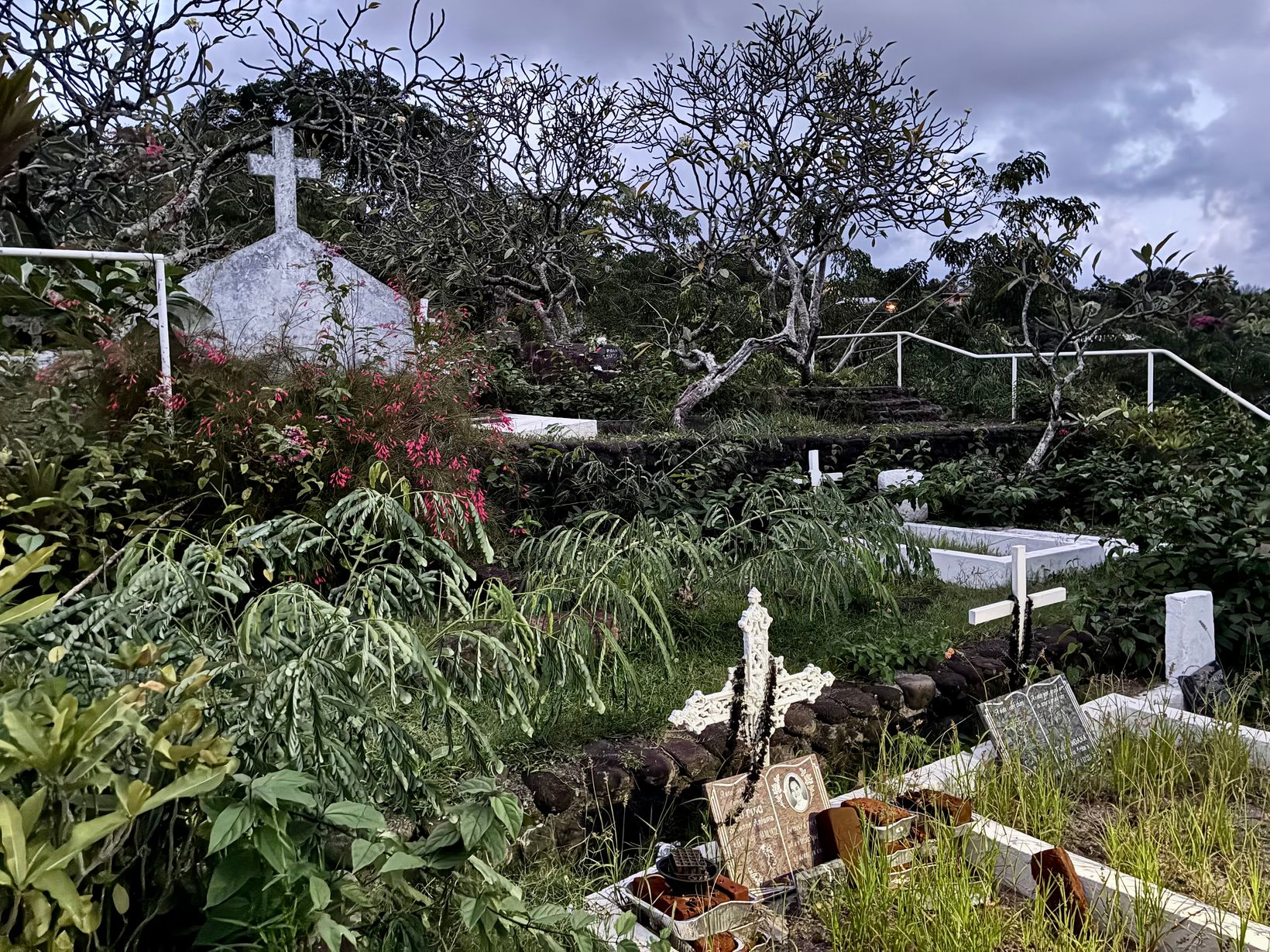
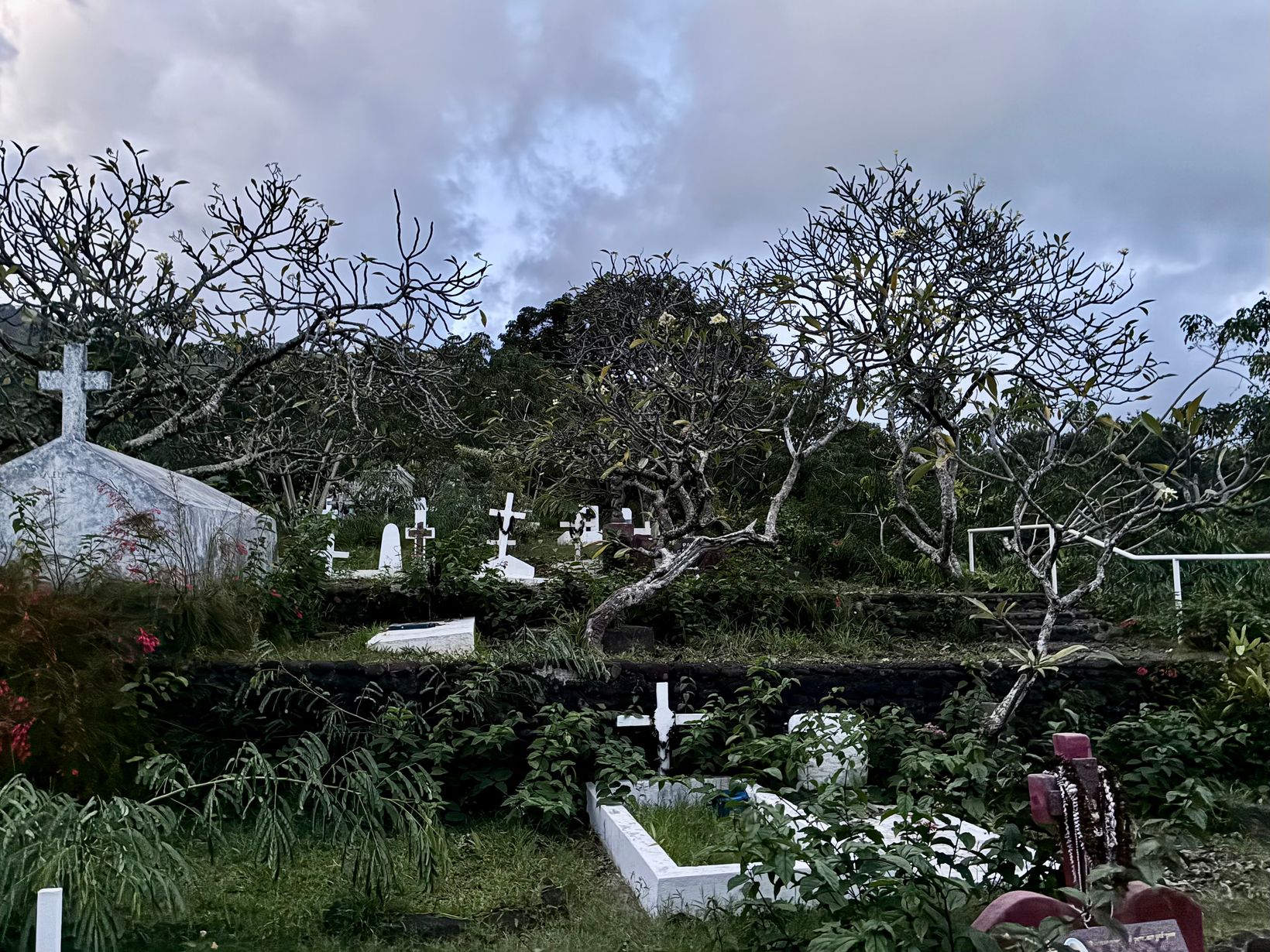
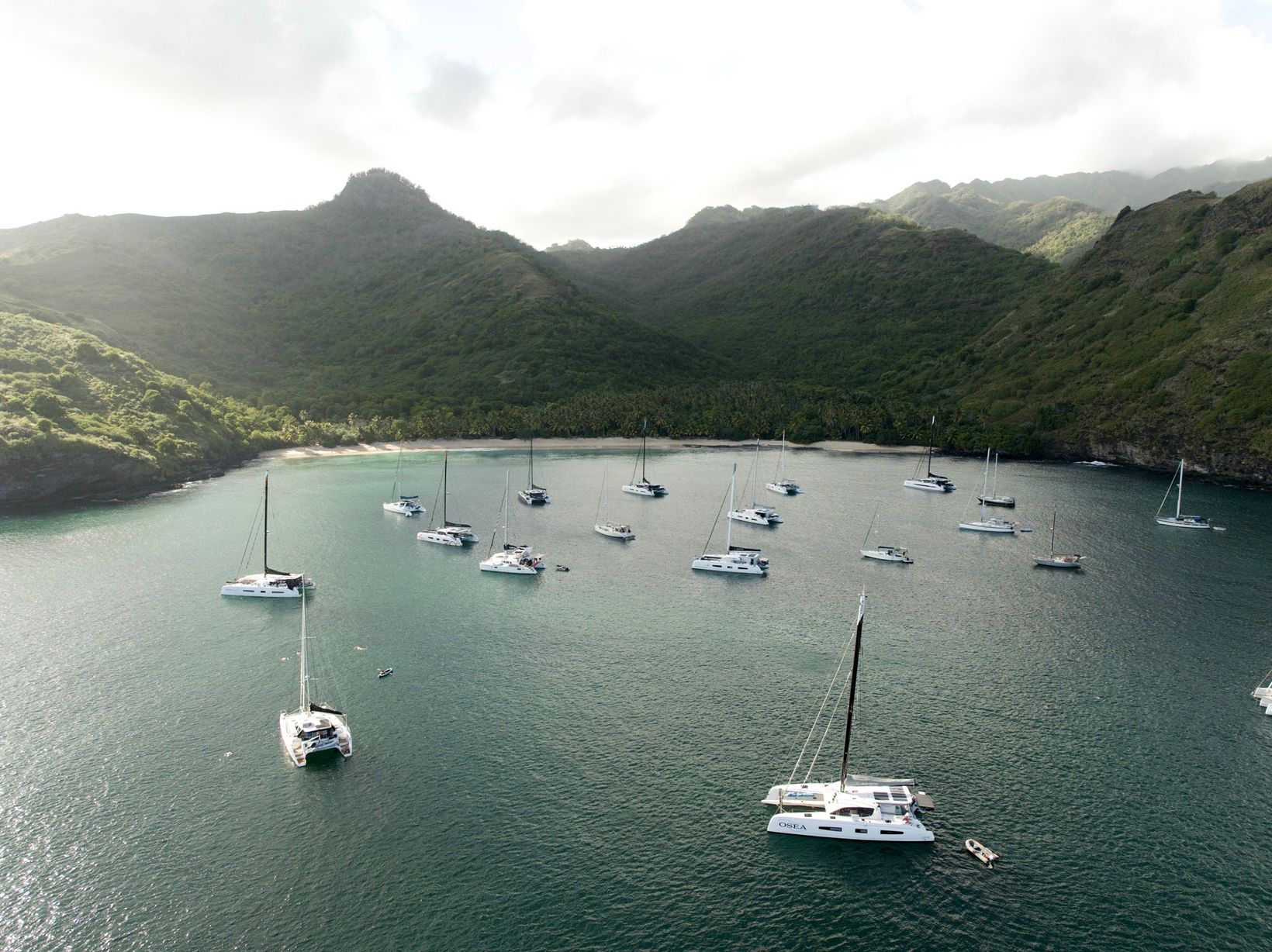
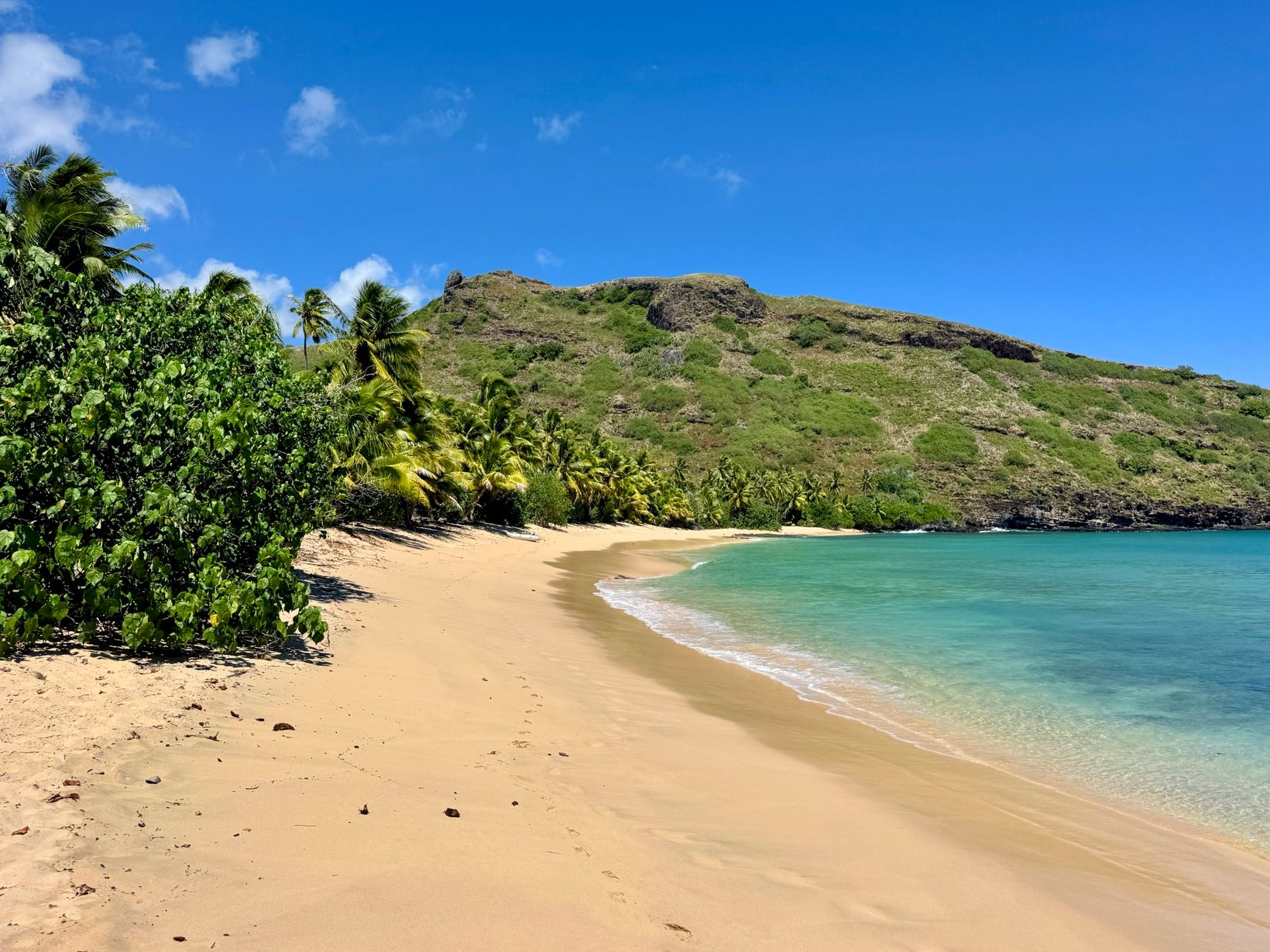
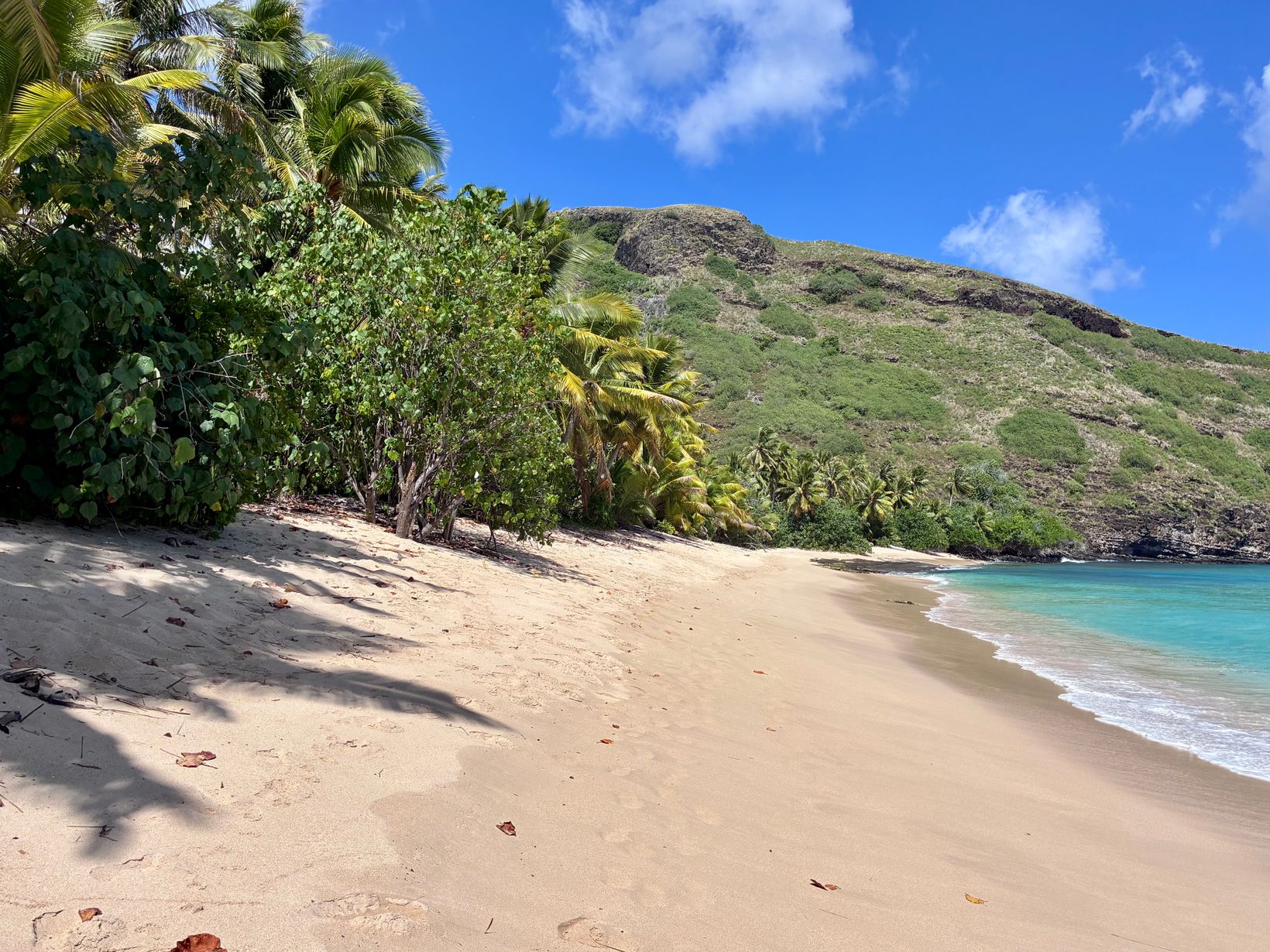
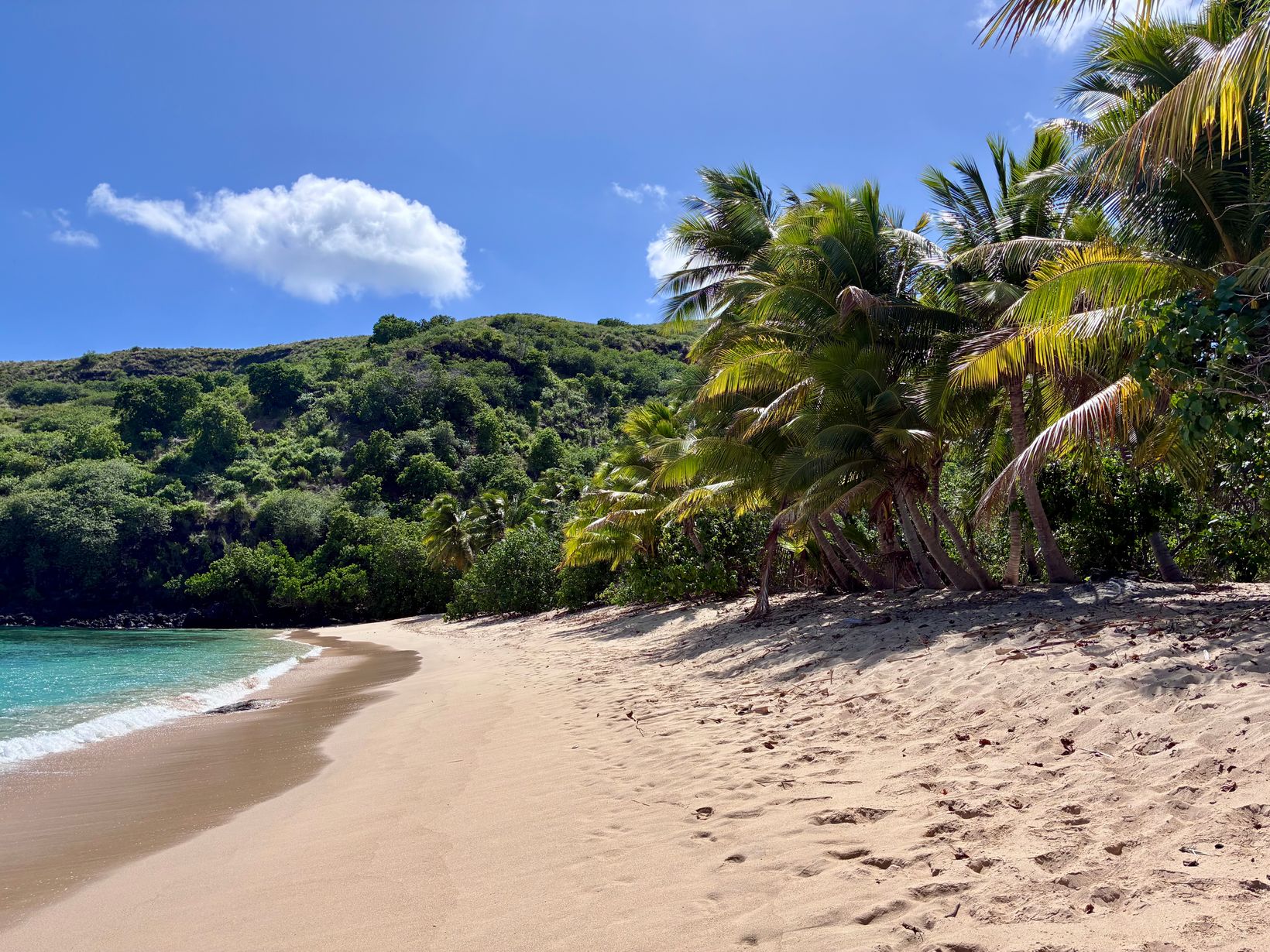
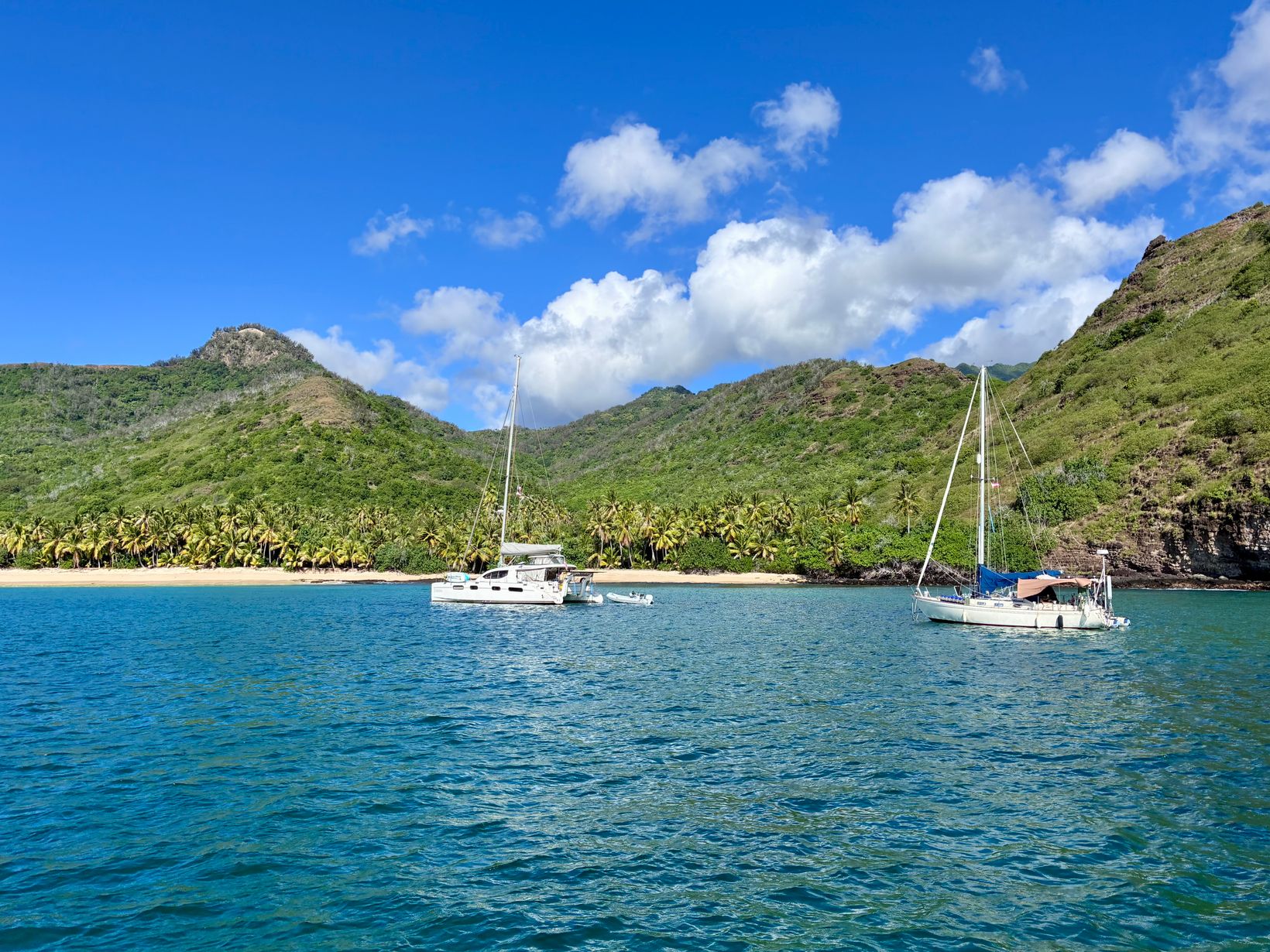
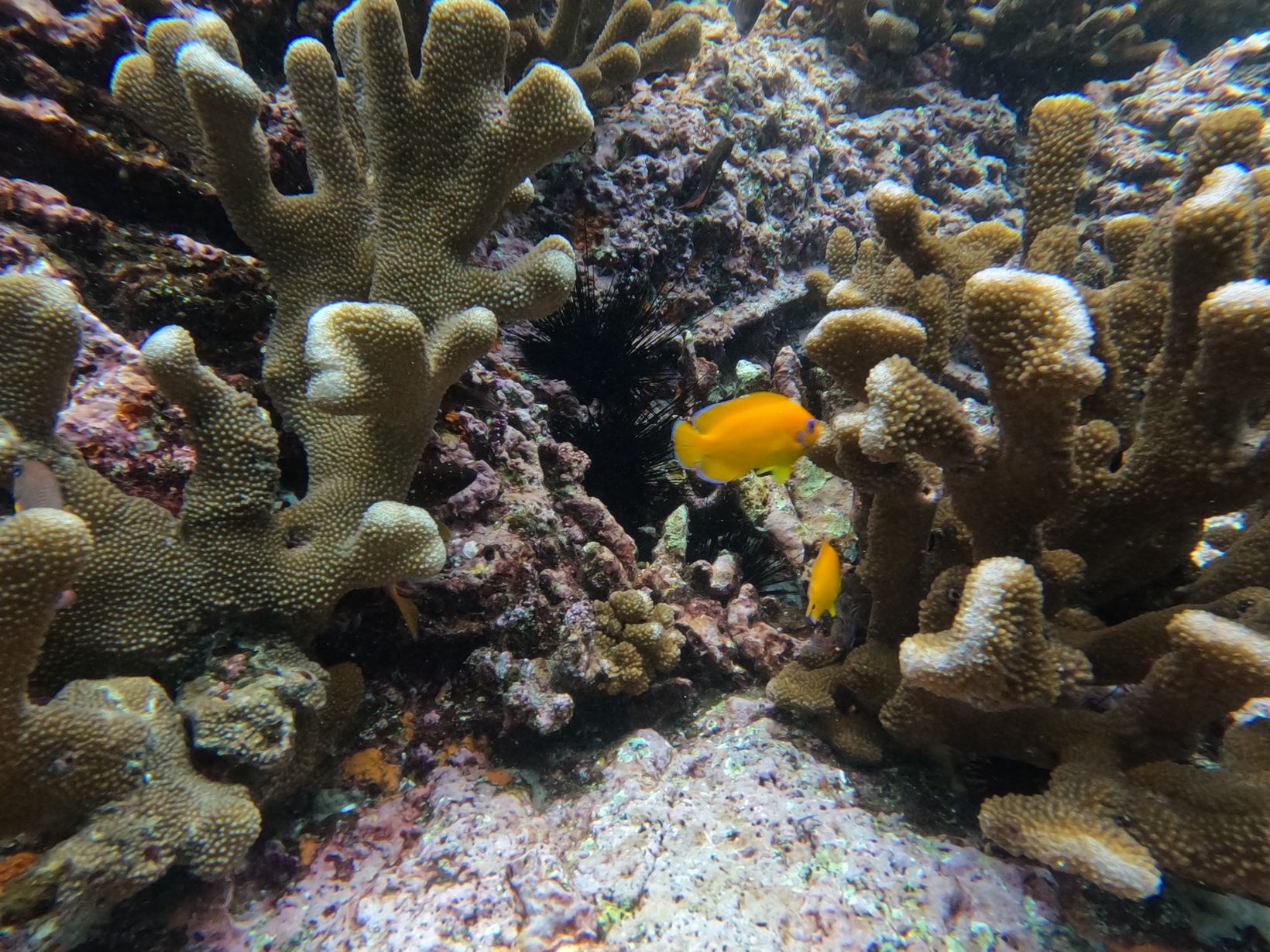
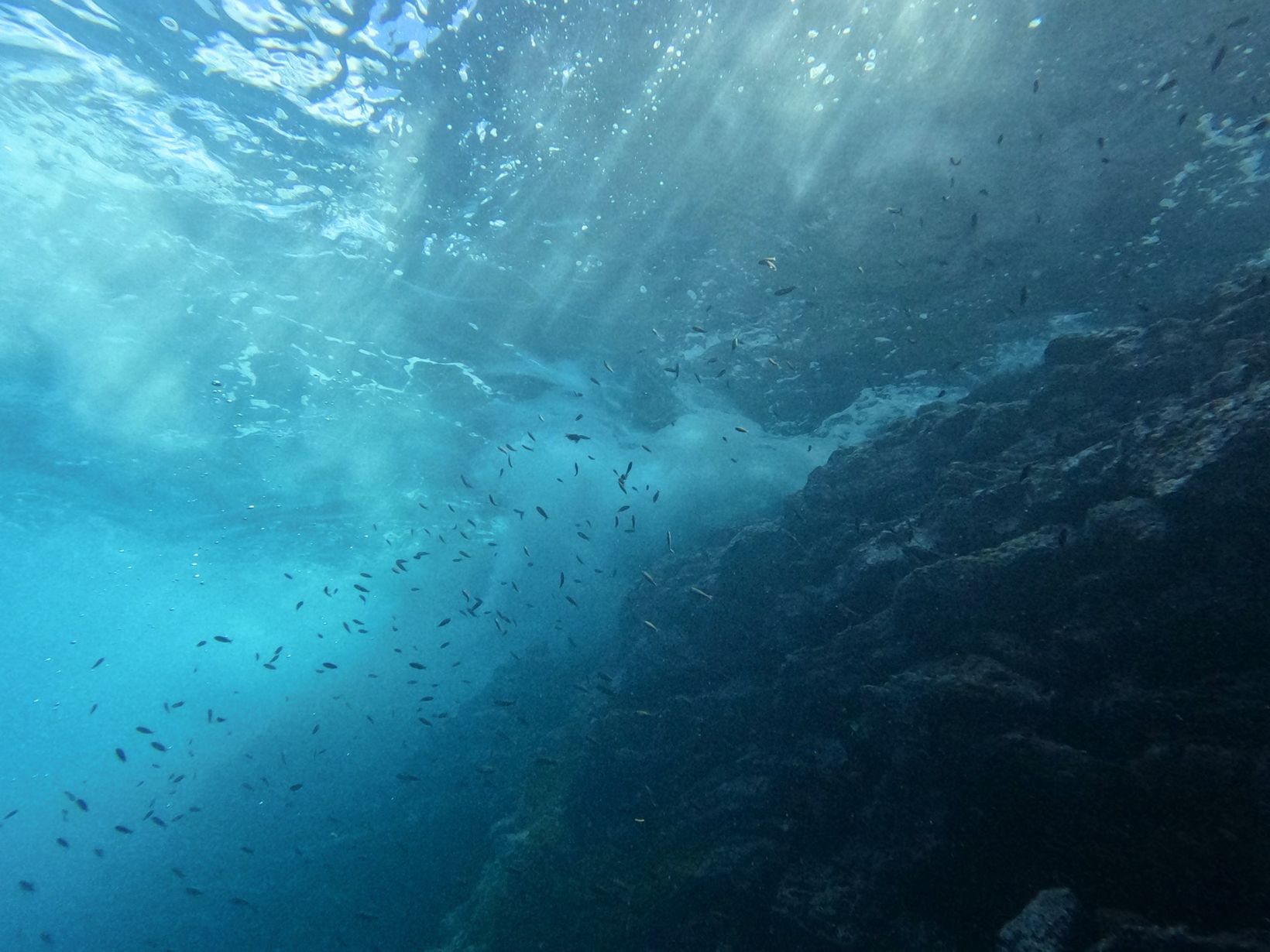
Honestly, we don’t know what we’re after. But we’re no less thrilled to be here. Not necessarily in this particular harbor, but on the Marquesas. The next day, despite a public holiday, the gendarmerie is staffed, and our passports are getting a new stamp. After that, we see quickly set sail. From Hiva Oa we head for the beach of the neighboring island of Tahuata – one of the few beaches that the archipelago, with its rugged, steep coasts, can offer. But quality beats quantity, and the bay is a dream. At least if you tune out the many boats of a catamaran rally. The days trickle by with swimming, diving and watching the majestic manta rays that sail through the bay each morning. It couldn’t be more beautiful, and we wonder how the other Marquesan islands will compare.